
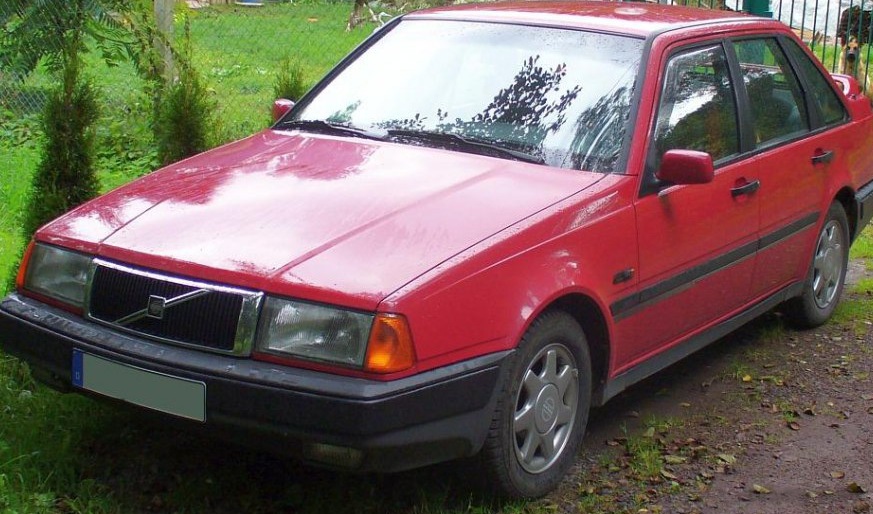
The Volvo 440 K, and its closely related five-door variant the 445, represented Volvo’s foray into the compact hatchback segment. Produced between 1989 and 1993, these models were a departure from Volvo’s traditionally larger, more conservative offerings. The 1.7-liter (1721 cc) engine producing 102 horsepower was a key part of the 440/445 lineup, positioned as the entry-level offering, balancing affordability with Volvo’s reputation for safety and durability. This variant aimed to attract buyers seeking a practical, economical, and reliable vehicle, particularly in European markets where compact hatchbacks were highly popular.
Technical Specifications
| Brand | Volvo |
| Model | 440 K |
| Generation | 440 K (445) |
| Type (Engine) | 1.7 (102 Hp) |
| Start of production | 1989 |
| End of production | 1993 |
| Powertrain Architecture | Internal Combustion engine |
| Body type | Hatchback |
| Seats | 5 |
| Doors | 5 |
| Fuel consumption (urban) | 10.8 l/100 km (21.8 US mpg, 26.2 UK mpg, 9.3 km/l) |
| Fuel consumption (extra urban) | 5.8 l/100 km (40.6 US mpg, 48.7 UK mpg, 17.2 km/l) |
| Fuel consumption (combined) | 7.5 l/100 km (31.4 US mpg, 37.7 UK mpg, 13.3 km/l) |
| Fuel Type | Petrol (Gasoline) |
| Acceleration 0 – 100 km/h | 11 sec |
| Acceleration 0 – 62 mph | 11 sec |
| Acceleration 0 – 60 mph | 10.5 sec |
| Maximum speed | 180 km/h (111.85 mph) |
| Weight-to-power ratio | 10.1 kg/Hp |
| Weight-to-torque ratio | 7.3 kg/Nm |
| Power | 102 Hp @ 5600 rpm |
| Power per litre | 59.3 Hp/l |
| Torque | 142 Nm @ 3900 rpm (104.73 lb.-ft. @ 3900 rpm) |
| Engine layout | Front, Transverse |
| Engine Model/Code | B18E |
| Engine displacement | 1721 cm3 (105.02 cu. in.) |
| Number of cylinders | 4 |
| Engine configuration | Inline |
| Cylinder Bore | 81 mm (3.19 in.) |
| Piston Stroke | 83.5 mm (3.29 in.) |
| Compression ratio | 10:1 |
| Number of valves per cylinder | 2 |
| Fuel injection system | Multi-port manifold injection |
| Engine aspiration | Naturally aspirated engine |
| Valvetrain | OHC |
| Engine oil capacity | 5 l (5.28 US qt | 4.4 UK qt) |
| Coolant capacity | 7 l (7.4 US qt | 6.16 UK qt) |
| Kerb Weight | 1030 kg (2270.76 lbs.) |
| Max. weight | 1520 kg (3351.03 lbs.) |
| Max load | 490 kg (1080.27 lbs.) |
| Trunk (boot) space – minimum | 330 l (11.65 cu. ft.) |
| Trunk (boot) space – maximum | 1028 l (36.3 cu. ft.) |
| Fuel tank capacity | 60 l (15.85 US gal | 13.2 UK gal) |
| Length | 4345 mm (171.06 in.) |
| Width | 1686 mm (66.38 in.) |
| Height | 1378 mm (54.25 in.) |
| Wheelbase | 2503 mm (98.54 in.) |
| Front track | 1416 mm (55.75 in.) |
| Rear track | 1425 mm (56.1 in.) |
| Drivetrain Architecture | Front wheel drive |
| Drive wheel | Front wheel drive |
| Number of gears | 5 gears, manual transmission |
| Front suspension | Wishbone |
| Rear suspension | Coil spring |
| Front brakes | Disc |
| Rear brakes | Disc |
| Assisting systems | ABS (Anti-lock braking system) |
| Steering type | Steering rack and pinion |
| Power steering | Hydraulic Steering |
| Tires size | 175/65 R14 |
| Wheel rims size | 14 |
INTRODUCTION
The Volvo 440 K, launched in 1989, was a significant departure for the Swedish automaker. While Volvo was known for its larger, more luxurious sedans and wagons, the 440 K aimed to capture a segment of the market increasingly interested in smaller, more fuel-efficient vehicles. Built on Volvo’s new 400 series platform (internally designated as the 440/460 series), the 440 K and its 445 five-door variant were designed to be modern, safe, and practical. The 1.7-liter engine, designated the B18E, was the base engine option, offering a balance between performance and economy. Production continued until 1993, with the model eventually being replaced by the more refined S40 and V40 series.
Powertrain & Engine Architecture
The heart of the 440 K 1.7 was the B18E engine, a naturally aspirated, inline-four cylinder unit displacing 1721 cc. This engine featured a single overhead camshaft (OHC) design, operating two valves per cylinder. Fuel delivery was handled by a multi-port fuel injection system, a relatively modern feature for its time, contributing to improved fuel efficiency and smoother operation compared to carbureted engines. The B18E produced 102 horsepower at 5600 rpm and 142 Nm (104.73 lb-ft) of torque at 3900 rpm. The engine was transversely mounted, a common configuration for front-wheel-drive vehicles, maximizing interior space. The 440 K was typically paired with a five-speed manual transmission, but a four-speed automatic transmission was also available, though less common. The automatic transmission, while offering convenience, did impact acceleration and fuel economy.
Driving Characteristics
The 1.7-liter engine in the 440 K provided adequate, but not exhilarating, performance. Acceleration from 0 to 60 mph took around 10.5 seconds, and top speed was approximately 112 mph. The automatic transmission, while smooth, resulted in noticeable power loss compared to the manual version. Gear ratios were optimized for fuel economy rather than outright speed. In real-world driving, the 440 K 1.7 felt best suited for city commuting and highway cruising, where its comfortable ride and reasonable fuel consumption were appreciated. The steering was light and precise, making it easy to maneuver in tight spaces. However, the suspension, while competent, wasn’t particularly sporty, prioritizing comfort over handling.
Equipment & Trim Levels
The 440 K 1.7 typically came with a fairly basic level of equipment, reflecting its position as the entry-level model. Standard features included power steering, central locking, and a basic stereo system. Interior upholstery was typically cloth, with a durable and practical design. Optional extras included power windows, a sunroof, and upgraded audio systems. Trim levels were relatively limited, with most variations stemming from the addition of optional packages. The dashboard layout was functional and straightforward, prioritizing ease of use over aesthetic flair. Safety features, a hallmark of Volvo, were standard, including seatbelt pretensioners and a reinforced safety cage.
Chassis & Braking
The 440 K featured a front-wheel-drive layout with independent wishbone suspension at the front and a coil spring rear suspension. This setup provided a comfortable ride, although it wasn’t particularly sporty. Braking was handled by disc brakes on all four wheels, a relatively advanced feature for a car in this class. An Anti-lock Braking System (ABS) was also available, further enhancing safety. The chassis was designed to be lightweight yet rigid, contributing to the car’s handling and crashworthiness. The 175/65 R14 tires provided adequate grip for everyday driving conditions.
Market Reception & Comparison
The Volvo 440 K 1.7 received mixed reviews from automotive critics. While praised for its safety, build quality, and practicality, it was often criticized for its relatively modest performance and somewhat bland styling. Compared to other compact hatchbacks of the time, such as the Ford Escort or Opel Astra, the 440 K offered a more refined interior and a stronger emphasis on safety. However, it was generally more expensive than its competitors. The automatic transmission version was often seen as a compromise, sacrificing performance for convenience. Fuel economy was respectable, but not class-leading.
Legacy
The Volvo 440 K 1.7, while not a performance icon, has proven to be a remarkably durable and reliable vehicle. The B18E engine is known for its longevity, and many examples are still on the road today. The car’s simple mechanical design makes it relatively easy to maintain and repair. In the used car market, the 440 K 1.7 is often sought after by enthusiasts looking for a classic Volvo that is affordable and practical. While not particularly collectible, well-maintained examples are gaining appreciation as a testament to Volvo’s commitment to quality and safety. The 440/445 series paved the way for Volvo’s successful entry into the compact car market, setting the stage for the S40 and V40 models that followed.
