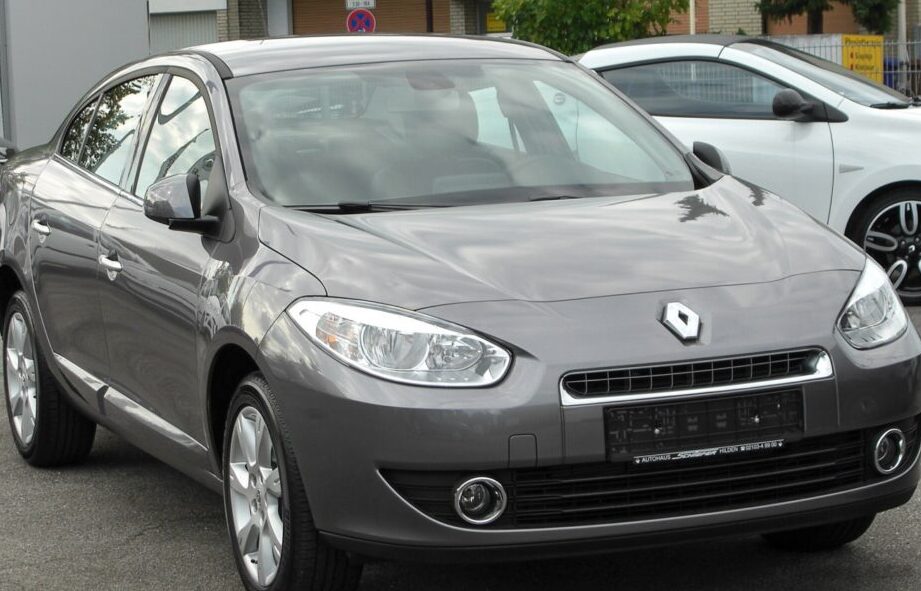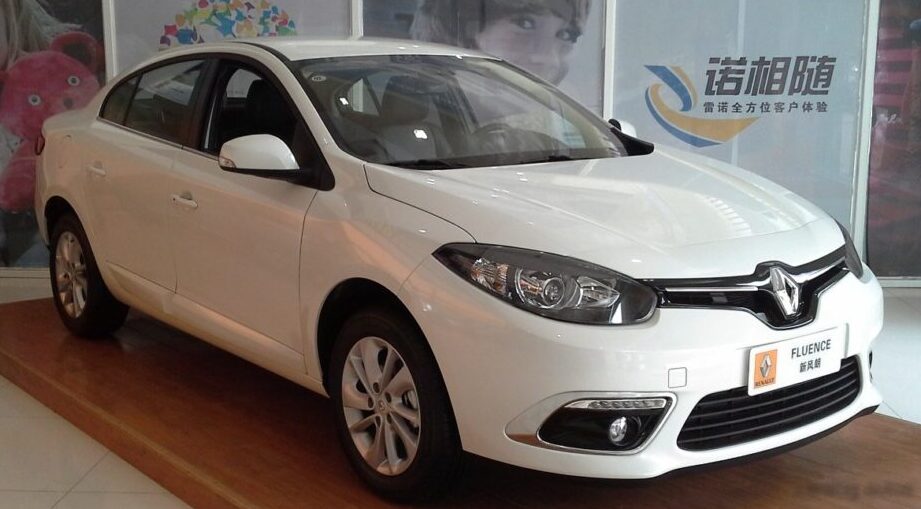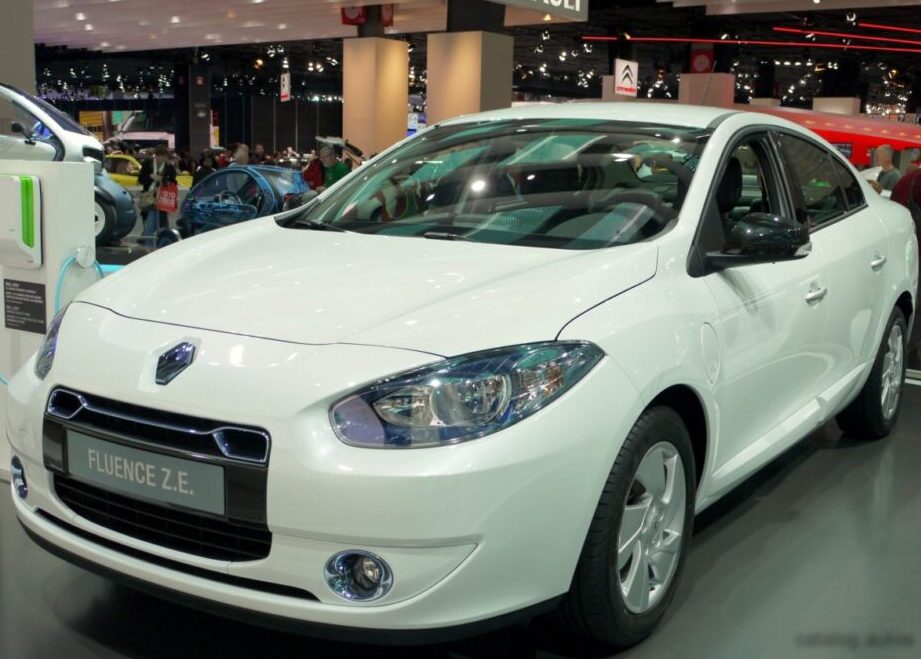
The Renault Fluence Z.E. 22 kWh, producing 95 horsepower, represents Renault’s initial foray into the mass-market all-electric sedan segment. Produced between 2011 and 2014, it was primarily aimed at European markets, offering a practical and zero-emission alternative to conventional gasoline-powered vehicles. The Fluence Z.E. was based on the standard Renault Fluence sedan, but significantly modified to accommodate its all-electric powertrain. It played a key role in establishing Renault as an early adopter of electric vehicle technology, paving the way for future EV models.
Technical Specifications
| Brand | Renault |
| Model | Fluence |
| Generation | Fluence Z.E. |
| Type (Engine) | 22 kWh (95 Hp) |
| Start of production | 2011 |
| End of production | 2014 |
| Powertrain Architecture | BEV (Electric Vehicle) |
| Body type | Sedan |
| Seats | 5 |
| Doors | 4 |
| Fuel Type | Electricity |
| Acceleration 0 – 100 km/h | 13.7 sec |
| Acceleration 0 – 62 mph | 13.7 sec |
| Acceleration 0 – 60 mph | 13 sec |
| Maximum speed | 135 km/h (83.89 mph) |
| Weight-to-power ratio | 16.1 kg/Hp, 62.1 Hp/tonne |
| Weight-to-torque ratio | 6.8 kg/Nm, 147.7 Nm/tonne |
| Gross battery capacity | 22 kWh |
| Battery voltage | 398 V |
| Battery technology | Lithium-ion (Li-Ion) |
| Battery weight | 280 kg (617.29 lbs) |
| Battery location | Inside the trunk |
| All-electric range (NEDC) | 185 km (114.95 mi) |
| Average Energy consumption (NEDC) | 14 kWh/100 km (22.53 kWh/100 mi, 150 MPGe, 7.1 km/kWh, 4.4 mi/kWh) |
| Electric motor power | 95 Hp @ 3000-8900 rpm |
| Electric motor Torque | 226 Nm @ 400-2500 rpm (166.69 lb.-ft. @ 400-2500 rpm) |
| Electric motor model/code | 5AM |
| Electric motor location | Front axle, Transverse |
| System power | 95 Hp @ 3000-8900 rpm |
| System torque | 226 Nm @ 400-2500 rpm (166.69 lb.-ft. @ 400-2500 rpm) |
| Kerb Weight | 1530 kg (3373.07 lbs) |
| Max. weight | 2023 kg (4459.95 lbs) |
| Max load | 493 kg (1086.88 lbs) |
| Trunk (boot) space – minimum | 317 l (11.19 cu. ft.) |
| Max. roof load | 75 kg (165.35 lbs) |
| Length | 4748 mm (186.93 in) |
| Width | 1809 mm (71.22 in) |
| Width including mirrors | 2041 mm (80.35 in) |
| Height | 1458 mm (57.4 in) |
| Wheelbase | 2701 mm (106.34 in) |
| Front track | 1537 mm (60.51 in) |
| Rear (Back) track | 1555 mm (61.22 in) |
| Front overhang | 907 mm (35.71 in) |
| Rear overhang | 1140 mm (44.88 in) |
| Ride height (ground clearance) | 142 mm (5.59 in) |
| Minimum turning circle | 11.1 m (36.42 ft) |
| Drivetrain Architecture | One electric motor drives the front wheels |
| Drive wheel | Front wheel drive |
| Number of gears | 1 |
| Gearbox type | Automatic transmission |
| Front suspension | Independent type McPherson |
| Rear suspension | Torsion |
| Front brakes | Ventilated discs, 280 mm |
| Rear brakes | Disc, 260 mm |
| Assisting systems | ABS (Anti-lock braking system) |
| Steering type | Steering rack and pinion |
| Power steering | Electric |
| Tires size | 205/55 R16 |
| Wheel rims size | 6.5J x 16 |
Powertrain & Engine Architecture
The Renault Fluence Z.E. is powered by a single electric motor, designated the 5AM model, producing 95 horsepower and 226 Nm (166.69 lb-ft) of torque. This motor is transversely mounted at the front of the vehicle, driving the front wheels. The motor operates within a voltage range of 398V and draws power from a 22 kWh lithium-ion battery pack. The battery pack is uniquely located under the rear seats and extending into the trunk space, reducing cargo capacity compared to the gasoline-powered Fluence. The Fluence Z.E. utilizes a single-speed automatic transmission, typical for electric vehicles, providing seamless acceleration. The motor’s torque curve is characteristic of electric motors, delivering maximum torque from a standstill, contributing to brisk initial acceleration.
Driving Characteristics
The Fluence Z.E., with its 95 hp electric motor and single-speed automatic transmission, offers a driving experience focused on efficiency and smooth, quiet operation. Acceleration from 0 to 100 km/h (0-62 mph) takes approximately 13.7 seconds, which is slower than comparable gasoline-powered sedans. However, the instant torque delivery of the electric motor provides responsive acceleration in urban driving conditions. The single-speed transmission simplifies the driving experience, eliminating the need for gear changes. The car’s handling is generally neutral, with the battery pack’s low placement contributing to a relatively low center of gravity. Regenerative braking is incorporated, allowing the motor to recapture energy during deceleration, extending the vehicle’s range.
Equipment & Trim Levels
The Renault Fluence Z.E. was generally offered with a moderate level of standard equipment, reflecting its positioning as a mainstream electric vehicle. Standard features typically included air conditioning, power windows, power door locks, and an audio system with USB connectivity. Safety features such as ABS (Anti-lock Braking System) and front airbags were also standard. Higher trim levels offered additional features such as alloy wheels, a navigation system, and rear parking sensors. Interior upholstery was typically cloth, with options for leather available on some trims. The dashboard layout was similar to the standard Fluence, with a dedicated display providing information about battery charge level, energy consumption, and range.
Chassis & Braking
The Fluence Z.E. utilizes a McPherson strut independent suspension at the front and a torsion beam suspension at the rear. This suspension setup provides a comfortable ride quality, suitable for everyday driving. The front brakes are ventilated discs measuring 280 mm, while the rear brakes are solid discs measuring 260 mm. The braking system is assisted by ABS (Anti-lock Braking System) to enhance stability during emergency braking. The steering is rack and pinion with electric power assistance, providing light and precise steering feel. The vehicle rides on 205/55 R16 tires mounted on 6.5J x 16 alloy or steel wheels.
Market Reception & Comparison
The Renault Fluence Z.E. received mixed reviews from automotive critics. While praised for its zero-emission operation and comfortable ride, it was criticized for its limited range, slow acceleration, and the intrusion of the battery pack into the trunk space. Compared to other electric vehicles available at the time, such as the Nissan Leaf, the Fluence Z.E. offered a more conventional sedan body style, appealing to buyers who preferred a traditional car shape. However, its range was generally shorter than the Leaf’s, and its performance was less spirited. Fuel economy, expressed as energy consumption, was rated at 14 kWh/100 km (approximately 150 MPGe), which was competitive for its time.
Legacy
The Renault Fluence Z.E. served as an important stepping stone for Renault in the development and adoption of electric vehicle technology. While production ended in 2014, the Fluence Z.E. demonstrated Renault’s commitment to sustainable mobility and helped to raise awareness of electric vehicles among consumers. On the used car market, the Fluence Z.E. remains an affordable entry point into electric vehicle ownership. However, potential buyers should be aware of the limited range and the potential for battery degradation over time. The longevity of the battery pack is a key factor in determining the vehicle’s overall reliability and value. The Fluence Z.E. paved the way for Renault’s subsequent electric vehicle models, such as the Zoe and the Megane E-Tech Electric, which offer improved range, performance, and technology.