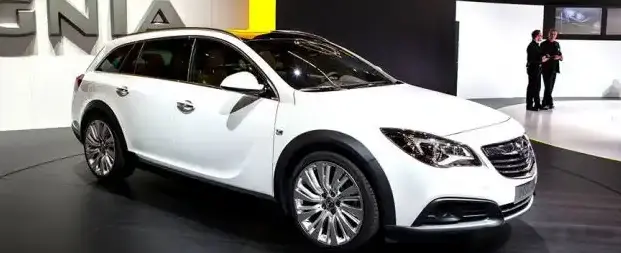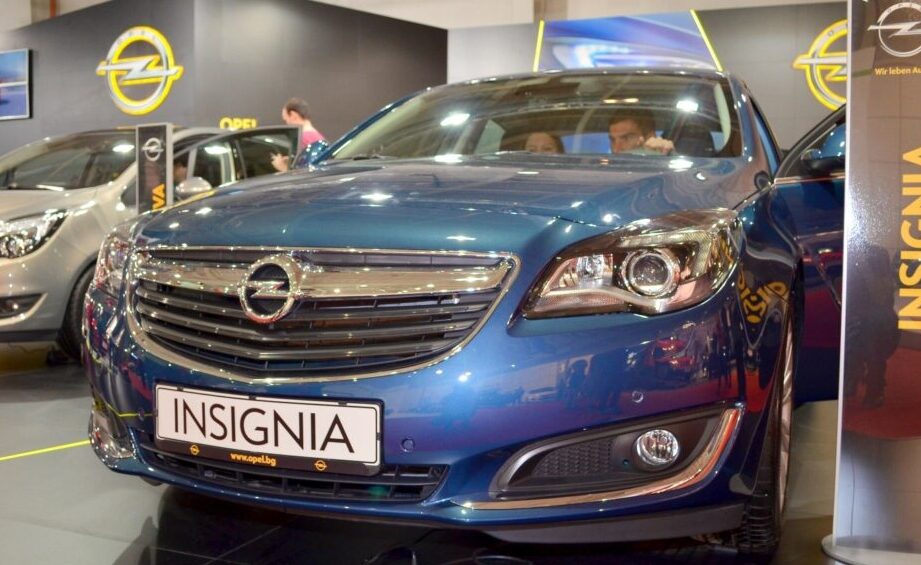
The Opel Insignia Sedan (A, facelift 2013) 1.8 Ecotec represents a mid-cycle refresh of Opel’s flagship D-segment sedan, produced from July 2013 to January 2017. Positioned as a mainstream offering within the Insignia range, this variant aimed to provide a balance of fuel efficiency and acceptable performance for family and commuter use. It served as a key volume seller in European markets, competing with vehicles like the Ford Mondeo, Volkswagen Passat, and Peugeot 508. The facelift brought styling updates and minor mechanical revisions to the original Insignia A, enhancing its appeal and addressing some initial criticisms.
Technical Specifications
| Brand | Opel |
| Model | Insignia |
| Generation | Insignia Sedan (A, facelift 2013) |
| Type (Engine) | 1.8 (140 Hp) Ecotec |
| Start of production | July, 2013 |
| End of production | January, 2017 |
| Powertrain Architecture | Internal Combustion engine |
| Body type | Sedan |
| Seats | 5 |
| Doors | 4 |
| Fuel consumption (urban) | 9.8 l/100 km (24 US mpg, 28.8 UK mpg, 10.2 km/l) |
| Fuel consumption (extra urban) | 5.4 l/100 km (43.6 US mpg, 52.3 UK mpg, 18.5 km/l) |
| Fuel consumption (combined) | 7 l/100 km (33.6 US mpg, 40.4 UK mpg, 14.3 km/l) |
| CO2 emissions | 164 g/km |
| Fuel Type | Petrol (Gasoline) |
| Acceleration 0 – 100 km/h | 11.5 sec |
| Acceleration 0 – 62 mph | 11.5 sec |
| Acceleration 0 – 60 mph | 10.9 sec |
| Maximum speed | 205 km/h (127.38 mph) |
| Emission standard | Euro 5 |
| Power | 140 Hp @ 6300 rpm |
| Power per litre | 78 Hp/l |
| Torque | 175 Nm @ 3800 rpm (129.07 lb.-ft. @ 3800 rpm) |
| Engine layout | Front, Transverse |
| Engine Model/Code | B18XER |
| Engine displacement | 1796 cm3 (109.6 cu. in.) |
| Number of cylinders | 4 |
| Engine configuration | Inline |
| Cylinder Bore | 80.5 mm (3.17 in.) |
| Piston Stroke | 88.2 mm (3.47 in.) |
| Number of valves per cylinder | 4 |
| Fuel injection system | Multi-port manifold injection |
| Engine aspiration | Naturally aspirated engine |
| Engine oil capacity | 4.5 l (4.76 US qt | 3.96 UK qt) |
| Coolant | 5.6 l (5.92 US qt | 4.93 UK qt) |
| Trunk (boot) space – minimum | 500 l (17.66 cu. ft.) |
| Trunk (boot) space – maximum | 1015 l (35.84 cu. ft.) |
| Fuel tank capacity | 70 l (18.49 US gal | 15.4 UK gal) |
| Length | 4842 mm (190.63 in.) |
| Width | 1856 mm (73.07 in.) |
| Width including mirrors | 2084 mm (82.05 in.) |
| Height | 1498 mm (58.98 in.) |
| Wheelbase | 2737 mm (107.76 in.) |
| Front track | 1587 mm (62.48 in.) |
| Rear (Back) track | 1590 mm (62.6 in.) |
| Minimum turning circle | 11.4 m (37.4 ft.) |
| Drivetrain Architecture | The Internal combustion engine (ICE) drives the front wheels of the vehicle. |
| Drive wheel | Front wheel drive |
| Number of gears and type of gearbox | 6 gears, manual transmission |
| Assisting systems | ABS (Anti-lock braking system) |
| Steering type | Steering rack and pinion |
INTRODUCTION
The Opel Insignia A, launched in 2008, was a significant model for Opel, representing a move upmarket and a challenge to established D-segment competitors. The 2013 facelift refined the design and introduced updated engine options, including the 1.8 Ecotec. This particular configuration, producing 140 horsepower, was aimed at buyers seeking a reasonably efficient and affordable Insignia. It occupied a middle ground in the lineup, slotting below the more powerful 2.0-liter turbocharged variants and above the lower-powered 1.6-liter engine. The facelifted Insignia continued Opel’s strategy of offering a well-equipped and stylish alternative to mainstream rivals.
Powertrain & Engine Architecture
The heart of this Insignia variant is the B18XER engine, a 1.8-liter inline-four cylinder gasoline engine. This engine belongs to Opel’s Ecotec family, known for its focus on efficiency and refinement. The B18XER utilizes multi-port fuel injection, delivering fuel directly into the intake ports. It features a dual overhead camshaft (DOHC) valvetrain with four valves per cylinder, optimizing breathing and contributing to its power output. The engine’s 140 horsepower peak is achieved at 6300 rpm, while its 175 Nm (129 lb-ft) of torque is available at 3800 rpm. The engine is transversely mounted in the front of the vehicle. The 1.8 Ecotec was typically paired with a six-speed manual transmission in this configuration, providing a balance between fuel economy and driver engagement. While an automatic transmission was available on other Insignia models, it wasn’t commonly paired with the 1.8L engine.
Driving Characteristics
The 1.8 Ecotec-equipped Insignia Sedan offered a comfortable and composed driving experience, prioritizing refinement over outright performance. Acceleration from 0-100 km/h (0-62 mph) took around 11.5 seconds, which was adequate for everyday driving but not particularly sporty. The six-speed manual transmission allowed drivers to keep the engine in its optimal power band, but the engine lacked the low-end grunt of turbocharged alternatives. Gear ratios were fairly conventional, designed for fuel efficiency rather than rapid acceleration. Compared to the 2.0 Turbo models, the 1.8 felt noticeably less responsive, especially during overtaking maneuvers. However, the 1.8 offered a smoother and more predictable power delivery, making it easier to drive in urban environments. The steering was light and precise, providing good feedback without being overly heavy.
Equipment & Trim Levels
The Insignia Sedan (A, facelift 2013) 1.8 Ecotec typically came with a respectable level of standard equipment. Base models included air conditioning, electric front windows, a CD/MP3 stereo system, and ABS brakes. Higher trim levels, such as ‘Edition’ or ‘Sport’, added features like alloy wheels, cruise control, rear parking sensors, and a more sophisticated infotainment system. Interior upholstery was typically cloth, with options for leather available on higher trims. The dashboard layout was modern and functional, with a clear instrument cluster and logically arranged controls. Optional extras included a sunroof, heated seats, and a navigation system.
Chassis & Braking
The Insignia A utilized a MacPherson strut front suspension and a multi-link rear suspension, providing a good balance of ride comfort and handling. The suspension was tuned for comfort, absorbing bumps and imperfections in the road surface effectively. The front brakes were typically ventilated discs, while the rear brakes were solid discs on most variants. ABS (Anti-lock Braking System) was standard, enhancing braking performance and stability. Stabilizer bars were fitted to both the front and rear axles, reducing body roll during cornering. The chassis was designed to provide a stable and predictable driving experience, prioritizing safety and comfort over sporty handling.
Market Reception & Comparison
The Opel Insignia 1.8 Ecotec was generally well-received by automotive critics as a sensible and practical choice. It was praised for its comfortable ride, spacious interior, and good fuel economy. However, some reviewers noted that the engine lacked the punch of its turbocharged counterparts. Compared to the 2.0 Turbo models, the 1.8 offered significantly lower running costs but at the expense of performance. The 1.6-liter engine, while even more fuel-efficient, was considered underpowered for the Insignia’s size and weight. Fuel economy figures of around 7 l/100 km (33.6 US mpg) were competitive for its class. Reliability was generally good, with few major issues reported.
Legacy
The Opel Insignia 1.8 Ecotec has proven to be a relatively reliable powertrain in the used car market. The B18XER engine is known for its durability and relatively low maintenance costs. Common issues are typically limited to routine wear and tear items, such as spark plugs, air filters, and oil changes. The Insignia A, in general, has maintained a reasonable level of popularity in the used car market, offering a good value proposition for buyers seeking a spacious and comfortable family sedan. While not a performance icon, the 1.8 Ecotec variant remains a practical and economical choice for those prioritizing fuel efficiency and everyday usability.