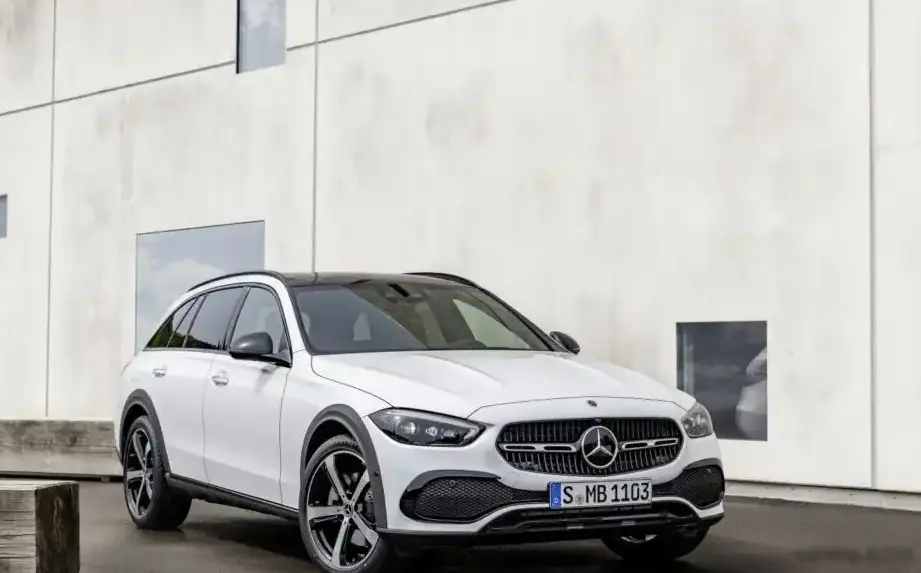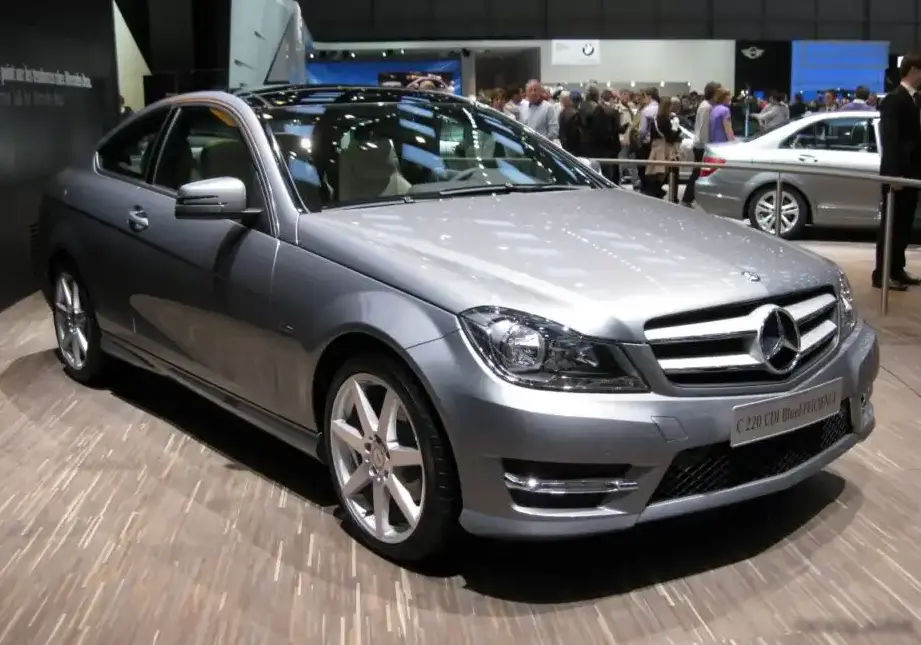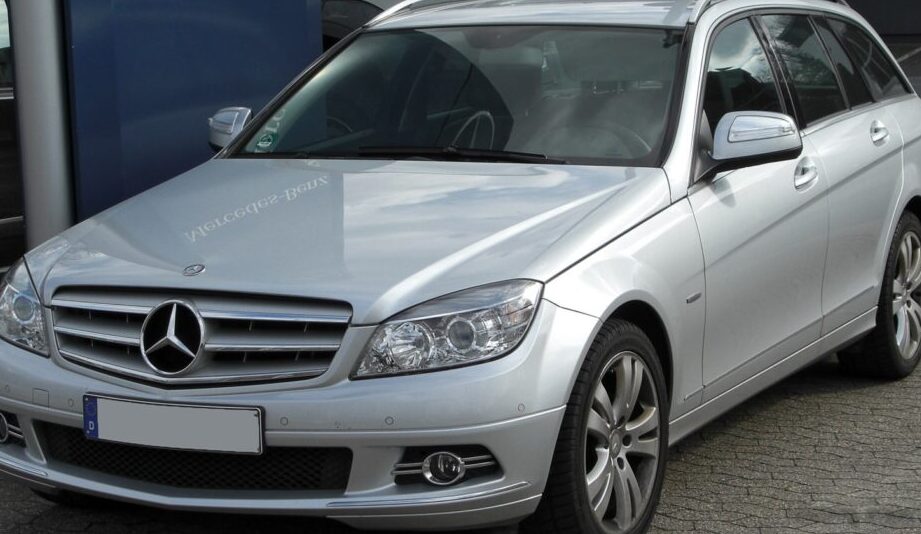
The Mercedes-Benz C-Class T-modell (S204) C 320 CDI V6 with the 7G-TRONIC automatic transmission was produced from 2007 to 2009. This variant represented a high-performance diesel option within the S204 estate (wagon) range, positioned above the C 220 CDI and C 250 CDI models, but below the more potent C 350 and C 63 AMG variants. It offered a blend of practicality, luxury, and strong performance, appealing to buyers seeking a refined and capable touring vehicle. The S204 generation C-Class T-modell aimed to compete with premium estate cars like the BMW 3 Series Touring and Audi A4 Avant.
Technical Specifications
| Brand | Mercedes-Benz |
| Model | C-Class |
| Generation | C-Class T-modell (S204) |
| Type (Engine) | C 320 CDI V6 (224 Hp) 7G-TRONIC |
| Start of production | 2007 |
| End of production | 2009 |
| Powertrain Architecture | Internal Combustion engine |
| Body type | Station wagon (estate) |
| Seats | 5 |
| Doors | 5 |
| Fuel consumption (urban) | 10.2-10.5 l/100 km (23.1 – 22.4 US mpg) |
| Fuel consumption (extra urban) | 6.2-6.5 l/100 km (37.9 – 36.2 US mpg) |
| Fuel consumption (combined) | 7.5-7.8 l/100 km (31.4 – 30.2 US mpg) |
| CO2 emissions | 199-209 g/km |
| Fuel Type | Diesel |
| Acceleration 0 – 100 km/h | 7.1 sec |
| Acceleration 0 – 60 mph | 6.7 sec |
| Maximum speed | 244 km/h (151.61 mph) |
| Emission standard | Euro 4 |
| Weight-to-power ratio | 7.5 kg/Hp |
| Weight-to-torque ratio | 3.3 kg/Nm |
| Power | 224 Hp @ 3800 rpm |
| Torque | 510 Nm @ 1600-2800 rpm (376.16 lb.-ft.) |
| Engine layout | Front, Longitudinal |
| Engine Model/Code | OM 642.960 |
| Engine displacement | 2987 cm3 (182.28 cu. in.) |
| Number of cylinders | 6 |
| Engine configuration | V-engine |
| Cylinder Bore | 83 mm (3.27 in.) |
| Piston Stroke | 92 mm (3.62 in.) |
| Compression ratio | 17.7:1 |
| Number of valves per cylinder | 4 |
| Fuel injection system | Diesel Commonrail |
| Engine aspiration | Turbocharger, Intercooler |
| Valvetrain | DOHC |
| Engine oil capacity | 8 l (8.45 US qt | 7.04 UK qt) |
| Kerb Weight | 1675 kg (3692.74 lbs.) |
| Max. weight | 2280 kg (5026.54 lbs.) |
| Max load | 605 kg (1333.8 lbs.) |
| Trunk (boot) space – minimum | 485 l (17.13 cu. ft.) |
| Trunk (boot) space – maximum | 1500 l (52.97 cu. ft.) |
| Fuel tank capacity | 66 l (17.44 US gal | 14.52 UK gal) |
| Permitted trailer load with brakes (12%) | 1800 kg (3968.32 lbs.) |
| Permitted trailer load without brakes | 750 kg (1653.47 lbs.) |
| Length | 4596 mm (180.94 in.) |
| Width | 1770 mm (69.69 in.) |
| Width including mirrors | 2020 mm (79.53 in.) |
| Height | 1459 mm (57.44 in.) |
| Wheelbase | 2760 mm (108.66 in.) |
| Front track | 1541 mm (60.67 in.) |
| Rear track | 1544 mm (60.79 in.) |
| Front overhang | 765 mm (30.12 in.) |
| Rear overhang | 1071 mm (42.17 in.) |
| Minimum turning circle | 10.84 m (35.56 ft.) |
| Drivetrain Architecture | Rear wheel drive |
| Number of gears | 7 |
| Gearbox type | Automatic transmission G-TRONIC |
| Front suspension | Independent type McPherson, Transverse stabilizer |
| Rear suspension | Independent multi-link suspension, Transverse stabilizer |
| Front brakes | Ventilated discs |
| Rear brakes | Disc |
| Assisting systems | ABS (Anti-lock braking system) |
| Steering type | Steering rack and pinion |
| Power steering | Hydraulic Steering |
| Tires size | 225/45 R17 |
| Wheel rims size | 7.5J x 17 |
INTRODUCTION
The Mercedes-Benz C 320 CDI T-modell, part of the S204 series produced between 2007 and 2009, was a station wagon designed to offer a premium experience with a focus on diesel efficiency and performance. Built on the W204 platform, the T-modell (Touring model) variant provided increased cargo capacity compared to the sedan, making it a practical choice for families and those requiring versatile space. The C 320 CDI specifically targeted buyers who desired a powerful and refined diesel engine, offering a compelling alternative to gasoline-powered options. It sat within a range that included smaller displacement diesels and more powerful gasoline engines, offering a balance between economy and performance.
Powertrain & Engine Architecture
At the heart of the C 320 CDI T-modell lies the OM 642.960 3.0-liter V6 diesel engine. This engine is a robust and technologically advanced unit, featuring a common rail direct injection system capable of delivering high injection pressures for optimized combustion. The engine utilizes a variable geometry turbocharger (VGT) and an intercooler to enhance power and torque output. The V6 configuration provides inherent smoothness and refinement compared to inline engines. The 7G-TRONIC automatic transmission, a seven-speed unit, was standard. This transmission is known for its smooth and quick shifts, contributing to both performance and fuel efficiency. It features a torque converter lock-up clutch that engages at higher speeds to reduce slippage and improve fuel economy. The transmission also offers a manual shift mode for greater driver control.
Driving Characteristics
The C 320 CDI T-modell delivered a strong and usable powerband. The 510 Nm (376 lb-ft) of torque, available from 1600-2800 rpm, provided excellent acceleration and effortless cruising. The 7.1-second 0-60 mph time was respectable for a wagon of its size and weight. The 7G-TRONIC transmission was well-matched to the engine, providing smooth and timely gear changes. Compared to the C 220 CDI, the C 320 CDI offered significantly more power and torque, resulting in a more responsive and engaging driving experience. While not as sporty as the C 350 or C 63 AMG, the C 320 CDI provided a comfortable and confident ride, making it well-suited for long-distance journeys. The rear-wheel-drive configuration contributed to balanced handling, although it could be less forgiving in slippery conditions compared to all-wheel-drive alternatives.
Equipment & Trim Levels
The C 320 CDI T-modell typically came well-equipped as standard. Features included automatic climate control, power windows and mirrors, a multi-function steering wheel, and a high-quality audio system. Upholstery was typically a combination of fabric and leatherette, with full leather options available as an upgrade. Optional extras included a sunroof, navigation system, premium sound system, parking sensors, and bi-xenon headlights. The interior design was typical of Mercedes-Benz, emphasizing luxury and refinement with high-quality materials and a well-laid-out dashboard. Trim levels could vary slightly depending on the market, but generally, the C 320 CDI represented a mid-to-high level of specification within the S204 range.
Chassis & Braking
The S204 C-Class T-modell featured an independent suspension system at all four wheels. The front suspension utilized a McPherson strut design, while the rear employed a multi-link setup. This configuration provided a good balance between ride comfort and handling. Stabilizer bars were fitted to both the front and rear axles to reduce body roll during cornering. The braking system consisted of ventilated discs at the front and solid discs at the rear. Anti-lock braking system (ABS) was standard, along with electronic brakeforce distribution (EBD). The steering was a rack-and-pinion system with hydraulic power assistance, providing precise and responsive steering feel.
Market Reception & Comparison
The C 320 CDI T-modell was generally well-received by automotive critics. It was praised for its powerful and efficient diesel engine, comfortable ride, and spacious interior. However, some critics noted that the rear-wheel-drive configuration could be a disadvantage in inclement weather. Compared to the C 220 CDI, the C 320 CDI offered a significant performance upgrade, but at a higher price point. Fuel economy was comparable between the two models, making the C 320 CDI a compelling option for those prioritizing performance. Against competitors like the BMW 3 Series Touring and Audi A4 Avant, the C 320 CDI offered a similar level of luxury and refinement, with the Mercedes-Benz diesel engine being a key differentiator.
Legacy
The OM 642 engine family, including the OM 642.960 found in the C 320 CDI, is known for its durability and reliability. With proper maintenance, these engines can accumulate high mileage without major issues. The 7G-TRONIC transmission is also generally reliable, although some units may require servicing over time. Today, the C 320 CDI T-modell represents a well-rounded and capable used car option. Its combination of practicality, luxury, and fuel efficiency continues to appeal to buyers seeking a premium estate car. However, potential buyers should be aware of the age-related maintenance requirements associated with any vehicle of this vintage, including checking for signs of wear in the suspension components and ensuring the diesel particulate filter is functioning correctly.