
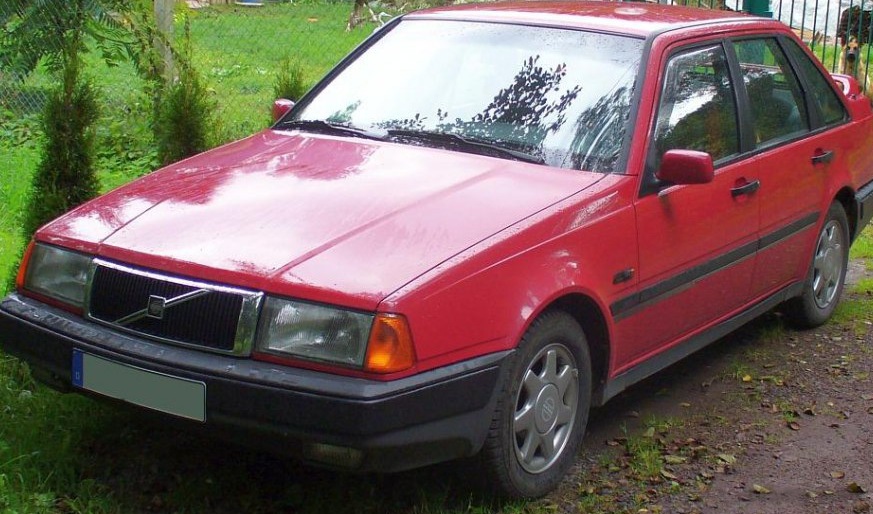
The Volvo 440 K, and its closely related variant the 445, represented Volvo’s foray into the compact hatchback segment. Produced between 1987 and 1993, these models were a departure from Volvo’s traditionally larger, more conservative offerings. The 1.7-liter, 87 horsepower version, often paired with a four-speed automatic transmission, served as the entry point into the 440/445 range. This variant aimed to provide affordable, practical transportation with the inherent safety reputation Volvo had cultivated. It was built on Volvo’s new front-wheel-drive platform, a significant shift for the company, and shared many components with the Renault 21, a result of the collaboration between the two manufacturers.
Technical Specifications
| Brand | Volvo |
| Model | 440 K |
| Generation | 440 K (445) |
| Type (Engine) | 1.7 (87 Hp) |
| Start of production | 1987 |
| End of production | 1993 |
| Powertrain Architecture | Internal Combustion engine |
| Body type | Hatchback |
| Seats | 5 |
| Doors | 5 |
| Fuel consumption (urban) | 9.4 l/100 km (25 US mpg) |
| Fuel consumption (extra urban) | 5.1 l/100 km (46.1 US mpg) |
| Fuel consumption (combined) | 6.8 l/100 km (34.6 US mpg) |
| Fuel Type | Petrol (Gasoline) |
| Acceleration 0 – 100 km/h | 11.5 sec |
| Acceleration 0 – 62 mph | 11.5 sec |
| Acceleration 0 – 60 mph | 10.9 sec |
| Maximum speed | 175 km/h (108.74 mph) |
| Weight-to-power ratio | 11.3 kg/Hp |
| Weight-to-torque ratio | 7.5 kg/Nm |
| Power | 87 Hp @ 5700 rpm |
| Torque | 130 Nm @ 3600 rpm (95.88 lb.-ft. @ 3600 rpm) |
| Engine layout | Front, Transverse |
| Engine Model/Code | B18KP |
| Engine displacement | 1721 cm3 (105.02 cu. in.) |
| Number of cylinders | 4 |
| Engine configuration | Inline |
| Cylinder Bore | 81 mm (3.19 in.) |
| Piston Stroke | 83.5 mm (3.29 in.) |
| Compression ratio | 9.5:1 |
| Number of valves per cylinder | 2 |
| Fuel injection system | Multi-port manifold injection |
| Engine aspiration | Naturally aspirated engine |
| Valvetrain | OHC |
| Engine oil capacity | 5.3 l (5.6 US qt | 4.66 UK qt) |
| Coolant capacity | 7 l (7.4 US qt | 6.16 UK qt) |
| Kerb Weight | 980 kg (2160.53 lbs.) |
| Max. weight | 1570 kg (3461.26 lbs.) |
| Max load | 590 kg (1300.73 lbs.) |
| Trunk (boot) space – minimum | 330 l (11.65 cu. ft.) |
| Trunk (boot) space – maximum | 1028 l (36.3 cu. ft.) |
| Fuel tank capacity | 60 l (15.85 US gal | 13.2 UK gal) |
| Length | 4345 mm (171.06 in.) |
| Width | 1686 mm (66.38 in.) |
| Height | 1378 mm (54.25 in.) |
| Wheelbase | 2503 mm (98.54 in.) |
| Front track | 1416 mm (55.75 in.) |
| Rear track | 1425 mm (56.1 in.) |
| Drivetrain Architecture | Front wheel drive |
| Number of gears | 5 |
| Gearbox type | Manual transmission |
Introduction
The Volvo 440 K (and the station wagon variant, the 445) was introduced as Volvo’s answer to the growing demand for smaller, more fuel-efficient vehicles in the late 1980s. It represented a significant departure for the Swedish automaker, moving away from its traditional rear-wheel-drive layout to a front-wheel-drive configuration. The 1.7-liter engine, producing 87 horsepower, was the base engine option, and when coupled with the available four-speed automatic transmission, it positioned the 440 K as an affordable and practical family car. Production spanned from 1987 to 1993, and the model was primarily aimed at the European market, though limited numbers were imported to the United States.
Powertrain & Engine Architecture
The heart of the 440 K 1.7 was the B18KP engine, a naturally aspirated, inline-four cylinder unit displacing 1721cc. This engine featured a single overhead camshaft (OHC) design and utilized multi-port fuel injection. The B18KP was a relatively simple engine, designed for reliability and fuel economy rather than outright performance. The four-speed automatic transmission, while providing convenience, was not known for its responsiveness. It was a three-speed unit with an overdrive fourth gear, designed to improve highway fuel efficiency. The transmission’s gear ratios were geared towards economy, resulting in somewhat sluggish acceleration. The engine code ‘KP’ denotes a specific calibration for the automatic transmission, differing from manual transmission variants.
Driving Characteristics
The 1.7-liter automatic 440 K offered a comfortable, if uninspiring, driving experience. Acceleration was modest, taking around 11.5 seconds to reach 60 mph. The automatic transmission contributed to this, with noticeable delays in downshifting and a tendency to hunt for gears on inclines. Compared to the five-speed manual version, the automatic felt noticeably slower. The suspension, tuned for comfort, provided a relatively smooth ride, but handling was not particularly sharp. Steering was light and easy, making it well-suited for city driving. The focus was clearly on providing a practical and easy-to-drive vehicle, rather than a sporty one.
Equipment & Trim Levels
The base 440 K 1.7 typically came with a fairly basic level of equipment. Standard features included power steering, front disc brakes, and a relatively simple interior with cloth upholstery. Optional extras included power windows, central locking, and a sunroof. Higher trim levels, such as the SE, added features like alloy wheels, upgraded interior trim, and a more comprehensive stereo system. The dashboard layout was functional and straightforward, with clearly marked gauges and easy-to-use controls. Interior space was good for a car of its size, offering comfortable seating for five adults.
Chassis & Braking
The 440 K utilized a MacPherson strut front suspension and a coil-sprung rear suspension. The front suspension incorporated a stabilizer bar to reduce body roll. Braking was provided by disc brakes on the front wheels and drum brakes on the rear. ABS (Anti-lock Braking System) was available as an option, enhancing safety. The chassis was designed to provide a balance between comfort and handling, prioritizing ride quality over sporty dynamics. The relatively lightweight construction of the 440 K helped to offset the modest power output of the 1.7-liter engine.
Market Reception & Comparison
The 440 K 1.7 automatic received mixed reviews. Critics generally praised its safety features and practicality, but criticized its lack of performance and the somewhat dated feel of the interior. Compared to other cars in its class, such as the Ford Escort or Opel Astra, the 440 K offered a more robust build quality and a stronger emphasis on safety. However, it was generally more expensive and less engaging to drive. Fuel economy was respectable for the time, but not class-leading. The automatic transmission was often cited as a weak point, detracting from the overall driving experience.
Legacy
The Volvo 440/445, while not a sales blockbuster, played an important role in Volvo’s history. It was the first Volvo to utilize a front-wheel-drive platform, paving the way for future models. The B18KP engine, while not particularly powerful, proved to be a reliable and durable unit. Today, the 440 K 1.7 automatic is a relatively rare sight on the roads. Well-maintained examples are sought after by Volvo enthusiasts and classic car collectors. The powertrain is generally considered to be reliable, but age-related issues, such as corrosion and worn suspension components, are common. Parts availability can be a challenge, but a dedicated community of Volvo enthusiasts helps to keep these cars on the road.
