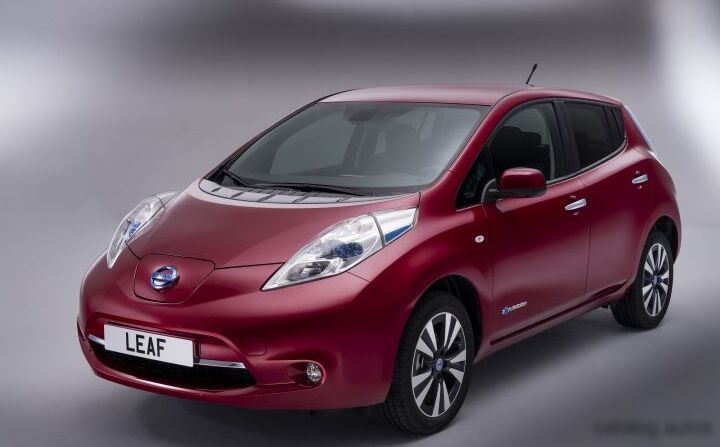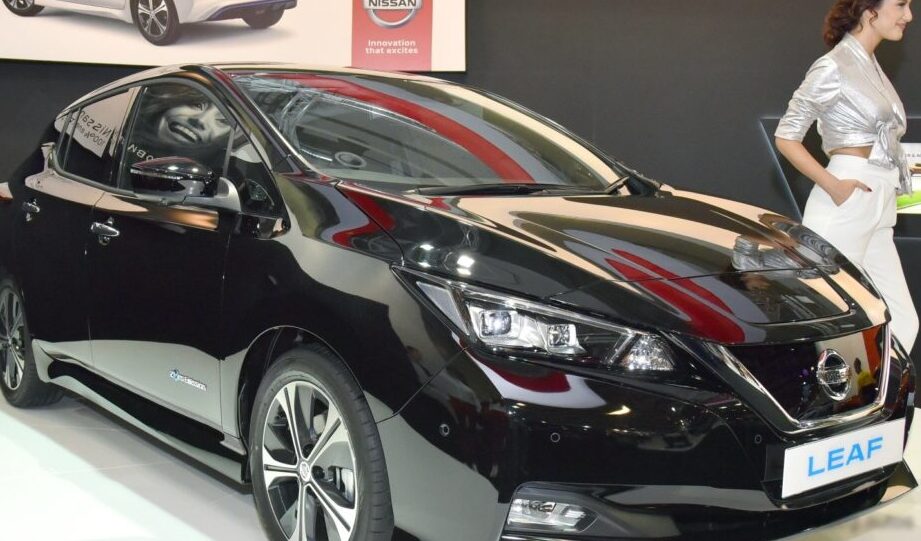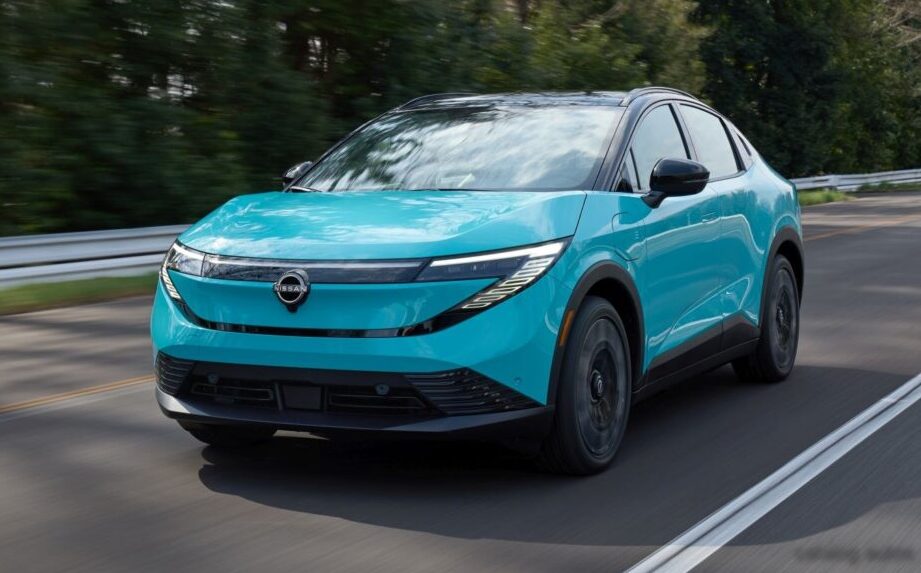
The Nissan Leaf III (ZE2) 52 kWh, producing 177 horsepower, represents the latest iteration of Nissan’s all-electric hatchback, launched in June 2025. Positioned as a mid-range offering within the ZE2 generation, it builds upon the success of its predecessors, aiming to provide a compelling balance of range, performance, and affordability in the increasingly competitive electric vehicle market. The ZE2 Leaf continues to utilize a dedicated electric vehicle platform, offering a practical and spacious interior within a compact footprint, categorized as a coupe-crossover body style. It is a key model in Nissan’s commitment to electrification and a significant player in the global EV landscape.
Technical Specifications
| Brand | Nissan |
| Model | Leaf |
| Generation | Leaf III (ZE2) |
| Type (Engine) | 52 kWh (177 Hp) |
| Start of production | June, 2025 |
| Powertrain Architecture | BEV (Electric Vehicle) |
| Body type | Coupe, Crossover |
| Seats | 5 |
| Doors | 5 |
| Fuel Type | Electricity |
| Maximum speed | 160 km/h (99.42 mph) |
| Weight-to-power ratio | 10.1 kg/Hp, 98.7 Hp/tonne |
| Weight-to-torque ratio | 5.2 kg/Nm, 191.8 Nm/tonne |
| Gross battery capacity | 52 kWh |
| Battery technology | Lithium-ion (Li-Ion) |
| Battery location | Below the floor |
| Electric motor power | 177 Hp |
| Electric motor Torque | 344 Nm (253.72 lb.-ft.) |
| Electric motor location | Front axle, Transverse |
| Electric motor type | Synchronous |
| System power | 177 Hp |
| System torque | 344 Nm (253.72 lb.-ft.) |
| Kerb Weight | 1794 kg (3955.09 lbs.) |
| Trunk (boot) space – minimum | 566 l (19.99 cu. ft.) |
| Trunk (boot) space – maximum | 1572 l (55.51 cu. ft.) |
| Length | 4404 mm (173.39 in.) |
| Width | 1811 mm (71.3 in.) |
| Width including mirrors | 2098 mm (82.6 in.) |
| Height | 1557 mm (61.3 in.) |
| Wheelbase | 2690 mm (105.91 in.) |
| Front track | 1585 mm (62.4 in.) |
| Rear (Back) track | 1577 mm (62.09 in.) |
| Ride height (ground clearance) | 135 mm (5.31 in.) |
| Drag coefficient (Cd) | 0.26 |
| Minimum turning circle (turning diameter) | 10.8 m (35.43 ft.) |
| Approach angle | 18° |
| Departure angle | 23.7° |
| Drivetrain Architecture | One electric motor drives the front wheels. |
| Drive wheel | Front wheel drive |
| Number of gears and type of gearbox | 1 gears, automatic transmission |
| Front suspension | Independent type McPherson |
| Rear suspension | Independent multi-link suspension |
| Assisting systems | ABS (Anti-lock braking system) |
| Steering type | Steering rack and pinion |
| Power steering | Electric Steering |
| Tires size | 215/55 R18 |
| Wheel rims size | 18 |
Powertrain & Engine Architecture
The Nissan Leaf III ZE2 52 kWh utilizes a front-wheel-drive, all-electric powertrain. The heart of the system is a synchronous electric motor, transversely mounted at the front axle, delivering 177 horsepower and 344 Nm (253.72 lb.-ft.) of torque. Power is drawn from a 52 kWh lithium-ion battery pack located under the vehicle floor, contributing to a low center of gravity and improved handling. The single-speed automatic transmission provides seamless acceleration, characteristic of electric vehicles. Nissan employs a sophisticated battery thermal management system to maintain optimal battery temperature for both performance and longevity. The onboard charger allows for AC charging, while DC fast charging capability enables rapid replenishment of the battery at compatible charging stations.
Driving Characteristics
The 177 hp and 344 Nm of instant torque provide brisk acceleration, making the Leaf III 52 kWh suitable for both city driving and highway cruising. While not as performance-oriented as some higher-output EVs, the 52 kWh variant offers a responsive and enjoyable driving experience. The single-speed automatic transmission ensures smooth and linear power delivery. Compared to earlier Leaf models, the ZE2 benefits from improved suspension tuning, resulting in a more comfortable and controlled ride. The relatively low center of gravity, thanks to the underfloor battery pack, contributes to stable handling. The regenerative braking system allows for one-pedal driving in certain conditions, enhancing efficiency and convenience.
Equipment & Trim Levels
The 52 kWh Leaf typically comes standard with features such as Nissan’s ProPILOT Assist driver-assistance system, an 8-inch touchscreen infotainment system with Apple CarPlay and Android Auto compatibility, automatic climate control, and a suite of safety features including automatic emergency braking and lane departure warning. Interior upholstery is typically cloth, with options for upgraded synthetic leather. Higher trim levels may include features like a larger touchscreen display, a premium audio system, heated front seats, and a panoramic sunroof. Exterior features generally include LED headlights and taillights, and alloy wheels.
Chassis & Braking
The Leaf III utilizes an independent McPherson strut suspension at the front and an independent multi-link suspension at the rear, providing a comfortable and controlled ride. The front brakes are typically ventilated discs, while the rear brakes are drums on the base model, with discs available on higher trims. Electric power steering provides light and precise steering feel. ABS (Anti-lock Braking System) is standard, along with electronic brake-force distribution and brake assist. The vehicle’s relatively low weight, due to the absence of a combustion engine, contributes to efficient braking performance.
Market Reception & Comparison
The Nissan Leaf III 52 kWh has been generally well-received by automotive critics, praised for its practicality, comfortable ride, and competitive range. Compared to the longer-range 62 kWh Leaf variant, the 52 kWh model offers a more affordable entry point into the EV market, albeit with a reduced driving range. Against competitors like the Chevrolet Bolt EV and Hyundai Kona Electric, the Leaf stands out with its spacious interior and available ProPILOT Assist technology. Fuel economy, expressed as MPGe (miles per gallon equivalent), is competitive within its class. Reliability has been generally good, with Nissan addressing some of the battery degradation concerns that plagued earlier Leaf models.
Legacy
The Nissan Leaf, since its introduction, has been a pioneering force in the electric vehicle market. The ZE2 52 kWh variant continues this legacy by offering a practical and affordable EV option for a wider range of consumers. While battery technology continues to evolve, the Leaf’s powertrain has proven to be relatively reliable, and the vehicle maintains a strong presence in the used car market. The ZE2’s improvements in battery thermal management and overall efficiency contribute to its long-term durability and appeal. As the automotive industry transitions towards electrification, the Nissan Leaf remains a significant and influential model.