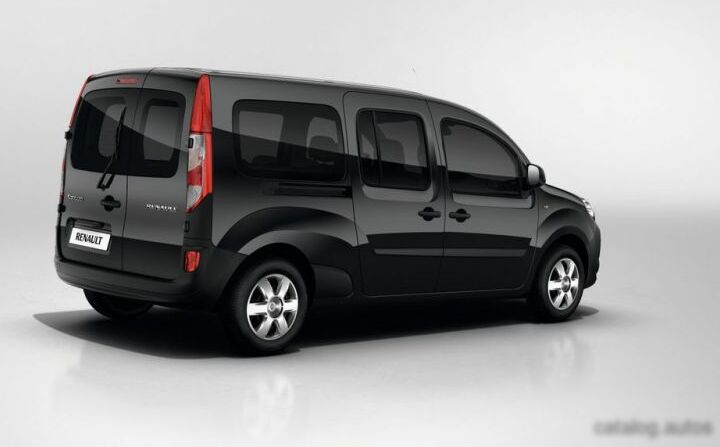
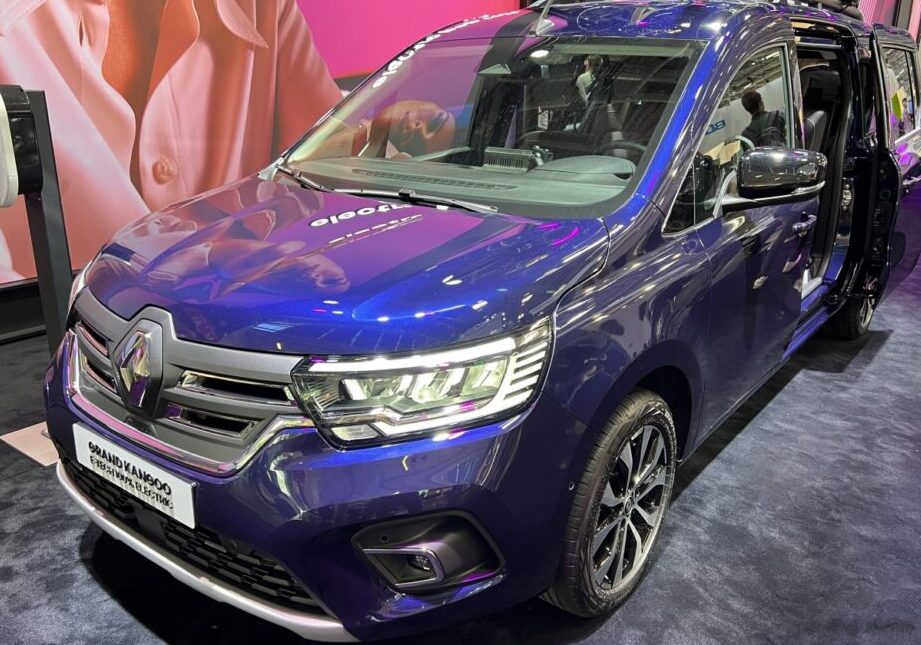
The Renault Grand Kangoo II 1.5 dCi 90 hp variant, produced from 2012 to 2013, represented an entry-level offering within the second generation of Renault’s popular Kangoo line of compact MPVs. Positioned as a practical and economical choice, this version catered to buyers prioritizing fuel efficiency and space over outright performance. It was a key model in European markets, where compact vans and MPVs are highly sought after for their versatility and suitability for both commercial and family use. The Grand Kangoo II, built on the X0/B9 platform, offered a larger seven-seat configuration compared to the standard Kangoo, making it a popular choice for larger families or those requiring flexible cargo space.
Technical Specifications
| Brand | Renault |
| Model | Kangoo |
| Generation | Grand Kangoo II |
| Type (Engine) | 1.5 dCi (90 Hp) |
| Start of production | 2012 |
| End of production | 2013 |
| Powertrain Architecture | Internal Combustion engine |
| Body type | Minivan |
| Seats | 7 |
| Doors | 5 |
| Fuel consumption (urban) | 5.6 l/100 km (42 US mpg, 50.4 UK mpg, 17.9 km/l) |
| Fuel consumption (extra urban) | 4.8 l/100 km (49 US mpg, 58.9 UK mpg, 20.8 km/l) |
| Fuel consumption (combined) | 5.1 l/100 km (46.1 US mpg, 55.4 UK mpg, 19.6 km/l) |
| CO2 emissions | 135 g/km |
| Fuel Type | Diesel |
| Acceleration 0 – 100 km/h | 15 sec |
| Acceleration 0 – 62 mph | 15 sec |
| Acceleration 0 – 60 mph | 14.3 sec |
| Maximum speed | 160 km/h (99.42 mph) |
| Emission standard | Euro 5 |
| Weight-to-power ratio | 15.9 kg/Hp, 62.9 Hp/tonne |
| Weight-to-torque ratio | 7.2 kg/Nm, 139.9 Nm/tonne |
| Power | 90 Hp @ 4000 rpm |
| Power per litre | 61.6 Hp/l |
| Torque | 200 Nm @ 1750 rpm (147.51 lb.-ft. @ 1750 rpm) |
| Engine layout | Front, Transverse |
| Engine Model/Code | K9K |
| Engine displacement | 1461 cm3 (89.16 cu. in.) |
| Number of cylinders | 4 |
| Engine configuration | Inline |
| Number of valves per cylinder | 2 |
| Fuel injection system | Diesel Commonrail |
| Engine aspiration | Turbocharger, Intercooler |
| Engine oil capacity | 4.5 l (4.76 US qt | 3.96 UK qt) |
| Coolant capacity | 7.2 l (7.61 US qt | 6.34 UK qt) |
| Kerb Weight | 1430 kg (3152.61 lbs) |
| Max. weight | 2175 kg (4795.05 lbs) |
| Max load | 745 kg (1642.44 lbs) |
| Trunk (boot) space – minimum | 300 l (10.59 cu. ft) |
| Fuel tank capacity | 60 l (15.85 US gal | 13.2 UK gal) |
| Permitted trailer load with brakes (12%) | 1050 kg (2314.85 lbs) |
| Permitted trailer load without brakes | 715 kg (1576.31 lbs) |
| Length | 4597 mm (180.98 in) |
| Width | 1829 mm (72.01 in) |
| Width including mirrors | 2133 mm (83.98 in) |
| Height | 1802 mm (70.94 in) |
| Wheelbase | 3081 mm (121.3 in) |
| Front track | 1521 mm (59.88 in) |
| Rear track | 1533 mm (60.35 in) |
| Front overhang | 807 mm (31.77 in) |
| Rear overhang | 709 mm (27.91 in) |
| Ride height (ground clearance) | 177-142 mm (6.97 – 5.59 in) |
| Minimum turning circle | 11.9 m (39.04 ft) |
| Drivetrain Architecture | Front wheel drive |
| Number of gears | 5 |
| Gearbox type | Manual transmission |
| Front suspension | Independent type McPherson |
| Rear suspension | Torsion |
| Front brakes | Ventilated discs |
| Rear brakes | Disc |
| Assisting systems | ABS (Anti-lock braking system) |
| Steering type | Steering rack and pinion |
| Tires size | 195/65 R15 95T |
| Wheel rims size | 15 |
Powertrain & Engine Architecture
The heart of the Grand Kangoo II 1.5 dCi 90 hp is the K9K engine, a member of Renault’s widely used family of small-displacement diesel engines. This 1461cc inline-four cylinder engine utilizes a single overhead camshaft (SOHC) design with two valves per cylinder. The engine employs a turbocharger with an intercooler to boost power and efficiency. Crucially, it features a Diesel Commonrail direct injection system, which delivers fuel directly into the combustion chamber at very high pressure, improving combustion efficiency and reducing emissions. The 90 horsepower output is achieved at 4000 rpm, while peak torque of 200 Nm (147.51 lb-ft) is available from 1750 rpm. This configuration prioritizes low-end torque, making it suitable for hauling loads and navigating urban environments. The engine is transversely mounted at the front of the vehicle. The five-speed manual transmission was the standard offering for this variant, chosen for its simplicity and fuel efficiency.
Driving Characteristics
The 1.5 dCi 90 hp Grand Kangoo II offered a practical, if not particularly exhilarating, driving experience. Acceleration was modest, taking around 15 seconds to reach 62 mph (100 km/h). The focus was on usability and fuel economy rather than outright speed. The engine’s strong low-end torque made it feel responsive in everyday driving situations, particularly when loaded with passengers or cargo. The five-speed gearbox was well-matched to the engine’s characteristics, providing adequate spacing between gears. Compared to higher-powered versions of the Kangoo, such as those with the 1.5 dCi 110 hp engine, the 90 hp variant felt noticeably slower, especially when climbing hills or overtaking. However, this trade-off was accepted by buyers seeking the most affordable and fuel-efficient option.
Equipment & Trim Levels
The Grand Kangoo II 1.5 dCi 90 hp typically came with a reasonable level of standard equipment, focusing on practicality and functionality. Standard features generally included power steering, central locking, electric front windows, and an adjustable steering column. Interior upholstery was typically cloth, with a durable and easy-to-clean finish. Optional extras included air conditioning, a CD player with radio, rear parking sensors, and alloy wheels. Trim levels varied slightly depending on the market, but the 90 hp version generally represented the entry point to the Grand Kangoo II range. Safety features included ABS brakes and driver and passenger airbags.
Chassis & Braking
The Grand Kangoo II utilized a McPherson strut independent suspension system at the front, providing a comfortable ride and decent handling. The rear suspension employed a torsion beam setup, which was cost-effective and space-efficient. Braking was handled by ventilated discs at the front and solid discs at the rear. ABS (Anti-lock Braking System) was standard, enhancing safety during emergency braking. The vehicle’s relatively high center of gravity and soft suspension tuning meant that it wasn’t particularly sporty to drive, but it provided a stable and predictable ride, even when fully loaded.
Market Reception & Comparison
The Renault Grand Kangoo II 1.5 dCi 90 hp was well-received in European markets as a practical and affordable MPV. Critics praised its spacious interior, fuel efficiency, and versatility. However, some reviewers noted its modest performance and relatively basic interior trim. Compared to other compact MPVs and vans in its class, such as the Citroën Berlingo and Peugeot Partner, the Kangoo offered a competitive combination of features and price. The 90 hp diesel engine provided a good balance between fuel economy and usability, making it a popular choice for families and small businesses.
Legacy
The K9K engine, found in the Grand Kangoo II 1.5 dCi 90 hp, has proven to be a relatively reliable and durable powertrain. While not without its potential issues (such as turbocharger wear and injector problems), it is generally considered a robust engine when properly maintained. Today, used examples of this variant are readily available and represent a cost-effective option for buyers seeking a practical and economical MPV. Its fuel efficiency and spacious interior continue to make it a viable choice for families and those needing a versatile vehicle for both work and leisure. The Grand Kangoo II, in general, remains a popular choice in the used car market due to its reputation for practicality and affordability.