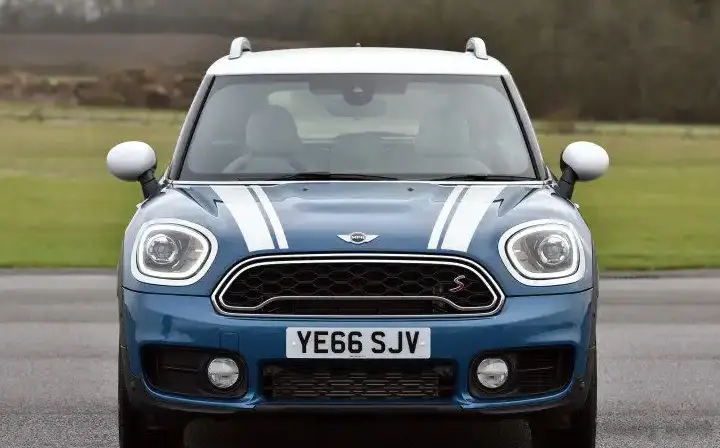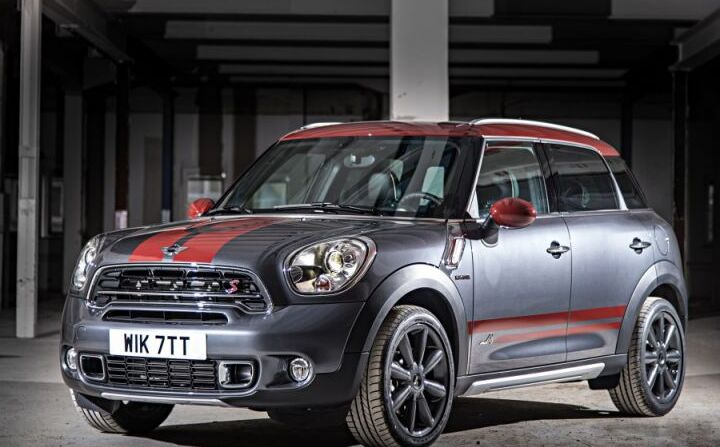
The Mini Countryman One D 1.6 (90 hp) was a diesel-powered variant of the R60 Countryman, produced from 2014 to 2016 following the model’s facelift. Positioned as the entry-level engine option in many European markets, it aimed to provide a balance of fuel efficiency and practicality within the expanding Mini lineup. The R60 Countryman represented Mini’s first foray into the compact SUV segment, built on the BMW UKL1 platform, also underpinning the BMW X1 (F48). This particular 1.6-liter diesel variant was primarily targeted at buyers seeking lower running costs and a more economical option compared to the petrol-powered Countryman models or the more powerful diesel variants.
Technical Specifications
| Brand | Mini |
| Model | Countryman |
| Generation | Countryman (R60, facelift 2014) |
| Type (Engine) | One D 1.6 (90 Hp) |
| Start of production | 2014 |
| End of production | 2016 |
| Powertrain Architecture | Internal Combustion engine |
| Body type | SUV |
| Seats | 4-5 |
| Doors | 5 |
| Fuel consumption (urban) | 4.7 l/100 km (50 US mpg, 60.1 UK mpg, 21.3 km/l) |
| Fuel consumption (extra urban) | 3.9 l/100 km (60.3 US mpg, 72.4 UK mpg, 25.6 km/l) |
| Fuel consumption (combined) | 4.2 l/100 km (56 US mpg, 67.3 UK mpg, 23.8 km/l) |
| CO2 emissions | 111 g/km |
| Fuel Type | Diesel |
| Acceleration 0 – 100 km/h | 12.9 sec |
| Acceleration 0 – 62 mph | 12.9 sec |
| Acceleration 0 – 60 mph | 12.3 sec |
| Maximum speed | 171 km/h (106.25 mph) |
| Emission standard | Euro 6 |
| Weight-to-power ratio | 14.6 kg/Hp, 68.7 Hp/tonne |
| Weight-to-torque ratio | 6.1 kg/Nm, 164.1 Nm/tonne |
| Power | 90 Hp @ 4000 rpm |
| Power per litre | 56.3 Hp/l |
| Torque | 215 Nm @ 1750-2500 rpm (158.58 lb.-ft. @ 1750-2500 rpm) |
| Engine layout | Front, Transverse |
| Engine displacement | 1598 cm3 (97.52 cu. in.) |
| Number of cylinders | 4 |
| Engine configuration | Inline |
| Cylinder Bore | 78 mm (3.07 in.) |
| Piston Stroke | 83.6 mm (3.29 in.) |
| Compression ratio | 16.5:1 |
| Number of valves per cylinder | 4 |
| Fuel injection system | Diesel Commonrail |
| Engine aspiration | Turbocharger, Intercooler |
| Engine oil capacity | 5.2 l (5.49 US qt | 4.58 UK qt) |
| Coolant capacity | 5.4 l (5.71 US qt | 4.75 UK qt) |
| Kerb Weight | 1310 kg (2888.06 lbs.) |
| Max. weight | 1820 kg (4012.41 lbs.) |
| Max load | 510 kg (1124.36 lbs.) |
| Trunk (boot) space – minimum | 350 l (12.36 cu. ft.) |
| Trunk (boot) space – maximum | 1170 l (41.32 cu. ft.) |
| Fuel tank capacity | 47 l (12.42 US gal | 10.34 UK gal) |
| Max. roof load | 75 kg (165.35 lbs.) |
| Length | 4097 mm (161.3 in.) |
| Width | 1789 mm (70.43 in.) |
| Height | 1561 mm (61.46 in.) |
| Wheelbase | 2595 mm (102.17 in.) |
| Front track | 1534 mm (60.39 in.) |
| Rear (Back) track | 1559 mm (61.38 in.) |
| Ride height (ground clearance) | 145 mm (5.71 in.) |
| Minimum turning circle | 11.6 m (38.06 ft.) |
| Drivetrain Architecture | Front wheel drive |
| Number of gears | 6 gears, manual transmission |
| Front suspension | Independent, type McPherson with coil spring and anti-roll bar |
| Rear suspension | Independent multi-link suspension |
| Front brakes | Ventilated discs |
| Rear brakes | Disc |
| Assisting systems | ABS (Anti-lock braking system) |
| Steering type | Steering rack and pinion |
| Tires size | 205/60 R16 92H |
| Wheel rims size | 6.5J x 16 |
Powertrain & Engine Architecture
The Countryman One D 1.6 utilized the BMW Group’s 1.6-liter four-cylinder diesel engine, specifically the PSA-derived DV6 engine family. Engine codes commonly found in this application include W16, though variations existed. This engine featured a turbocharger with an intercooler to enhance power output and efficiency. The fuel injection system was a common rail direct injection system, delivering fuel directly into the combustion chamber at high pressure for optimized combustion. The engine employed four valves per cylinder and a single overhead camshaft. The 6-speed manual transmission was standard, providing a relatively long gearing setup to maximize fuel economy. The engine’s design prioritized low-end torque, making it suitable for everyday driving conditions.
Driving Characteristics
With 90 horsepower and 215 Nm (158 lb-ft) of torque, the One D 1.6 Countryman offered modest performance. Acceleration from 0-60 mph took around 12.3 seconds, and top speed was limited to 106 mph. The long gearing of the manual transmission meant that the engine didn’t feel particularly stressed at highway speeds, contributing to good fuel economy. However, overtaking maneuvers required careful planning. Compared to the more powerful Countryman diesel variants (like the Cooper D with 150 hp), the One D felt noticeably slower. The focus was on providing a comfortable and economical driving experience rather than outright performance. The front-wheel-drive configuration contributed to predictable handling, but lacked the all-weather capability of the optional ALL4 all-wheel-drive system.
Equipment & Trim Levels
The One D 1.6 Countryman typically came with a reasonable level of standard equipment. This included air conditioning, power windows, central locking, and a basic audio system. Interior upholstery was typically cloth, with options for partial leather. Standard safety features included ABS, airbags, and stability control. Optional extras included a panoramic sunroof, navigation system, parking sensors, and upgraded audio systems. Trim levels varied by market, but generally followed a tiered structure with increasing levels of luxury and technology as you moved up the range. The One D was often seen as a base model, with many buyers opting to add packages to enhance its features.
Chassis & Braking
The Countryman One D featured independent suspension all around, with McPherson struts at the front and a multi-link setup at the rear. This provided a comfortable ride quality, although it wasn’t particularly sporty. The front brakes were ventilated discs, while the rear brakes were solid discs. The ABS system provided effective stopping power in most conditions. The suspension was tuned to prioritize comfort and stability, rather than aggressive handling. The relatively low weight of the One D compared to other Countryman variants helped to mitigate the effects of the modest engine power.
Market Reception & Comparison
The Mini Countryman One D 1.6 was generally well-received by critics as an economical and practical option within the Countryman range. Its fuel efficiency was a major selling point, and it offered a good balance of space and usability. However, some reviewers criticized its lack of performance, particularly when fully loaded or on uphill gradients. Compared to other compact SUVs in the market, the Countryman One D stood out for its distinctive styling and premium brand image. Against its siblings, the One D offered the lowest price of entry but sacrificed performance. The Cooper D provided a significant power upgrade, while the ALL4 models offered all-wheel-drive capability.
Legacy
The 1.6-liter diesel engine used in the Countryman One D has a generally good reputation for reliability, although like all diesel engines, it’s susceptible to issues related to the diesel particulate filter (DPF) if not properly maintained. Regular servicing and the use of high-quality diesel fuel are essential to ensure long-term reliability. On the used car market, the One D 1.6 Countryman represents an affordable entry point into Mini ownership. Its fuel efficiency and relatively low running costs make it an attractive option for buyers seeking a practical and economical compact SUV. However, potential buyers should be aware of the potential for DPF issues and ensure that the vehicle has been properly maintained.