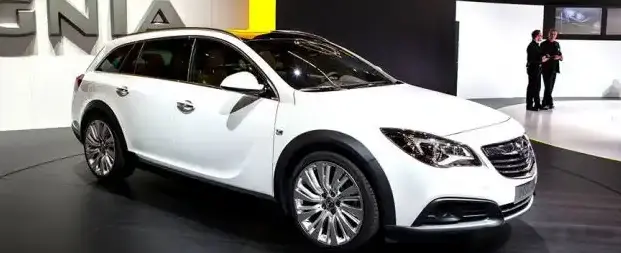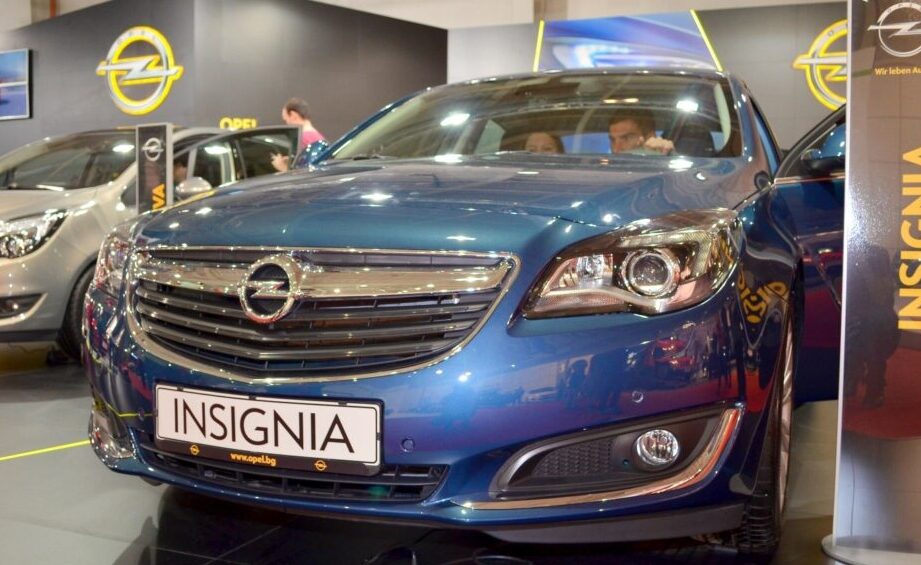
The Opel Insignia Sedan (A, facelift 2013) 2.0 CDTI (140 Hp) Ecotec ecoFLEX start/stop represented a significant offering in the European mid-size sedan market. Introduced in July 2013 and remaining in production until June 2015, this variant aimed to balance fuel efficiency with respectable performance, appealing to drivers seeking a practical and economical family vehicle. It was positioned as a core model within the Insignia range, offering a diesel option for those prioritizing lower running costs compared to the gasoline engines available.
Technical Specifications
| Brand | Opel |
| Model | Insignia |
| Generation | Insignia Sedan (A, facelift 2013) |
| Type (Engine) | 2.0 CDTI (140 Hp) Ecotec ecoFLEX start/stop |
| Start of production | July, 2013 |
| End of production | June, 2015 |
| Powertrain Architecture | Internal Combustion engine |
| Body type | Sedan |
| Seats | 5 |
| Doors | 4 |
| Fuel consumption (urban) | 4.6 l/100 km (51.1 US mpg, 61.4 UK mpg, 21.7 km/l) |
| Fuel consumption (extra urban) | 3.3 l/100 km (71.3 US mpg, 85.6 UK mpg, 30.3 km/l) |
| Fuel consumption (combined) | 3.7 l/100 km (63.6 US mpg, 76.3 UK mpg, 27 km/l) |
| CO2 emissions | 99 g/km |
| Fuel Type | Diesel |
| Acceleration 0 – 100 km/h | 10.5 sec |
| Acceleration 0 – 62 mph | 10.5 sec |
| Acceleration 0 – 60 mph | 10 sec |
| Maximum speed | 205 km/h (127.38 mph) |
| Emission standard | Euro 5 |
| Power | 140 Hp @ 4000 rpm |
| Power per litre | 71.6 Hp/l |
| Torque | 350 Nm @ 1750-2500 rpm (258.15 lb.-ft. @ 1750-2500 rpm) |
| Engine layout | Front, Transverse |
| Engine Model/Code | A20DTE |
| Engine displacement | 1956 cm3 (119.36 cu. in.) |
| Number of cylinders | 4 |
| Engine configuration | Inline |
| Cylinder Bore | 83 mm (3.27 in.) |
| Piston Stroke | 90.4 mm (3.56 in.) |
| Number of valves per cylinder | 4 |
| Fuel injection system | Diesel Commonrail |
| Engine aspiration | Turbocharger, Intercooler |
| Engine oil capacity | 4.5 l (4.76 US qt | 3.96 UK qt) |
| Coolant | 9 l (9.51 US qt | 7.92 UK qt) |
| Engine systems | Start & Stop System, Particulate filter |
| Trunk (boot) space – minimum | 500 l (17.66 cu. ft.) |
| Trunk (boot) space – maximum | 1015 l (35.84 cu. ft.) |
| Fuel tank capacity | 70 l (18.49 US gal | 15.4 UK gal) |
| Length | 4842 mm (190.63 in.) |
| Width | 1856 mm (73.07 in.) |
| Width including mirrors | 2084 mm (82.05 in.) |
| Height | 1498 mm (58.98 in.) |
| Wheelbase | 2737 mm (107.76 in.) |
| Front track | 1587 mm (62.48 in.) |
| Rear (Back) track | 1590 mm (62.6 in.) |
| Minimum turning circle | 11.4 m (37.4 ft.) |
| Drivetrain Architecture | ICE drives front wheels |
| Drive wheel | Front wheel drive |
| Number of gears and type of gearbox | 6 gears, manual transmission |
| Assisting systems | ABS (Anti-lock braking system) |
| Steering type | Steering rack and pinion |
Overview and Market Positioning
The Insignia, launched in 2008, was Opel’s attempt to move upmarket and compete with established players like the Ford Mondeo and Volkswagen Passat. The facelifted version in 2013 brought styling updates and refinements to the engine lineup. The 2.0 CDTI 140 hp variant occupied a crucial middle ground in the Insignia range. Above it sat more powerful diesel options (like the 160 hp and 195 hp versions) and the sporty petrol-powered models. Below it were lower-powered gasoline engines aimed at budget-conscious buyers. This 140 hp diesel was therefore targeted at drivers who wanted a good balance of fuel economy, reasonable performance, and a comfortable driving experience.
Engine and Mechanical Details
The heart of this Insignia variant was the A20DTE 2.0-liter four-cylinder turbocharged diesel engine. This engine was part of Opel’s Ecotec range, known for its focus on efficiency. The 140 horsepower output, achieved at 4000 rpm, was coupled with a healthy 350 Nm (258 lb-ft) of torque available from 1750 to 2500 rpm. This torque band provided good in-gear acceleration, making it suitable for both city driving and longer highway journeys. The engine featured common-rail direct injection and a turbocharger with an intercooler to optimize combustion and boost power. The inclusion of a particulate filter helped to reduce emissions, meeting Euro 5 standards. The standard transmission was a six-speed manual gearbox, contributing to the car’s fuel efficiency. A six-speed automatic transmission was also available as an option, though it slightly impacted fuel economy.
Technology and Features
The 2013 facelift brought several technological enhancements to the Insignia. The 2.0 CDTI ecoFLEX model specifically benefited from the ‘Start/Stop’ system, which automatically shut off the engine when the vehicle came to a standstill, further improving fuel economy in urban conditions. Standard equipment typically included ABS, electronic stability control, and a range of airbags. Higher trim levels offered features like dual-zone climate control, a touchscreen infotainment system, and parking sensors. The Insignia was also praised for its comfortable ride and relatively spacious interior, making it a practical choice for families.
Comparison with Siblings
Compared to the more powerful 2.0 CDTI variants, the 140 hp model offered a more affordable entry point into the Insignia range. While the 160 hp and 195 hp versions provided quicker acceleration and a more dynamic driving experience, they came at a higher price and with slightly increased fuel consumption. The 140 hp version was also more economical to insure and maintain. In contrast to the gasoline engines, the 2.0 CDTI offered significantly better fuel economy, making it a more cost-effective option for high-mileage drivers. The 1.8L petrol engine, for example, provided less torque and required more frequent refueling. The diesel engine, while potentially having higher maintenance costs associated with the particulate filter and common-rail system, generally offered a lower total cost of ownership for those covering significant distances.
Legacy and Impact
The Opel Insignia, including the 2.0 CDTI 140 hp variant, proved to be a successful model for Opel, helping to establish the brand as a credible competitor in the mid-size segment. Its combination of practicality, comfort, and fuel efficiency resonated with European buyers. While the Insignia was eventually replaced by the Insignia B in 2017, the original model remains a popular choice on the used car market, offering a well-rounded package at an attractive price point. The 2.0 CDTI engine, in particular, is known for its reliability and longevity, making this variant a sensible and dependable option for those seeking a used family sedan.