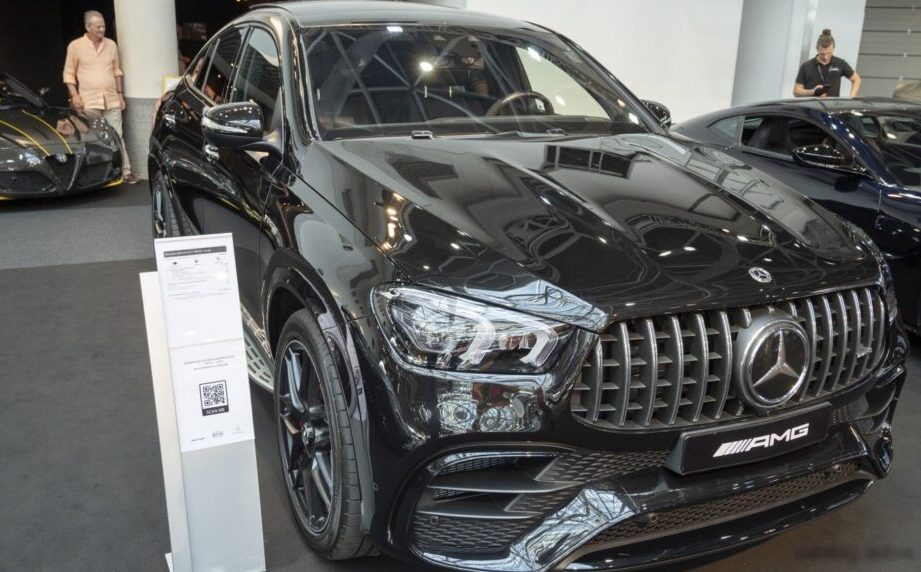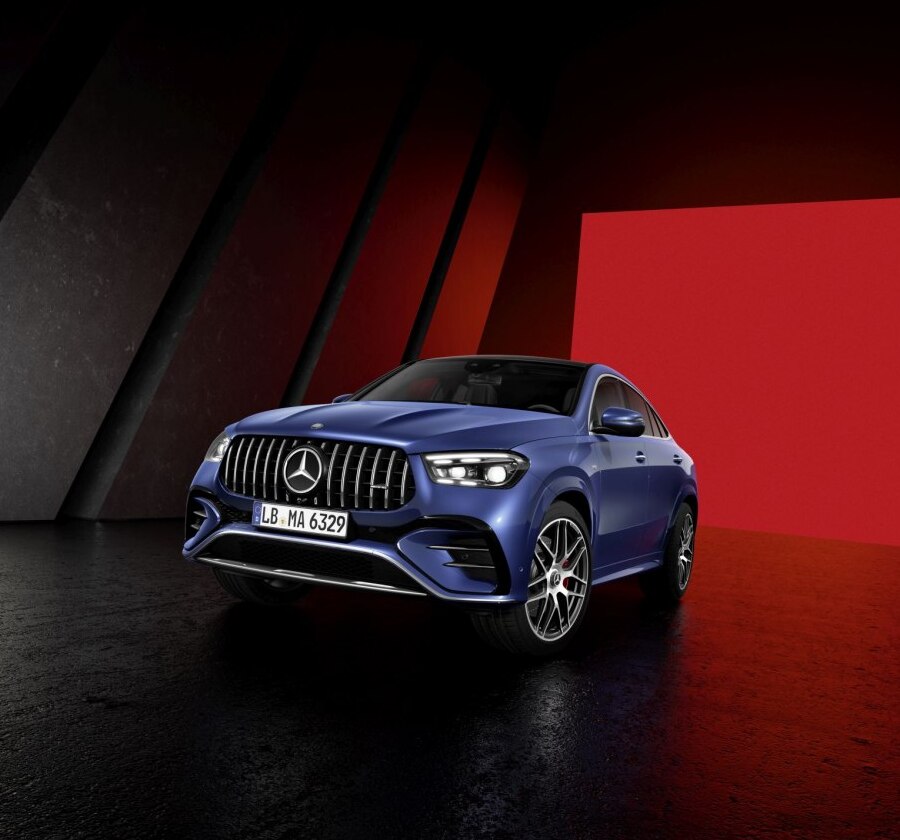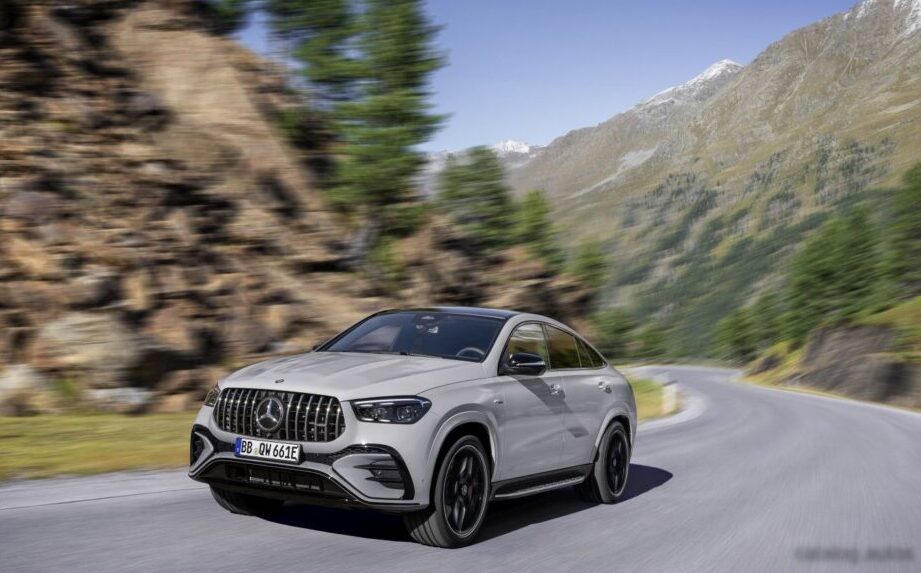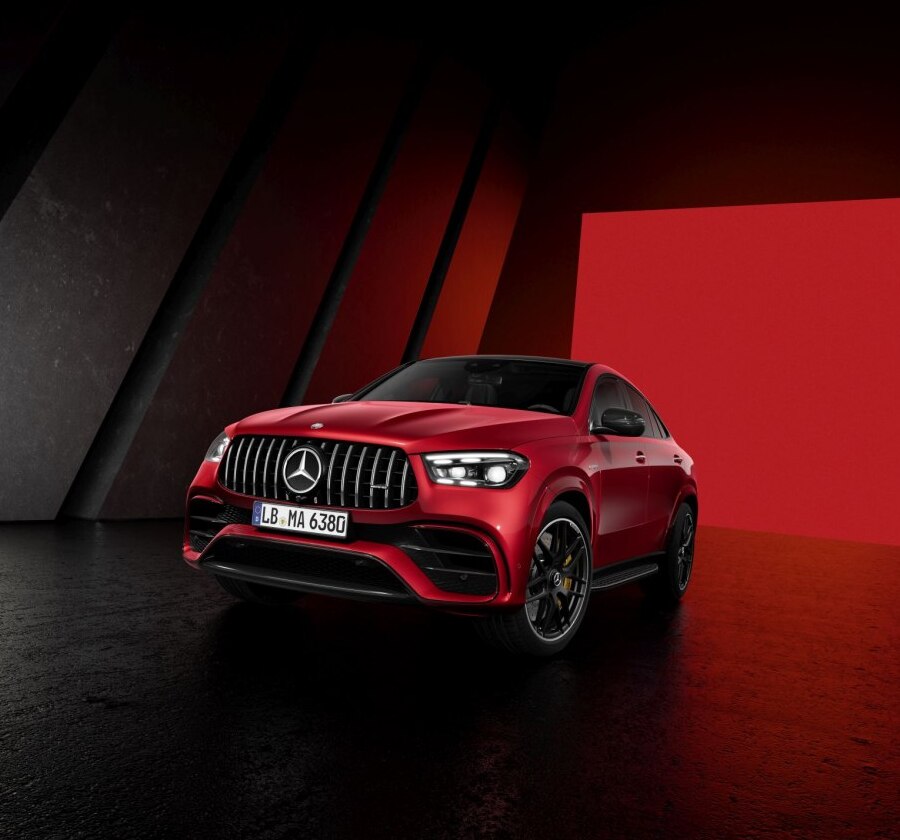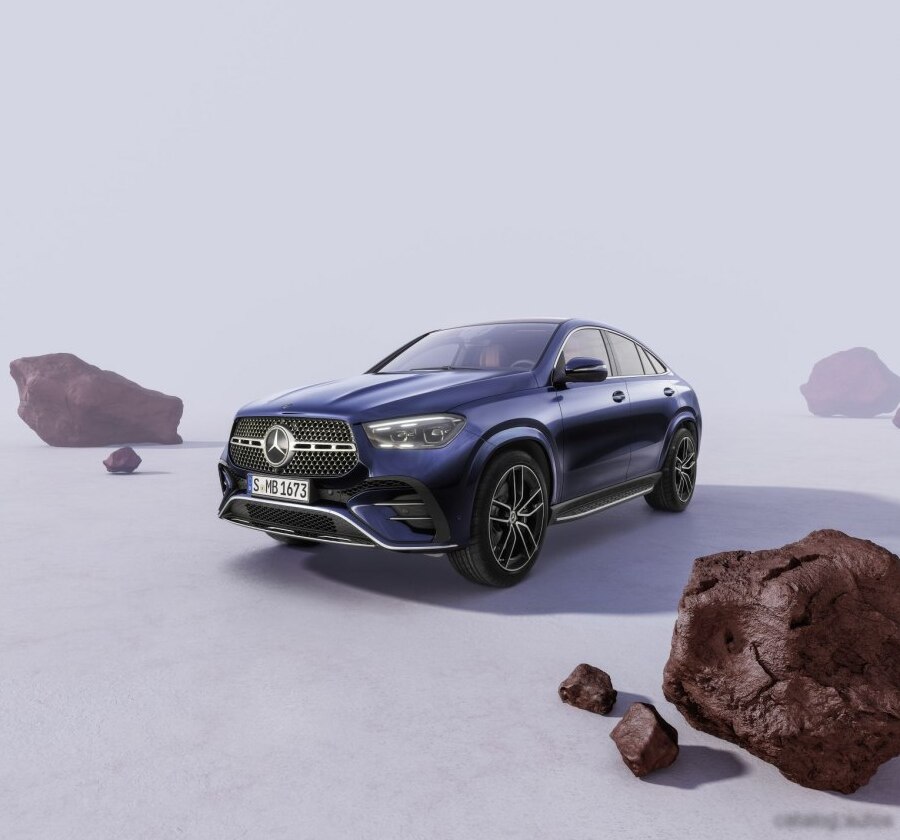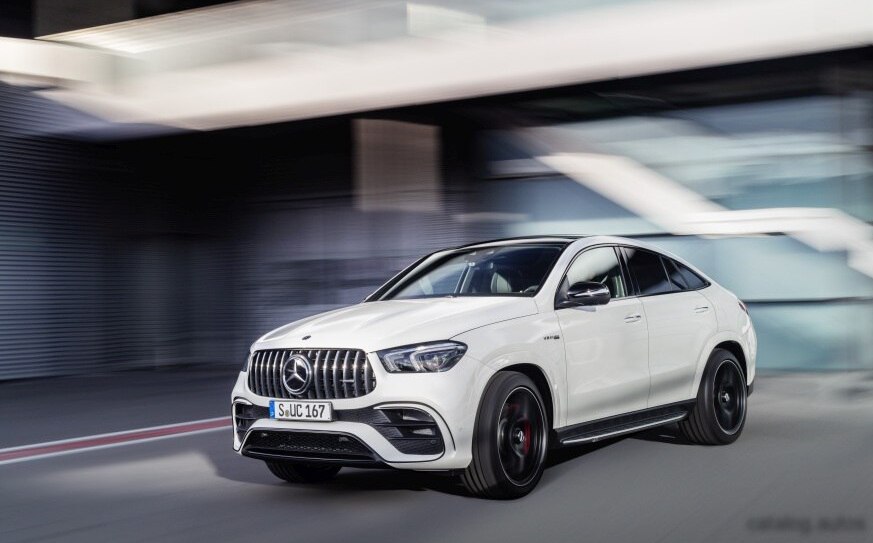
The Mercedes-Benz GLE 350de (C167) is a plug-in hybrid (PHEV) variant of the GLE Coupe, produced from 2020 to 2023. It represents Mercedes-Benz’s commitment to electrification within its luxury SUV lineup, offering a blend of diesel efficiency and all-electric driving capability. This model was primarily aimed at the European market, where diesel engines remain popular and government incentives favor lower-emission vehicles. However, it was also available in select global markets. The 350de occupies a mid-range position within the GLE Coupe family, positioned above the base models and below the more performance-oriented AMG variants.
Technical Specifications
| Brand | Mercedes-Benz |
| Model | GLE |
| Generation | GLE Coupe (C167) |
| Type | GLE 350de (320 Hp) Plug-in Hybrid 4MATIC 9G-TRONIC |
| Start of production | 2020 |
| End of production | 2023 |
| Powertrain Architecture | PHEV (Plug-in Hybrid Electric Vehicle) |
| Body type | Coupe, SUV |
| Seats | 5 |
| Doors | 5 |
| Combined fuel consumption (WLTP) | 0.7-1 l/100 km (336 – 235.2 US mpg, 403.5 – 282.5 UK mpg, 142.9 – 100 km/l) |
| CO2 emissions (WLTP) | 18-25 g/km |
| Fuel consumption (economy) – combined (NEDC) | 1.1-1.2 l/100 km (213.8 – 196 US mpg, 256.8 – 235.4 UK mpg, 90.9 – 83.3 km/l) |
| CO2 emissions (NEDC) | 29-32 g/km |
| Fuel Type | Diesel / electricity |
| Acceleration 0 – 100 km/h | 6.9 sec |
| Acceleration 0 – 62 mph | 6.9 sec |
| Acceleration 0 – 60 mph | 6.6 sec |
| Maximum speed | 210 km/h (130.49 mph) |
| Emission standard | Euro 6D-ISC-FCM |
| Weight-to-power ratio | 8.2 kg/Hp, 122.4 Hp/tonne |
| Weight-to-torque ratio | 3.7 kg/Nm, 267.7 Nm/tonne |
| Gross battery capacity | 31.2 kWh |
| Net (usable) battery capacity | 27 kWh |
| Battery technology | Lithium-ion (Li-Ion) |
| Battery location | Under the trunk |
| All-electric range (WLTP) | 86-99 km (53.44 – 61.52 mi) |
| All-electric range (NEDC) | 101-105 km (62.76 – 65.24 mi) |
| Average Energy consumption (WLTP) | 23.9-26.2 kWh/100 km (38.46 – 42.16 kWh/100 mi, 88 – 80 MPGe, 4.2 – 3.8 km/kWh, 2.6 – 2.4 mi/kWh) |
| Average Energy consumption (NEDC) | 22.2-24 kWh/100 km (35.73 – 38.62 kWh/100 mi, 94 – 87 MPGe, 4.5 – 4.2 km/kWh, 2.8 – 2.6 mi/kWh) |
| Max speed (electric) | 160 km/h (99.42 mph) |
| Electric motor power | 136 Hp |
| Electric motor Torque | 440 Nm @ 0-2500 rpm (324.53 lb.-ft. @ 0-2500 rpm) |
| Electric motor location | Between the combustion engine and the transmission |
| System power | 320 Hp |
| System torque | 700 Nm (516.29 lb.-ft.) |
| Power | 194 Hp @ 3800 rpm |
| Torque | 400 Nm @ 1600-2400 rpm (295.02 lb.-ft. @ 1600-2400 rpm) |
| Engine layout | Front, Longitudinal |
| Engine Model/Code | OM 654.920 |
| Engine displacement | 1950 cm3 (119 cu. in.) |
| Number of cylinders | 4 |
| Engine configuration | Inline |
| Cylinder Bore | 82 mm (3.23 in.) |
| Piston Stroke | 92.3 mm (3.63 in.) |
| Compression ratio | 15.5:1 |
| Number of valves per cylinder | 4 |
| Fuel injection system | Diesel Commonrail |
| Engine aspiration | Turbocharger, Intercooler |
| Valvetrain | DOHC |
| Engine oil capacity | 6.5 l (6.87 US qt | 5.72 UK qt) |
| Kerb Weight | 2615 kg (5765.09 lbs.) |
| Max. weight | 3230 kg (7120.93 lbs.) |
| Max load | 615 kg (1355.84 lbs.) |
| Trunk (boot) space – minimum | 510 l (18.01 cu. ft.) |
| Trunk (boot) space – maximum | 1645 l (58.09 cu. ft.) |
| Fuel tank capacity | 65 l (17.17 US gal | 14.3 UK gal) |
| Max. roof load | 75 kg (165.35 lbs.) |
| Permitted trailer load with brakes (12%) | 2700 kg (5952.48 lbs.) |
| Permitted trailer load without brakes | 750 kg (1653.47 lbs.) |
| Permitted towbar download | 108 kg (238.1 lbs.) |
| Length | 4939 mm (194.45 in.) |
| Width | 2010 mm (79.13 in.) |
| Width including mirrors | 2157 mm (84.92 in.) |
| Height | 1730 mm (68.11 in.) |
| Wheelbase | 2935 mm (115.55 in.) |
| Front track | 1680 mm (66.14 in.) |
| Rear (Back) track | 1727 mm (67.99 in.) |
| Front overhang | 925 mm (36.42 in.) |
| Rear overhang | 1079 mm (42.48 in.) |
| Ride height (ground clearance) | 185 mm (7.28 in.) |
| Drag coefficient (Cd) | 0.35 |
| Minimum turning circle (turning diameter) | 11.8 m (38.71 ft.) |
| Approach angle | 25° |
| Departure angle | 24° |
| Ramp-over (brakeover) angle | 17° |
| Drivetrain Architecture | The Internal combustion engine (ICE) and the electric motor permanently drive the four wheels of the car with the ability to work in full electric or mixed mode. |
| Drive wheel | All wheel drive (4×4) |
| Number of gears and type of gearbox | 9 gears, automatic transmission G-TRONIC |
| Front suspension | Double wishbone |
| Rear suspension | Independent multi-link suspension |
| Front brakes | Ventilated discs |
| Rear brakes | Ventilated discs |
| Assisting systems | ABS (Anti-lock braking system) |
| Steering type | Steering rack and pinion |
| Power steering | Electric Steering |
| Tires size | Front wheel tires: 275/55 R19; 275/50 R20; 275/45 R21; 285/40 R22Rear wheel tires: 275/55 R19; 275/50 R20; 315/40 R21; 325/35 R22 |
| Wheel rims size | Front wheel rims: 8.5J x 19; 8.5J x 20; 9J x 20; 10J x 21; 10J x 22Rear wheel rims: 8.5J x 19; 8.5J x 20; 9J x 20; 11J x 21; 11J x 22 |
Powertrain and Technology
The GLE 350de combines a 2.0-liter four-cylinder diesel engine with an electric motor integrated into the 9G-TRONIC automatic transmission. The diesel engine produces 194 horsepower and 400 Nm (295 lb-ft) of torque, while the electric motor contributes 136 horsepower and 440 Nm (325 lb-ft). The combined system output is 320 horsepower and 700 Nm (516 lb-ft) of torque. This powertrain configuration allows for a 0-60 mph acceleration time of approximately 6.6 seconds and a top speed of 210 km/h (130 mph).
A key feature of the 350de is its substantial 31.2 kWh battery pack, providing a usable capacity of 27 kWh. This enables an all-electric range of 86-99 km (53-62 miles) under WLTP testing, making it suitable for many daily commutes without using the diesel engine. The battery can be charged via a standard household outlet, a dedicated wallbox, or a public charging station. The charging time varies depending on the power source, but a full charge using a wallbox typically takes around 5 hours.
The 4MATIC all-wheel-drive system ensures optimal traction in various driving conditions. Mercedes-Benz’s intelligent software seamlessly manages the transition between electric, diesel, and combined power modes, prioritizing efficiency and performance. The vehicle also incorporates regenerative braking, which captures energy during deceleration and stores it back in the battery, further enhancing efficiency.
Positioning and Comparison
Within the GLE Coupe lineup, the 350de served as a compelling alternative to the traditional gasoline and diesel models. It offered a lower tax bracket in many European countries due to its reduced emissions, and the ability to drive in zero-emission mode in urban areas was a significant advantage. Compared to the GLE 450, which featured a gasoline engine, the 350de prioritized fuel economy and torque, making it a better choice for drivers who frequently tow or cover long distances.
Compared to the GLE 300d, a diesel-only variant, the 350de offered the added benefit of electric-only driving and a more refined overall driving experience. While the 300d was generally more affordable, the 350de’s plug-in hybrid technology provided a unique combination of performance, efficiency, and environmental responsibility. The more powerful AMG variants, such as the GLE 53 and GLE 63, were geared towards performance enthusiasts and offered significantly higher horsepower and a more aggressive driving experience, but at a considerably higher price point and with much lower fuel economy.
Legacy
The Mercedes-Benz GLE 350de represented an important step in the company’s transition towards electrification. It demonstrated the feasibility of combining diesel technology with electric power to create a versatile and efficient SUV. While production ended in 2023, the 350de paved the way for future plug-in hybrid models and helped establish Mercedes-Benz as a leader in the luxury PHEV segment. The technology and engineering advancements incorporated into the 350de continue to influence the development of Mercedes-Benz’s electric vehicle strategy.