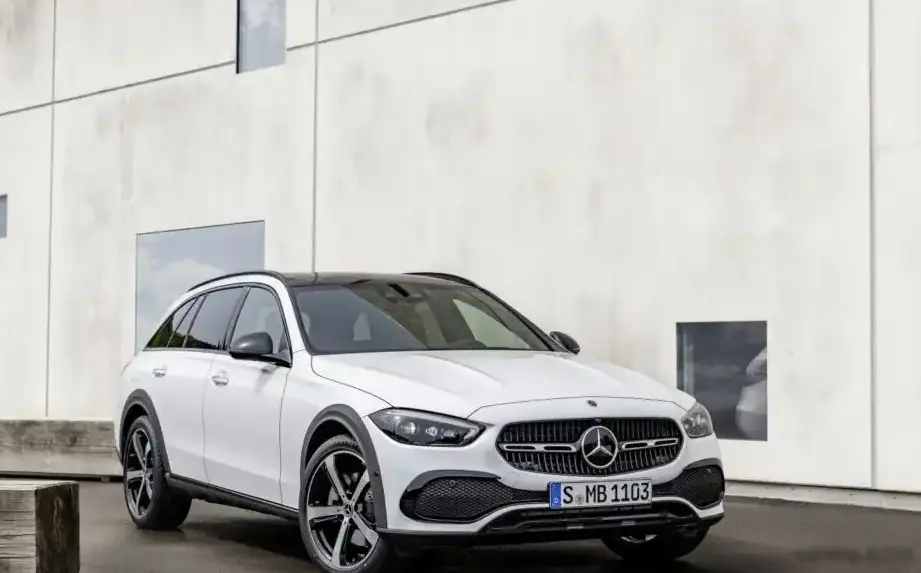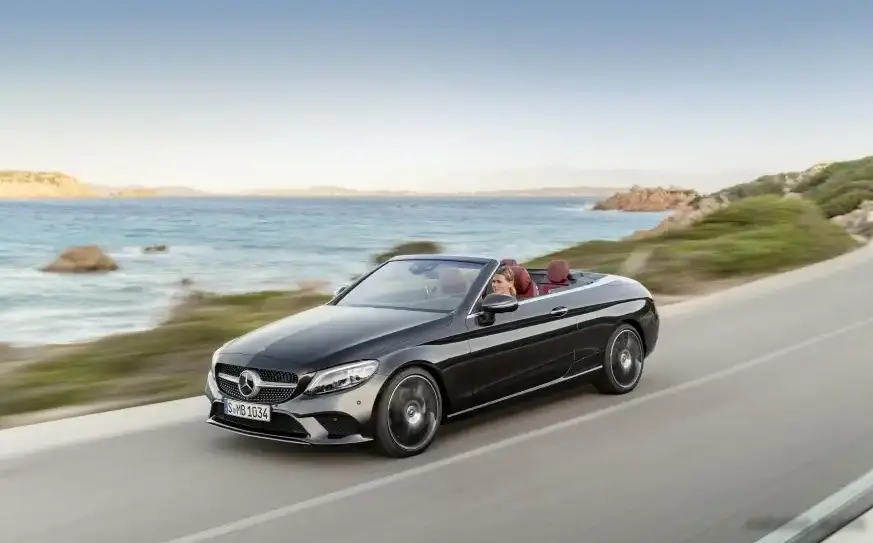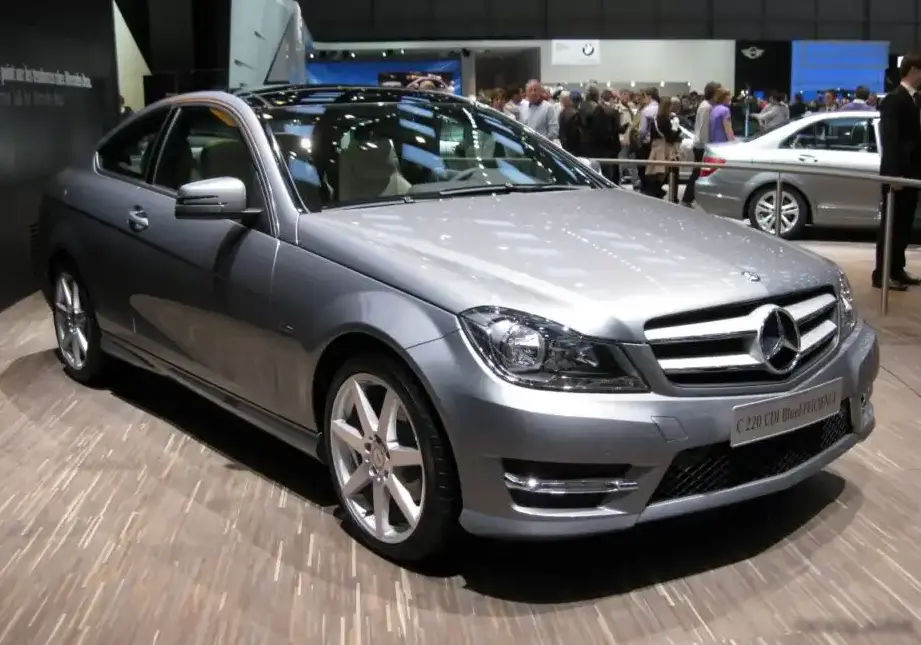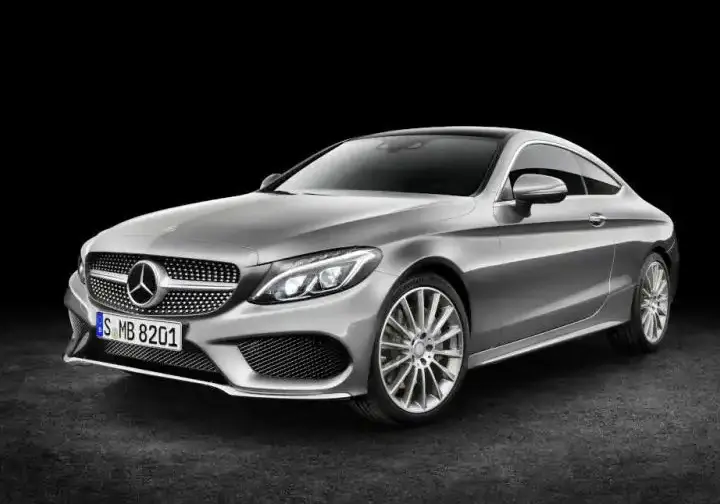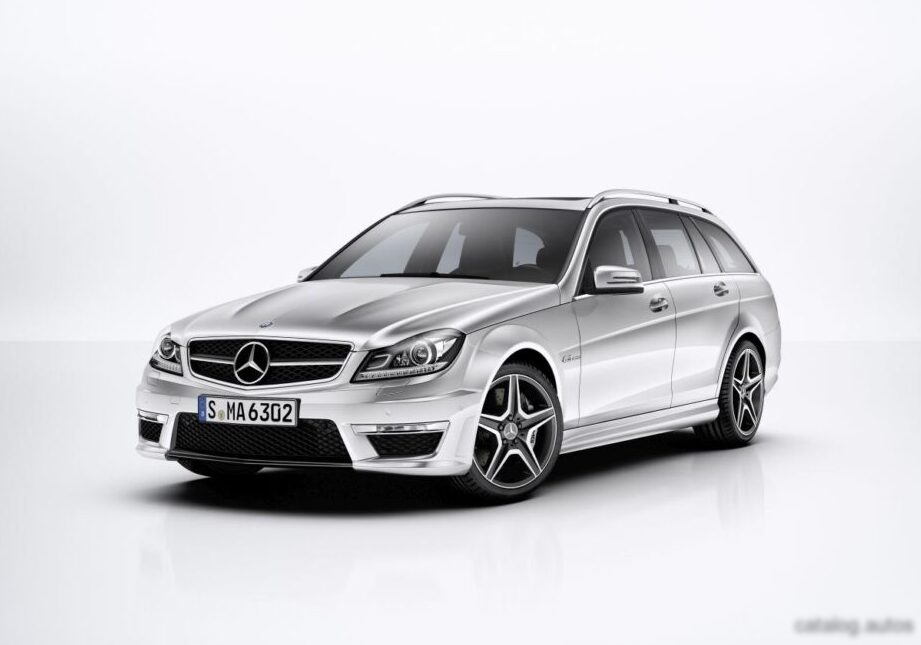
The Mercedes-Benz C-Class T-modell (S204), particularly the facelifted version introduced in 2011, represented a significant offering in the premium compact executive station wagon segment. The C 180 CDI BlueEFFICIENCY, equipped with a 2.1-liter diesel engine producing 120 horsepower and paired with a 7G-TRONIC PLUS automatic transmission, was positioned as the entry-level diesel variant within the T-modell range. This model focused on fuel efficiency and practicality, appealing to buyers prioritizing economy and versatility over outright performance.
Technical Specifications
| Brand | Mercedes-Benz |
| Model | C-Class |
| Generation | C-Class T-modell (S204, facelift 2011) |
| Type (Engine) | C 180 CDI BlueEFFICIENCY (120 Hp) 7G-TRONIC PLUS |
| Start of production | 2011 |
| End of production | 2014 |
| Powertrain Architecture | Internal Combustion engine |
| Body type | Station wagon (estate) |
| Seats | 5 |
| Doors | 5 |
| Fuel consumption (urban) | 6.2-6.5 l/100 km (37.9 – 36.2 US mpg, 45.6 – 43.5 UK mpg, 16.1 – 15.4 km/l) |
| Fuel consumption (extra urban) | 4.5-4.9 l/100 km (52.3 – 48 US mpg, 62.8 – 57.6 UK mpg, 22.2 – 20.4 km/l) |
| Fuel consumption (combined) | 5.1-5.5 l/100 km (46.1 – 42.8 US mpg, 55.4 – 51.4 UK mpg, 19.6 – 18.2 km/l) |
| CO2 emissions | 134-144 g/km |
| Fuel Type | Diesel |
| Acceleration 0 – 100 km/h | 11.1 sec |
| Acceleration 0 – 62 mph | 11.1 sec |
| Acceleration 0 – 60 mph | 10.5 sec |
| Maximum speed | 200 km/h (124.27 mph) |
| Emission standard | Euro 5 |
| Weight-to-power ratio | 13.1 kg/Hp, 76.4 Hp/tonne |
| Weight-to-torque ratio | 5.2 kg/Nm, 191.1 Nm/tonne |
| Power | 120 Hp @ 2800-4600 rpm |
| Power per litre | 56 Hp/l |
| Torque | 300 Nm @ 1400-2800 rpm (221.27 lb.-ft. @ 1400-2800 rpm) |
| Engine layout | Front, Longitudinal |
| Engine Model/Code | OM 651.913 |
| Engine displacement | 2143 cm3 (130.77 cu. in.) |
| Number of cylinders | 4 |
| Engine configuration | Inline |
| Cylinder Bore | 83 mm (3.27 in.) |
| Piston Stroke | 99 mm (3.9 in.) |
| Compression ratio | 16.2:1 |
| Number of valves per cylinder | 4 |
| Fuel injection system | Diesel Commonrail |
| Engine aspiration | Turbocharger, Intercooler |
| Valvetrain | DOHC |
| Engine oil capacity | 6.5 l (6.87 US qt | 5.72 UK qt) |
| Kerb Weight | 1570 kg (3461.26 lbs.) |
| Max. weight | 2185 kg (4817.1 lbs.) |
| Max load | 615 kg (1355.84 lbs.) |
| Trunk (boot) space – minimum | 485 l (17.13 cu. ft.) |
| Trunk (boot) space – maximum | 1500 l (52.97 cu. ft.) |
| Fuel tank capacity | 59 l (15.59 US gal | 12.98 UK gal) |
| Max. roof load | 100 kg (220.46 lbs.) |
| Permitted trailer load with brakes (12%) | 1800 kg (3968.32 lbs.) |
| Permitted trailer load without brakes | 750 kg (1653.47 lbs.) |
| Length | 4606 mm (181.34 in.) |
| Width | 1770 mm (69.69 in.) |
| Width including mirrors | 2008 mm (79.06 in.) |
| Height | 1459 mm (57.44 in.) |
| Wheelbase | 2760 mm (108.66 in.) |
| Front track | 1541 mm (60.67 in.) |
| Rear track | 1544 mm (60.79 in.) |
| Front overhang | 775 mm (30.51 in.) |
| Rear overhang | 1071 mm (42.17 in.) |
| Drag coefficient (Cd) | 0.29 |
| Minimum turning circle | 10.84 m (35.56 ft.) |
| Drivetrain Architecture | The Internal combustion engine (ICE) drives the rear wheels of the vehicle. |
| Drive wheel | Rear wheel drive |
| Number of gears and type of gearbox | 7 gears, automatic transmission G-TRONIC PLUS |
| Front suspension | Independent type McPherson, Transverse stabilizer |
| Rear suspension | Independent multi-link suspension, Transverse stabilizer |
| Front brakes | Ventilated discs, 288 mm |
| Rear brakes | Disc, 278 mm |
| Assisting systems | ABS (Anti-lock braking system) |
| Steering type | Steering rack and pinion |
| Power steering | Hydraulic Steering |
| Tires size | 205/55 R16; 225/45 R17 |
| Wheel rims size | 7J x 16; 7.5J x 17 |
Positioning and Market Role
The S204 C-Class T-modell, launched in 2007 and facelifted in 2011, was Mercedes-Benz’s entry into the premium compact estate market, competing with vehicles like the Audi A4 Avant, BMW 3 Series Touring, and Volvo V60. The C 180 CDI BlueEFFICIENCY served as the most economical diesel option in the lineup, targeting buyers who valued fuel efficiency and practicality above all else. In European markets, where diesel engines were (and still are) highly popular due to favorable taxation and fuel economy, this variant was a common sight. Its positioning was deliberately below the more powerful C 220 CDI and C 250 CDI models, offering a lower price point and reduced running costs. In the US market, the T-modell was not officially offered, as station wagons traditionally held a smaller market share compared to Europe.
Engine and Transmission Details
The heart of the C 180 CDI BlueEFFICIENCY is the OM651.913 2.1-liter inline-four cylinder diesel engine. This engine, a mainstay of the Mercedes-Benz lineup for many years, is known for its durability and relatively simple construction. The 120 horsepower output, while not particularly high by modern standards, was sufficient for comfortable cruising and everyday driving. The engine’s 300 Nm (221 lb-ft) of torque, available from a low 1400 rpm, provided good responsiveness and made it well-suited for hauling loads or navigating hilly terrain. The 7G-TRONIC PLUS seven-speed automatic transmission further enhanced the driving experience, offering smooth and efficient gear changes. This transmission was a significant upgrade over earlier Mercedes automatics, contributing to improved fuel economy and reduced emissions.
Comparison with Other C-Class Variants
Compared to its siblings, the C 180 CDI BlueEFFICIENCY represented a more economical and practical choice. The C 220 CDI, with its more powerful engine (typically around 170 hp), offered noticeably quicker acceleration and a more refined driving experience, but at the cost of increased fuel consumption and a higher purchase price. The C 250 CDI, boasting around 204 hp, was the performance-oriented diesel option, appealing to drivers who wanted a more engaging driving experience. Furthermore, petrol variants like the C 180 Kompressor and C 250 offered different driving characteristics, prioritizing responsiveness over fuel economy.
In terms of maintenance, the C 180 CDI is generally considered relatively straightforward to maintain, benefiting from the robust design of the OM651 engine. However, like all modern diesel engines, it is susceptible to issues with the diesel particulate filter (DPF) if not driven on longer journeys regularly. The 7G-TRONIC PLUS transmission, while generally reliable, can require occasional servicing to ensure smooth operation. Compared to the petrol variants, the diesel models typically have slightly higher maintenance costs due to the more complex fuel injection system and the need for specialized diesel engine oil.
Technology and Efficiency Features
The 2011 facelift of the S204 C-Class brought with it a number of technological enhancements aimed at improving efficiency and reducing emissions. The “BlueEFFICIENCY” designation indicates the inclusion of features such as an optimized engine management system, low-rolling-resistance tires, and aerodynamic improvements. The Start & Stop system, which automatically shuts off the engine when the vehicle is stationary, further contributed to fuel savings in urban driving conditions. The inclusion of a diesel particulate filter (DPF) ensured compliance with stringent Euro 5 emission standards. These features collectively made the C 180 CDI BlueEFFICIENCY a relatively environmentally friendly option for its time.
Legacy and Impact
The Mercedes-Benz C-Class T-modell (S204) C 180 CDI BlueEFFICIENCY, while not a groundbreaking vehicle in terms of performance, played an important role in establishing Mercedes-Benz as a competitive force in the premium compact estate market. Its focus on fuel efficiency and practicality appealed to a broad range of buyers, particularly in Europe. The OM651 engine, used in this variant, proved to be a durable and reliable powerplant, contributing to the C-Class’s reputation for quality and longevity. The S204 generation, and the C 180 CDI BlueEFFICIENCY within it, laid the groundwork for subsequent C-Class models, which continue to build on the brand’s legacy of luxury, performance, and innovation.