
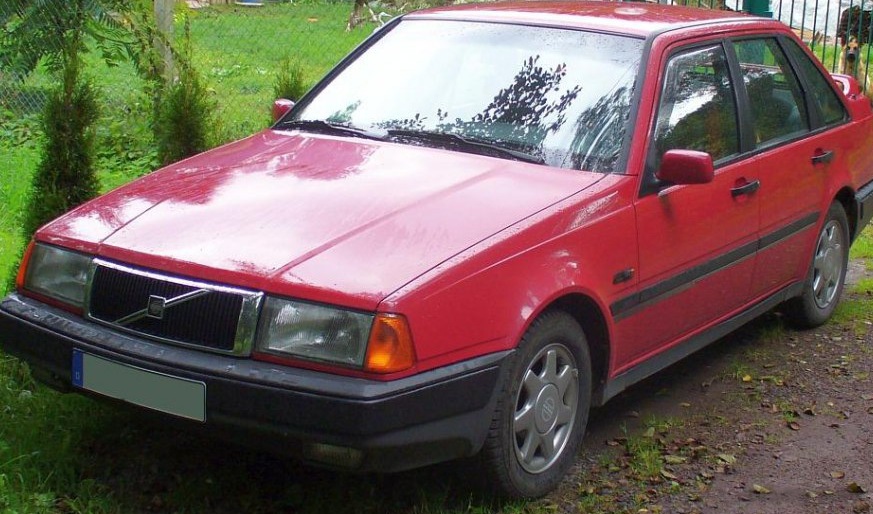
The Volvo 440 K, produced between 1993 and 1996, represented a significant, though often overlooked, chapter in Volvo’s history. Specifically, the 2.0-liter (109 horsepower) variant paired with an automatic transmission offered a blend of practicality and reasonable performance within the Volvo lineup. This model occupied a mid-range position, appealing to buyers seeking a comfortable and reliable family vehicle without the higher price tag of the more powerful or luxurious options.
Technical Specifications
| Brand | Volvo |
| Model | 440 K |
| Generation | 440 K (445) |
| Type (Engine) | 2.0 (109 Hp) Automatic |
| Start of production | 1993 |
| End of production | 1996 |
| Powertrain Architecture | Internal Combustion engine |
| Body type | Hatchback |
| Seats | 5 |
| Doors | 5 |
| Fuel consumption (combined) | 8 l/100 km (29.4 US mpg, 35.3 UK mpg, 12.5 km/l) |
| Fuel Type | Petrol (Gasoline) |
| Acceleration 0 – 100 km/h | 10.3 sec |
| Acceleration 0 – 62 mph | 10.3 sec |
| Acceleration 0 – 60 mph | 9.8 sec |
| Maximum speed | 190 km/h (118.06 mph) |
| Weight-to-power ratio | 9.8 kg/Hp, 102.3 Hp/tonne |
| Weight-to-torque ratio | 6.5 kg/Nm, 154.8 Nm/tonne |
| Power | 109 Hp @ 5200 rpm |
| Power per litre | 54.6 Hp/l |
| Torque | 165 Nm @ 3500 rpm (121.7 lb.-ft. @ 3500 rpm) |
| Engine layout | Front, Transverse |
| Engine Model/Code | B20F116 |
| Engine displacement | 1998 cm3 (121.93 cu. in.) |
| Number of cylinders | 4 |
| Engine configuration | Inline |
| Cylinder Bore | 82.7 mm (3.26 in.) |
| Piston Stroke | 93 mm (3.66 in.) |
| Compression ratio | 9.5:1 |
| Number of valves per cylinder | 2 |
| Fuel injection system | Multi-port manifold injection |
| Engine aspiration | Naturally aspirated engine |
| Valvetrain | OHC |
| Engine oil capacity | 5 l (5.28 US qt | 4.4 UK qt) |
| Coolant | 7 l (7.4 US qt | 6.16 UK qt) |
| Kerb Weight | 1066 kg (2350.13 lbs.) |
| Max. weight | 1580 kg (3483.3 lbs.) |
| Max load | 514 kg (1133.18 lbs.) |
| Trunk (boot) space – minimum | 330 l (11.65 cu. ft.) |
| Trunk (boot) space – maximum | 1028 l (36.3 cu. ft.) |
| Fuel tank capacity | 60 l (15.85 US gal | 13.2 UK gal) |
| Length | 4345 mm (171.06 in.) |
| Width | 1686 mm (66.38 in.) |
| Height | 1378 mm (54.25 in.) |
| Wheelbase | 2503 mm (98.54 in.) |
| Front track | 1416 mm (55.75 in.) |
| Rear (Back) track | 1426 mm (56.14 in.) |
| Drivetrain Architecture | The Internal combustion engine (ICE) drives the front wheels of the vehicle. |
| Drive wheel | Front wheel drive |
| Number of gears and type of gearbox | 4 gears, automatic transmission |
| Front suspension | Wishbone |
| Rear suspension | Coil spring |
| Front brakes | Disc |
| Rear brakes | Disc |
| Assisting systems | ABS (Anti-lock braking system) |
| Steering type | Steering rack and pinion |
| Power steering | Hydraulic Steering |
| Tires size | 185/65 R14 |
| Wheel rims size | 14 |
Background and Market Positioning
The Volvo 440 and its closely related sibling, the 460, were Volvo’s attempts to enter the compact family car segment, traditionally dominated by European and Japanese manufacturers. Launched in 1987, the 440 series was a departure for Volvo, which was known for larger, more robust vehicles. The 440 K, introduced later in the production run, represented refinements to the original design. The 2.0-liter automatic variant was positioned as a comfortable and convenient option for families and individuals who prioritized ease of driving over outright performance. It sat below the more powerful 440 Turbo and the fuel-efficient diesel models in the lineup.
Engine and Transmission Details
The B20F116 engine, a 1.998-liter inline-four cylinder, was a relatively simple and robust unit. Producing 109 horsepower at 5200 rpm and 165 Nm (121.7 lb-ft) of torque at 3500 rpm, it wasn’t a powerhouse, but it provided adequate performance for everyday driving. The four-speed automatic transmission, while not particularly advanced by modern standards, offered smooth shifts and contributed to the car’s overall ease of use. This combination resulted in a 0-60 mph time of around 9.8 seconds and a top speed of approximately 118 mph. The engine featured multi-port fuel injection and an overhead camshaft (OHC) valvetrain, technologies common for the era.
Comparison with Other 440 Variants
The 2.0-liter automatic 440 K differed significantly from other variants in the range. The 440 Turbo, for example, boasted a turbocharged engine producing considerably more power (around 140-150 hp), offering much quicker acceleration and a sportier driving experience. However, the Turbo came with a higher price tag and potentially increased maintenance costs. The 1.7 and 1.9-liter diesel versions, while offering superior fuel economy, were slower and noisier. The diesel models appealed to drivers covering high mileages, while the 2.0-liter automatic struck a balance between performance, economy, and comfort. Maintenance on the 2.0L engine was generally considered straightforward, though like all older vehicles, regular servicing was crucial to prevent issues. Parts availability, while not as plentiful as for more common models, remained reasonable due to the 440’s relatively simple design.
Features and Interior
The 440 K 2.0 Automatic offered a practical and functional interior. While not luxurious, it provided comfortable seating for five passengers and a reasonably spacious cargo area, especially with the rear seats folded down. Standard features typically included power steering, ABS brakes, and a basic audio system. The hatchback body style offered excellent versatility, making it suitable for carrying both passengers and cargo. Safety, a hallmark of Volvo design, was also a priority, with features like reinforced steel cages and side impact protection.
Legacy and Impact
The Volvo 440 series, including the 2.0-liter automatic variant, didn’t achieve the same iconic status as some of Volvo’s other models. However, it played an important role in broadening Volvo’s appeal and demonstrating the company’s ability to compete in the compact car segment. The 440 K’s blend of practicality, reliability, and reasonable performance made it a popular choice for families and individuals seeking a sensible and dependable vehicle. While now a classic, the 440 K remains a testament to Volvo’s commitment to safety and functional design.
Technical Data Summary
The 1993-1996 Volvo 440 K 2.0 Automatic represents a solid, if unspectacular, entry in Volvo’s history. Its 2.0-liter engine and automatic transmission provided a comfortable and convenient driving experience, making it a practical choice for everyday use. While not as powerful or sporty as some of its siblings, it offered a compelling combination of features, reliability, and affordability.
