
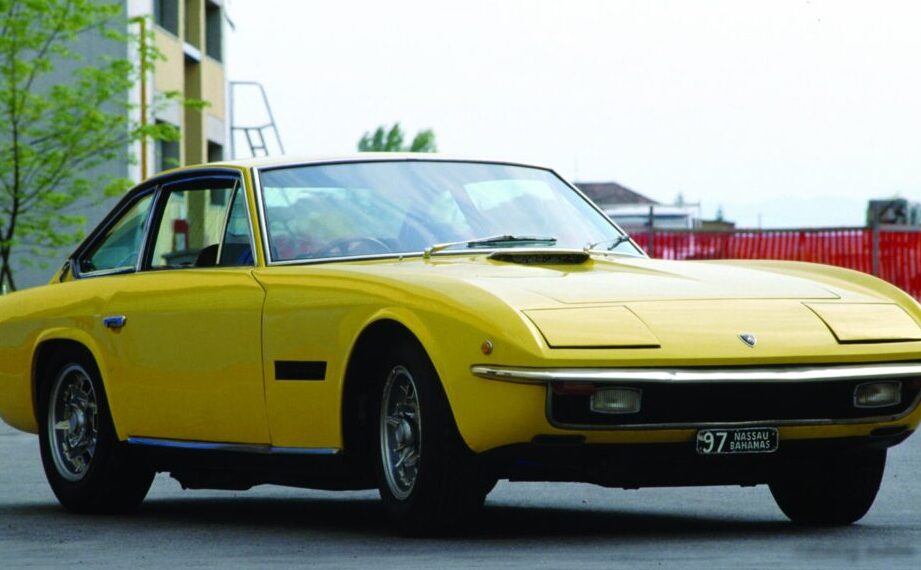
The Lamborghini Islero 4.0 V12, produced between 1968 and 1970, represents a pivotal moment in the Italian automaker’s history. Positioned as a more refined and comfortable grand tourer than its predecessor, the 400 GT, the Islero aimed to broaden Lamborghini’s appeal beyond the realm of purely exotic sports cars. It served as a transitional model, bridging the gap between the raw, early Lamborghini designs and the more sophisticated machines that would follow. The 4.0-liter variant, producing 320 horsepower, was the definitive version of the Islero, representing the peak of its development.
Technical Specifications
| Brand | Lamborghini |
| Model | Islero |
| Generation | Islero |
| Type (Engine) | 4.0 V12 (320 Hp) |
| Start of production | August, 1968 |
| End of production | June, 1970 |
| Powertrain Architecture | Internal Combustion engine |
| Body type | Coupe |
| Seats | 4 |
| Doors | 2 |
| Fuel consumption (combined) | 16-18 l/100 km (14.7 – 13.1 US mpg, 17.7 – 15.7 UK mpg, 6.3 – 5.6 km/l) |
| Fuel Type | Petrol (Gasoline) |
| Maximum speed | 255 km/h (158.45 mph) |
| Weight-to-power ratio | 3.8 kg/Hp, 262.3 Hp/tonne |
| Weight-to-torque ratio | 3.2 kg/Nm, 309 Nm/tonne |
| Power | 320 Hp @ 6500 rpm |
| Power per litre | 81.4 Hp/l |
| Torque | 377 Nm @ 5000 rpm (278.06 lb.-ft. @ 5000 rpm) |
| Engine layout | Front, Longitudinal |
| Engine displacement | 3929 cm3 (239.76 cu. in.) |
| Number of cylinders | 12 |
| Engine configuration | V-engine |
| Cylinder Bore | 82 mm (3.23 in.) |
| Piston Stroke | 62 mm (2.44 in.) |
| Compression ratio | 9.5:1 |
| Number of valves per cylinder | 2 |
| Fuel injection system | Carburettor |
| Engine aspiration | Naturally aspirated engine |
| Valvetrain | DOHC |
| Kerb Weight | 1220 kg (2689.64 lbs.) |
| Fuel tank capacity | 85 l (22.45 US gal | 18.7 UK gal) |
| Length | 4525 mm (178.15 in.) |
| Width | 1730 mm (68.11 in.) |
| Height | 1270 mm (50 in.) |
| Wheelbase | 2550 mm (100.39 in.) |
| Front track | 1380 mm (54.33 in.) |
| Rear track | 1380 mm (54.33 in.) |
| Drivetrain Architecture | The Internal combustion engine (ICE) drives the rear wheels of the vehicle. |
| Drive wheel | Rear wheel drive |
| Number of gears and type of gearbox | 5 gears, manual transmission |
| Front suspension | Independent coil spring |
| Rear suspension | Independent coil spring |
| Front brakes | Disc |
| Rear brakes | Disc |
| Steering type | Worm-reduction unit |
A Refined Grand Tourer
The Islero represented a deliberate shift in Lamborghini’s design philosophy. While the earlier 350 GT and 400 GT were undeniably sporting, they lacked the refinement expected of a true grand tourer. The Islero, penned by Carrozzeria Bertone under the direction of Marcello Gandini, offered a more elegant and understated aesthetic. The design, while still unmistakably Lamborghini, moved away from the aggressive lines of its predecessors, presenting a longer, lower, and more balanced profile. The interior was similarly upgraded, featuring more luxurious materials and improved comfort for both driver and passengers. The Islero was intended to compete with established grand tourers from Ferrari and Maserati, offering a blend of performance, luxury, and Italian flair.
The 4.0-Liter Engine and Performance
The heart of the Islero 4.0 V12 was its magnificent 3.9-liter, naturally aspirated V12 engine. This engine, a development of the earlier Lamborghini V12s, produced 320 horsepower at 6,500 rpm and 278 lb-ft of torque at 5,000 rpm. This output allowed the Islero to achieve a top speed of approximately 158 mph (255 km/h). The engine’s smooth power delivery and responsive nature made it a joy to drive, both on winding roads and during high-speed cruising. The standard transmission was a five-speed manual, contributing to the car’s engaging driving experience. The Islero’s weight of around 2,690 lbs meant a respectable power-to-weight ratio, resulting in brisk acceleration.
Positioning within the Lamborghini Lineup
The Islero occupied a unique position within the Lamborghini range. It was introduced as a replacement for the 400 GT, but it was more expensive and more sophisticated. It was positioned above the more basic 400 GT but below the more exotic and expensive Miura. The Miura, with its mid-engine layout and radical styling, was aimed at the enthusiast driver, while the Islero catered to those seeking a luxurious and capable grand tourer. The Islero’s target audience was the discerning customer who appreciated Italian craftsmanship, high performance, and a comfortable driving experience.
Comparison with Siblings
Compared to the earlier 400 GT, the Islero offered significant improvements in refinement, comfort, and handling. The 400 GT, while still a capable car, felt more like a modified sports car, whereas the Islero was designed from the outset as a grand tourer. The Islero also benefited from a more modern chassis and suspension design, resulting in improved ride quality and stability. In contrast to the Miura, the Islero was far more practical and comfortable for long-distance travel. The Miura’s mid-engine layout and limited luggage space made it less suitable for everyday use. The Islero, with its front-engine layout and spacious interior, offered a more usable and versatile package. Maintenance on the Islero, while still requiring specialized knowledge, was generally less complex and expensive than that of the Miura.
Mechanical Details and Engineering
The Islero featured an independent coil spring suspension on all four wheels, providing a comfortable ride and good handling characteristics. Disc brakes were fitted to all four wheels, offering ample stopping power. The steering was a worm-reduction unit, which provided a direct and responsive feel. The engine utilized a single overhead camshaft (SOHC) design per cylinder bank, operating four valves per cylinder. Fuel was delivered via three Weber 46 IDA carburetors. The chassis was a tubular steel space frame, providing a rigid and lightweight platform. The body was constructed from steel panels, with aluminum used for certain components to reduce weight.
Legacy and Collectibility
Although production numbers were relatively low – only around 175 Isleros were built – the car has gained a devoted following among collectors. The Islero 4.0 V12 is particularly sought after, representing the pinnacle of the model’s development. Today, the Islero is recognized as a significant piece of automotive history, embodying the spirit of 1960s Italian design and engineering. Its blend of performance, luxury, and exclusivity continues to appeal to enthusiasts and collectors alike. The Islero stands as a testament to Lamborghini’s early ambition to create world-class grand touring automobiles.
