
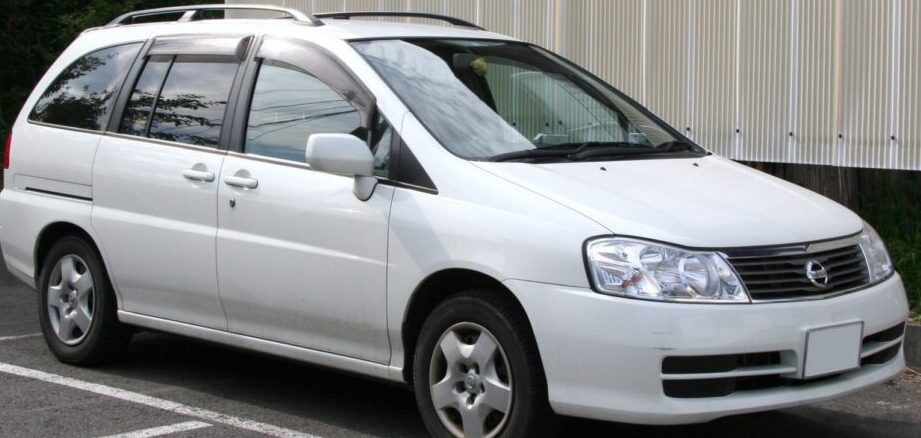
The Nissan Liberty (M12), specifically the 2.0 i 16V variant producing 147 horsepower, was a significant offering in the compact minivan segment during its production run from 2000 to September 2002. This model aimed to provide a practical and affordable seven-seat people carrier, primarily targeted at families in markets where larger MPVs were less common or considered excessive. The Liberty, while not widely exported outside of Asia and Australia, was a key vehicle for Nissan in those regions, offering a blend of space, functionality, and relatively economical operation.
Technical Specifications
| Brand | Nissan |
| Model | Liberty |
| Generation | Liberty (M12) |
| Type (Engine) | 2.0 i 16V (147 Hp) |
| Start of production | 2000 |
| End of production | September, 2002 |
| Powertrain Architecture | Internal Combustion engine |
| Body type | Minivan |
| Seats | 7 |
| Doors | 5 |
| Fuel Type | Petrol (Gasoline) |
| Maximum speed | 180 km/h (111.85 mph) |
| Weight-to-power ratio | 10.2 kg/Hp, 98 Hp/tonne |
| Weight-to-torque ratio | 7.6 kg/Nm, 132 Nm/tonne |
| Power | 147 Hp @ 6000 rpm |
| Power per litre | 73.6 Hp/l |
| Torque | 198 Nm @ 4000 rpm (146.04 lb.-ft. @ 4000 rpm) |
| Engine layout | Front, Transverse |
| Engine displacement | 1998 cm3 (121.93 cu. in.) |
| Number of cylinders | 4 |
| Engine configuration | Inline |
| Cylinder Bore | 89 mm (3.5 in.) |
| Piston Stroke | 80.3 mm (3.16 in.) |
| Compression ratio | 9.9:1 |
| Number of valves per cylinder | 4 |
| Fuel injection system | Multi-port manifold injection |
| Engine aspiration | Naturally aspirated engine |
| Kerb Weight | 1500 kg (3306.93 lbs.) |
| Max. weight | 1885 kg (4155.71 lbs.) |
| Max load | 385 kg (848.78 lbs.) |
| Fuel tank capacity | 60 l (15.85 US gal | 13.2 UK gal) |
| Length | 4575 mm (180.12 in.) |
| Width | 1695 mm (66.73 in.) |
| Height | 1630 mm (64.17 in.) |
| Wheelbase | 2690 mm (105.91 in.) |
| Front track | 1470 mm (57.87 in.) |
| Rear (Back) track | 1470 mm (57.87 in.) |
| Drivetrain Architecture | The Internal combustion engine (ICE) drives the front wheels of the vehicle. |
| Drive wheel | Front wheel drive |
| Front suspension | Coil spring |
| Rear suspension | Coil spring |
| Front brakes | Ventilated discs |
| Rear brakes | Drum |
| Assisting systems | ABS (Anti-lock braking system) |
| Steering type | Steering rack and pinion |
| Power steering | Hydraulic Steering |
| Tires size | 185/65 R15 |
Positioning and Market Role
The 2.0 i 16V Liberty occupied a mid-range position within the M12 lineup. Nissan offered lower-specification models with smaller engines – typically 1.6-liter variants – aimed at budget-conscious buyers. Higher-end trims might have included additional features like alloy wheels, upgraded audio systems, and optional automatic transmissions. The 2.0-liter engine struck a balance between acceptable performance and reasonable fuel consumption, making it a popular choice for families needing a versatile vehicle without the expense of a larger engine. It was positioned as a step up from the base models, offering more power for highway driving and carrying a full load of passengers. In markets like Australia and parts of Asia, where larger MPVs were often prohibitively expensive or impractical for urban environments, the Liberty filled a crucial niche.
Engine and Performance Characteristics
The 2.0-liter inline-four engine in the Liberty was a naturally aspirated unit, meaning it did not employ turbocharging or supercharging. Its 147 horsepower output at 6000 rpm and 198 Nm (146 lb-ft) of torque at 4000 rpm provided adequate, though not exceptional, performance. Acceleration was respectable for a vehicle of its size and weight, and the engine proved relatively reliable. The engine’s multi-port fuel injection system contributed to smooth operation and reasonable fuel efficiency. The front-wheel-drive configuration was standard, and the vehicle utilized a conventional coil spring suspension setup for both the front and rear axles. Braking duties were handled by ventilated discs at the front and drum brakes at the rear, with ABS included as a standard safety feature. While not a sports-oriented vehicle, the 2.0 i 16V offered sufficient power for everyday driving and occasional longer trips.
Comparison with Siblings
Compared to smaller-engined Liberties, the 2.0 i 16V offered a noticeable improvement in performance, particularly when fully loaded or tackling inclines. The smaller engines could feel strained under these conditions. However, it didn’t offer the outright performance of larger engine options that were available in some markets. The 2.0L engine was generally considered more refined and quieter than the smaller 1.6L, making it a more pleasant experience for longer journeys. Maintenance costs for the 2.0-liter engine were generally comparable to those of the smaller engines, with routine servicing being relatively straightforward. The 2.0 i 16V was a good compromise for buyers who wanted a balance of performance, fuel economy, and affordability. It avoided the higher purchase price and potentially increased maintenance costs associated with larger, more powerful engines. The 1.6L models were often favored by those prioritizing fuel efficiency above all else, while the 2.0L appealed to those needing more versatility.
Interior and Practicality
The Nissan Liberty M12 was praised for its spacious interior and versatile seating configuration. The seven-seat layout, while somewhat cramped in the third row, made it suitable for occasional use or for transporting children. The rear seats could be folded flat or removed entirely to create a larger cargo area. The interior design was functional rather than luxurious, with durable materials used throughout. Features like power steering and air conditioning were typically standard on the 2.0 i 16V model, enhancing comfort and convenience. The large windows and relatively upright seating position provided good visibility for the driver. The dashboard layout was simple and intuitive, prioritizing ease of use over aesthetic flair. Storage compartments were plentiful throughout the cabin, adding to the vehicle’s practicality.
Legacy and Impact
The Nissan Liberty (M12) represented Nissan’s attempt to cater to the growing demand for compact minivans in Asia and Australia. While it didn’t achieve widespread global success, it established a foothold for Nissan in this segment and provided a practical and affordable transportation solution for many families. The M12 Liberty paved the way for subsequent Nissan minivan models, incorporating lessons learned in terms of design, engineering, and market acceptance. The 2.0 i 16V variant, with its balanced performance and reasonable running costs, remains a fondly remembered option for those who owned and operated one during its production years. It demonstrated Nissan’s ability to create a versatile and affordable vehicle tailored to the specific needs of regional markets, and its influence can be seen in later Nissan people movers.
