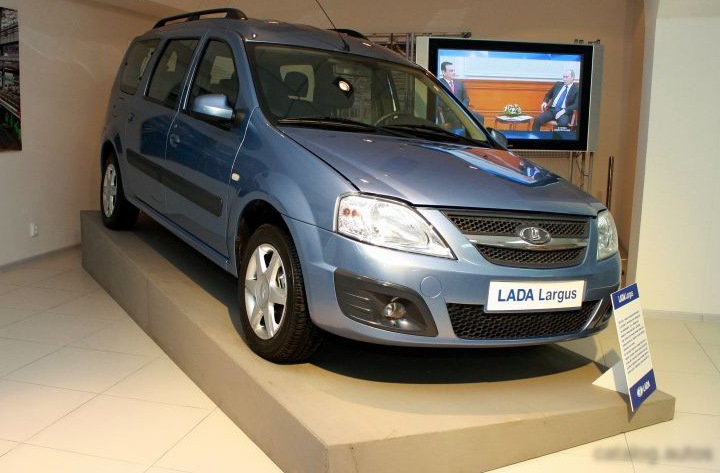
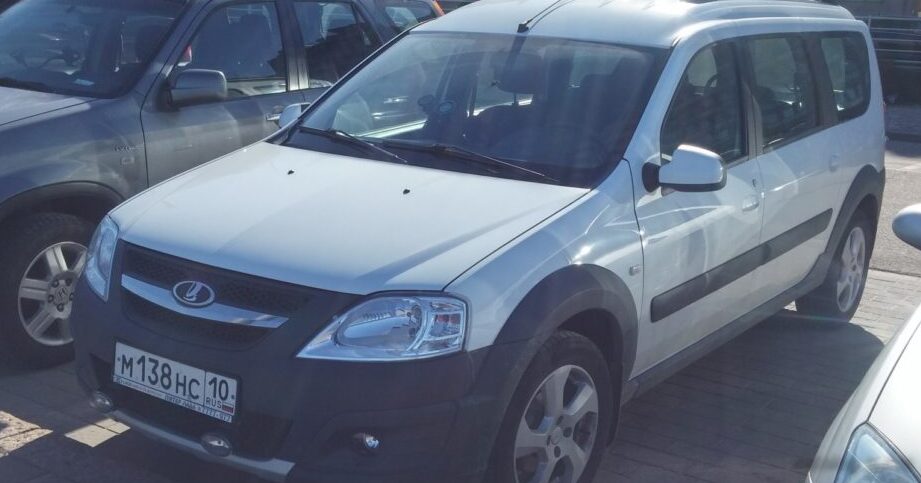
The Lada Largus Furgon, particularly the facelifted 2021 model powered by the 1.6-liter, 106 horsepower engine, represents a pragmatic and utilitarian vehicle designed primarily for commercial and family use in the Russian and Eastern European markets. While not typically found in North America, understanding its specifications and positioning provides insight into the demands of those regions and the evolution of Lada as a manufacturer. This variant occupied the entry-level position within the Largus Furgon range, offering a balance of affordability, cargo capacity, and basic functionality.
Technical Specifications
| Brand | Lada |
| Model | Largus |
| Generation | Largus Furgon (facelift 2021) |
| Type (Engine) | 1.6 (106 Hp) |
| Start of production | 2021 |
| Powertrain Architecture | Internal Combustion engine |
| Body type | Minivan |
| Seats | 2 |
| Doors | 5 |
| Fuel consumption (urban) | 10.9 l/100 km (21.6 US mpg, 25.9 UK mpg, 9.2 km/l) |
| Fuel consumption (extra urban) | 6.5 l/100 km (36.2 US mpg, 43.5 UK mpg, 15.4 km/l) |
| Fuel consumption (combined) | 8.1 l/100 km (29 US mpg, 34.9 UK mpg, 12.3 km/l) |
| Fuel Type | Petrol (Gasoline) |
| Acceleration 0 – 100 km/h | 13.1 sec |
| Acceleration 0 – 62 mph | 13.1 sec |
| Acceleration 0 – 60 mph | 12.4 sec |
| Maximum speed | 170 km/h (105.63 mph) |
| Emission standard | Euro 5 |
| Weight-to-power ratio | 13 kg/Hp, 76.8 Hp/tonne |
| Weight-to-torque ratio | 9.3 kg/Nm, 107.2 Nm/tonne |
| Power | 106 Hp @ 5800 rpm |
| Power per litre | 66.4 Hp/l |
| Torque | 148 Nm @ 4200 rpm (109.16 lb.-ft. @ 4200 rpm) |
| Engine layout | Front, Transverse |
| Engine Model/Code | 21129 |
| Engine displacement | 1596 cm3 (97.39 cu. in.) |
| Number of cylinders | 4 |
| Engine configuration | Inline |
| Number of valves per cylinder | 4 |
| Fuel injection system | Multi-port manifold injection |
| Engine aspiration | Naturally aspirated engine |
| Engine oil capacity | 3.85 l (4.07 US qt, 3.39 UK qt) |
| Coolant capacity | 6.4 l (6.76 US qt, 5.63 UK qt) |
| Kerb Weight | 1380 kg (3042.38 lbs.) |
| Max. weight | 2000 kg (4409.25 lbs.) |
| Max load | 620 kg (1366.87 lbs.) |
| Trunk (boot) space – maximum | 2540 l (89.7 cu. ft.) |
| Fuel tank capacity | 50 l (13.21 US gal, 11 UK gal) |
| Permitted trailer load without brakes | 650 kg (1433 lbs.) |
| Length | 4488 mm (176.69 in.) |
| Width | 1735 mm (68.31 in.) |
| Height | 1656 mm (65.2 in.) |
| Wheelbase | 2905 mm (114.37 in.) |
| Front track | 1469 mm (57.83 in.) |
| Rear (Back) track | 1466 mm (57.72 in.) |
| Front overhang | 813 mm (32.01 in.) |
| Rear overhang | 770 mm (30.31 in.) |
| Ride height (ground clearance) | 172 mm (6.77 in.) |
| Drivetrain Architecture | Front wheel drive, Internal Combustion engine |
| Drive wheel | Front wheel drive |
| Number of gears and type of gearbox | 5 gears, manual transmission |
| Front suspension | Independent, type McPherson with coil spring and anti-roll bar |
| Rear suspension | Semi-independent, coil spring |
| Front brakes | Ventilated discs |
| Rear brakes | Drum |
| Assisting systems | ABS (Anti-lock braking system) |
| Steering type | Steering rack and pinion |
| Tires size | 185/65 R15 |
| Wheel rims size | 15 |
Origins and Market Positioning
The Lada Largus is fundamentally a rebadged and modernized version of the Dacia Logan MCV (Multi-Capacity Vehicle), a relationship stemming from Renault’s acquisition of a controlling stake in AvtoVAZ, Lada’s parent company. Introduced in 2010, the Largus was intended to fill a gap in the Lada lineup for a practical, affordable, and spacious vehicle suitable for both commercial and family needs. The Furgon variant, specifically, is a panel van version, prioritizing cargo volume over passenger comfort. The 2021 facelift brought minor cosmetic updates and refinements to the interior, but the core mechanicals remained largely unchanged.
In its primary markets – Russia and neighboring countries – the Largus Furgon 1.6 (106 Hp) served as an entry point into the commercial vehicle segment. It was targeted towards small businesses, tradespeople, and those requiring a versatile vehicle for transporting goods. Its relatively low price point, combined with its robust construction and large cargo area (2540 liters), made it a popular choice. The two-seat configuration further maximized cargo space, making it ideal for deliveries and work-related tasks.
Engine and Transmission
The heart of this Largus variant is the 1.6-liter, naturally aspirated inline-four cylinder engine, designated as the 21129. Producing 106 horsepower at 5800 rpm and 148 Nm (109.16 lb.-ft.) of torque at 4200 rpm, this engine prioritizes reliability and fuel efficiency over outright performance. The engine utilizes a multi-port fuel injection system, a relatively simple and proven technology. Paired with a five-speed manual transmission, the powertrain delivers adequate, though not exhilarating, performance. Acceleration from 0-100 km/h (0-62 mph) takes approximately 13.1 seconds, and the top speed is limited to 170 km/h (105.63 mph). The engine’s power-to-weight ratio of 13 kg/Hp reflects its modest output relative to the vehicle’s 1380 kg (3042.38 lbs) curb weight.
Comparison with Other Largus Variants
The 1.6-liter engine was the base engine option for the Largus range. Stepping up the lineup, buyers could opt for a more powerful 1.8-liter engine, offering a noticeable increase in performance. While the 1.8L wasn’t significantly more fuel-efficient, it provided a more relaxed driving experience, particularly when fully loaded. Diesel variants, such as the 1.9 TDI (sourced from Renault), were also available, offering superior fuel economy and torque, making them ideal for long-distance hauling. However, the diesel versions typically commanded a higher price and potentially incurred higher maintenance costs.
Compared to its siblings, the 1.6-liter Furgon was the most affordable and practical option. It lacked the refinement and performance of the higher-spec models but offered a compelling value proposition for those prioritizing functionality and cost-effectiveness. The target audience for this variant was primarily commercial users who valued cargo capacity and low running costs over driving pleasure.
Suspension, Brakes, and Handling
The Largus Furgon utilizes a simple yet effective suspension setup. The front suspension employs a McPherson strut design with coil springs and an anti-roll bar, while the rear suspension is a semi-independent coil spring arrangement. This setup provides a reasonable balance between ride comfort and load-carrying capability. Braking duties are handled by ventilated discs at the front and drum brakes at the rear, assisted by an ABS (Anti-lock Braking System). The steering is a rack and pinion system, providing adequate precision for everyday driving. The vehicle rides on 15-inch wheels with 185/65 R15 tires.
Overall Assessment
The Lada Largus Furgon 1.6 (106 Hp) is a no-frills, utilitarian vehicle designed to meet the practical needs of commercial users and families in specific markets. While it may not offer the sophistication or performance of more modern vehicles, its affordability, spaciousness, and robust construction have made it a popular choice in its target regions. Its simple mechanicals contribute to relatively low maintenance costs, and its large cargo capacity makes it a versatile workhorse. Although not sold in the United States, the Largus Furgon represents a significant example of a vehicle engineered for specific market demands and budgetary constraints.