
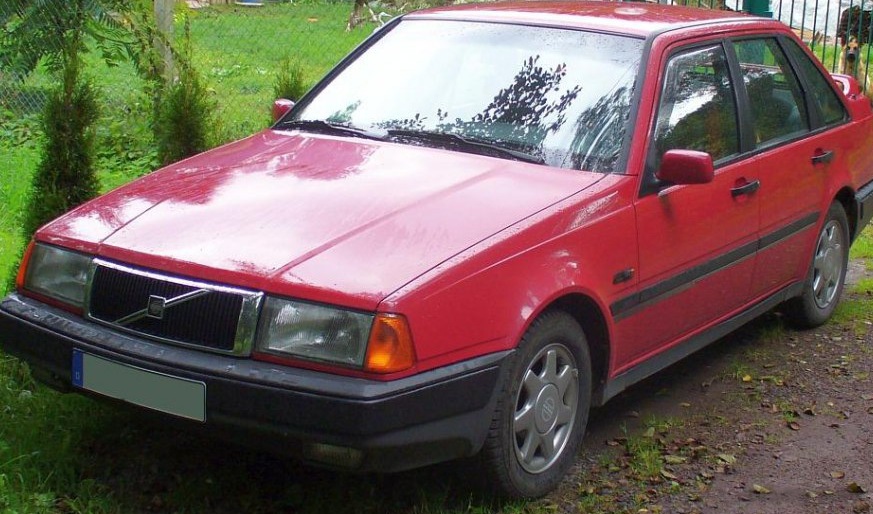
The Volvo 440 K, produced between 1993 and 1996, represented a significant, though often overlooked, chapter in Volvo’s history. This five-door hatchback, and its closely related variant the 445 estate, was a departure for the Swedish automaker, being the first Volvo to be fully designed with front-wheel drive. The 2.0-liter (110 hp) variant occupied a middle ground in the 440/445 lineup, offering a balance between affordability and performance. It was positioned above the base 1.6-liter models and below the more powerful, though less common, turbocharged versions.
Technical Specifications
| Brand | Volvo |
| Model | 440 K |
| Generation | 440 K (445) |
| Type (Engine) | 2.0 (110 Hp) |
| Start of production | 1993 |
| End of production | 1996 |
| Powertrain Architecture | Internal Combustion engine |
| Body type | Hatchback |
| Seats | 5 |
| Doors | 5 |
| Fuel consumption (urban) | 11.1 l/100 km (21.2 US mpg, 25.4 UK mpg, 9 km/l) |
| Fuel consumption (extra urban) | 5.9 l/100 km (39.9 US mpg, 47.9 UK mpg, 16.9 km/l) |
| Fuel consumption (combined) | 8.1 l/100 km (29 US mpg, 34.9 UK mpg, 12.3 km/l) |
| Fuel Type | Petrol (Gasoline) |
| Acceleration 0 – 100 km/h | 10.2 sec |
| Acceleration 0 – 62 mph | 10.2 sec |
| Acceleration 0 – 60 mph | 9.7 sec |
| Maximum speed | 190 km/h (118.06 mph) |
| Weight-to-power ratio | 9.5 kg/Hp, 104.8 Hp/tonne |
| Weight-to-torque ratio | 6.4 kg/Nm, 157.1 Nm/tonne |
| Power | 110 Hp @ 5500 rpm |
| Power per litre | 55.1 Hp/l |
| Torque | 165 Nm @ 3500 rpm (121.7 lb.-ft. @ 3500 rpm) |
| Engine layout | Front, Transverse |
| Engine Model/Code | B20F116 |
| Engine displacement | 1998 cm3 (121.93 cu. in.) |
| Number of cylinders | 4 |
| Engine configuration | Inline |
| Cylinder Bore | 82.7 mm (3.26 in.) |
| Piston Stroke | 93 mm (3.66 in.) |
| Compression ratio | 9.5:1 |
| Number of valves per cylinder | 2 |
| Fuel injection system | Multi-port manifold injection |
| Engine aspiration | Naturally aspirated engine |
| Valvetrain | OHC |
| Engine oil capacity | 5 l (5.28 US qt | 4.4 UK qt) |
| Coolant capacity | 7 l (7.4 US qt | 6.16 UK qt) |
| Kerb Weight | 1050 kg (2314.85 lbs.) |
| Max. weight | 1580 kg (3483.3 lbs.) |
| Max load | 530 kg (1168.45 lbs.) |
| Trunk (boot) space – minimum | 1028 l (36.3 cu. ft.) |
| Trunk (boot) space – maximum | 1030 l (36.37 cu. ft.) |
| Fuel tank capacity | 60 l (15.85 US gal | 13.2 UK gal) |
| Length | 4345 mm (171.06 in.) |
| Width | 1686 mm (66.38 in.) |
| Height | 1378 mm (54.25 in.) |
| Wheelbase | 2503 mm (98.54 in.) |
| Front track | 1416 mm (55.75 in.) |
| Rear track | 1425 mm (56.1 in.) |
| Drivetrain Architecture | Front wheel drive |
| Number of gears and type of gearbox | 5 gears, manual transmission |
| Front suspension | Wishbone |
| Rear suspension | Coil spring |
| Front brakes | Disc |
| Rear brakes | Disc |
| Assisting systems | ABS (Anti-lock braking system) |
| Steering type | Steering rack and pinion |
| Power steering | Hydraulic Steering |
| Tires size | 175/65 R14 |
| Wheel rims size | 14 |
Background and Market Positioning
Prior to the 440, Volvo was almost exclusively known for rear-wheel-drive vehicles, embodying a reputation for safety and durability. The shift to front-wheel drive with the 440 series was a strategic move to modernize the lineup and appeal to a broader market, particularly in Europe where smaller, more fuel-efficient cars were in high demand. The 440 K, with its 2.0-liter engine, aimed to provide a reasonable level of performance without the higher cost associated with the turbocharged models. It was marketed towards families and individuals seeking a practical and reliable vehicle for everyday use.
Engine and Performance
The B20F116 engine, a naturally aspirated 2.0-liter inline-four, produced 110 horsepower at 5500 rpm and 165 Nm (121.7 lb-ft) of torque at 3500 rpm. While not a powerhouse, this engine provided adequate performance for the 440 K, allowing for a 0-60 mph time of around 9.7 seconds and a top speed of 118 mph. The engine’s relatively simple design contributed to its reliability, although it wasn’t without its quirks. The B20F was known to be somewhat sensitive to maintenance, particularly regarding timing belt changes. The five-speed manual transmission offered in this variant provided a more engaging driving experience compared to the optional three-speed automatic.
Comparison with Other Variants
The 440/445 range offered a variety of engine options. The base 1.6-liter engine provided even greater fuel economy but significantly less performance, making it ideal for budget-conscious buyers. At the other end of the spectrum were the turbocharged 2.0-liter models, which delivered considerably more power and a sportier driving experience, but at a higher price point and with increased complexity. The 1.9 TDI diesel, available in some European markets, prioritized fuel efficiency and torque over outright speed. The 2.0-liter 110 hp version struck a balance, offering a good compromise between performance, economy, and cost. Compared to the turbocharged variants, the 2.0-liter naturally aspirated engine was generally considered more reliable and less prone to issues related to turbocharger failure or boost control.
Mechanical Features and Technology
The Volvo 440 K featured a relatively conventional mechanical setup. It utilized a MacPherson strut front suspension and a coil-sprung rear axle. Disc brakes were fitted on all four wheels, and an anti-lock braking system (ABS) was available as an option, enhancing safety. The steering was rack and pinion, providing reasonably precise handling. The interior of the 440 K was functional and practical, prioritizing usability over luxury. While not lavishly equipped, it offered comfortable seating for five passengers and a surprisingly spacious cargo area, particularly in the 445 estate version. The 440/445 series was notable for its robust construction and focus on safety, incorporating features such as reinforced side impact protection.
Legacy and Impact
The Volvo 440 K, and the 440/445 series as a whole, played a crucial role in Volvo’s transition to front-wheel drive. While not a resounding commercial success, it paved the way for future models like the 850 and S40/V40, which cemented Volvo’s position as a leader in safety and innovation. The 2.0-liter 110 hp variant remains a popular choice among enthusiasts for its reliability, affordability, and balanced performance. Today, well-maintained examples are increasingly sought after by classic car collectors and Volvo aficionados.
