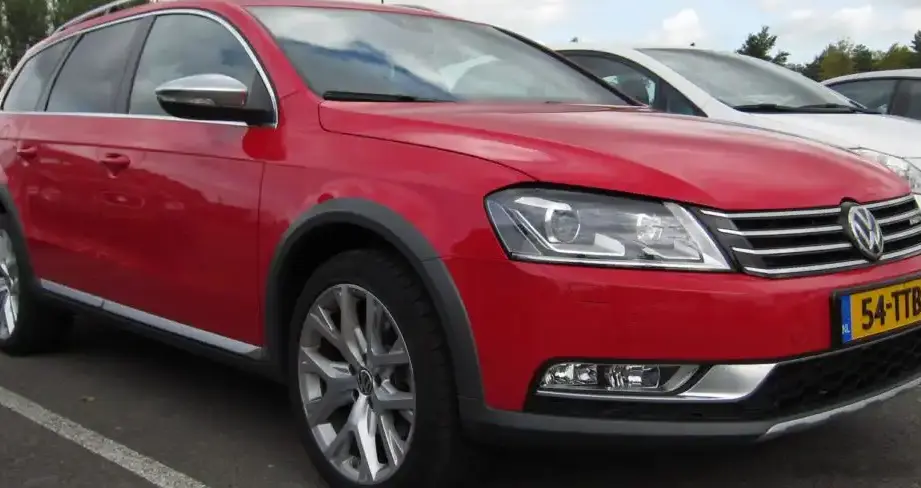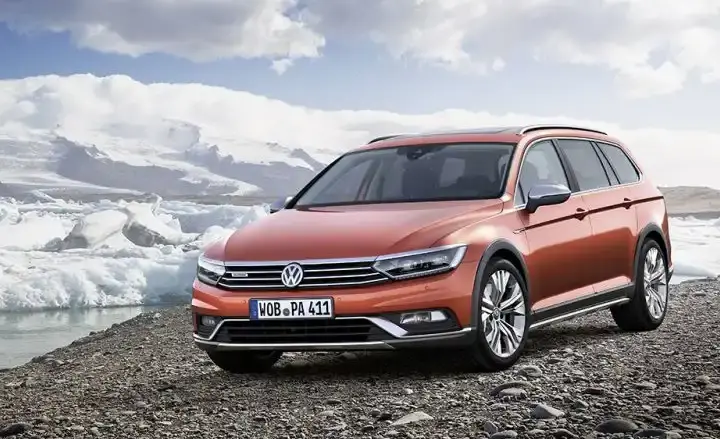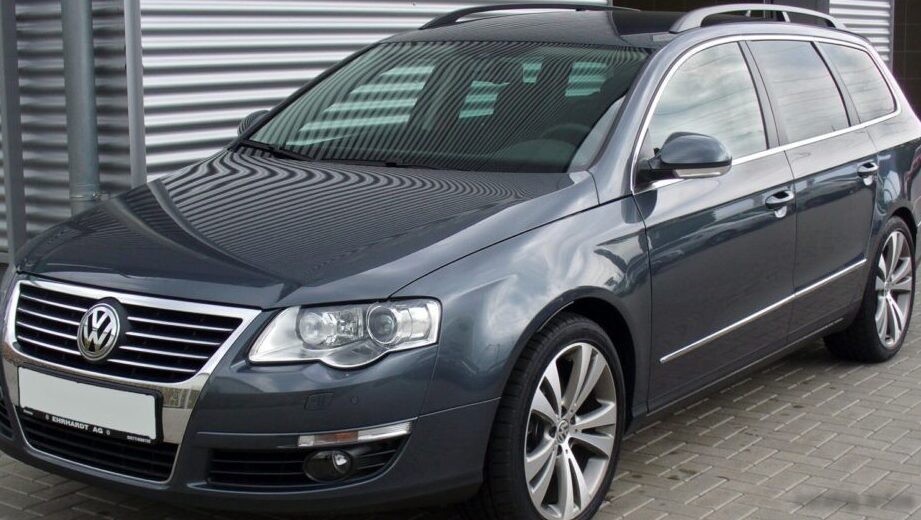
The Volkswagen Passat Variant (B6) 2.0i 16V FSI, produced from February 2005 to April 2010, represented a significant offering in Volkswagen’s mid-size family car lineup. This variant, a station wagon (estate) body style, was primarily aimed at the European market, where practicality and fuel efficiency were highly valued. It slotted into the Passat range as a mid-range option, offering a balance between performance and economy, appealing to families and individuals needing a versatile vehicle. The “FSI” designation indicated the use of Volkswagen’s direct fuel injection technology, a key feature for improving power and reducing emissions.
Technical Specifications
| Brand | Volkswagen |
| Model | Passat |
| Generation | Passat Variant (B6) |
| Type (Engine) | 2.0i 16V FSI (150 Hp) |
| Start of production | February, 2005 |
| End of production | April, 2010 |
| Powertrain Architecture | Internal Combustion engine |
| Body type | Station wagon (estate) |
| Seats | 5 |
| Doors | 5 |
| Fuel consumption (urban) | 11.5 l/100 km (20.5 US mpg, 24.6 UK mpg) |
| Fuel consumption (extra urban) | 6.6 l/100 km (35.6 US mpg, 42.8 UK mpg) |
| Fuel consumption (combined) | 8.4 l/100 km (28 US mpg, 33.6 UK mpg) |
| Fuel Type | Petrol (Gasoline) |
| Acceleration 0 – 100 km/h | 9.6 sec |
| Acceleration 0 – 62 mph | 9.6 sec |
| Acceleration 0 – 60 mph | 9.1 sec |
| Maximum speed | 210 km/h (130.49 mph) |
| Weight-to-power ratio | 9.6 kg/Hp |
| Weight-to-torque ratio | 7.2 kg/Nm |
| Power | 150 Hp @ 6000 rpm |
| Power per litre | 75.6 Hp/l |
| Torque | 200 Nm @ 3500 rpm (147.51 lb.-ft. @ 3500 rpm) |
| Engine layout | Front, Transverse |
| Engine Model/Code | BLR |
| Engine displacement | 1984 cm3 (121.07 cu. in.) |
| Number of cylinders | 4 |
| Engine configuration | Inline |
| Cylinder Bore | 82.5 mm (3.25 in.) |
| Piston Stroke | 92.8 mm (3.65 in.) |
| Compression ratio | 11.5:1 |
| Number of valves per cylinder | 4 |
| Fuel injection system | Direct injection |
| Engine aspiration | Naturally aspirated engine |
| Valvetrain | DOHC |
| Engine oil capacity | 4.6 l (4.86 US qt | 4.05 UK qt) |
| Coolant | 8 l (8.45 US qt | 7.04 UK qt) |
| Kerb Weight | 1445 kg (3185.68 lbs.) |
| Max. weight | 2080 kg (4585.62 lbs.) |
| Max load | 635 kg (1399.94 lbs.) |
| Trunk (boot) space – minimum | 603 l (21.29 cu. ft.) |
| Trunk (boot) space – maximum | 1731 l (61.13 cu. ft.) |
| Fuel tank capacity | 70 l (18.49 US gal | 15.4 UK gal) |
| Length | 4774 mm (187.95 in.) |
| Width | 1820 mm (71.65 in.) |
| Height | 1517 mm (59.72 in.) |
| Wheelbase | 2709 mm (106.65 in.) |
| Front track | 1552 mm (61.1 in.) |
| Rear (Back) track | 1551 mm (61.06 in.) |
| Minimum turning circle | 11.4 m (37.4 ft.) |
| Drivetrain Architecture | ICE, Front wheel drive |
| Drive wheel | Front wheel drive |
| Number of gears | 6 gears, manual transmission |
| Front suspension | Spring Strut |
| Rear suspension | Coil spring |
| Front brakes | Ventilated discs |
| Rear brakes | Disc |
| Assisting systems | ABS (Anti-lock braking system) |
| Steering type | Steering rack and pinion |
| Tires size | 205/55 R16 |
| Wheel rims size | 6.5J x 16 |
Positioning within the Passat B6 Range
The 2.0i 16V FSI variant occupied a crucial middle ground within the B6 Passat lineup. Below it sat the more economical, typically lower-powered 1.6-liter and 1.4-liter petrol engines, as well as the diesel options like the 1.9 TDI. Above it were the more performance-oriented models, most notably the 3.2-liter V6 FSI, which offered significantly more power but at the cost of increased fuel consumption. The 2.0 FSI aimed to provide a sweet spot for drivers who wanted a reasonably powerful and refined engine without the higher running costs of the V6. It was a popular choice for families who needed space and practicality but didn’t necessarily prioritize outright speed.
Engine and Technology
The BLR engine, a 1.984-liter inline-four, was a key component of this Passat variant. Its defining feature was the direct fuel injection (FSI) system. Unlike traditional port fuel injection, FSI injects fuel directly into the combustion chamber, allowing for more precise fuel control, improved combustion efficiency, and increased power output. This technology contributed to the engine’s respectable 150 horsepower and 200 Nm (147.51 lb-ft) of torque. The engine also featured a double overhead camshaft (DOHC) valvetrain with four valves per cylinder, further enhancing its breathing and performance. The six-speed manual transmission offered precise gear changes and contributed to the car’s relatively engaging driving experience.
Comparison with Siblings
Compared to the 1.6-liter Passat, the 2.0 FSI offered a noticeable performance boost. Acceleration was quicker, and the engine felt more responsive, especially during overtaking maneuvers. However, the 1.6-liter was more fuel-efficient and generally cheaper to insure and maintain. In contrast to the 3.2-liter V6, the 2.0 FSI was significantly more economical and lighter, resulting in better handling and fuel economy. The V6 provided a more luxurious and powerful driving experience, but its higher running costs made it less appealing to budget-conscious buyers. The diesel variants, particularly the 1.9 TDI and later the 2.0 TDI, offered even better fuel economy and strong low-end torque, making them ideal for long-distance driving. However, they often came with a price premium and could be more expensive to repair due to the complexity of their diesel particulate filters and other emissions control systems. The 2.0 FSI offered a compelling compromise, blending reasonable performance with good fuel economy and a lower overall cost of ownership than the V6 or some of the more advanced diesel models.
Practicality and Features
The Passat Variant (B6) was renowned for its spacious interior and large cargo area. With 603 liters (21.29 cu. ft.) of boot space with the rear seats up and 1731 liters (61.13 cu. ft.) with them folded down, it offered ample room for luggage, groceries, or family equipment. The B6 generation also benefited from a well-designed interior with comfortable seats and a user-friendly layout. Standard features typically included air conditioning, power windows, central locking, and an audio system. Higher trim levels offered additional features such as alloy wheels, a sunroof, and upgraded audio systems. Safety features like ABS and multiple airbags were standard across the range.
Legacy and Reliability
The Volkswagen Passat B6, including the 2.0i 16V FSI variant, proved to be a popular and reliable family car. While the FSI engines were generally well-regarded, they were sometimes prone to carbon buildup on the intake valves, which could lead to reduced performance over time. Regular servicing and the use of high-quality fuel could help mitigate this issue. Overall, the B6 Passat remains a well-respected vehicle, known for its practicality, comfort, and relatively low running costs. It continues to be a popular choice on the used car market, offering a good balance of features and value for money.