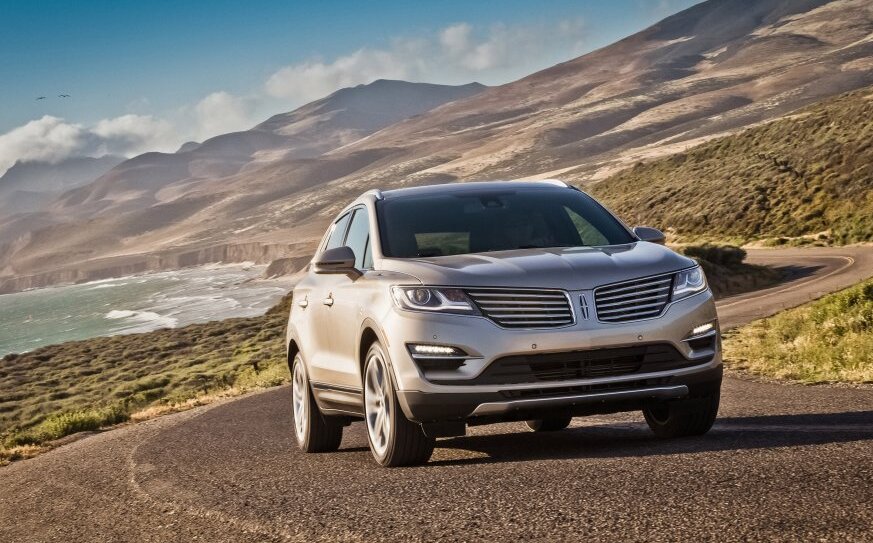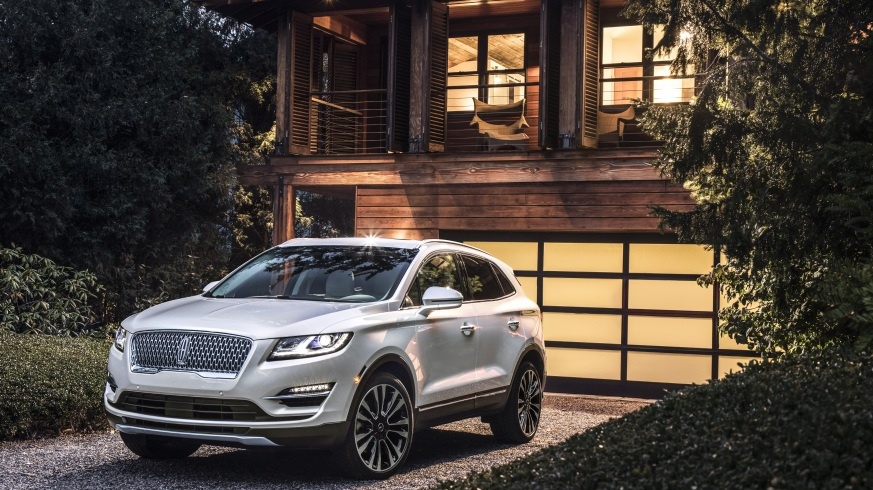
The Lincoln MKC (facelift 2019) 2.0, producing 245 horsepower, represented a key offering in Lincoln’s compact luxury SUV lineup. Introduced as part of a mid-cycle refresh in 2019, this variant aimed to balance performance and fuel efficiency within the MKC range. It occupied a middle ground, positioned above the base 2.3L engine and below potential higher-trim options with more extensive features. The MKC, and subsequently the Corsair which replaced it, were Lincoln’s attempts to capture a larger share of the growing compact luxury SUV market, competing with established players like the Acura RDX, BMW X3, and Audi Q5.
Technical Specifications
| Brand | Lincoln |
| Model | MKC |
| Generation | MKC (facelift 2019) |
| Type (Engine) | 2.0 (245 Hp) Automatic |
| Start of production | 2018 |
| Powertrain Architecture | Internal Combustion engine |
| Body type | SUV |
| Seats | 5 |
| Doors | 5 |
| Fuel consumption (economy) – urban | 14.1 l/100 km (20 UK mpg, 7.1 km/l) |
| Fuel consumption (economy) – extra urban | 10.5 l/100 km (26.9 UK mpg, 9.5 km/l) |
| Fuel consumption (economy) – combined | 12.3 l/100 km (23 UK mpg, 8.1 km/l) |
| Fuel Type | Petrol (Gasoline) |
| Weight-to-power ratio | 7.1 kg/Hp, 141.7 Hp/tonne |
| Weight-to-torque ratio | 4.6 kg/Nm, 215.7 Nm/tonne |
| Power | 245 Hp @ 5500 rpm |
| Power per litre | 122.6 Hp/l |
| Torque | 373 Nm @ 3000 rpm (275.11 lb.-ft. @ 3000 rpm) |
| Engine layout | Front, Transverse |
| Engine Model/Code | EcoBoost |
| Engine displacement | 1999 cm3 (121.99 cu. in.) |
| Number of cylinders | 4 |
| Engine configuration | Inline |
| Cylinder Bore | 87.5 mm (3.44 in.) |
| Piston Stroke | 83.1 mm (3.27 in.) |
| Compression ratio | 9.7:1 |
| Number of valves per cylinder | 4 |
| Fuel injection system | Direct injection |
| Engine aspiration | Turbocharger, Intercooler |
| Valvetrain | DOHC, Ti-VCT |
| Engine oil capacity | 5.4 l (5.71 US qt | 4.75 UK qt) |
| Coolant | 8.1 l (8.56 US qt | 7.13 UK qt) |
| Kerb Weight | 1729 kg (3811.79 lbs.) |
| Trunk (boot) space – minimum | 714 l (25.21 cu. ft.) |
| Trunk (boot) space – maximum | 1504 l (53.11 cu. ft.) |
| Fuel tank capacity | 59 l (15.59 US gal | 12.98 UK gal) |
| Permitted trailer load with brakes (12%) | 1361 kg (3000.49 lbs.) |
| Length | 4552 mm (179.21 in.) |
| Width | 1938 mm (76.3 in.) |
| Width including mirrors | 2136 mm (84.09 in.) |
| Height | 1656 mm (65.2 in.) |
| Wheelbase | 2690 mm (105.91 in.) |
| Front track | 1585 mm (62.4 in.) |
| Rear (Back) track | 1588 mm (62.52 in.) |
| Minimum turning circle (turning diameter) | 11.6 m (38.06 ft.) |
| Drivetrain Architecture | The Internal combustion engine (ICE) drives the front wheels of the vehicle. |
| Drive wheel | Front wheel drive |
| Number of gears and type of gearbox | 6 gears, automatic transmission SelectShift |
| Front suspension | Independent, type McPherson with coil spring and anti-roll bar |
| Rear suspension | Independent multi-link spring suspension with stabilizer |
| Front brakes | Ventilated discs |
| Rear brakes | Disc |
| Assisting systems | ABS (Anti-lock braking system) |
| Steering type | Steering rack and pinion |
| Power steering | Electric Steering |
| Tires size | 235/50 R18; 235/45 R19; 255/40 R20 |
| Wheel rims size | 18; 19; 20 |
Overview and Market Positioning
The 2019 Lincoln MKC facelift represented a significant effort to modernize the vehicle and enhance its appeal in a competitive segment. The 2.0-liter EcoBoost engine was a central component of this strategy, offering a balance between respectable power and reasonable fuel economy. In the US market, Lincoln aimed to attract buyers seeking a more refined and comfortable alternative to mainstream luxury brands, emphasizing quiet interiors and a smooth ride. The MKC, and this 2.0L variant specifically, targeted buyers who prioritized a comfortable daily driving experience over outright performance.
Engine and Transmission Details
The heart of this MKC variant is the 2.0-liter turbocharged inline-four cylinder engine, part of Ford’s EcoBoost family. This engine utilizes direct fuel injection and a twin-scroll turbocharger to deliver 245 horsepower at 5500 rpm and 275 lb-ft of torque at 3000 rpm. The engine’s Ti-VCT (Twin Independent Variable Camshaft Timing) technology optimizes valve timing for improved performance and efficiency across the rev range. The engine is transversely mounted in the front of the vehicle. Power is delivered through a six-speed automatic transmission with SelectShift functionality, allowing drivers to manually select gears for more control. While not the sportiest transmission available at the time, it prioritized smooth and comfortable shifts, aligning with Lincoln’s brand ethos.
Comparison with Other MKC Variants
The MKC was also offered with a 2.3-liter EcoBoost engine, which produced significantly more power (around 285 hp). This larger engine catered to drivers who desired more spirited acceleration and a more engaging driving experience. However, the 2.3L came at a higher price point and typically offered slightly lower fuel economy. A diesel option, the 2.0L I4 Turbo Diesel, was available in some markets (primarily Europe) offering excellent fuel economy but less overall power than either gasoline engine. The 2.0L gasoline engine, therefore, positioned itself as a sweet spot, offering a good compromise between performance, efficiency, and cost. Compared to the diesel, the 2.0L gasoline engine provided quicker acceleration and a more responsive feel, while being more readily available and accepted in the US market.
Technology and Features
The 2019 facelift brought several technological updates to the MKC, including an updated infotainment system with a larger touchscreen display. Standard features on the 2.0L variant typically included features like automatic climate control, a rearview camera, and a suite of driver-assistance technologies such as blind-spot monitoring and lane-keeping assist. Higher trim levels offered features like navigation, premium audio systems, and adaptive cruise control. The MKC’s interior focused on providing a comfortable and quiet cabin, utilizing sound-deadening materials and premium upholstery options.
Driving Dynamics and Ride Quality
The MKC 2.0 prioritizes a comfortable and composed ride. The suspension, tuned for comfort, effectively absorbs bumps and imperfections in the road. Steering is light and precise, making it easy to maneuver in urban environments. While not a sports SUV, the 2.0L engine provides adequate power for everyday driving and highway merging. The front-wheel-drive configuration contributes to good fuel economy, although all-wheel drive was available as an option for enhanced traction in inclement weather.
Successor and Legacy
The Lincoln MKC was replaced by the Corsair in the 2020 model year. The Corsair represented a more substantial redesign, incorporating a more modern design language and updated technology. However, the core philosophy of providing a comfortable and refined luxury SUV experience remained consistent. The MKC, particularly the 2.0L variant, played a crucial role in Lincoln’s efforts to re-establish itself as a viable competitor in the luxury SUV segment, paving the way for the Corsair and future Lincoln models.