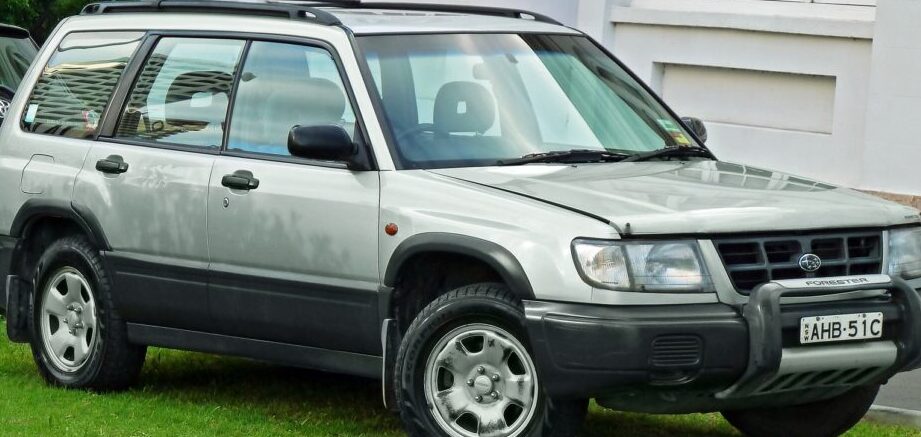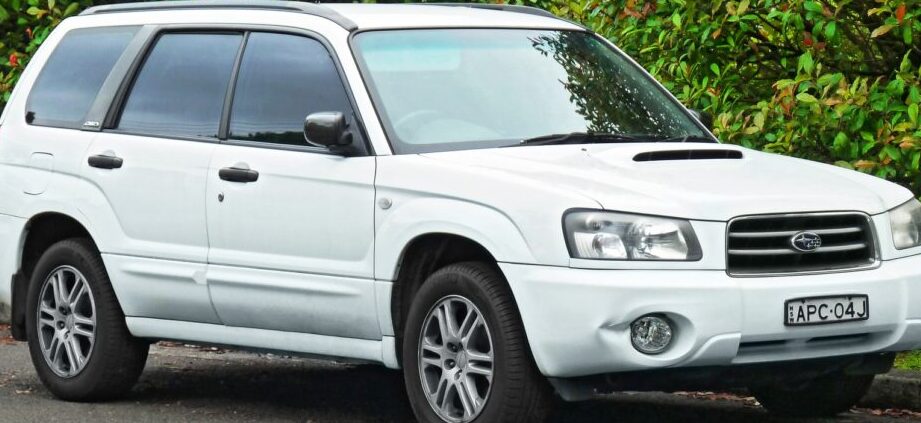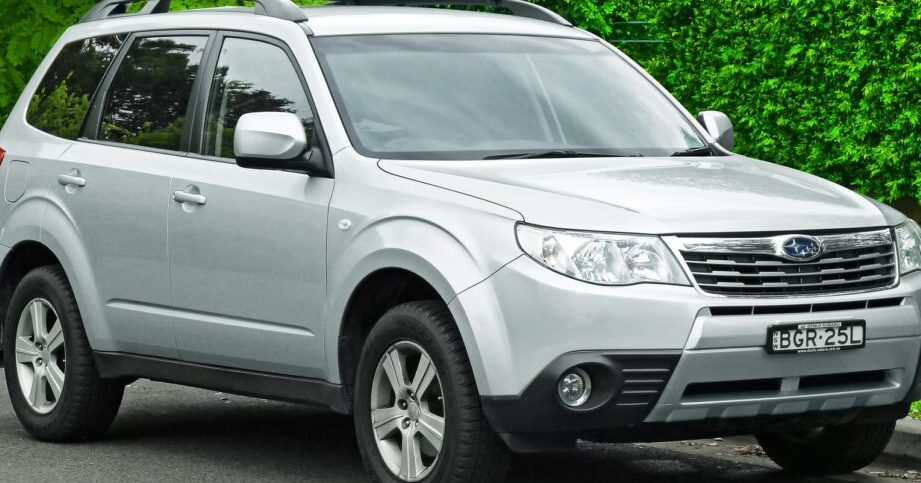
The Subaru Forester III 2.0 X (150 Hp) E-4AT, produced between 2007 and 2010, represented a significant iteration in Subaru’s popular compact SUV lineup. This variant occupied a middle ground within the Forester III range, offering a balance between affordability, fuel efficiency, and Subaru’s signature all-wheel-drive capability. It was primarily marketed in Europe, Australia, and other international markets, where compact SUVs were gaining traction as versatile family vehicles. The 2.0 X trim aimed to provide a practical and reliable option for buyers seeking a capable crossover without the higher price tag of the more powerful or feature-rich models.
Technical Specifications
| Brand | Subaru |
| Model | Forester |
| Generation | Forester III |
| Type (Engine) | 2.0 X (150 Hp) E-4AT |
| Start of production | 2007 |
| End of production | 2010 |
| Powertrain Architecture | Internal Combustion engine |
| Body type | SUV, Crossover |
| Seats | 5 |
| Doors | 5 |
| Fuel consumption (urban) | 12.3 l/100 km (19.1 US mpg, 23 UK mpg, 8.1 km/l) |
| Fuel consumption (extra urban) | 7.6 l/100 km (30.9 US mpg, 37.2 UK mpg, 13.2 km/l) |
| Fuel consumption (combined) | 9.3 l/100 km (25.3 US mpg, 30.4 UK mpg, 10.8 km/l) |
| Fuel Type | Petrol (Gasoline) |
| Acceleration 0 – 100 km/h | 11.9 sec |
| Acceleration 0 – 62 mph | 11.9 sec |
| Acceleration 0 – 60 mph | 11.3 sec |
| Maximum speed | 190 km/h (118.06 mph) |
| Emission standard | Euro 4 |
| Weight-to-power ratio | 9.4 kg/Hp, 106.8 Hp/tonne |
| Weight-to-torque ratio | 7.2 kg/Nm, 139.5 Nm/tonne |
| Power | 150 Hp @ 6000 rpm |
| Power per litre | 75.2 Hp/l |
| Torque | 196 Nm @ 3200 rpm (144.56 lb.-ft. @ 3200 rpm) |
| Engine layout | Front, Longitudinal |
| Engine displacement | 1994 cm3 (121.68 cu. in.) |
| Number of cylinders | 4 |
| Engine configuration | Boxer |
| Cylinder Bore | 92 mm (3.62 in.) |
| Piston Stroke | 75 mm (2.95 in.) |
| Compression ratio | 11:1 |
| Number of valves per cylinder | 4 |
| Fuel injection system | Multi-port manifold injection |
| Engine aspiration | Naturally aspirated engine |
| Valvetrain | DOHC |
| Engine oil capacity | 4.2 l (4.44 US qt | 3.7 UK qt) |
| Kerb Weight | 1405 kg (3097.49 lbs.) |
| Max. weight | 1880 kg (4144.69 lbs.) |
| Max load | 475 kg (1047.2 lbs.) |
| Trunk (boot) space – minimum | 387 l (13.67 cu. ft.) |
| Fuel tank capacity | 60 l (15.85 US gal | 13.2 UK gal) |
| Length | 4485 mm (176.57 in.) |
| Width | 1735 mm (68.31 in.) |
| Height | 1590 mm (62.6 in.) |
| Wheelbase | 2525 mm (99.41 in.) |
| Front track | 1495 mm (58.86 in.) |
| Rear (Back) track | 1485 mm (58.46 in.) |
| Minimum turning circle | 10.6 m (34.78 ft.) |
| Drive wheel | All wheel drive (4×4) |
| Number of gears and type of gearbox | 4 gears, automatic transmission |
| Front suspension | Spring-loaded rack |
| Rear suspension | Suspension De-Dion |
| Front brakes | Ventilated discs |
| Rear brakes | Disc |
| Assisting systems | ABS (Anti-lock braking system) |
| Steering type | Steering rack and pinion |
| Power steering | Electric Steering |
| Tires size | 215/60 R16 |
Positioning and Market Role
The Forester III range offered a variety of engine and transmission options, catering to different buyer preferences. The 2.0 X with the E-4AT automatic transmission was positioned as a mainstream offering. It sat below the more powerful 2.5 XT turbocharged model, which appealed to drivers seeking sportier performance, and above the base 1.6L naturally aspirated engine, which prioritized fuel economy. The E-4AT transmission, a four-speed automatic, was chosen for its ease of use and suitability for everyday driving, making it a popular choice for families and those less concerned with maximizing performance. Compared to the diesel options available in Europe (like the 1.9 TDI), the 2.0 X offered a smoother, quieter driving experience, albeit with slightly higher fuel consumption.
Engine and Transmission Details
The heart of the 2.0 X is Subaru’s naturally aspirated 1994cc (121.68 cu. in.) four-cylinder boxer engine. This engine, a hallmark of Subaru engineering, is known for its low center of gravity, contributing to the Forester’s stable handling. The 150 horsepower output at 6000 rpm, coupled with 196 Nm (144.56 lb.-ft.) of torque at 3200 rpm, provided adequate performance for typical driving conditions. While not exceptionally quick – 0-60 mph in around 11.3 seconds – it was sufficient for comfortable highway cruising and city driving. The E-4AT four-speed automatic transmission was a conventional torque converter type, offering smooth shifts but lacking the efficiency and responsiveness of more modern transmissions. The combination of the engine and transmission resulted in a combined fuel economy of around 25.3 US mpg, which was competitive for its time but falls short of contemporary standards.
Subaru’s Symmetrical All-Wheel Drive System
A defining feature of the Forester III 2.0 X, and indeed all Subarus, is its symmetrical all-wheel-drive (AWD) system. This system distributes power to all four wheels, providing enhanced traction and stability in various driving conditions, particularly on slippery surfaces. The 2.0 X utilized a viscous coupling center differential, which automatically adjusted the power distribution between the front and rear axles based on available grip. This system, while not as sophisticated as some of the electronically controlled AWD systems found in later models, was highly effective and contributed significantly to the Forester’s reputation for all-weather capability. The AWD system, combined with the relatively short wheelbase and well-tuned suspension, made the Forester a surprisingly capable vehicle on unpaved roads and in inclement weather.
Interior and Features
The interior of the Forester III 2.0 X was functional and well-built, prioritizing practicality over luxury. The cabin offered comfortable seating for five passengers and a generous amount of cargo space – 387 liters (13.67 cu. ft.) with the rear seats up. Standard features typically included air conditioning, power windows and locks, and an audio system. Higher trim levels offered options such as alloy wheels, a sunroof, and upgraded upholstery. The Forester’s large windows and upright seating position provided good visibility, enhancing driver confidence. Safety features included ABS brakes and front airbags, although the level of safety equipment varied depending on the market.
Reliability and Maintenance
The Subaru Forester III 2.0 X generally enjoys a reputation for reliability, although like any vehicle, it is not without its potential issues. The boxer engine, while durable, can be prone to oil consumption as it ages. Regular oil changes and maintenance are crucial to prevent premature wear. The E-4AT automatic transmission is generally reliable, but it’s important to ensure it receives regular fluid changes. The AWD system requires periodic inspection and maintenance to ensure proper operation. Overall, the Forester III 2.0 X is a relatively easy vehicle to maintain, and parts are generally readily available. Its robust construction and proven mechanicals make it a viable option for buyers seeking a dependable and long-lasting compact SUV.