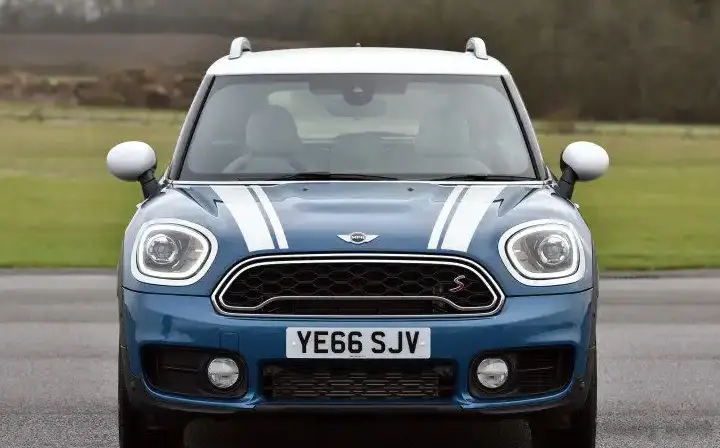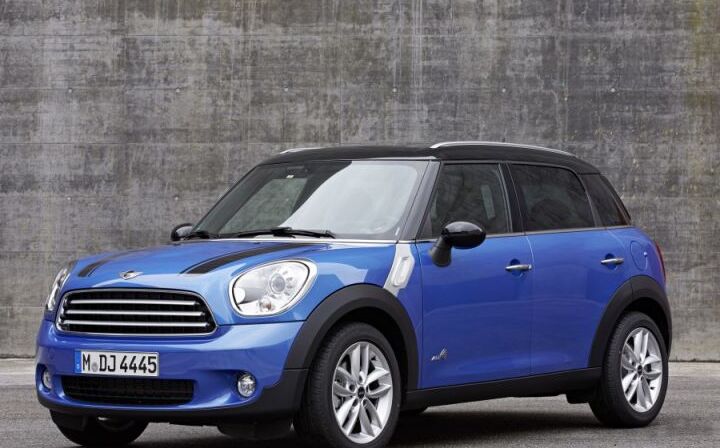
The Mini Countryman (R60) One D 1.6 (90 hp) represented the entry point into the second generation of the Countryman, Mini’s first foray into the compact SUV segment. Introduced in 2010 and continuing through 2014, this variant was primarily aimed at the European market, where fuel efficiency and lower running costs were highly valued. While not officially sold in the United States during its production run, the Countryman as a whole gained popularity in North America in later years. The One D trim offered a balance between Mini’s characteristic styling and a more accessible price point, making it a popular choice for first-time Mini buyers and those seeking a practical, yet stylish, small SUV.
Technical Specifications
| Brand | Mini |
| Model | Countryman |
| Generation | Countryman (R60) |
| Type (Engine) | One D 1.6 (90 Hp) |
| Start of production | 2010 |
| End of production | 2014 |
| Powertrain Architecture | Internal Combustion engine |
| Body type | SUV |
| Seats | 4-5 |
| Doors | 5 |
| Fuel consumption (urban) | 4.7 l/100 km (50 US mpg, 60.1 UK mpg, 21.3 km/l) |
| Fuel consumption (extra urban) | 4.2 l/100 km (56 US mpg, 67.3 UK mpg, 23.8 km/l) |
| Fuel consumption (combined) | 4.4 l/100 km (53.5 US mpg, 64.2 UK mpg, 22.7 km/l) |
| CO2 emissions | 115 g/km |
| Fuel Type | Diesel |
| Acceleration 0 – 100 km/h | 12.9 sec |
| Acceleration 0 – 62 mph | 12.9 sec |
| Acceleration 0 – 60 mph | 12.3 sec |
| Maximum speed | 170 km/h (105.63 mph) |
| Emission standard | Euro 5 |
| Weight-to-power ratio | 14.6 kg/Hp, 68.7 Hp/tonne |
| Weight-to-torque ratio | 6.1 kg/Nm, 164.1 Nm/tonne |
| Power | 90 Hp @ 4000 rpm |
| Power per litre | 56.3 Hp/l |
| Torque | 215 Nm @ 1750-2500 rpm (158.58 lb.-ft. @ 1750-2500 rpm) |
| Engine layout | Front, Transverse |
| Engine displacement | 1598 cm3 (97.52 cu. in.) |
| Number of cylinders | 4 |
| Engine configuration | Inline |
| Cylinder Bore | 78 mm (3.07 in.) |
| Piston Stroke | 83.6 mm (3.29 in.) |
| Compression ratio | 16.5:1 |
| Number of valves per cylinder | 4 |
| Fuel injection system | Diesel Commonrail |
| Engine aspiration | Turbocharger, Intercooler |
| Engine oil capacity | 5.2 l (5.49 US qt | 4.58 UK qt) |
| Coolant capacity | 5.4 l (5.71 US qt | 4.75 UK qt) |
| Engine systems | Particulate filter |
| Kerb Weight | 1310 kg (2888.06 lbs.) |
| Max. weight | 1780 kg (3924.23 lbs.) |
| Max load | 470 kg (1036.17 lbs.) |
| Trunk (boot) space – minimum | 350 l (12.36 cu. ft.) |
| Trunk (boot) space – maximum | 1170 l (41.32 cu. ft.) |
| Fuel tank capacity | 47 l (12.42 US gal | 10.34 UK gal) |
| Max. roof load | 75 kg (165.35 lbs.) |
| Length | 4097 mm (161.3 in.) |
| Width | 1789 mm (70.43 in.) |
| Height | 1561 mm (61.46 in.) |
| Wheelbase | 2595 mm (102.17 in.) |
| Front track | 1534 mm (60.39 in.) |
| Rear (Back) track | 1559 mm (61.38 in.) |
| Ride height (ground clearance) | 149 mm (5.87 in.) |
| Minimum turning circle | 11.6 m (38.06 ft.) |
| Drivetrain Architecture | Front wheel drive |
| Number of gears and type of gearbox | 6 gears, manual transmission |
| Front suspension | Independent, type McPherson with coil spring and anti-roll bar |
| Rear suspension | Independent multi-link suspension |
| Front brakes | Ventilated discs |
| Rear brakes | Disc |
| Assisting systems | ABS (Anti-lock braking system) |
| Steering type | Steering rack and pinion |
| Tires size | 205/60 R16 92H |
| Wheel rims size | 6.5J x 16 |
Positioning and Market Role
The Countryman One D 1.6 occupied the base trim level within the R60 Countryman range. Above it sat the Cooper D, offering more power, and then the Cooper S, which provided a significant performance boost. The One D was designed to appeal to buyers prioritizing fuel economy and affordability. It was a common choice for urban drivers and those covering long distances where minimizing fuel costs was a key concern. Compared to the more powerful variants, the One D offered a more relaxed driving experience, focusing on usability rather than outright speed. Its lower price point made the Countryman accessible to a wider audience, attracting customers who might otherwise have considered more conventional hatchbacks or smaller SUVs.
Engine and Performance Characteristics
The 1.6-liter diesel engine powering the One D was a member of BMW’s modular engine family, shared with several other models within the BMW and Mini lineups. While 90 horsepower might seem modest by modern standards, the engine’s strength lay in its torque output of 215 Nm (158.58 lb.-ft.). This torque, available from a relatively low 1750 rpm, provided adequate performance for everyday driving and made the car surprisingly capable when fully loaded. The six-speed manual transmission allowed drivers to effectively utilize the engine’s powerband. Acceleration from 0 to 60 mph took around 12.3 seconds, and the top speed was 170 km/h (105.63 mph). However, the primary focus wasn’t on speed, but on efficiency. The One D achieved combined fuel economy figures of around 4.4 l/100 km (53.5 US mpg), making it a very economical vehicle to run.
Comparison with Other Countryman Variants
The key differences between the One D and other Countryman models revolved around engine performance and equipment levels. The Cooper D, with its more powerful engine, offered noticeably quicker acceleration and a more engaging driving experience. The Cooper S, featuring a turbocharged petrol engine, delivered significantly higher horsepower and torque, transforming the Countryman into a genuinely sporty SUV. In terms of equipment, the One D typically came with a more basic specification, lacking some of the premium features found on the higher-end models. However, it still offered a respectable level of standard equipment, including air conditioning, power windows, and a CD player. Maintenance costs for the One D were generally lower than those for the Cooper S, due to the simpler engine and fewer performance-related components. The One D’s diesel engine also benefited from a particulate filter, helping to reduce emissions and meet stringent European emission standards.
Technological Features and Safety
The R60 Countryman One D, while not boasting the latest cutting-edge technology, offered a reasonable level of features for its time. Standard safety equipment included ABS, electronic brakeforce distribution, and front and side airbags. Optional extras included stability control and traction control. The car’s interior was designed with Mini’s signature retro-modern aesthetic, featuring a large central speedometer and a range of customizable options. The infotainment system was relatively basic, but it offered connectivity for MP3 players and other devices. The Countryman’s independent suspension provided a comfortable ride, and the car’s relatively compact size made it easy to maneuver in urban environments.
Legacy and Impact
The Mini Countryman (R60) One D 1.6 played a significant role in establishing the Countryman as a successful model within the Mini range. It broadened the brand’s appeal, attracting customers who were previously hesitant to consider a Mini due to its perceived lack of practicality. The One D’s fuel efficiency and affordability made it a popular choice in Europe, and it helped to pave the way for the Countryman’s eventual success in other markets, including the United States. While the R60 has since been replaced by newer generations of the Countryman, the One D variant remains a popular choice among enthusiasts seeking a stylish, economical, and practical small SUV.