
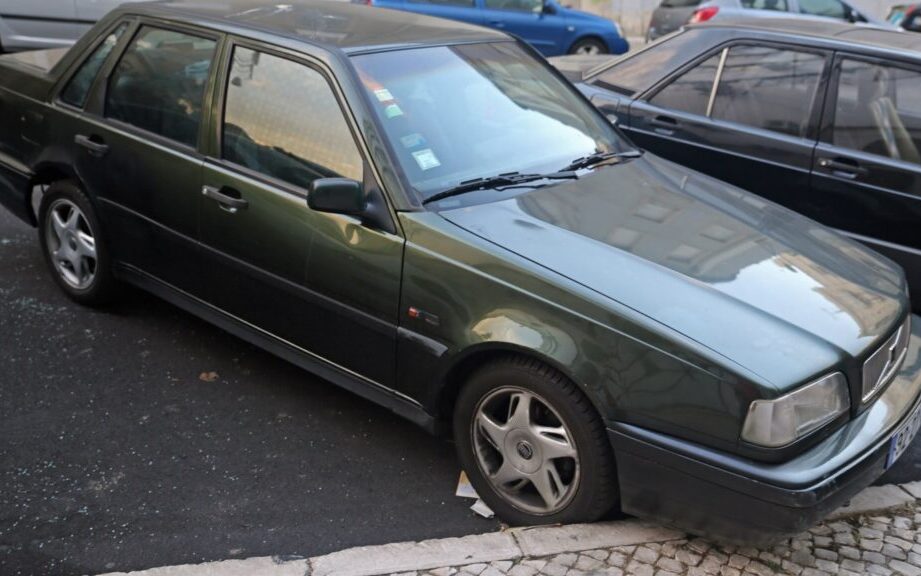
The Volvo 460 L, specifically the 1.7-liter (102 horsepower) variant produced between 1989 and 1992, represented Volvo’s entry into the compact executive sedan market. Falling under the internal designation 464, this model was a key component of Volvo’s lineup during a period of significant change for the Swedish automaker. It was built on the new 400 series platform, a departure from Volvo’s traditionally larger, more robust designs. The 460 L aimed to offer a more affordable and fuel-efficient option, particularly appealing to European buyers seeking a practical and safe family car. This particular engine and transmission combination – the B18E engine paired with a 5-speed manual gearbox – positioned itself as the standard offering, balancing cost with acceptable performance.
Technical Specifications
| Brand | Volvo |
| Model | 460 L |
| Generation | 460 L (464) |
| Type (Engine) | 1.7 (102 Hp) |
| Start of production | 1989 |
| End of production | 1992 |
| Powertrain Architecture | Internal Combustion engine |
| Body type | Sedan |
| Seats | 5 |
| Doors | 4 |
| Fuel consumption (urban) | 10.8 l/100 km (21.8 US mpg) |
| Fuel consumption (extra urban) | 5.8 l/100 km (40.6 US mpg) |
| Fuel consumption (combined) | 7.5 l/100 km (31.4 US mpg) |
| Fuel Type | Petrol (Gasoline) |
| Acceleration 0 – 100 km/h | 11 sec |
| Acceleration 0 – 62 mph | 11 sec |
| Acceleration 0 – 60 mph | 10.5 sec |
| Maximum speed | 180 km/h (111.85 mph) |
| Weight-to-power ratio | 10.1 kg/Hp |
| Weight-to-torque ratio | 7.3 kg/Nm |
| Power | 102 Hp @ 5600 rpm |
| Torque | 142 Nm @ 3900 rpm (104.73 lb.-ft. @ 3900 rpm) |
| Engine layout | Front, Transverse |
| Engine Model/Code | B18E |
| Engine displacement | 1721 cm3 (105.02 cu. in.) |
| Number of cylinders | 4 |
| Engine configuration | Inline |
| Cylinder Bore | 81 mm (3.19 in.) |
| Piston Stroke | 83.5 mm (3.29 in.) |
| Compression ratio | 10:1 |
| Number of valves per cylinder | 2 |
| Fuel injection system | Multi-port manifold injection |
| Engine aspiration | Naturally aspirated engine |
| Valvetrain | OHC |
| Engine oil capacity | 5 l (5.28 US qt | 4.4 UK qt) |
| Coolant capacity | 7 l (7.4 US qt | 6.16 UK qt) |
| Kerb Weight | 1030 kg (2270.76 lbs.) |
| Max. weight | 1520 kg (3351.03 lbs.) |
| Max load | 490 kg (1080.27 lbs.) |
| Trunk (boot) space – minimum | 453 l (16 cu. ft.) |
| Trunk (boot) space – maximum | 948 l (33.48 cu. ft.) |
| Fuel tank capacity | 60 l (15.85 US gal | 13.2 UK gal) |
| Length | 4435 mm (174.61 in.) |
| Width | 1686 mm (66.38 in.) |
| Height | 1378 mm (54.25 in.) |
| Wheelbase | 2503 mm (98.54 in.) |
| Front track | 1416 mm (55.75 in.) |
| Rear track | 1426 mm (56.14 in.) |
| Drivetrain Architecture | Front wheel drive |
| Number of gears | 5 |
| Gearbox type | Manual transmission |
| Front suspension | Wishbone |
| Rear suspension | Coil spring |
| Front brakes | Ventilated discs |
| Rear brakes | Disc |
| Assisting systems | ABS (Anti-lock braking system) |
| Steering type | Steering rack and pinion |
| Power steering | Hydraulic Steering |
| Tires size | 175/65 R14 |
| Wheel rims size | 14 |
INTRODUCTION
The Volvo 460 L 1.7, launched in 1989, was a significant departure for Volvo, marking the company’s move towards more mainstream, front-wheel-drive vehicles. It was the first Volvo to be built on the new 400 series platform, developed in collaboration with Renault. This platform aimed to reduce production costs and offer a more compact and fuel-efficient vehicle. The 460 L was intended to compete with other European sedans like the Ford Sierra and Opel Ascona, offering Volvo’s renowned safety features in a more accessible package. The 1.7-liter engine, producing 102 horsepower, was the base engine option, designed for buyers prioritizing economy and practicality over outright performance. Production continued until 1992, with minor revisions throughout its lifespan.
Powertrain & Engine Architecture
The heart of the 460 L 1.7 was the B18E engine, a 1.7-liter inline-four cylinder powerplant. This engine featured a single overhead camshaft (OHC) design and multi-port fuel injection, a relatively modern setup for its time. The B18E was known for its reliability and relatively smooth operation, though it wasn’t a particularly powerful engine. The engine code ‘B18E’ signifies a specific iteration within Volvo’s red block engine family. The 5-speed manual transmission, a standard feature on this model, was designed to maximize fuel efficiency and provide adequate acceleration. The transmission’s gear ratios were tuned for everyday driving, prioritizing smooth shifts and reasonable performance rather than sporty responsiveness. The engine’s relatively low compression ratio of 10:1 contributed to its ability to run on lower octane fuel, a benefit in many European markets.
Driving Characteristics
The 460 L 1.7 with the 5-speed manual offered a competent, if not exhilarating, driving experience. Acceleration from 0-60 mph took around 10.5 seconds, and top speed was approximately 112 mph. The engine’s torque output of 142 Nm (104.73 lb-ft) was sufficient for everyday driving, but overtaking maneuvers required careful planning. Compared to the later 2.0-liter versions, the 1.7 felt noticeably less powerful, particularly when fully loaded. The manual transmission allowed for greater driver control and contributed to better fuel economy than the optional automatic transmission. The front-wheel-drive configuration provided predictable handling, although it lacked the dynamic finesse of rear-wheel-drive competitors. The suspension, tuned for comfort, absorbed bumps reasonably well, making it a suitable long-distance cruiser.
Equipment & Trim Levels
The 460 L 1.7 typically came with a fairly basic level of equipment, reflecting its position as the entry-level model. Standard features included power steering, central locking, and a basic stereo system. Interior upholstery was typically cloth, and the dashboard featured a functional, if somewhat austere, design. Optional extras included power windows, a sunroof, and upgraded audio systems. The trim level was generally consistent across the 1.7 models, with limited customization options available. Volvo prioritized safety, so even the base model included features like seatbelt pre-tensioners and a reinforced safety cage.
Chassis & Braking
The 460 L utilized a front-wheel-drive chassis with independent front suspension using wishbones and a coil-sprung rear axle. This setup provided a comfortable ride and predictable handling. The braking system consisted of ventilated discs on the front wheels and solid discs on the rear, offering adequate stopping power for the vehicle’s weight and performance. An Anti-lock Braking System (ABS) was included as standard, a significant safety feature for the time. The steering was rack and pinion, providing precise and responsive control. The 175/65 R14 tires offered a good balance of grip and ride comfort.
Market Reception & Comparison
The Volvo 460 L 1.7 received mixed reviews from automotive critics. While praised for its safety features and fuel efficiency, it was often criticized for its lack of performance and somewhat bland styling. Compared to the more powerful 2.0-liter versions, the 1.7 was seen as underpowered, particularly on hilly terrain or when carrying a full load. However, its lower price point and improved fuel economy made it an attractive option for budget-conscious buyers. The 1.7 offered better fuel economy than the 2.0L, achieving around 31.4 US mpg combined, making it a practical choice for daily commuting. Reliability was generally good, although some owners reported issues with the fuel injection system.
Legacy
The Volvo 460 L 1.7, while not a performance icon, played an important role in Volvo’s transition to front-wheel-drive vehicles. The B18E engine proved to be a durable and reliable powerplant, and many examples are still on the road today. In the used car market, the 460 L 1.7 is often sought after by enthusiasts looking for a classic Volvo at an affordable price. Its simplicity and relatively low maintenance costs make it an appealing option for those seeking a practical and reliable classic car. While not highly collectible, well-maintained examples are gaining recognition as a significant piece of Volvo’s history.
