Technical Specifications
| Brand | Opel |
| Model | Insignia |
| Generation | Insignia Sedan (A, facelift 2013) |
| Type (Engine) | 2.0 CDTI (163 Hp) Ecotec Start/Stop |
| Start of production | July, 2013 |
| End of production | June, 2015 |
| Powertrain Architecture | Internal Combustion engine |
| Body type | Sedan |
| Seats | 5 |
| Doors | 4 |
| Fuel consumption (urban) | 5.4 l/100 km (43.6 US mpg, 52.3 UK mpg, 18.5 km/l) |
| Fuel consumption (extra urban) | 3.7 l/100 km (63.6 US mpg, 76.3 UK mpg, 27 km/l) |
| Fuel consumption (combined) | 4.3 l/100 km (54.7 US mpg, 65.7 UK mpg, 23.3 km/l) |
| CO2 emissions | 114 g/km |
| Fuel Type | Diesel |
| Acceleration 0 – 100 km/h | 9.5 sec |
| Acceleration 0 – 62 mph | 9.5 sec |
| Acceleration 0 – 60 mph | 9 sec (Calculated) |
| Maximum speed | 220 km/h (136.7 mph) |
| Emission standard | Euro 5 |
| Power | 163 Hp @ 4000 rpm |
| Power per litre | 83.3 Hp/l |
| Torque | 350 Nm @ 1750-2500 rpm (258.15 lb.-ft. @ 1750-2500 rpm) |
| Engine layout | Front, Transverse |
| Engine Model/Code | A20DTH |
| Engine displacement | 1956 cm3 (119.36 cu. in.) |
| Number of cylinders | 4 |
| Engine configuration | Inline |
| Cylinder Bore | 83 mm (3.27 in.) |
| Piston Stroke | 90.4 mm (3.56 in.) |
| Number of valves per cylinder | 4 |
| Fuel injection system | Diesel Commonrail |
| Engine aspiration | Turbocharger, Intercooler |
| Engine oil capacity | 4.5 l (4.76 US qt | 3.96 UK qt) |
| Coolant capacity | 9 l (9.51 US qt | 7.92 UK qt) |
| Trunk (boot) space – minimum | 500 l (17.66 cu. ft.) |
| Trunk (boot) space – maximum | 1015 l (35.84 cu. ft.) |
| Fuel tank capacity | 70 l (18.49 US gal | 15.4 UK gal) |
| Length | 4842 mm (190.63 in.) |
| Width | 1856 mm (73.07 in.) |
| Width including mirrors | 2084 mm (82.05 in.) |
| Height | 1498 mm (58.98 in.) |
| Wheelbase | 2737 mm (107.76 in.) |
| Front track | 1587 mm (62.48 in.) |
| Rear track | 1590 mm (62.6 in.) |
| Minimum turning circle | 10.9 m (35.76 ft.) |
| Drivetrain Architecture | Front wheel drive, Internal Combustion Engine |
| Number of gears | 6 |
| Gearbox type | Manual transmission |
| Assisting systems | ABS (Anti-lock braking system) |
| Steering type | Steering rack and pinion |
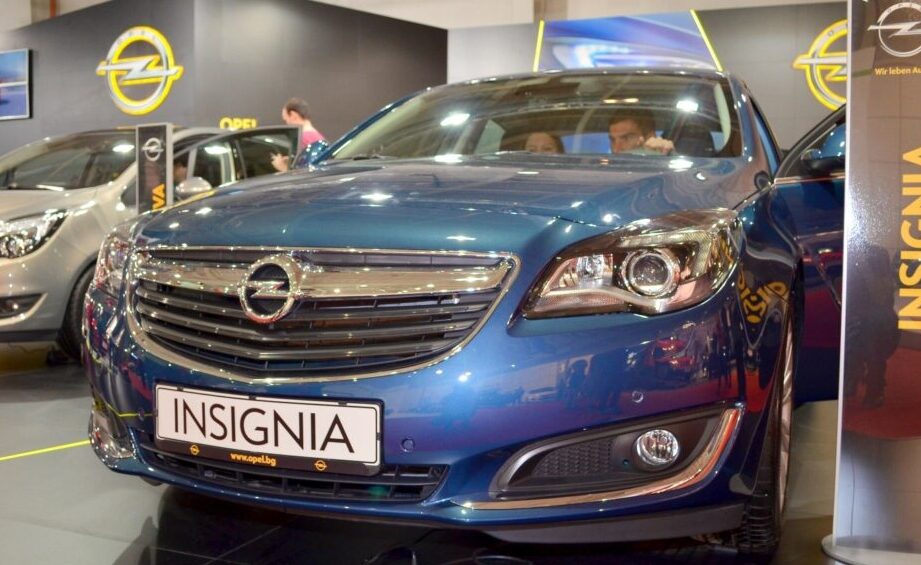
The Opel Insignia Sedan (A, facelift 2013) 2.0 CDTI 163 hp model was a key component of Opel’s strategy to offer a broad range of options within the Insignia family. The facelift, introduced in 2013, brought revised front and rear styling, an updated interior, and improvements to the chassis and engine range. This particular 2.0 CDTI variant, equipped with a six-speed manual transmission, was designed to appeal to buyers seeking a balance between fuel economy, reasonable performance, and a comfortable driving experience. It sat in the mid-range of the Insignia lineup, offering more power and refinement than the entry-level petrol engines, but at a lower price point than the more powerful diesel options.
Powertrain & Engine Architecture
At the heart of this Insignia variant lies the A20DTH engine, a 2.0-liter four-cylinder turbocharged diesel. This engine is part of Opel’s Ecotec range, known for its focus on efficiency and reduced emissions. The A20DTH utilizes a common rail direct injection system, delivering fuel directly into the combustion chamber at extremely high pressure for optimized combustion. The engine also features a variable geometry turbocharger (VGT) and an intercooler, enhancing both power and torque delivery. The Start/Stop system, a standard feature, automatically shuts off the engine when the vehicle is stationary, further improving fuel economy. The six-speed manual transmission was chosen for its efficiency and driver engagement, offering precise gear changes and a good balance between acceleration and fuel consumption.
Driving Characteristics
The 163 hp 2.0 CDTI with the manual transmission provided a competent and comfortable driving experience. While not a performance-oriented variant, it offered sufficient power for everyday driving and highway cruising. The 350 Nm (258 lb-ft) of torque, available from 1750-2500 rpm, provided good responsiveness in most situations, making overtaking maneuvers relatively effortless. Compared to the higher-output 195 hp diesel, the 163 hp version felt less urgent in acceleration, but the difference was often negligible in real-world driving. The manual gearbox allowed for greater driver control, and the well-chosen gear ratios ensured that the engine remained within its optimal power band. The ride quality was generally comfortable, thanks to the Insignia’s well-tuned suspension, although it could feel slightly firm on rougher road surfaces.
Equipment & Trim Levels
The Insignia Sedan 2.0 CDTI 163 hp typically came equipped with a respectable level of standard features. These included air conditioning, electric front and rear windows, a CD/MP3 stereo system, and alloy wheels. Higher trim levels, such as SE and Elite, added features like dual-zone climate control, leather upholstery, heated front seats, a touchscreen infotainment system with navigation, and parking sensors. Optional extras included a panoramic sunroof, adaptive cruise control, and a premium sound system. Interior upholstery was typically cloth on the base models, with leather options available on higher trims. The dashboard layout was modern and functional, with a clear instrument cluster and intuitive controls.
Chassis & Braking
The Insignia Sedan featured a MacPherson strut front suspension and a multi-link rear suspension, providing a good balance between ride comfort and handling. The chassis was designed to be relatively lightweight, contributing to the car’s overall efficiency. Braking systems varied depending on the trim level, with lower trims typically equipped with front disc brakes and rear drum brakes, while higher trims featured disc brakes all around. Anti-lock Braking System (ABS) was standard across the range. Stabilizer bars were fitted to both the front and rear axles to reduce body roll during cornering.
Market Reception & Comparison
The Opel Insignia 2.0 CDTI 163 hp was generally well-received by automotive critics. It was praised for its fuel efficiency, comfortable ride, and spacious interior. However, some critics noted that the engine could be somewhat noisy under hard acceleration. Compared to the 195 hp diesel, the 163 hp version offered better fuel economy but less outright performance. The 1.6-liter petrol engine, while more affordable, lacked the torque and refinement of the 2.0 CDTI. In terms of reliability, the A20DTH engine proved to be generally robust, although regular maintenance was essential to prevent issues with the diesel particulate filter (DPF) and turbocharger.
Legacy
The Opel Insignia Sedan (A, facelift 2013) 2.0 CDTI 163 hp remains a popular choice in the used car market. Its combination of fuel efficiency, practicality, and affordability makes it an attractive option for buyers seeking a comfortable and reliable family sedan. The A20DTH engine, when properly maintained, has proven to be durable and long-lasting. However, potential buyers should be aware of the potential for DPF issues, particularly if the vehicle has primarily been used for short journeys. Overall, this Insignia variant represents a solid and well-rounded package that continues to offer good value for money.