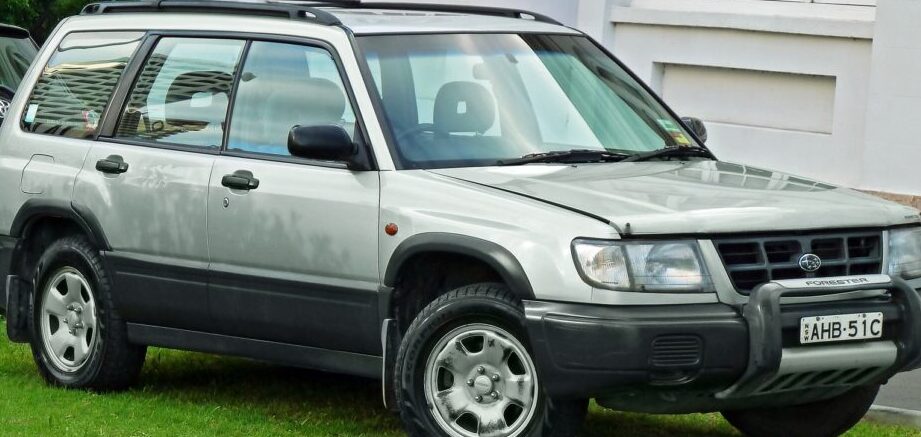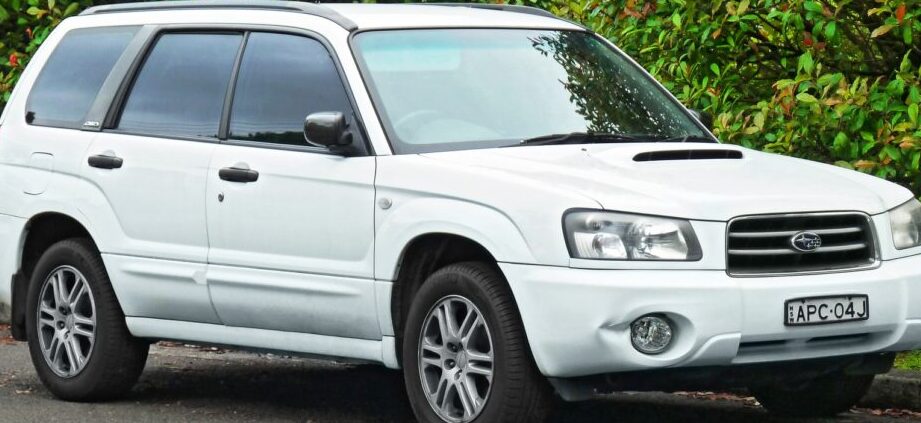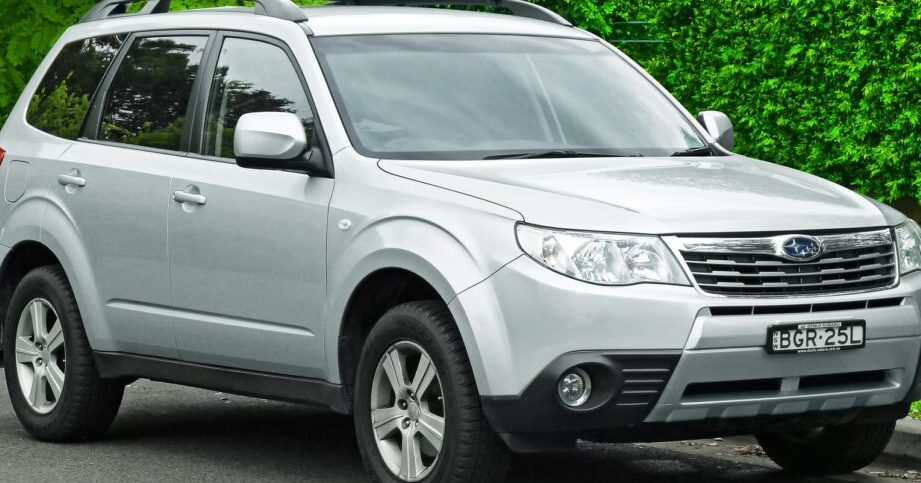
The Subaru Forester III 2.5 XT, produced between 2007 and 2010, represented a performance-oriented variant within the third generation (2008–2013) of Subaru’s popular compact SUV. Positioned as the top-tier trim level, the 2.5 XT distinguished itself with a turbocharged engine and standard all-wheel drive, appealing to buyers seeking a blend of practicality and spirited driving. It was a key model for Subaru in markets like North America and Europe, where compact SUVs were gaining significant traction. The Forester III, internally designated as the SG platform, aimed to improve upon its predecessor with increased space, refinement, and safety features, while the 2.5 XT specifically targeted enthusiasts desiring more power.
Technical Specifications
| Brand | Subaru |
| Model | Forester |
| Generation | Forester III |
| Type (Engine) | 2.5 XT (230 Hp) |
| Start of production | 2007 |
| End of production | 2010 |
| Powertrain Architecture | Internal Combustion engine |
| Body type | SUV, Crossover |
| Seats | 5 |
| Doors | 5 |
| Fuel consumption (urban) | 14.7 l/100 km (16 US mpg, 19.2 UK mpg, 6.8 km/l) |
| Fuel consumption (extra urban) | 8.4 l/100 km (28 US mpg, 33.6 UK mpg, 11.9 km/l) |
| Fuel consumption (combined) | 10.7 l/100 km (22 US mpg, 26.4 UK mpg, 9.3 km/l) |
| Fuel Type | Petrol (Gasoline) |
| Acceleration 0 – 100 km/h | 6 sec |
| Acceleration 0 – 62 mph | 6 sec |
| Acceleration 0 – 60 mph | 5.7 sec |
| Maximum speed | 216 km/h (134.22 mph) |
| Emission standard | Euro 4 |
| Weight-to-power ratio | 6.5 kg/Hp, 154.9 Hp/tonne |
| Weight-to-torque ratio | 4.6 kg/Nm, 215.5 Nm/tonne |
| Power | 230 Hp @ 5200 rpm |
| Power per litre | 93.6 Hp/l |
| Torque | 320 Nm @ 2800 rpm (236.02 lb.-ft. @ 2800 rpm) |
| Engine layout | Front, Longitudinal |
| Engine Model/Code | EJ255 |
| Engine displacement | 2457 cm3 (149.94 cu. in.) |
| Number of cylinders | 4 |
| Engine configuration | Boxer |
| Cylinder Bore | 99.5 mm (3.92 in.) |
| Piston Stroke | 79 mm (3.11 in.) |
| Compression ratio | 8.4:1 |
| Number of valves per cylinder | 4 |
| Fuel injection system | Multi-port manifold injection |
| Engine aspiration | Turbocharger, Intercooler |
| Valvetrain | DOHC |
| Engine oil capacity | 4.2 l (4.44 US qt | 3.7 UK qt) |
| Kerb Weight | 1485 kg (3273.86 lbs.) |
| Max. weight | 2000 kg (4409.25 lbs.) |
| Max load | 515 kg (1135.38 lbs.) |
| Trunk (boot) space – minimum | 387 l (13.67 cu. ft.) |
| Fuel tank capacity | 60 l (15.85 US gal | 13.2 UK gal) |
| Length | 4485 mm (176.57 in.) |
| Width | 1735 mm (68.31 in.) |
| Height | 1590 mm (62.6 in.) |
| Wheelbase | 2525 mm (99.41 in.) |
| Front track | 1495 mm (58.86 in.) |
| Rear (Back) track | 1485 mm (58.46 in.) |
| Minimum turning circle | 10.8 m (35.43 ft.) |
| Drive wheel | All wheel drive (4×4) |
| Number of gears | 5 |
| Gearbox type | Manual transmission |
| Front suspension | Spring-loaded rack |
| Front brakes | Ventilated discs |
| Rear brakes | Disc |
| Assisting systems | ABS (Anti-lock braking system) |
| Steering type | Steering rack and pinion |
| Power steering | Hydraulic Steering |
| Tires size | 215/55 R17 |
Powertrain & Engine Architecture
The heart of the Forester 2.5 XT was the EJ255, a 2.5-liter turbocharged boxer-four engine. Subaru’s horizontally-opposed “boxer” configuration, where pistons move horizontally rather than vertically, contributes to a lower center of gravity, enhancing stability. The EJ255 featured a single turbocharger with an intercooler to increase air density and improve performance. Fuel delivery was managed by a multi-port fuel injection system. The engine produced 230 horsepower at 5200 rpm and 320 Nm (236 lb-ft) of torque at 2800 rpm. This engine code was a refinement of earlier EJ25 series engines, incorporating improvements to the turbocharger and engine management system. The 2.5 XT was exclusively offered with a 5-speed manual transmission, providing drivers with direct control over the engine’s power. The all-wheel-drive system, a hallmark of Subaru, was standard, utilizing a symmetrical design for balanced handling.
Driving Characteristics
The 2.5 XT offered a noticeably more engaging driving experience compared to the naturally aspirated Forester variants. The turbocharger provided a surge of power, resulting in brisk acceleration – 0 to 60 mph in approximately 5.7 seconds. The manual transmission allowed for precise gear selection, maximizing the engine’s potential. While the turbo lag was present, it was relatively minimal, and the engine responded well to throttle inputs. The all-wheel-drive system provided excellent traction in various conditions, making the Forester 2.5 XT capable both on and off-road. Compared to the base models, the 2.5 XT’s suspension was tuned for slightly firmer handling, enhancing cornering stability. However, this did come at the expense of some ride comfort.
Equipment & Trim Levels
The 2.5 XT typically came well-equipped, reflecting its position as the premium trim level. Standard features included alloy wheels, a sunroof, automatic climate control, power windows and locks, and a CD stereo system. Interior upholstery was typically cloth or leather, with options for heated front seats. Available options included a premium audio system, navigation system, and a rear cargo area organizer. The dashboard layout was functional and straightforward, prioritizing usability over flashy design. The 2.5 XT also included standard safety features such as anti-lock brakes (ABS) and multiple airbags.
Chassis & Braking
The Forester 2.5 XT utilized a MacPherson strut front suspension and a double-wishbone rear suspension. The suspension components were generally robust, designed to handle the increased power and weight of the turbocharged engine. Braking duties were handled by ventilated disc brakes at all four corners, providing ample stopping power. The ABS system helped to maintain control during hard braking. The steering system was a rack-and-pinion setup with hydraulic power assistance, offering precise and responsive steering feel. The 2.5 XT often featured slightly thicker stabilizer bars compared to lower trims, further reducing body roll during cornering.
Market Reception & Comparison
The Forester 2.5 XT was generally well-received by automotive critics, who praised its performance, handling, and practicality. However, fuel economy was a common criticism, with the turbocharged engine consuming significantly more fuel than the naturally aspirated variants. Compared to the base Forester models, the 2.5 XT offered a substantial performance upgrade, but at a higher price point. It competed with other compact SUVs like the Honda CR-V and Toyota RAV4, but distinguished itself with its standard all-wheel drive and turbocharged engine. The 2.5 XT appealed to buyers who prioritized performance and all-weather capability over fuel efficiency.
Legacy
The EJ255 engine, while generally reliable, is known to require regular maintenance, particularly regarding oil changes. The turbocharger can be a potential point of failure if not properly maintained. Today, the Forester 2.5 XT holds a modest following among Subaru enthusiasts. Well-maintained examples are sought after for their performance and unique driving experience. However, finding parts can sometimes be challenging, and repair costs can be higher than for the base models. The 2.5 XT remains a testament to Subaru’s commitment to performance and all-wheel-drive technology, and it continues to be a capable and enjoyable SUV for those willing to invest in its upkeep.