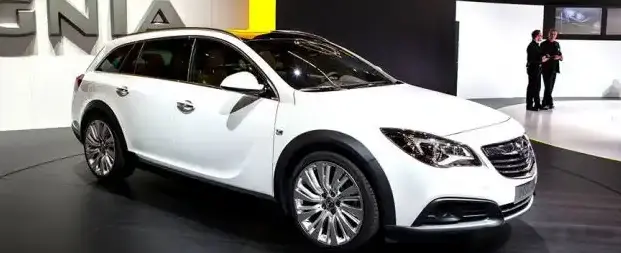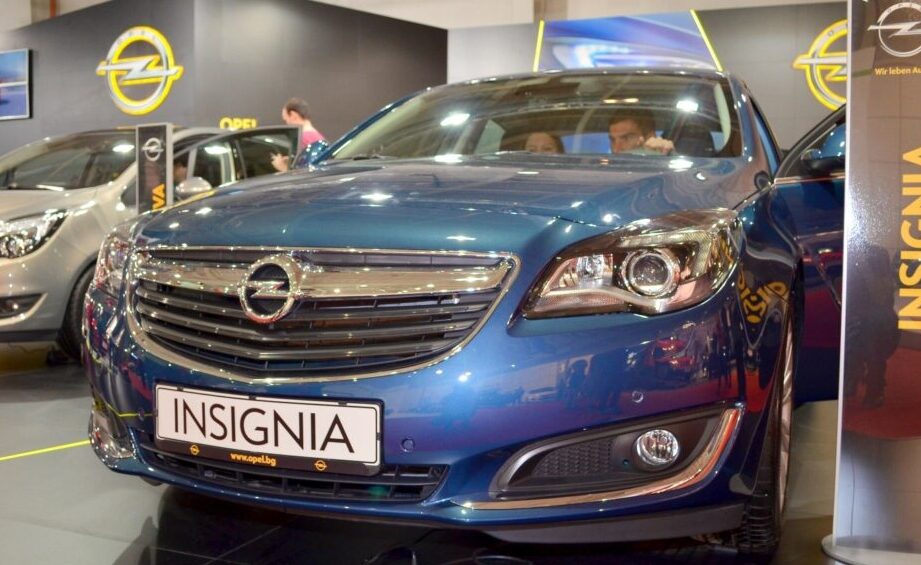
The Opel Insignia Sedan (A, facelift 2013) 2.0 CDTI Automatic, produced from July 2015 to January 2017, represented a significant offering in the mid-size sedan segment, particularly within the European market. This variant, powered by a 2.0-liter turbocharged diesel engine producing 170 horsepower, was positioned as a comfortable and efficient option for drivers seeking a balance between performance and fuel economy. It sat within the broader Insignia A range, which included petrol engines and other diesel outputs, as well as both liftback and estate body styles. The facelifted model, introduced in 2013, brought styling updates and technological enhancements to the original Insignia, solidifying its position as a competitive family car.
Technical Specifications
| Brand | Opel |
| Model | Insignia |
| Generation | Insignia Sedan (A, facelift 2013) |
| Type (Engine) | 2.0 CDTI (170 Hp) Automatic |
| Start of production | July, 2015 |
| End of production | January, 2017 |
| Powertrain Architecture | Internal Combustion engine |
| Body type | Sedan |
| Seats | 5 |
| Doors | 4 |
| Fuel consumption (urban) | 7.8-7.6 l/100 km (30.2 – 30.9 US mpg) |
| Fuel consumption (extra urban) | 4.2-4.1 l/100 km (56 – 57.4 US mpg) |
| Fuel consumption (combined) | 5.6-5.4 l/100 km (42 – 43.6 US mpg) |
| CO2 emissions | 147-143 g/km |
| Fuel Type | Diesel |
| Acceleration 0 – 100 km/h | 9.4 sec |
| Acceleration 0 – 62 mph | 9.4 sec |
| Acceleration 0 – 60 mph | 8.9 sec |
| Maximum speed | 220 km/h (136.7 mph) |
| Emission standard | Euro 6 |
| Weight-to-power ratio | 9.4 kg/Hp |
| Weight-to-torque ratio | 4 kg/Nm |
| Power | 170 Hp @ 3750 rpm |
| Torque | 400 Nm @ 1750-2500 rpm (295.02 lb.-ft. @ 1750-2500 rpm) |
| Engine layout | Front, Transverse |
| Engine Model/Code | B20DTH |
| Engine displacement | 1956 cm3 (119.36 cu. in.) |
| Number of cylinders | 4 |
| Engine configuration | Inline |
| Cylinder Bore | 83 mm (3.27 in.) |
| Piston Stroke | 90.4 mm (3.56 in.) |
| Compression ratio | 16:1 |
| Number of valves per cylinder | 4 |
| Fuel injection system | Diesel Commonrail |
| Engine aspiration | Turbocharger, Intercooler |
| Engine oil capacity | 4.9 l (5.18 US qt | 4.31 UK qt) |
| Coolant | 7 l (7.4 US qt | 6.16 UK qt) |
| Kerb Weight | 1599 kg (3525.19 lbs.) |
| Max. weight | 2210 kg (4872.22 lbs.) |
| Max load | 611 kg (1347.02 lbs.) |
| Trunk (boot) space – minimum | 500 l (17.66 cu. ft.) |
| Trunk (boot) space – maximum | 1015 l (35.84 cu. ft.) |
| Fuel tank capacity | 70 l (18.49 US gal | 15.4 UK gal) |
| Max. roof load | 100 kg (220.46 lbs.) |
| Permitted trailer load with brakes (12%) | 1800 kg (3968.32 lbs.) |
| Permitted trailer load without brakes | 750 kg (1653.47 lbs.) |
| Length | 4842 mm (190.63 in.) |
| Width | 1856 mm (73.07 in.) |
| Width including mirrors | 2084 mm (82.05 in.) |
| Height | 1498 mm (58.98 in.) |
| Wheelbase | 2737 mm (107.76 in.) |
| Front track | 1587 mm (62.48 in.) |
| Rear (Back) track | 1590 mm (62.6 in.) |
| Minimum turning circle | 11.40 m (37.4 ft.) |
| Drivetrain Architecture | Front wheel drive |
| Number of gears and type of gearbox | 6 gears, automatic transmission |
| Front brakes | Ventilated discs |
| Rear brakes | Disc |
INTRODUCTION
The Opel Insignia, launched in 2008, was designed to elevate Opel’s presence in the mid-size segment, competing with established rivals like the Ford Mondeo and Volkswagen Passat. The facelifted version in 2013 brought a more refined appearance and updated technology. The 2.0 CDTI Automatic variant, introduced in 2015, offered a compelling blend of diesel efficiency and the convenience of an automatic transmission. This model was primarily aimed at European markets, where diesel engines held a significant share of the automotive landscape. It was a popular choice for families and business users alike, offering a spacious interior, a large trunk, and a comfortable driving experience.
Powertrain & Engine Architecture
At the heart of the Insignia 2.0 CDTI Automatic lies the B20DTH engine, a 1.956-liter inline-four cylinder diesel. This engine is a member of Opel’s/Vauxhall’s family of common-rail direct injection diesel engines. The B20DTH utilizes a turbocharger with an intercooler to boost power and torque. The common-rail direct injection system, supplied by Bosch, delivers fuel directly into the combustion chamber at extremely high pressure, optimizing combustion efficiency and reducing emissions. The engine features four valves per cylinder and a compression ratio of 16:1. The automatic transmission is a six-speed unit, providing smooth and efficient gear changes. This transmission was chosen for its balance of responsiveness and fuel economy, catering to drivers who preferred the ease of automatic operation over a manual gearbox.
Driving Characteristics
The 170 horsepower and 400 Nm (295 lb-ft) of torque produced by the 2.0 CDTI engine provided adequate performance for everyday driving. Acceleration from 0 to 62 mph (0-100 km/h) took around 9.4 seconds, and the car had a top speed of 136.7 mph (220 km/h). While not a sports car, the Insignia 2.0 CDTI Automatic offered sufficient power for overtaking and cruising on motorways. The automatic transmission, while smooth, wasn’t particularly quick to respond to throttle inputs compared to some more modern transmissions. Compared to the lower-powered 1.6 CDTI variants, the 2.0 CDTI offered a noticeable improvement in performance, particularly when fully loaded or tackling inclines. The six-speed automatic transmission was geared for fuel efficiency, with taller ratios in the higher gears.
Equipment & Trim Levels
The Insignia 2.0 CDTI Automatic typically came well-equipped, even in base trim levels. Standard features often included air conditioning, electric windows, a touchscreen infotainment system with Bluetooth connectivity, and alloy wheels. Higher trim levels, such as SE Nav or Elite, added features like leather upholstery, heated seats, a premium sound system, and advanced safety technologies like adaptive cruise control and lane departure warning. Interior upholstery was typically cloth in lower trims, with leather options available on higher-spec models. The dashboard layout was functional and modern, with a focus on ergonomics.
Chassis & Braking
The Insignia Sedan featured a MacPherson strut front suspension and a multi-link rear suspension, providing a comfortable ride and good handling characteristics. The suspension was tuned to prioritize comfort over outright sportiness. Braking duties were handled by ventilated discs at the front and solid discs at the rear. Anti-lock Braking System (ABS) was standard, along with Electronic Stability Control (ESC). The steering was electrically assisted, providing a light and precise feel.
Market Reception & Comparison
The Opel Insignia 2.0 CDTI Automatic was generally well-received by automotive critics. It was praised for its spacious interior, comfortable ride, and fuel efficiency. However, some reviewers noted that the automatic transmission could feel a little sluggish at times. Compared to the petrol-powered Insignia variants, the 2.0 CDTI offered significantly better fuel economy, making it a more practical choice for high-mileage drivers. Against rivals like the Ford Mondeo and Volkswagen Passat, the Insignia offered a competitive package, often at a slightly lower price point. The 1.6 CDTI offered better fuel economy but lacked the outright performance of the 2.0-liter engine.
Legacy
The Opel Insignia 2.0 CDTI Automatic has proven to be a relatively reliable powertrain. The B20DTH engine is known for its durability, although regular maintenance is crucial to prevent issues with the diesel particulate filter (DPF) and the turbocharger. In the used car market, these Insignias represent good value for money, offering a comfortable and well-equipped family car at an affordable price. However, potential buyers should be aware of the potential maintenance costs associated with diesel engines, particularly the DPF and the potential for injector issues. Overall, the Insignia 2.0 CDTI Automatic remains a popular and practical choice for those seeking a spacious and efficient mid-size sedan.