
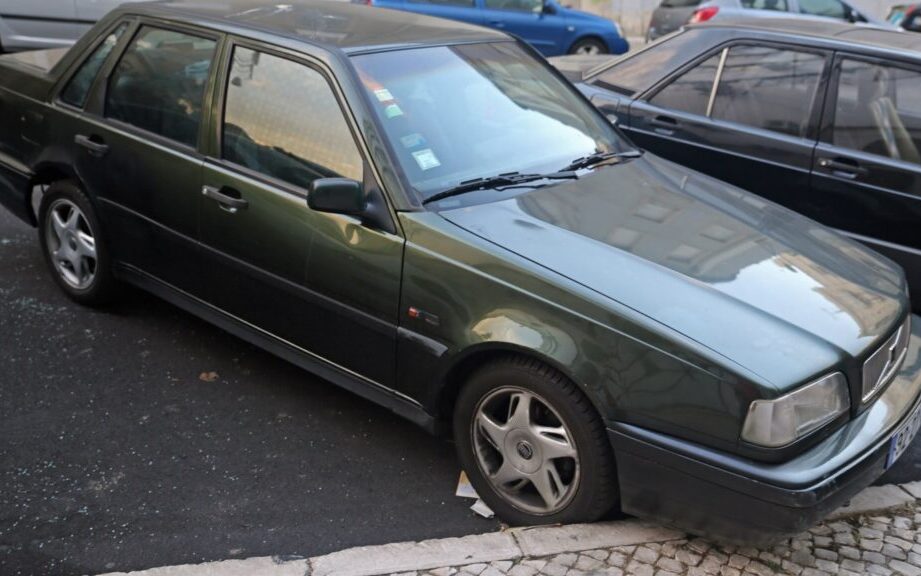
The Volvo 460 L, specifically the 1.7 Turbo variant produced between 1989 and 1993, represented a significant, though often overlooked, step in Volvo’s evolution. Falling under the 464 chassis code, this model was positioned as a more performance-oriented offering within the 460 series, aimed at buyers seeking a blend of practicality and spirited driving. It was a key component of Volvo’s attempt to modernize its lineup and appeal to a broader customer base, particularly in Europe where it found its primary market. While not a massive sales success, the 460 L 1.7 Turbo laid groundwork for future Volvo models and showcased the company’s commitment to forced induction technology.
Technical Specifications
| Brand | Volvo |
| Model | 460 L |
| Generation | 460 L (464) |
| Type (Engine) | 1.7 Turbo (120 Hp) |
| Start of production | 1989 |
| End of production | 1993 |
| Powertrain Architecture | Internal Combustion engine |
| Body type | Sedan |
| Seats | 5 |
| Doors | 4 |
| Fuel consumption (combined) | 8.5 l/100 km |
| Fuel consumption (US mpg) | 27.7 US mpg |
| Fuel consumption (UK mpg) | 33.2 UK mpg |
| Fuel consumption (km/l) | 11.8 km/l |
| Fuel Type | Petrol (Gasoline) |
| Acceleration 0 – 100 km/h | 9 sec |
| Acceleration 0 – 62 mph | 9 sec |
| Acceleration 0 – 60 mph | 8.6 sec |
| Maximum speed | 200 km/h (124.27 mph) |
| Weight-to-power ratio | 9.2 kg/Hp |
| Weight-to-torque ratio | 6.3 kg/Nm |
| Power | 120 Hp @ 5500 rpm |
| Power per litre | 69.7 Hp/l |
| Torque | 175 Nm @ 3300 rpm (129.07 lb.-ft. @ 3300 rpm) |
| Engine layout | Front, Transverse |
| Engine Model/Code | B18FT |
| Engine displacement | 1721 cm3 (105.02 cu. in.) |
| Number of cylinders | 4 |
| Engine configuration | Inline |
| Cylinder Bore | 81 mm (3.19 in.) |
| Piston Stroke | 83.5 mm (3.29 in.) |
| Compression ratio | 8.1:1 |
| Number of valves per cylinder | 2 |
| Fuel injection system | Multi-port manifold injection |
| Engine aspiration | Turbocharger |
| Valvetrain | OHC |
| Engine oil capacity | 5.3 l (5.6 US qt | 4.66 UK qt) |
| Coolant capacity | 7.2 l (7.61 US qt | 6.34 UK qt) |
| Kerb Weight | 1103 kg (2431.7 lbs.) |
| Max. weight | 1580 kg (3483.3 lbs.) |
| Max load | 477 kg (1051.6 lbs.) |
| Trunk (boot) space – minimum | 453 l (16 cu. ft.) |
| Trunk (boot) space – maximum | 948 l (33.48 cu. ft.) |
| Fuel tank capacity | 60 l (15.85 US gal | 13.2 UK gal) |
| Length | 4435 mm (174.61 in.) |
| Width | 1686 mm (66.38 in.) |
| Height | 1378 mm (54.25 in.) |
| Wheelbase | 2503 mm (98.54 in.) |
| Front track | 1416 mm (55.75 in.) |
| Rear track | 1426 mm (56.14 in.) |
| Drivetrain Architecture | Front wheel drive |
| Number of gears | 5 |
| Gearbox type | Manual transmission |
| Front suspension | Wishbone |
| Rear suspension | Coil spring |
| Front brakes | Ventilated discs |
| Rear brakes | Disc |
| Assisting systems | ABS (Anti-lock braking system) |
| Steering type | Steering rack and pinion |
| Power steering | Hydraulic |
| Tires size | 185/65 R14 |
| Wheel rims size | 14 |
Powertrain & Engine Architecture
The heart of the 460 L 1.7 Turbo was the B18FT engine, a 1.7-liter inline-four cylinder powerplant. This engine was a derivative of Volvo’s B18 family, but crucially, it incorporated a Garrett T25 turbocharger and intercooler. The B18FT utilized multi-port fuel injection, a relatively advanced system for its time, contributing to improved fuel efficiency and throttle response. The engine featured a single overhead camshaft (OHC) valvetrain with two valves per cylinder. The turbocharger boosted output to 120 horsepower at 5500 rpm and 175 Nm (129 lb-ft) of torque at 3300 rpm. This was paired with a five-speed manual transmission, the only gearbox option available for this variant. The engine’s transverse mounting and front-wheel-drive configuration were typical for European compact cars of the era.
Driving Characteristics
The 1.7 Turbo offered a noticeable performance upgrade over the naturally aspirated 460 models. Acceleration to 60 mph took approximately 8.6 seconds, and it could reach a top speed of around 124 mph. While not exceptionally quick by modern standards, this performance was competitive within its class in the early 1990s. The turbocharger did introduce a degree of turbo lag, meaning there was a slight delay between pressing the accelerator and feeling the full power delivery. However, once the turbo spooled up, the engine provided a strong surge of torque, making it enjoyable to drive on winding roads. The five-speed manual transmission allowed drivers to keep the engine in its optimal power band. Compared to the base 460 models, the 1.7 Turbo felt significantly more responsive and capable, though it lacked the refinement of some of its German competitors.
Equipment & Trim Levels
The 460 L 1.7 Turbo was generally well-equipped for its price point. Standard features included power steering, ABS brakes, and a basic stereo system. Interior upholstery was typically cloth, with a relatively simple dashboard layout. Optional extras included a sunroof, upgraded stereo systems, and alloy wheels. The trim level was generally consistent across the 1.7 Turbo models, with limited customization options available. The focus was on providing a practical and well-equipped vehicle rather than offering a luxurious experience.
Chassis & Braking
The 460 L featured a front-wheel-drive chassis with independent wishbone suspension at the front and a coil spring rear suspension. The braking system consisted of ventilated discs at the front and solid discs at the rear. The ABS system was a valuable safety feature, particularly in wet or slippery conditions. The suspension was tuned for a balance between comfort and handling, providing a reasonably compliant ride without sacrificing too much stability. The relatively lightweight construction of the 460 L helped to contribute to its nimble handling characteristics.
Market Reception & Comparison
The 460 L 1.7 Turbo received mixed reviews from automotive critics. While praised for its performance and fuel efficiency, it was often criticized for its somewhat bland styling and interior. Compared to its rivals, such as the Volkswagen Golf GTI and the Ford Escort RS Turbo, the 460 L 1.7 Turbo offered a different driving experience. It was less focused on outright performance and more on providing a comfortable and practical package. Fuel economy was generally good, averaging around 27.7 mpg in combined driving. Reliability was generally considered to be average for a European car of the era, with some owners reporting issues with the turbocharger and fuel injection system.
Legacy
The Volvo 460 L 1.7 Turbo, while not a runaway success, played a role in Volvo’s development of turbocharged engines. The B18FT engine proved to be a reliable and capable powerplant, and its technology was carried over to later Volvo models. Today, the 460 L 1.7 Turbo is a relatively rare and sought-after classic car, particularly among Volvo enthusiasts. Well-maintained examples are becoming increasingly valuable, and the car is appreciated for its unique blend of performance, practicality, and Scandinavian design. The powertrain, while aging, is generally considered to be durable if properly maintained, making it a viable option for those seeking a classic turbocharged Volvo.
