
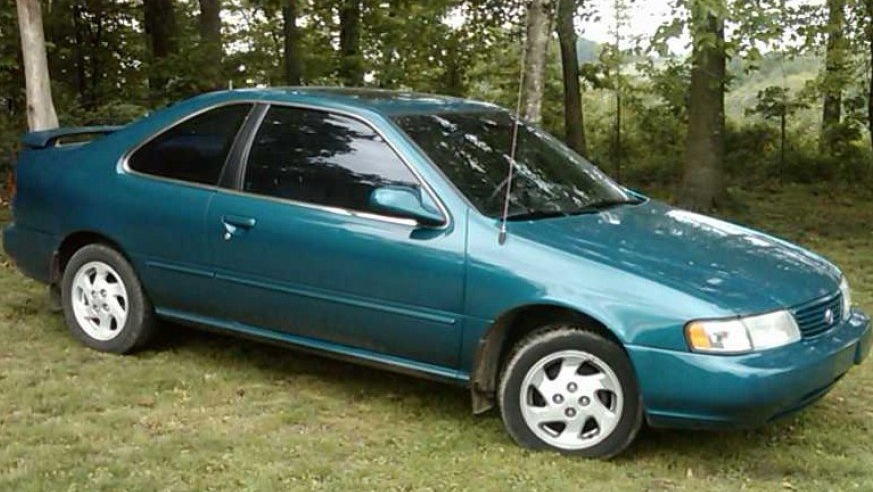
The Nissan Lucino, produced between 1994 and 1998, was a coupe marketed primarily in Japan and Australia. It represented Nissan’s entry into the compact coupe segment, offering a stylish alternative to established rivals. The Lucino was based on the Nissan Sentra (known as the Sunny in some markets) platform, sharing its mechanical underpinnings but distinguished by its two-door body style and more sporting aspirations. The 1.8 i 16V SS variant, producing 140 horsepower, occupied a mid-range position within the Lucino lineup, offering a balance between performance and affordability. It was positioned above the base 1.6-liter models and below any potential high-performance trims.
Technical Specifications
| Brand | Nissan |
| Model | Lucino |
| Generation | Lucino |
| Type (Engine) | 1.8 i 16V SS (140 Hp) |
| Start of production | 1994 |
| End of production | 1998 |
| Powertrain Architecture | Internal Combustion engine |
| Body type | Coupe |
| Seats | 5 |
| Doors | 2 |
| Fuel consumption (combined) | 6.9 l/100 km (34.1 US mpg, 40.9 UK mpg, 14.5 km/l) |
| Fuel Type | Petrol (Gasoline) |
| Weight-to-power ratio | 9.6 kg/Hp, 104.1 Hp/tonne |
| Weight-to-torque ratio | 8.1 kg/Nm, 124.2 Nm/tonne |
| Power | 140 Hp @ 6400 rpm |
| Power per litre | 76.1 Hp/l |
| Torque | 167 Nm @ 4800 rpm (123.17 lb.-ft. @ 4800 rpm) |
| Engine layout | Front, Transverse |
| Engine displacement | 1839 cm3 (112.22 cu. in.) |
| Number of cylinders | 4 |
| Engine configuration | Inline |
| Cylinder Bore | 82.5 mm (3.25 in.) |
| Piston Stroke | 86 mm (3.39 in.) |
| Compression ratio | 10:1 |
| Number of valves per cylinder | 4 |
| Fuel injection system | Multi-port manifold injection |
| Engine aspiration | Naturally aspirated engine |
| Valvetrain | DOHC |
| Kerb Weight | 1345 kg (2965.22 lbs.) |
| Fuel tank capacity | 50 l (13.21 US gal | 11 UK gal) |
| Length | 4285 mm (168.7 in.) |
| Width | 1690 mm (66.54 in.) |
| Height | 1375 mm (54.13 in.) |
| Wheelbase | 2535 mm (99.8 in.) |
| Front track | 1470 mm (57.87 in.) |
| Rear track | 1435 mm (56.5 in.) |
| Minimum turning circle | 9.6 m (31.5 ft.) |
| Drivetrain Architecture | Front wheel drive, Internal Combustion engine |
| Drive wheel | Front wheel drive |
| Number of gears and type of gearbox | 5 gears, manual transmission |
| Front suspension | Spring Strut |
| Rear suspension | Coil spring |
| Front brakes | Ventilated discs |
| Rear brakes | Disc |
| Assisting systems | ABS (Anti-lock braking system) |
| Steering type | Steering rack and pinion |
| Power steering | Hydraulic Steering |
| Tires size | 185/65 R14 H |
Powertrain & Engine Architecture
The heart of the Lucino 1.8 i 16V SS is the GA16DE engine, a 1.8-liter inline-four cylinder powerplant. This engine is a member of Nissan’s GA series, known for its reliability and relatively simple design. The “DE” designation indicates Nissan’s Dual Overhead Camshaft (DOHC) and multi-point fuel injection system. The GA16DE utilizes a timing belt to drive the camshafts, and features four valves per cylinder, contributing to its respectable power output for its displacement. The multi-point fuel injection system delivers fuel directly to each intake port, optimizing combustion efficiency. The 140 horsepower output was achieved through a combination of a relatively high compression ratio (10:1) and optimized intake and exhaust port designs. The engine was paired with a five-speed manual transmission, providing drivers with direct control over the power delivery.
Driving Characteristics
The 1.8-liter engine in the Lucino SS provided a noticeable step up in performance compared to the base 1.6-liter models. While not a sports car by any means, the 140 hp engine offered adequate acceleration for everyday driving and even some spirited maneuvers. The five-speed manual transmission allowed drivers to keep the engine in its optimal power band, maximizing performance. The gear ratios were fairly standard for the time, prioritizing fuel economy alongside usability. Compared to a potential automatic transmission variant (not widely available in all markets), the manual offered a more engaging driving experience and slightly better fuel efficiency. The Lucino’s front-wheel-drive layout contributed to predictable handling, although it lacked the all-weather capability of an all-wheel-drive system.
Equipment & Trim Levels
The “SS” designation indicated a mid-level trim package. Standard features typically included power windows, power door locks, and a basic audio system. Interior upholstery was usually cloth, with a relatively simple dashboard layout. Optional extras could include air conditioning, upgraded audio systems, and alloy wheels. The Lucino aimed for a balance between affordability and comfort, offering a reasonably well-equipped vehicle without the premium price tag of more luxurious coupes. The interior design was functional and straightforward, prioritizing usability over extravagant styling.
Chassis & Braking
The Lucino utilized a conventional front-wheel-drive chassis layout. Front suspension consisted of MacPherson struts, while the rear employed a coil spring setup. This suspension configuration provided a comfortable ride quality, suitable for everyday driving. Braking duties were handled by ventilated discs at the front and solid discs at the rear, providing adequate stopping power for the vehicle’s weight and performance. An Anti-lock Braking System (ABS) was included as a standard safety feature, enhancing braking performance in slippery conditions. Steering was rack-and-pinion, assisted by hydraulic power steering, offering a responsive and relatively light steering feel.
Market Reception & Comparison
The Nissan Lucino was generally well-received as a stylish and affordable coupe. Critics praised its attractive design and relatively spacious interior for its class. The 1.8-liter engine was considered a good compromise between performance and fuel economy. Compared to other coupes in its segment, such as the Honda Civic Coupe or Toyota Corolla Coupe, the Lucino offered a slightly more mature and refined driving experience. Fuel economy was competitive, averaging around 34.1 US mpg in combined driving. Reliability was generally good, typical of Nissan products from this era. However, some critics noted that the Lucino lacked the outright sporting character of some of its rivals.
Legacy
The Nissan Lucino, while not a groundbreaking vehicle, holds a place as a well-regarded and reliable coupe from the 1990s. The GA16DE engine is known for its durability and relatively low maintenance costs. Today, the Lucino is becoming increasingly sought after by enthusiasts and collectors, particularly well-maintained examples. Parts availability is generally good, thanks to the shared components with other Nissan models of the era. The Lucino represents a relatively affordable entry point into the world of classic Japanese coupes, offering a blend of style, reliability, and driving enjoyment.
