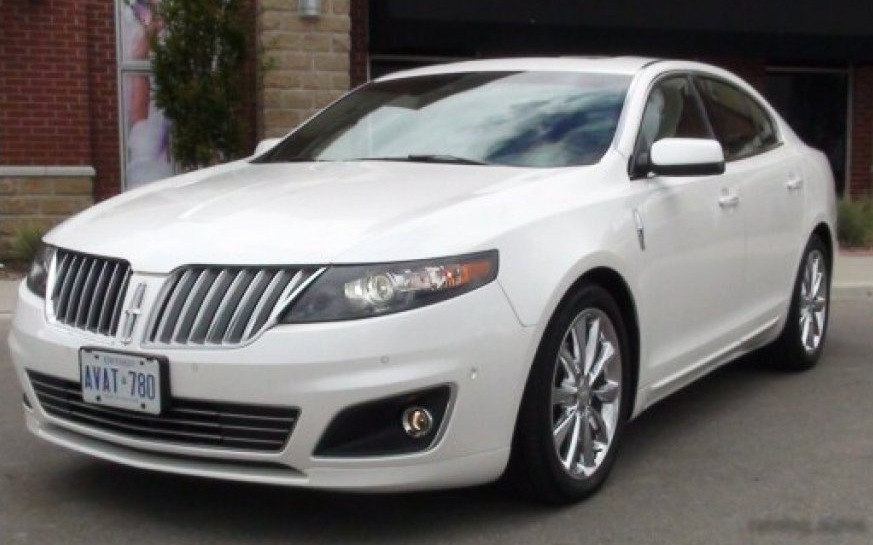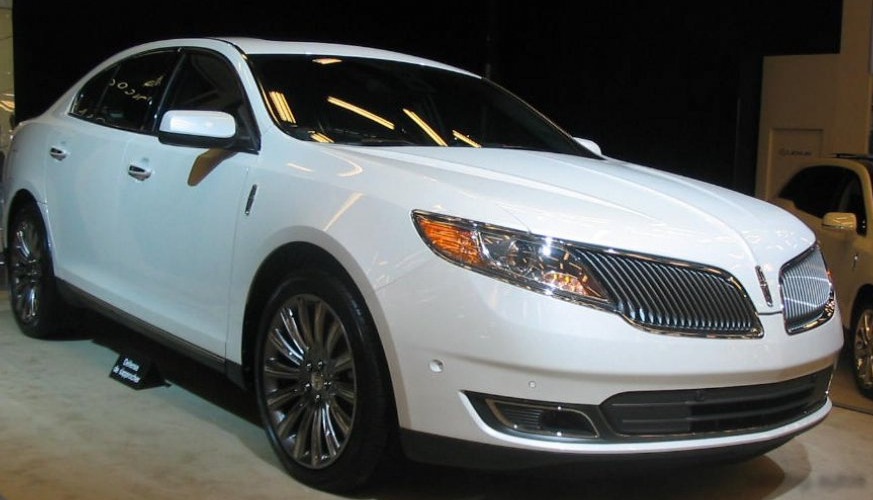
The Lincoln MKS, particularly the facelifted version introduced in 2013, represented Lincoln’s attempt to offer a domestically-produced, full-size luxury sedan aimed at competing with established American brands like Buick and Cadillac, as well as import rivals. Produced from 2012 to 2016, the MKS was based on the D3 platform shared with the Ford Taurus and Ford Five Hundred. The 3.5 GTDI V6 AWD Automatic variant, introduced with the 2013 facelift, was positioned as the premium offering within the MKS lineup, emphasizing performance and all-weather capability. It served as the flagship powertrain, offering a significant step up in power compared to the standard 3.7L V6 engine.
Technical Specifications
| Brand | Lincoln |
| Model | MKS |
| Generation | MKS I (facelift 2013) |
| Type (Engine) | 3.5 GTDI V6 (365 Hp) AWD Automatic |
| Start of production | 2012 |
| End of production | 2016 |
| Powertrain Architecture | Internal Combustion engine |
| Body type | Sedan |
| Seats | 5 |
| Doors | 4 |
| Fuel consumption (urban) | 13.8 l/100 km (17 US mpg, 20.5 UK mpg) |
| Fuel consumption (extra urban) | 9.4 l/100 km (25 US mpg, 30.1 UK mpg) |
| Fuel consumption (combined) | 11.8 l/100 km (19.9 US mpg, 23.9 UK mpg) |
| Fuel Type | Petrol (Gasoline) |
| Weight-to-power ratio | 5.5 kg/Hp, 181.4 Hp/tonne |
| Weight-to-torque ratio | 4.2 kg/Nm, 236.1 Nm/tonne |
| Power | 365 Hp @ 5500 rpm |
| Power per litre | 104.4 Hp/l |
| Torque | 475 Nm @ 1500-5250 rpm (350.34 lb.-ft. @ 1500-5250 rpm) |
| Maximum engine speed | 6200 rpm |
| Engine layout | Front, Transverse |
| Engine Model/Code | EcoBoost |
| Engine displacement | 3496 cm3 (213.34 cu. in.) |
| Number of cylinders | 6 |
| Engine configuration | V-engine |
| Cylinder Bore | 92.5 mm (3.64 in.) |
| Piston Stroke | 86.7 mm (3.41 in.) |
| Compression ratio | 10:1 |
| Number of valves per cylinder | 4 |
| Fuel injection system | Direct injection |
| Engine aspiration | Twin-Turbo, Intercooler |
| Valvetrain | DOHC, i-VCT |
| Engine oil capacity | 5.7 l (6.02 US qt | 5.02 UK qt) |
| Coolant capacity | 10.8 l (11.41 US qt | 9.5 UK qt) |
| Kerb Weight | 2012 kg (4435.7 lbs.) |
| Trunk (boot) space – maximum | 544 l (19.21 cu. ft.) |
| Fuel tank capacity | 72 l (19.02 US gal | 15.84 UK gal) |
| Length | 5222 mm (205.59 in.) |
| Width | 2017 mm (79.41 in.) |
| Width including mirrors | 2172 mm (85.51 in.) |
| Height | 1565 mm (61.61 in.) |
| Wheelbase | 2868 mm (112.91 in.) |
| Front track | 1648 mm (64.88 in.) |
| Rear (Back) track | 1654 mm (65.12 in.) |
| Drag coefficient (Cd) | 0.32 |
| Minimum turning circle (turning diameter) | 12.0 m (39.37 ft.) |
| Drive wheel | All wheel drive (4×4) |
| Number of gears and type of gearbox | 6 gears, automatic transmission SelectShift |
| Front suspension | Independent coil spring |
| Rear suspension | Independent multi-link suspension |
| Front brakes | Ventilated discs |
| Rear brakes | Ventilated discs |
| Assisting systems | ABS (Anti-lock braking system) |
| Steering type | Steering rack and pinion |
| Tires size | 245/45 R20V |
| Wheel rims size | 20 |
Powertrain & Engine Architecture
The heart of the 2013-2016 Lincoln MKS 3.5 GTDI AWD was the 3.5-liter EcoBoost V6 engine. This engine, part of Ford’s EcoBoost family, utilized a twin-turbocharged configuration to deliver a substantial 365 horsepower and 475 lb-ft of torque. The “GTDI” designation stands for Gasoline Turbocharged Direct Injection. Direct injection allowed for precise fuel delivery, enhancing both power and fuel efficiency. The engine featured a double overhead camshaft (DOHC) valvetrain with independent variable cam timing (i-VCT) on both intake and exhaust valves, optimizing engine breathing across the rev range. The engine code is generally associated with the Ford EcoBoost family, and specific calibrations were applied for the MKS application. The engine’s transverse layout was a common characteristic of front-wheel-drive based platforms like the D3. The engine was paired with a six-speed automatic transmission, marketed as SelectShift, offering manual shift control via steering wheel-mounted paddles. This transmission was designed to handle the engine’s high output and provide smooth, responsive shifts.
Driving Characteristics
The 3.5 GTDI AWD MKS offered a noticeably different driving experience compared to the base 3.7L V6 model. The twin-turbocharged engine delivered strong acceleration, with peak torque available from a low 1500 rpm, providing ample power for both city driving and highway passing. The six-speed automatic transmission was well-tuned, offering quick and decisive shifts. The all-wheel-drive system provided enhanced traction and stability, particularly in inclement weather conditions. While not a dedicated sports sedan, the MKS 3.5 GTDI offered a confident and composed ride, with the suspension effectively absorbing road imperfections. Compared to a manual transmission equipped version (which wasn’t offered), the automatic provided convenience and ease of use, but at the expense of some driver engagement. The gear ratios were optimized for a balance of acceleration and fuel economy, though the MKS remained a relatively heavy vehicle, impacting overall agility.
Equipment & Trim Levels
The 3.5 GTDI AWD was typically offered as the top-tier trim level for the MKS. Standard features included leather upholstery, heated and ventilated front seats, a premium sound system (often THX II certified), a navigation system, and a suite of driver-assistance technologies such as adaptive cruise control, blind-spot monitoring, and parking sensors. Interior trim options included various wood and metallic accents. Optional extras could include a rear-seat entertainment system, a power moonroof, and upgraded wheels. The MKS aimed for a luxurious interior experience, with a focus on comfort and convenience.
Chassis & Braking
The MKS utilized an independent coil spring suspension at the front and an independent multi-link suspension at the rear. The suspension was tuned for a comfortable ride, prioritizing isolation from road imperfections. The AWD system employed a sophisticated electronic limited-slip differential to distribute torque between the front and rear axles as needed. Braking duties were handled by ventilated discs at all four corners, providing ample stopping power. The MKS was equipped with an anti-lock braking system (ABS) and electronic stability control as standard safety features. Stabilizer bars were used at both the front and rear to reduce body roll during cornering.
Market Reception & Comparison
The Lincoln MKS 3.5 GTDI AWD was generally well-received by automotive critics, who praised its powerful engine, comfortable ride, and luxurious interior. However, it faced stiff competition from established luxury brands. Fuel economy, while respectable for a vehicle of its size and performance, was a common criticism, averaging around 19.9 US mpg in combined driving. Compared to the base 3.7L V6 MKS, the 3.5 GTDI offered a significant performance upgrade, but at a higher price point. Reliability was generally considered average, with some reports of minor issues with the turbochargers and fuel injection system.
Legacy
The Lincoln MKS was discontinued after the 2016 model year, as Lincoln shifted its focus towards crossover SUVs. The 3.5 GTDI EcoBoost engine, however, continued to be used in other Ford and Lincoln vehicles. On the used car market, the MKS 3.5 GTDI AWD represents a relatively affordable entry point into the full-size luxury sedan segment. The powertrain, while not without its potential maintenance needs (particularly related to the turbochargers), is generally considered durable if properly maintained. The MKS remains a somewhat overlooked vehicle, but it offers a compelling combination of performance, luxury, and value for those seeking a spacious and well-equipped American sedan.