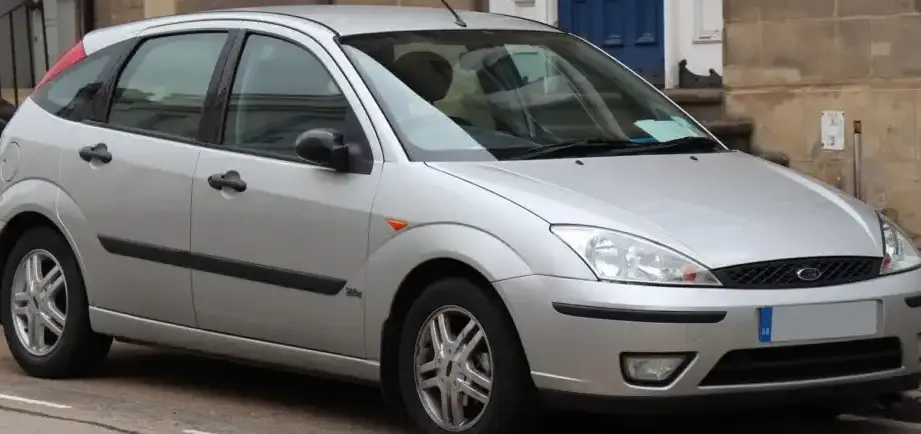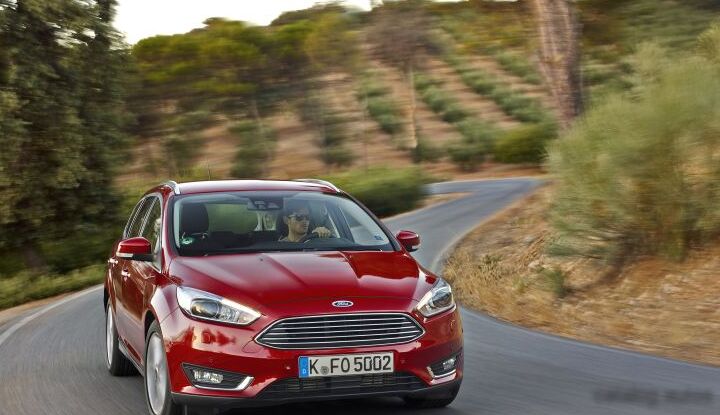
The Ford Focus III Wagon, specifically the 2.0 TDCi (150 hp) S&S variant produced from 2014 to 2018, represents a significant offering in the European compact wagon market. This facelifted version of the third-generation Focus (internally designated as the Mk3.5) aimed to blend practicality, fuel efficiency, and a degree of driving enjoyment. Positioned as a mid-range option within the Focus Wagon lineup, it sat above the lower-powered diesel variants and below the performance-oriented ST model. The “S&S” designation indicates the inclusion of Ford’s Auto-Start-Stop system, designed to improve fuel economy in urban driving conditions. This model was primarily aimed at families and individuals needing a versatile vehicle for both daily commuting and longer journeys.
Technical Specifications
| Brand | Ford |
| Model | Focus |
| Generation | Focus III Wagon (facelift 2014) |
| Type (Engine) | 2.0 TDCi (150 Hp) S&S |
| Start of production | 2014 |
| End of production | 2018 |
| Powertrain Architecture | Internal Combustion engine |
| Body type | Station wagon (estate) |
| Seats | 5 |
| Doors | 5 |
| Fuel consumption (urban) | 4.7 l/100 km (50 US mpg, 60.1 UK mpg, 21.3 km/l) |
| Fuel consumption (extra urban) | 3.7 l/100 km (63.6 US mpg, 76.3 UK mpg, 27 km/l) |
| Fuel consumption (combined) | 4 l/100 km (58.8 US mpg, 70.6 UK mpg, 25 km/l) |
| CO2 emissions | 105 g/km |
| Fuel Type | Diesel |
| Acceleration 0 – 100 km/h | 9 sec |
| Acceleration 0 – 62 mph | 9 sec |
| Acceleration 0 – 60 mph | 8.6 sec |
| Maximum speed | 210 km/h (130.49 mph) |
| Emission standard | Euro 6 |
| Weight-to-power ratio | 10.9 kg/Hp, 92.1 Hp/tonne |
| Weight-to-torque ratio | 4.4 kg/Nm, 227.3 Nm/tonne |
| Power | 150 Hp @ 3750 rpm |
| Power per litre | 75.1 Hp/l |
| Torque | 370 Nm @ 2000-3250 rpm (272.9 lb.-ft. @ 2000-3250 rpm) |
| Engine layout | Front, Transverse |
| Engine Model/Code | T7DB |
| Engine displacement | 1997 cm3 (121.86 cu. in.) |
| Number of cylinders | 4 |
| Engine configuration | Inline |
| Cylinder Bore | 85 mm (3.35 in.) |
| Piston Stroke | 88 mm (3.46 in.) |
| Compression ratio | 16:1 |
| Number of valves per cylinder | 4 |
| Fuel injection system | Diesel Commonrail |
| Engine aspiration | Turbocharger, Intercooler |
| Valvetrain | DOHC |
| Engine oil capacity | 6.1 l (6.45 US qt | 5.37 UK qt) |
| Coolant | 8 l (8.45 US qt | 7.04 UK qt) |
| Kerb Weight | 1628 kg (3589.13 lbs.) |
| Max. weight | 2050 kg (4519.48 lbs.) |
| Max load | 422 kg (930.35 lbs.) |
| Trunk (boot) space – minimum | 476 l (16.81 cu. ft.) |
| Trunk (boot) space – maximum | 1502 l (53.04 cu. ft.) |
| Fuel tank capacity | 60 l (15.85 US gal | 13.2 UK gal) |
| Length | 4556 mm (179.37 in.) |
| Width | 1823 mm (71.77 in.) |
| Height | 1505 mm (59.25 in.) |
| Wheelbase | 2648 mm (104.25 in.) |
| Front track | 1544 mm (60.79 in.) |
| Rear (Back) track | 1559 mm (61.38 in.) |
| Minimum turning circle | 11 m (36.09 ft.) |
| Drivetrain Architecture | Front wheel drive |
| Number of gears | 6 gears, manual transmission |
| Front suspension | Independent, type McPherson with coil spring and anti-roll bar |
| Rear suspension | Independent multi-link suspension |
| Front brakes | Disc |
| Rear brakes | Disc |
| Assisting systems | ABS (Anti-lock braking system) |
| Steering type | Steering rack and pinion |
| Tires size | 205/55 R16; 215/50 R17 |
| Wheel rims size | 6.5J x 16; 7.0J x 17 |
Powertrain & Engine Architecture
The heart of this Focus Wagon is the 2.0-liter TDCi diesel engine, specifically the T7DB variant. This engine belongs to Ford’s Duratorque family and utilizes a common-rail direct injection system, delivering fuel at extremely high pressure for optimized combustion. The engine features a turbocharger with an intercooler, enhancing power output and efficiency. The DOHC (Double Overhead Camshaft) valvetrain, with four valves per cylinder, contributes to improved breathing and overall performance. The 16:1 compression ratio is typical for modern diesel engines, maximizing energy extraction from the fuel. The Auto-Start-Stop system, a key feature of this variant, shuts off the engine when the vehicle is stationary (at traffic lights, for example) and restarts it automatically when the driver depresses the clutch or brake pedal. This system contributes to reduced fuel consumption and emissions in urban environments. The engine is transversely mounted at the front of the vehicle, driving the front wheels.
Driving Characteristics
The 150 hp 2.0 TDCi engine, paired with a six-speed manual transmission, provides a good balance of performance and economy. Acceleration from 0-60 mph takes approximately 8.6 seconds, and the car has a top speed of 130.49 mph. While not a particularly sporty setup, the engine delivers a respectable amount of torque (272.9 lb.-ft.) from 2000-3250 rpm, making it well-suited for everyday driving and overtaking maneuvers. Compared to the lower-powered 1.6 TDCi versions, the 2.0 TDCi offers noticeably more punch, especially when fully loaded. However, it doesn’t match the responsiveness of the higher-output versions or the petrol-powered ST model. The six-speed gearbox provides well-spaced ratios, allowing the engine to operate efficiently at highway speeds. The manual transmission offers a more engaging driving experience than the optional automatic.
Equipment & Trim Levels
The 2.0 TDCi S&S variant typically came equipped with features such as air conditioning, power windows, power mirrors, a basic audio system with USB connectivity, and alloy wheels. Higher trim levels, such as Titanium, added features like dual-zone climate control, a more advanced infotainment system with a touchscreen display, parking sensors, and upgraded interior trim. Optional extras included a panoramic sunroof, leather upholstery, and a navigation system. Safety features such as ABS, ESP (Electronic Stability Program), and multiple airbags were standard across the range.
Chassis & Braking
The Focus Wagon utilizes an independent McPherson strut suspension at the front and an independent multi-link suspension at the rear, providing a comfortable ride and good handling characteristics. The suspension setup is tuned to balance ride comfort with body control. Disc brakes are fitted on all four wheels, providing adequate stopping power. The steering is a rack and pinion system, offering precise and responsive steering feel. Stabilizer bars are included on both axles to reduce body roll during cornering.
Market Reception & Comparison
The 2.0 TDCi 150 hp variant of the Focus Wagon was generally well-received by automotive critics. It was praised for its fuel efficiency, comfortable ride, and spacious interior. However, some reviewers noted that the engine could be a bit noisy under hard acceleration. Compared to the 1.6 TDCi versions, the 2.0 TDCi offered a significant improvement in performance, making it a more suitable choice for drivers who frequently carry passengers or cargo. The 2.0 TDCi also offered better fuel economy than the petrol-powered variants.
Legacy
The 2.0 TDCi engine, in various iterations, proved to be a reliable and durable powertrain. While diesel engines, in general, have faced increased scrutiny in recent years due to emissions concerns, the T7DB engine has a relatively good reputation for longevity. On the used car market, the 2.0 TDCi Focus Wagon remains a popular choice, offering a practical and economical option for families and individuals. Regular maintenance, including timely oil changes and filter replacements, is crucial for ensuring the long-term reliability of this powertrain. The availability of spare parts is generally good, and the Focus Wagon benefits from a large and active owner community.