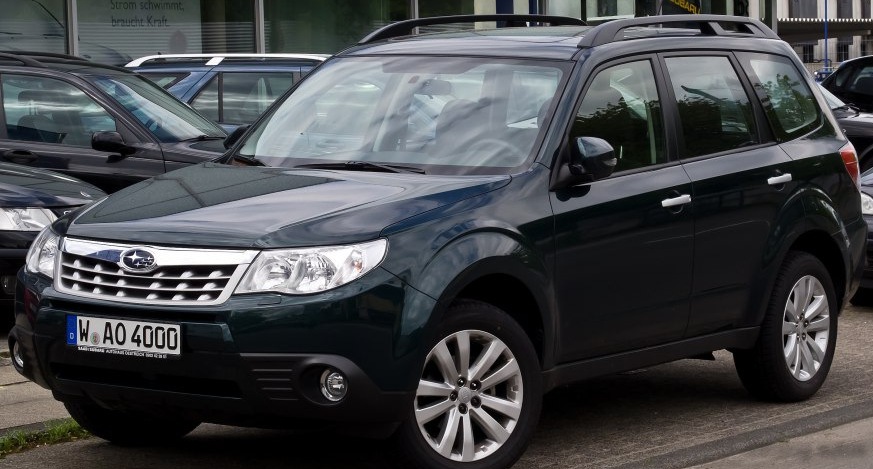
The Subaru Forester III, specifically the facelifted model produced from 2010 to 2013, offered a 2.0-liter Turbo Diesel variant delivering 147 horsepower. This engine option represented a significant addition to the Forester lineup, particularly in European and Asian markets where diesel engines were – and continue to be – highly favored for their fuel efficiency and torque characteristics. Positioned as a mid-range offering, it bridged the gap between the base petrol engines and potentially more expensive, higher-specification trims. The 2010 facelift brought cosmetic and minor mechanical updates to the third-generation Forester (introduced in 2008), enhancing its appeal and addressing some earlier criticisms.
Technical Specifications
| Brand | Subaru |
| Model | Forester |
| Generation | Forester III (facelift 2010) |
| Type (Engine) | 2.0 Turbo Diesel (147 Hp) |
| Start of production | 2010 |
| End of production | 2013 |
| Powertrain Architecture | Internal Combustion engine |
| Body type | SUV, Crossover |
| Seats | 5 |
| Doors | 5 |
| Fuel consumption (combined) | 5.9 l/100 km (39.9 US mpg, 47.9 UK mpg, 16.9 km/l) |
| Fuel Type | Diesel |
| Acceleration 0 – 100 km/h | 10.3 sec |
| Acceleration 0 – 62 mph | 10.3 sec |
| Acceleration 0 – 60 mph | 9.8 sec |
| Maximum speed | 186 km/h (115.58 mph) |
| Weight-to-power ratio | 10.5 kg/Hp, 95.5 Hp/tonne |
| Weight-to-torque ratio | 4.4 kg/Nm, 227.3 Nm/tonne |
| Power | 147 Hp @ 3600 rpm |
| Power per litre | 73.6 Hp/l |
| Torque | 350 Nm @ 1800-2400 rpm (258.15 lb.-ft. @ 1800-2400 rpm) |
| Engine layout | Front, Longitudinal |
| Engine Model/Code | EE20 |
| Engine displacement | 1998 cm3 (121.93 cu. in.) |
| Number of cylinders | 4 |
| Engine configuration | Boxer |
| Number of valves per cylinder | 4 |
| Fuel injection system | Diesel Commonrail |
| Engine aspiration | Turbocharger, Intercooler |
| Valvetrain | DOHC |
| Engine oil capacity | 5.9 l (6.23 US qt | 5.19 UK qt) |
| Coolant | 9 l (9.51 US qt | 7.92 UK qt) |
| Kerb Weight | 1540 kg (3395.12 lbs.) |
| Trunk (boot) space – minimum | 450 l (15.89 cu. ft.) |
| Length | 4560 mm (179.53 in.) |
| Width | 1780 mm (70.08 in.) |
| Height | 1700 mm (66.93 in.) |
| Drive wheel | All wheel drive (4×4) |
| Number of gears and type of gearbox | 6 gears, manual transmission |
| Assisting systems | ABS (Anti-lock braking system) |
| Steering type | Steering rack and pinion |
Powertrain & Engine Architecture
The heart of this Forester variant is the EE20 diesel engine, a 2.0-liter horizontally-opposed (Boxer) four-cylinder unit. Subaru’s Boxer engine design, known for its low center of gravity and inherent balance, contributes to the Forester’s stable handling. The EE20 utilizes a common rail direct injection system, delivering fuel directly into the combustion chamber at extremely high pressure for optimized combustion and reduced emissions. A turbocharger with an intercooler is employed to boost power output, providing increased torque and responsiveness. The engine features a Double Overhead Camshaft (DOHC) valvetrain with four valves per cylinder, further enhancing its breathing and efficiency. The 6-speed manual transmission was the standard offering, providing drivers with precise control over the engine’s power delivery.
Driving Characteristics
The 147 hp and 350 Nm (258 lb-ft) of torque produced by the EE20 diesel engine provided a noticeable step up in performance compared to the base petrol engines available in the Forester lineup. While not a sports car by any means, the diesel Forester offered ample power for everyday driving, including highway overtaking and carrying a full load of passengers and cargo. The turbocharger provides a surge of power in the mid-range, making it feel more responsive than its horsepower figure might suggest. The 6-speed manual transmission allowed drivers to keep the engine in its optimal power band. Compared to higher-output petrol variants, the diesel Forester prioritized torque and fuel economy over outright acceleration. The 0-60 mph time of around 9.8 seconds reflects this focus.
Equipment & Trim Levels
The 2.0 Turbo Diesel Forester typically came equipped with a reasonable level of standard features. These generally included air conditioning, power windows and mirrors, a CD player with auxiliary input, and alloy wheels. Safety features such as ABS, electronic brakeforce distribution, and multiple airbags were also standard. Higher trim levels offered options like leather upholstery, a sunroof, a premium audio system, and automatic climate control. The specific trim levels and available options varied depending on the market.
Chassis & Braking
The Forester III utilized a MacPherson strut front suspension and a double-wishbone rear suspension, providing a comfortable ride and predictable handling. The all-wheel-drive system, a hallmark of Subaru vehicles, provided excellent traction in various weather conditions. Braking systems typically consisted of ventilated disc brakes on the front wheels and either disc or drum brakes on the rear, depending on the specific trim level. Stabilizer bars were fitted to both the front and rear axles to reduce body roll during cornering.
Market Reception & Comparison
The 2.0 Turbo Diesel Forester was generally well-received by automotive critics, particularly for its fuel efficiency and practicality. Reviewers praised the engine’s torque and responsiveness, making it a capable and comfortable vehicle for long-distance driving. Compared to the petrol-powered Forester models, the diesel variant offered significantly better fuel economy, making it an attractive option for drivers who covered a lot of miles. However, some critics noted that the diesel engine was slightly noisier than the petrol engines. In terms of reliability, the EE20 engine proved to be generally robust, although like any diesel engine, it required regular maintenance and the use of high-quality diesel fuel.
Legacy
The 2.0 Turbo Diesel Forester III remains a popular choice in the used car market, particularly in Europe and Asia. Its combination of practicality, fuel efficiency, and all-wheel-drive capability makes it a versatile and reliable vehicle. The EE20 engine, while not without its potential maintenance needs (such as diesel particulate filter issues), has proven to be durable when properly maintained. Today, these Foresters represent a good value proposition for buyers seeking a capable and economical SUV. The Forester’s reputation for reliability and its strong resale value continue to make it a desirable vehicle in the used car market.