
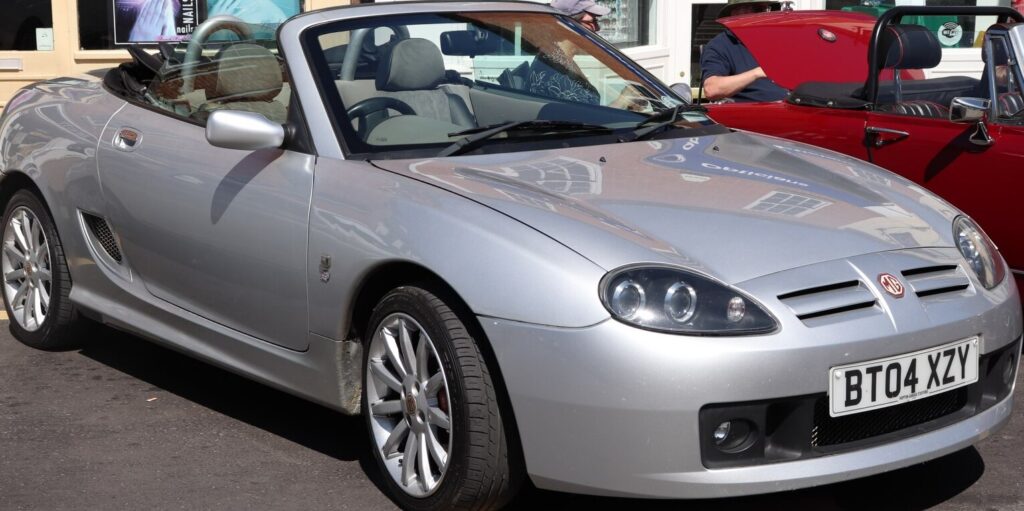
The MG TF 1.6i 16V, produced between 2002 and 2005, was a two-seat roadster representing a revival of the classic MG sports car lineage. Positioned as the entry-level model within the TF range, it offered an accessible price point for those seeking the open-top driving experience. The TF, internally designated as the RD/GE platform, was a significant update to the earlier MGF, addressing many of its predecessor’s shortcomings with a revised chassis and updated styling. This 1.6-liter variant aimed to provide a balance of affordability, reasonable performance, and classic British roadster charm.
Technical Specifications
| Brand | MG |
| Model | TF |
| Generation | TF |
| Type (Engine) | 1.6 i 16V (116 Hp) |
| Start of production | 2002 |
| End of production | 2005 |
| Powertrain Architecture | Internal Combustion engine |
| Body type | Cabriolet |
| Seats | 2 |
| Doors | 2 |
| Fuel consumption (urban) | 9.7 l/100 km (24.2 US mpg) |
| Fuel consumption (extra urban) | 5.6 l/100 km (42 US mpg) |
| Fuel consumption (combined) | 7.1 l/100 km (33.1 US mpg) |
| Fuel Type | Petrol (Gasoline) |
| Acceleration 0 – 100 km/h | 9.8 sec |
| Acceleration 0 – 62 mph | 9.8 sec |
| Acceleration 0 – 60 mph | 9.3 sec |
| Maximum speed | 190 km/h (118.06 mph) |
| Weight-to-power ratio | 9.4 kg/Hp |
| Weight-to-torque ratio | 7.6 kg/Nm |
| Power | 116 Hp @ 6250 rpm |
| Torque | 145 Nm @ 4700 rpm (106.95 lb.-ft. @ 4700 rpm) |
| Engine layout | Middle, Transverse |
| Engine Model/Code | 16K4F |
| Engine displacement | 1588 cm3 (96.91 cu. in.) |
| Number of cylinders | 4 |
| Engine configuration | Inline |
| Cylinder Bore | 80 mm (3.15 in.) |
| Piston Stroke | 79 mm (3.11 in.) |
| Compression ratio | 10.5:1 |
| Number of valves per cylinder | 4 |
| Fuel injection system | Multi-port manifold injection |
| Engine oil capacity | 4.5 l (4.76 US qt | 3.96 UK qt) |
| Kerb Weight | 1095 kg (2414.06 lbs.) |
| Max. weight | 1320 kg (2910.1 lbs.) |
| Max load | 225 kg (496.04 lbs.) |
| Trunk (boot) space – minimum | 210 l (7.42 cu. ft.) |
| Fuel tank capacity | 50 l (13.21 US gal | 11 UK gal) |
| Length | 3943 mm (155.24 in.) |
| Width | 1630 mm (64.17 in.) |
| Height | 1261 mm (49.65 in.) |
| Wheelbase | 2375 mm (93.5 in.) |
| Front track | 1404 mm (55.28 in.) |
| Rear (Back) track | 1410 mm (55.51 in.) |
| Drivetrain Architecture | Rear wheel drive |
| Number of gears and type of gearbox | 5 gears, manual transmission |
| Front suspension | Coil spring |
| Rear suspension | Coil spring |
| Front brakes | Ventilated discs |
| Rear brakes | Disc |
| Assisting systems | ABS (Anti-lock braking system) |
| Steering type | Steering rack and pinion |
| Power steering | Hydraulic Steering |
| Tires size | 185/55 R15; 205/50 R15 |
Powertrain & Engine Architecture
The MG TF 1.6i 16V was powered by the 16K4F engine, a 1.6-liter inline-four cylinder unit. This engine was derived from the K-Series engine family developed by British Leyland and later Rover. It featured a multi-point fuel injection system and a 10.5:1 compression ratio. The 16-valve cylinder head, with four valves per cylinder, contributed to improved breathing and higher-end power delivery. The engine produced 116 horsepower at 6250 rpm and 145 Nm (107 lb-ft) of torque at 4700 rpm. The engine’s mid-mounted, transverse layout contributed to a balanced weight distribution, enhancing handling characteristics. The five-speed manual transmission was the standard offering, providing a direct connection between the engine and the rear wheels.
Driving Characteristics
The 1.6-liter TF offered a distinctly different driving experience compared to its more powerful siblings, such as the 1.8-liter and V6 models. While not offering blistering acceleration (0-60 mph in approximately 9.3 seconds), it provided a lively and engaging drive, particularly on winding roads. The engine required to be revved to extract its full potential, and the five-speed gearbox was well-matched to the engine’s powerband. The rear-wheel-drive configuration contributed to a balanced chassis and predictable handling. Compared to the higher-output models, the 1.6i felt more nimble and less prone to oversteer, making it a more forgiving option for less experienced drivers. The gear ratios were tuned for acceleration rather than outright top speed, making it well-suited for spirited driving on country lanes.
Equipment & Trim Levels
The 1.6i typically came with a relatively basic, but functional, equipment list. Standard features included power steering, ABS brakes, alloy wheels, and a leather-wrapped steering wheel. Interior upholstery was typically cloth, although leather options were available. The dashboard layout was straightforward and driver-focused. Optional extras included air conditioning, a CD player, and upgraded interior trim. The 1.6i was often seen as the entry point to the TF range, appealing to buyers who prioritized affordability and the core roadster experience over luxury features.
Chassis & Braking
The MG TF utilized a steel monocoque chassis, a significant improvement over the MGF’s bonded structure. This provided increased torsional rigidity and improved crash safety. The suspension consisted of coil springs and dampers all around, with an anti-roll bar at the front to reduce body roll. Braking duties were handled by ventilated discs at the front and solid discs at the rear. The braking system, combined with ABS, provided adequate stopping power for the car’s weight and performance. The suspension setup was tuned for a balance between comfort and handling, offering a reasonably compliant ride without sacrificing agility.
Market Reception & Comparison
The MG TF 1.6i was generally well-received by automotive critics as an affordable and enjoyable roadster. It was praised for its handling, steering feel, and classic British roadster character. However, some critics noted that the 1.6-liter engine felt underpowered compared to the larger-displacement options. Fuel economy was respectable, averaging around 33.1 US mpg in combined driving. Compared to the 1.8-liter TF, the 1.6i offered lower running costs and insurance premiums, making it a more attractive option for budget-conscious buyers. The V6 model, while offering significantly more performance, came at a substantial price premium.
Legacy
The MG TF 1.6i, while not the most powerful variant, remains a popular choice among enthusiasts today. The 16K4F engine, while known for potential head gasket issues common to the K-Series family, is generally reliable when properly maintained. Parts availability is reasonable, and the car’s relatively simple mechanicals make it a viable option for home mechanics. The TF 1.6i offers a unique blend of classic roadster charm and modern features, making it a compelling alternative to more mainstream sports cars. In the used car market, well-maintained examples command reasonable prices, reflecting their enduring appeal and the continued interest in the MG brand.
