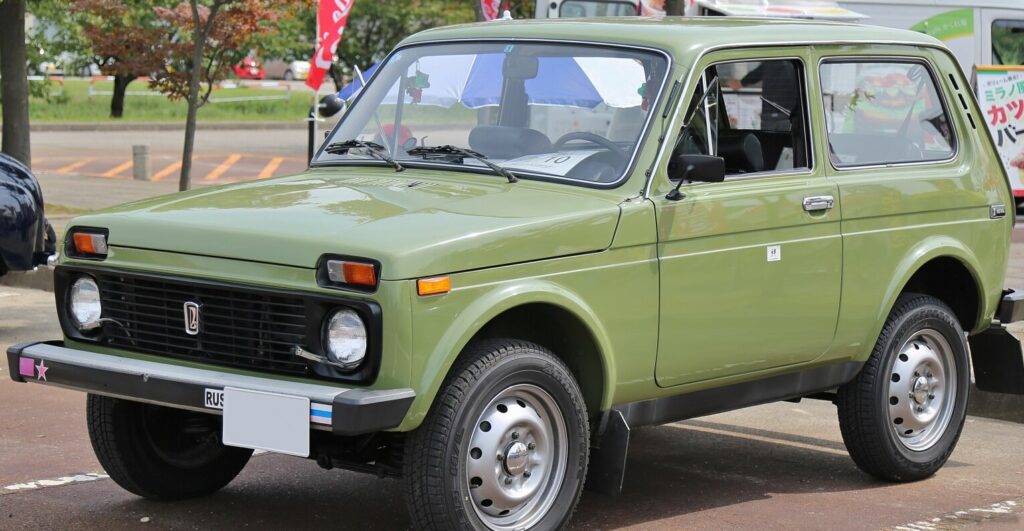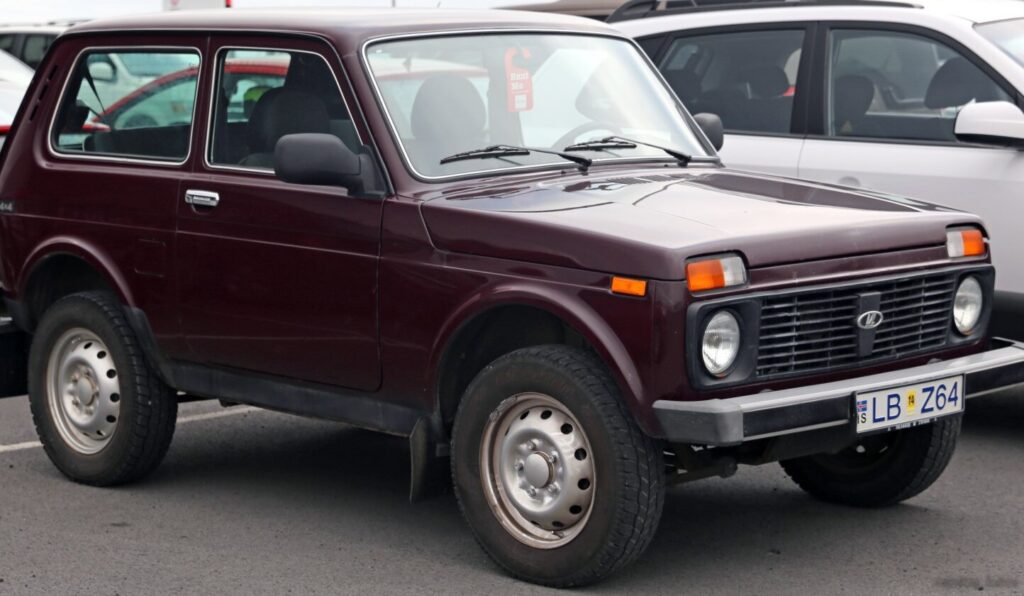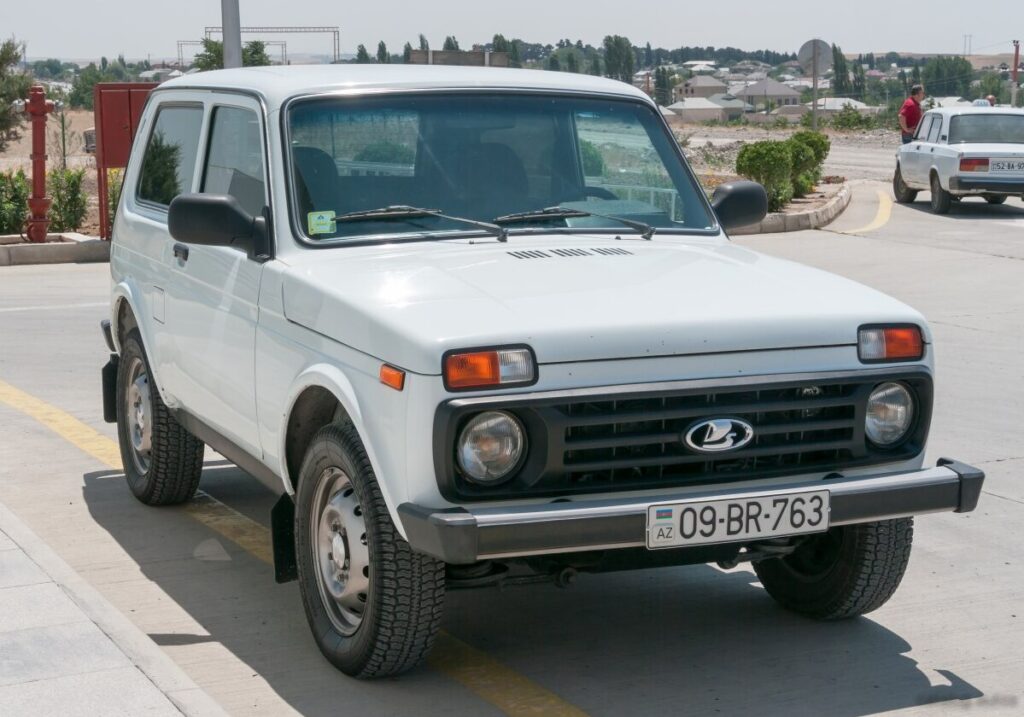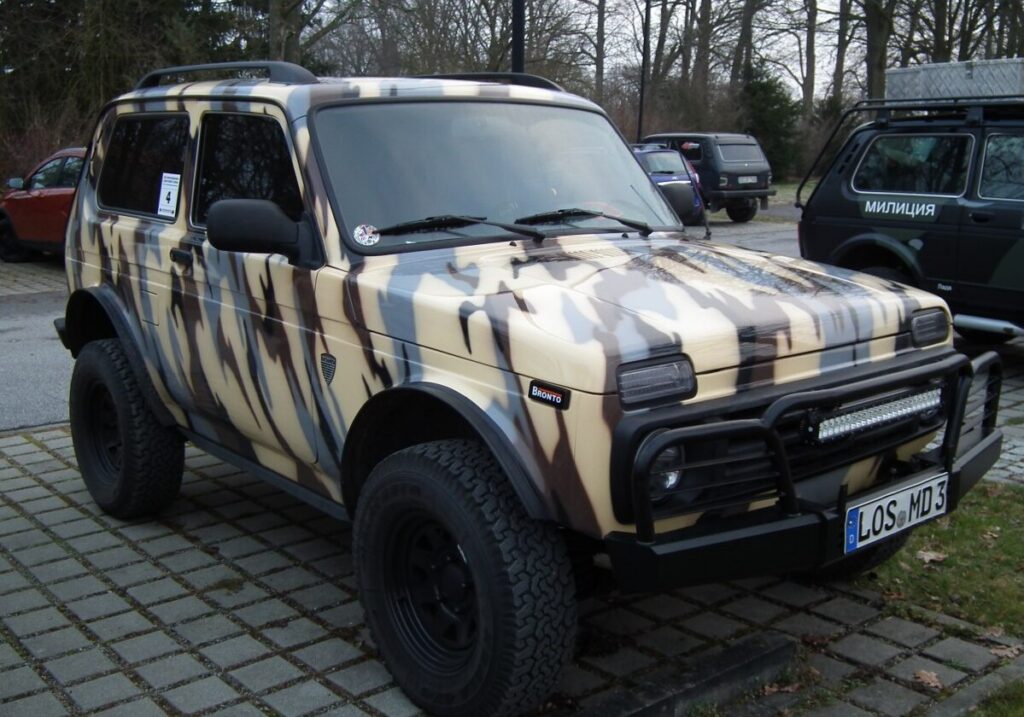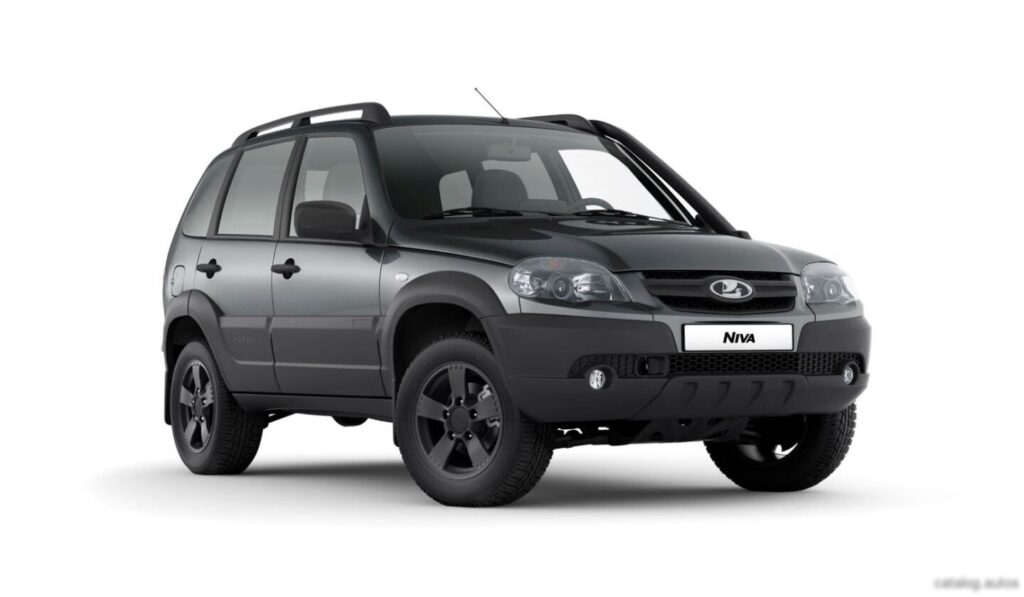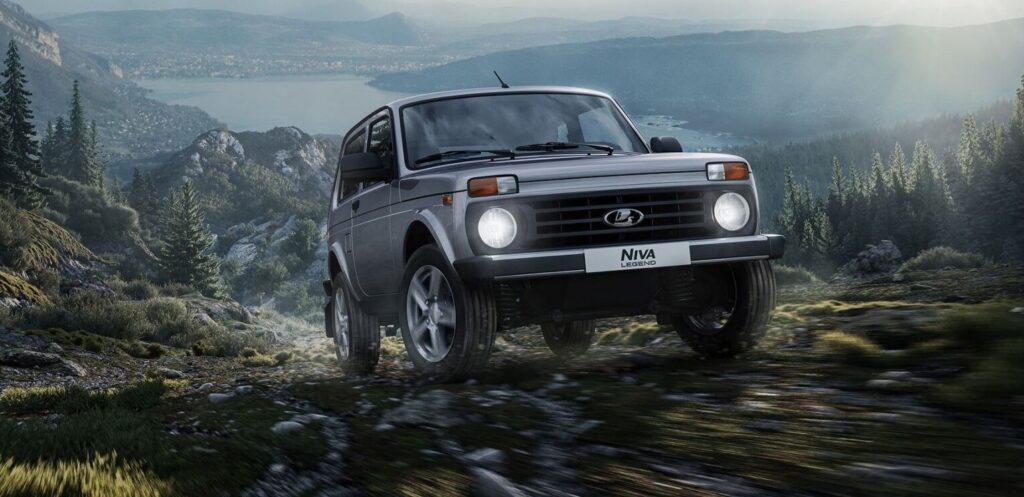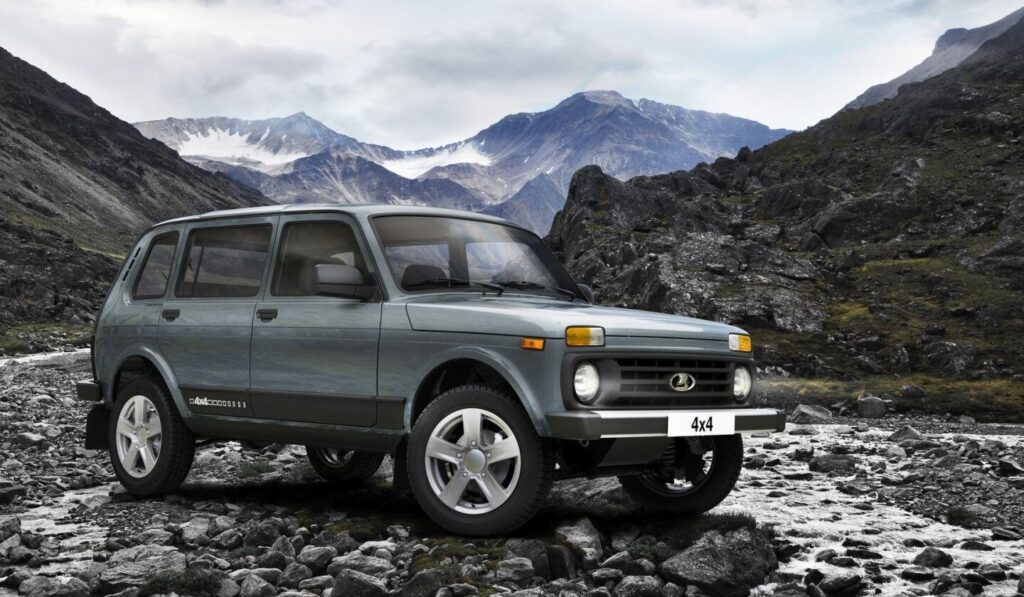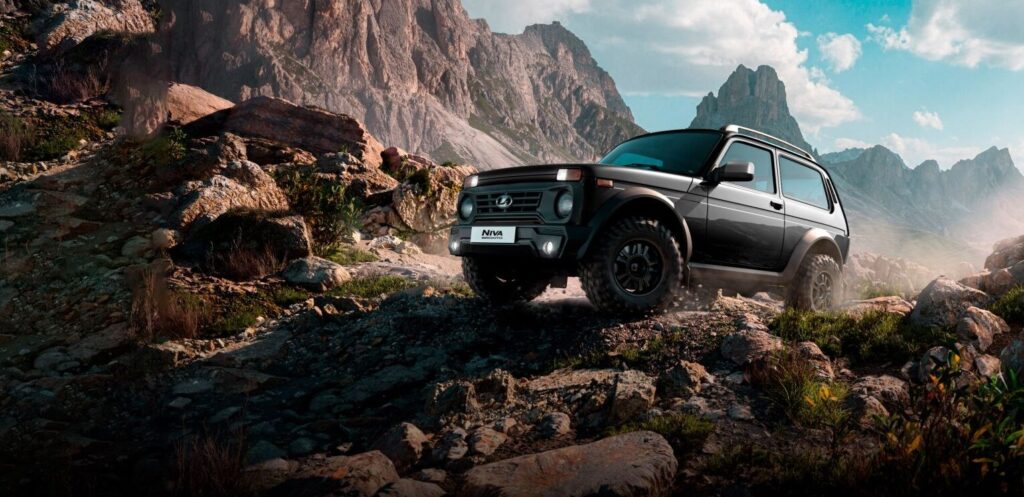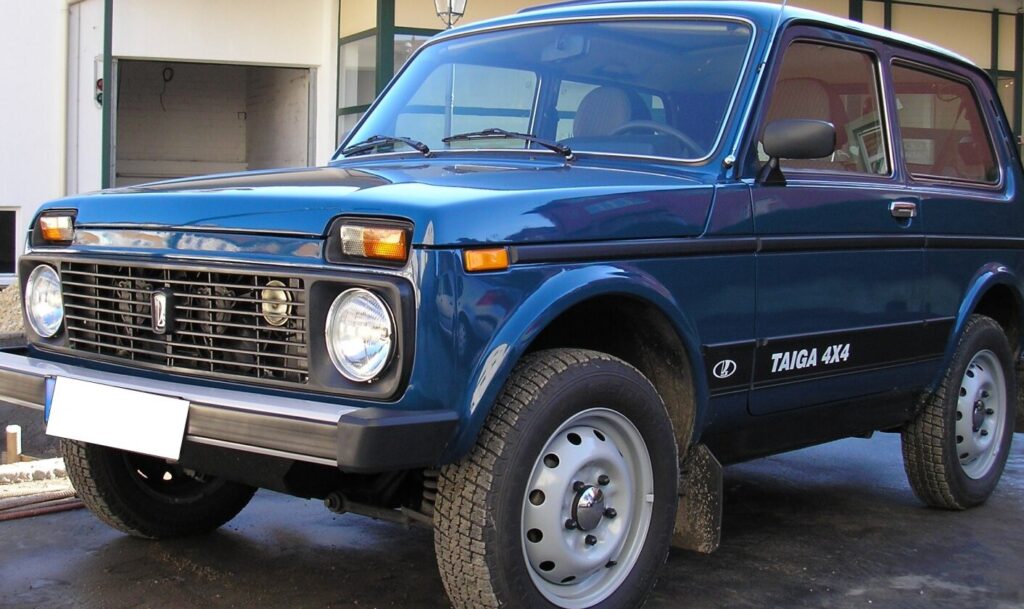
The Lada Niva 3-door, specifically the facelifted version introduced in 1993 and produced through 2009, represents a significant evolution of the original Niva design. This iteration, powered by the 1.7i engine producing 82 horsepower, occupied a crucial position in the Lada lineup as an affordable and highly capable off-road vehicle. While production spanned from 2003 to 2009, the 1993 facelift brought notable improvements to the vehicle’s aesthetics and some mechanical refinements. It remained a popular choice in Eastern Europe and Russia, where its robust construction and four-wheel-drive system were highly valued. This variant was positioned as a practical, no-frills option for those needing a dependable vehicle for both on and off-road use.
Technical Specifications
| Brand | Lada |
| Model | Niva |
| Generation | Niva 3-door (facelift 1993) |
| Type (Engine) | 1.7i (82 Hp) 4×4 |
| Start of production | 2003 year |
| End of production | 2009 year |
| Powertrain Architecture | Internal Combustion engine |
| Body type | SUV |
| Seats | 4 |
| Doors | 3 |
| Fuel consumption (combined) | 10.8 l/100 km (21.8 US mpg, 26.2 UK mpg, 9.3 km/l) |
| Fuel Type | Petrol (Gasoline) |
| Acceleration 0 – 100 km/h | 17 sec |
| Acceleration 0 – 62 mph | 17 sec |
| Acceleration 0 – 60 mph | 16.2 sec |
| Maximum speed | 142 km/h (88.23 mph) |
| Weight-to-power ratio | 14.8 kg/Hp, 67.8 Hp/tonne |
| Power | 82 Hp @ 5200 rpm |
| Power per litre | 48.5 Hp/l |
| Maximum engine speed | 6000 rpm |
| Engine layout | Front, Longitudinal |
| Engine Model/Code | VAZ-21214 |
| Engine displacement | 1690 cm3 (103.13 cu. in.) |
| Number of cylinders | 4 |
| Engine configuration | Inline |
| Cylinder Bore | 82 mm (3.23 in.) |
| Piston Stroke | 80 mm (3.15 in.) |
| Compression ratio | 9.3:1 |
| Number of valves per cylinder | 2 |
| Fuel injection system | Multi-port manifold injection |
| Engine aspiration | Naturally aspirated engine |
| Valvetrain | SOHC |
| Engine oil capacity | 3.75 l (3.96 US qt | 3.3 UK qt) |
| Coolant | 10.7 l (11.31 US qt | 9.41 UK qt) |
| Kerb Weight | 1210 kg (2667.59 lbs.) |
| Max. weight | 1610 kg (3549.44 lbs.) |
| Max load | 400 kg (881.85 lbs.) |
| Fuel tank capacity | 42 l (11.1 US gal | 9.24 UK gal) |
| Max. roof load | 50 kg (110.23 lbs.) |
| Permitted trailer load with brakes (12%) | 600 kg (1322.77 lbs.) |
| Permitted trailer load without brakes | 300 kg (661.39 lbs.) |
| Permitted towbar download | 50 kg (110.23 lbs.) |
| Length | 3740 mm (147.24 in.) |
| Width | 1680 mm (66.14 in.) |
| Width including mirrors | 1814 mm (71.42 in.) |
| Height | 1640 mm (64.57 in.) |
| Wheelbase | 2200 mm (86.61 in.) |
| Front track | 1430 mm (56.3 in.) |
| Rear (Back) track | 1400 mm (55.12 in.) |
| Front overhang | 705 mm (27.76 in.) |
| Rear overhang | 835 mm (32.87 in.) |
| Ride height (ground clearance) | 213 mm (8.39 in.) |
| Minimum turning circle | 11 m (36.09 ft.) |
| Wading depth | 500 mm (19.69 in.) |
| Drivetrain Architecture | The Internal combustion engine (ICE) drives permanently the four wheels of the vehicle. |
| Drive wheel | All wheel drive (4×4) |
| Number of gears and type of gearbox | 5 gears, manual transmission |
| Front suspension | Independent coil spring |
| Rear suspension | dependent spring suspension |
| Front brakes | Disc |
| Rear brakes | Drum |
| Tires size | 175/80 R16; 185/75 R16 |
| Wheel rims size | 5J x 16 |
INTRODUCTION
The Lada Niva, originally launched in 1977, quickly gained a reputation as a rugged and affordable off-road vehicle. The 1993 facelift brought updated styling, including a revised front grille, headlights, and interior trim. The 1.7i variant, producing 82 horsepower, was a mainstay of the lineup from 2003 to 2009. This model was built on the foundation of the original Niva design, utilizing a body-on-frame construction and a permanent four-wheel-drive system. It was primarily sold in Russia and other Eastern European markets, where it competed with other budget-friendly 4x4s. The 1.7i engine was chosen for its balance of fuel efficiency and adequate power for both on-road and off-road driving.
Powertrain & Engine Architecture
The heart of the Niva 1.7i is the VAZ-21214 engine, a 1.7-liter inline-four cylinder gasoline engine. This engine features a single overhead camshaft (SOHC) valvetrain with two valves per cylinder. It utilizes a multi-port fuel injection system, a significant upgrade from the carburetor systems found in earlier Niva models. The engine produces 82 horsepower at 5200 rpm and 128 Nm (94 lb-ft) of torque. The engine is longitudinally mounted in the front of the vehicle, driving all four wheels through a five-speed manual transmission. The transmission is known for its robust construction but can feel somewhat clunky compared to more modern gearboxes. The 4×4 system is a part-time system with a high and low range, selectable via a lever inside the cabin.
Driving Characteristics
The Niva 1.7i offers a driving experience that prioritizes capability over refinement. The 82 horsepower engine provides adequate power for everyday driving, but acceleration is leisurely, taking around 17 seconds to reach 62 mph. The five-speed manual transmission has relatively wide gear ratios, designed to maximize torque in low-range for off-road situations. On paved roads, the Niva feels somewhat agricultural, with noticeable body roll and a firm ride. However, its true strength lies in its off-road performance. The permanent four-wheel drive system, combined with its short wheelbase and high ground clearance, allows it to tackle challenging terrain with ease. The vehicle’s relatively light weight (around 2668 lbs) also contributes to its off-road prowess.
Equipment & Trim Levels
The Niva 1.7i was typically offered with a fairly basic level of equipment. Standard features included steel wheels, vinyl or cloth upholstery, and a simple dashboard layout. Power steering and air conditioning were often optional extras, depending on the market and year of production. Interior trim was functional rather than luxurious, with a focus on durability. Later models might have included features like a basic radio and upgraded seat fabrics. The overall emphasis was on providing a practical and reliable vehicle at an affordable price point.
Chassis & Braking
The Niva’s chassis is a traditional body-on-frame design, known for its strength and durability. The front suspension utilizes independent coil springs, while the rear suspension employs a dependent spring suspension with a solid axle. This setup contributes to the vehicle’s off-road capability but can result in a less comfortable ride on paved roads. The braking system consists of disc brakes on the front wheels and drum brakes on the rear wheels. The brakes are adequate for normal driving conditions, but lack the stopping power of more modern vehicles. The tires are typically all-terrain tires, designed to provide good grip on a variety of surfaces.
Market Reception & Comparison
The Lada Niva 1.7i was generally well-received in its target markets as a dependable and affordable off-road vehicle. Critics praised its robust construction, four-wheel-drive system, and low price. However, it was also criticized for its lack of refinement, dated interior, and relatively slow performance. Compared to other trims in the Niva lineup, the 1.7i offered a balance between fuel economy and power. The more powerful engines, while offering better performance, were less fuel-efficient. The 1.7i was often seen as the sweet spot for buyers who needed a capable off-road vehicle but didn’t require the extra power of the larger engines.
Legacy
The Lada Niva 1.7i has proven to be a remarkably durable and reliable vehicle. Many examples are still on the road today, testament to its robust construction and simple design. In the used car market, the Niva 1.7i remains a popular choice for those seeking an affordable and capable off-road vehicle. While maintenance can be relatively straightforward due to the engine’s simplicity, parts availability can sometimes be an issue depending on the region. The Niva’s legacy as a rugged and dependable 4×4 continues to endure, and it remains a beloved vehicle among off-road enthusiasts.