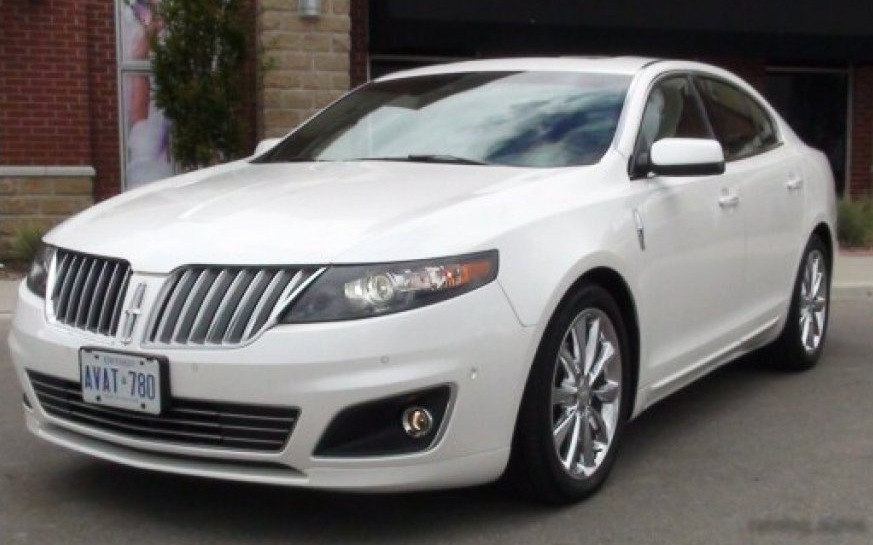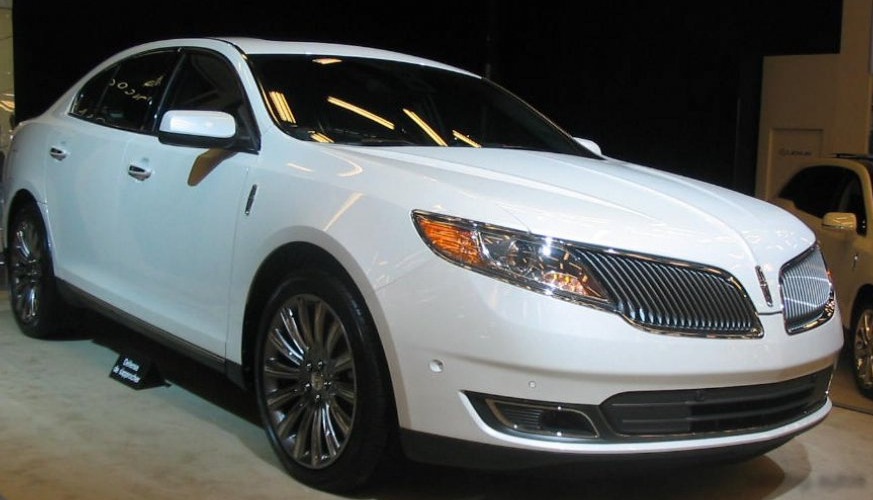
The Lincoln MKS, particularly the facelifted version produced from 2013 to 2016, represented Lincoln’s attempt to offer a domestically-produced, full-size luxury sedan aimed at competing with established American brands like Buick and Cadillac. The 3.7-liter V6 with all-wheel drive and an automatic transmission was a significant configuration within the MKS lineup, positioned as a strong mid-range offering balancing performance and features. Production spanned from 2012 through 2016, marking a relatively short lifespan for the model as Lincoln shifted its focus towards crossover SUVs.
Technical Specifications
| Brand | Lincoln |
| Model | MKS |
| Generation | MKS I (facelift 2013) |
| Type (Engine) | 3.7 V6 (304 Hp) AWD Automatic |
| Start of production | 2012 |
| End of production | 2016 |
| Powertrain Architecture | Internal Combustion engine |
| Body type | Sedan |
| Seats | 5 |
| Doors | 4 |
| Fuel consumption (urban) | 13.1 l/100 km (18 US mpg, 21.6 UK mpg, 7.6 km/l) |
| Fuel consumption (extra urban) | 9 l/100 km (26.1 US mpg, 31.4 UK mpg, 11.1 km/l) |
| Fuel consumption (combined) | 11.2 l/100 km (21 US mpg, 25.2 UK mpg, 8.9 km/l) |
| Fuel Type | Petrol (Gasoline) |
| Weight-to-power ratio | 6.6 kg/Hp, 152.6 Hp/tonne |
| Weight-to-torque ratio | 5.3 kg/Nm, 189.8 Nm/tonne |
| Power | 304 Hp @ 6500 rpm |
| Power per litre | 81.6 Hp/l |
| Torque | 378 Nm @ 4000 rpm (278.8 lb.-ft. @ 4000 rpm) |
| Maximum engine speed | 6750 rpm |
| Engine layout | Front, Transverse |
| Engine Model/Code | Cyclone |
| Engine displacement | 3726 cm3 (227.37 cu. in.) |
| Number of cylinders | 6 |
| Engine configuration | V-engine |
| Cylinder Bore | 95.5 mm (3.76 in.) |
| Piston Stroke | 86.7 mm (3.41 in.) |
| Compression ratio | 10.3:1 |
| Number of valves per cylinder | 4 |
| Fuel injection system | Multi-port manifold injection |
| Engine aspiration | Naturally aspirated engine |
| Valvetrain | DOHC, Ti-VCT |
| Engine oil capacity | 5.7 l (6.02 US qt, 5.02 UK qt) |
| Coolant capacity | 10.5 l (11.1 US qt, 9.24 UK qt) |
| Kerb Weight | 1992 kg (4391.61 lbs.) |
| Trunk (boot) space – maximum | 544 l (19.21 cu. ft.) |
| Fuel tank capacity | 72 l (19.02 US gal, 15.84 UK gal) |
| Length | 5222 mm (205.59 in.) |
| Width | 2017 mm (79.41 in.) |
| Width including mirrors | 2172 mm (85.51 in.) |
| Height | 1565 mm (61.61 in.) |
| Wheelbase | 2868 mm (112.91 in.) |
| Front track | 1648 mm (64.88 in.) |
| Rear (Back) track | 1654 mm (65.12 in.) |
| Drag coefficient (Cd) | 0.32 |
| Minimum turning circle (turning diameter) | 12.0 m (39.37 ft.) |
| Drive wheel | All wheel drive (4×4) |
| Number of gears and type of gearbox | 6 gears, automatic transmission SelectShift |
| Front suspension | Independent coil spring |
| Rear suspension | Independent multi-link suspension |
| Front brakes | Ventilated discs |
| Rear brakes | Ventilated discs |
| Assisting systems | ABS (Anti-lock braking system) |
| Steering type | Steering rack and pinion |
| Tires size | 255/45 R19 V |
| Wheel rims size | 19 |
INTRODUCTION
The 2013-2016 Lincoln MKS 3.7L AWD Automatic represented a refinement of the original MKS launched in 2006. Built on the D3 platform, shared with the Ford Taurus and other Ford models, the MKS aimed to provide a more luxurious and refined experience than its Ford counterpart. The facelift brought updated styling, including a new grille and headlights, and interior enhancements. The 3.7-liter V6, paired with a six-speed automatic transmission and all-wheel drive, was a popular choice for buyers seeking a balance of performance and all-weather capability. This configuration sat comfortably in the middle of the MKS range, above the base 3.5L V6 and below the more powerful EcoBoost variants.
Powertrain & Engine Architecture
At the heart of the MKS 3.7 AWD was the Ford Cyclone family of engines. This 3.7-liter, naturally aspirated V6 (engine code 3.7L Ti-VCT) produced 304 horsepower and 278 lb-ft of torque. The engine featured a 60-degree V-angle, dual overhead camshafts (DOHC) with variable valve timing (Ti-VCT) on both intake and exhaust valves, and multi-port fuel injection. This combination allowed for a relatively broad torque curve and responsive performance. The six-speed SelectShift automatic transmission, also sourced from Ford, offered smooth shifts and a manual shift mode for more driver control. The all-wheel-drive system was primarily front-wheel drive biased, automatically engaging the rear wheels when traction was needed.
Driving Characteristics
The MKS 3.7 AWD offered a comfortable and composed driving experience. While not a sports sedan, the 304 horsepower provided ample power for everyday driving and highway passing. The automatic transmission was well-tuned, providing smooth and predictable shifts. The all-wheel-drive system enhanced stability and traction, particularly in inclement weather. Compared to the base 3.5L V6, the 3.7L offered noticeably quicker acceleration and a more refined feel. However, it didn’t possess the outright performance of the turbocharged EcoBoost models. The gear ratios were optimized for cruising comfort rather than aggressive acceleration, prioritizing a relaxed driving experience.
Equipment & Trim Levels
The MKS 3.7 AWD typically came standard with a generous list of features, including leather upholstery, heated front seats, a premium audio system (often a THX II Certified system), dual-zone automatic climate control, and a rearview camera. Higher trim levels, such as the Elite, added features like navigation, adaptive cruise control, and power-adjustable pedals. Optional extras included a sunroof, upgraded wheels, and various appearance packages. Interior materials were generally of good quality, though not quite on par with some European luxury brands. The dashboard layout was straightforward and user-friendly, with a focus on ease of operation.
Chassis & Braking
The MKS utilized an independent front suspension with coil springs and an independent multi-link rear suspension. This setup provided a comfortable ride and good handling characteristics. The steering was precise and well-weighted, though it lacked the ultimate feel of some sportier sedans. Braking duties were handled by ventilated discs on all four wheels, and the car was equipped with an anti-lock braking system (ABS) as standard. The MKS 3.7 AWD’s weight of nearly 4400 pounds meant that the braking system needed to work effectively to provide confident stopping power.
Market Reception & Comparison
The Lincoln MKS 3.7 AWD received mixed reviews from automotive critics. While praised for its comfortable ride, spacious interior, and standard features, it was often criticized for its somewhat bland styling and lack of a truly distinctive character. Compared to the base 3.5L V6, the 3.7L offered a noticeable performance improvement, but fuel economy suffered slightly. The EcoBoost models provided significantly more power but came at a higher price point. Reliability was generally considered average, with some reports of minor electrical issues and transmission concerns. Fuel economy averaged around 21 mpg combined, which was typical for a full-size, all-wheel-drive sedan of that era.
Legacy
The Lincoln MKS, and particularly the 3.7L AWD variant, represents a transitional period for the Lincoln brand. While it offered a competitive product in the American luxury sedan segment, it ultimately failed to gain significant market share. The Cyclone 3.7L V6 proved to be a relatively reliable engine, and examples are still found on the road today. On the used car market, the MKS 3.7 AWD offers a good value proposition for buyers seeking a spacious, comfortable, and well-equipped sedan at an affordable price. However, potential buyers should be aware of the potential for age-related maintenance issues and the relatively high fuel consumption.