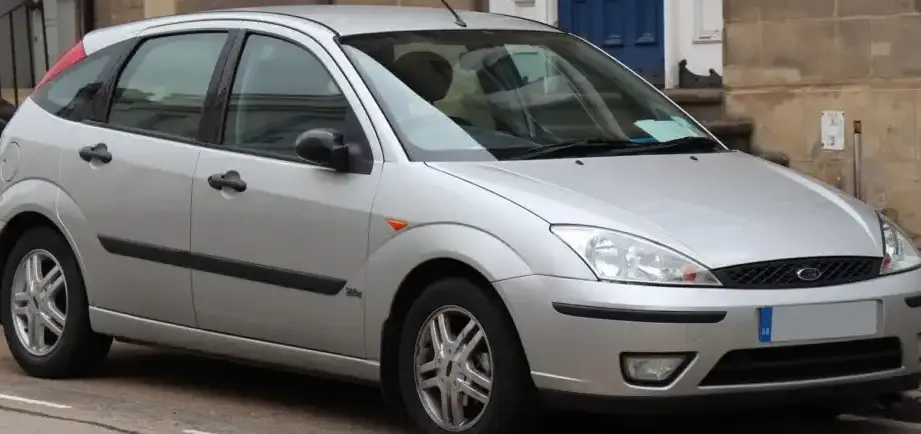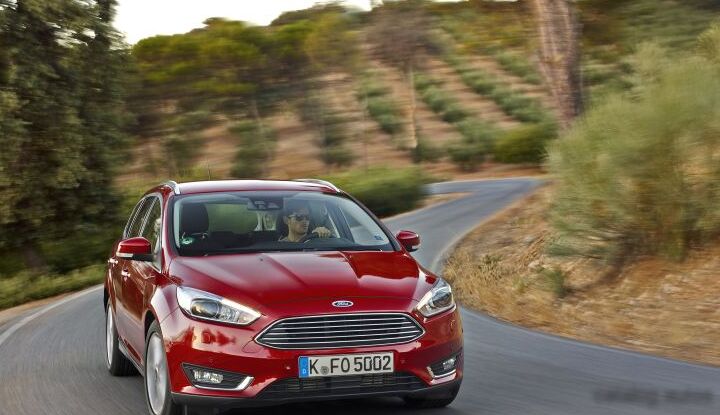
The Ford Focus III Wagon ST 2.0 EcoBoost, produced from 2014 to 2018, represents the performance-oriented variant of the third-generation Focus Wagon (estate). Positioned as the flagship trim, it offered a significant upgrade in power and handling compared to the standard Focus models. This model year corresponds to the facelifted version of the Mk3 Focus, incorporating revised styling and updated technology. The ST aimed to deliver a sporty driving experience within the practical confines of a family wagon, appealing to enthusiasts who required both performance and versatility. It was primarily marketed in Europe and other global markets, with limited availability in North America where the Focus was discontinued earlier.
Technical Specifications
| Brand | Ford |
| Model | Focus |
| Generation | Focus III Wagon (facelift 2014) |
| Type (Engine) | ST 2.0 EcoBoost (250 Hp) |
| Start of production | 2014 |
| End of production | 2018 |
| Powertrain Architecture | Internal Combustion engine |
| Body type | Station wagon (estate) |
| Seats | 5 |
| Doors | 5 |
| Fuel consumption (urban) | 9.9 l/100 km (23.8 US mpg) |
| Fuel consumption (extra urban) | 5.7 l/100 km (41.3 US mpg) |
| Fuel consumption (combined) | 6.8 l/100 km (34.6 US mpg) |
| CO2 emissions | 169 g/km |
| Fuel Type | Petrol (Gasoline) |
| Acceleration 0 – 100 km/h | 6.7 sec |
| Acceleration 0 – 62 mph | 6.7 sec |
| Acceleration 0 – 60 mph | 6.4 sec |
| Maximum speed | 248 km/h (154.1 mph) |
| Emission standard | Euro 6 |
| Weight-to-power ratio | 5.8 kg/Hp |
| Weight-to-torque ratio | 4.1 kg/Nm |
| Power | 250 Hp @ 5500 rpm |
| Torque | 360 Nm @ 2000-4500 rpm (265.52 lb.-ft.) |
| Engine layout | Front, Transverse |
| Engine Model/Code | R9DA |
| Engine displacement | 2000 cm3 (122.05 cu. in.) |
| Number of cylinders | 4 |
| Engine configuration | Inline |
| Cylinder Bore | 87.5 mm (3.44 in.) |
| Piston Stroke | 83.1 mm (3.27 in.) |
| Compression ratio | 9.3:1 |
| Number of valves per cylinder | 4 |
| Fuel injection system | Direct injection |
| Engine aspiration | Turbocharger, Intercooler |
| Valvetrain | DOHC |
| Engine oil capacity | 5.4 l (5.71 US qt | 4.75 UK qt) |
| Coolant capacity | 6.45 l (6.82 US qt | 5.68 UK qt) |
| Kerb Weight | 1461 kg (3220.95 lbs.) |
| Max. weight | 2025 kg (4464.36 lbs.) |
| Max load | 564 kg (1243.41 lbs.) |
| Trunk (boot) space – minimum | 476 l (16.81 cu. ft.) |
| Trunk (boot) space – maximum | 1502 l (53.04 cu. ft.) |
| Fuel tank capacity | 62 l (16.38 US gal | 13.64 UK gal) |
| Length | 4563 mm (179.65 in.) |
| Width | 1823 mm (71.77 in.) |
| Height | 1486 mm (58.5 in.) |
| Wheelbase | 2648 mm (104.25 in.) |
| Front track | 1550 mm (61.02 in.) |
| Rear track | 1534 mm (60.39 in.) |
| Minimum turning circle | 12.4 m (40.68 ft.) |
| Drivetrain | Front wheel drive |
| Number of gears | 6 gears, manual transmission |
| Front suspension | Independent type McPherson |
| Rear suspension | Double wishbone |
| Front brakes | Ventilated discs |
| Rear brakes | Disc |
| Tires size | 235/40 R18; 235/35 R19 |
| Wheel rims size | 8.5J x 18; 8.0J x 19 |
Powertrain & Engine Architecture
The heart of the Focus ST Wagon is the 2.0-liter EcoBoost inline-four cylinder engine, designated as the R9DA. This engine is a direct-injected, turbocharged powerplant, representing Ford’s advancements in downsized engine technology. Direct injection allows for precise fuel delivery, enhancing both power and efficiency. The turbocharger, coupled with an intercooler, provides increased air density for improved combustion. The engine produces 250 horsepower at 5500 rpm and 360 Nm (265.52 lb.-ft.) of torque between 2000 and 4500 rpm. The engine utilizes a dual overhead camshaft (DOHC) valvetrain with four valves per cylinder, optimizing airflow for enhanced performance. The engine is transversely mounted, driving the front wheels. The six-speed manual transmission was the only transmission option available, providing drivers with full control over the engine’s power delivery.
Driving Characteristics
The 2.0 EcoBoost engine in the Focus ST Wagon delivers a noticeably spirited driving experience. Acceleration from 0 to 60 mph is achieved in approximately 6.4 seconds, and it boasts a top speed of 154.1 mph. The turbocharger provides a surge of power in the mid-range, making overtaking maneuvers effortless. The six-speed manual transmission is well-matched to the engine’s characteristics, offering precise shifts and a satisfying engagement. Compared to lower-powered Focus Wagon variants, the ST provides a much more responsive and engaging driving experience. While the standard Focus models prioritize fuel economy and comfort, the ST prioritizes performance and handling. The gear ratios are tuned for acceleration, though this comes at the expense of some fuel efficiency on the highway.
Equipment & Trim Levels
The Focus ST Wagon came generously equipped as standard. Key features included sport seats with enhanced bolstering, a unique ST body kit (including a rear spoiler and side skirts), and alloy wheels. Inside, the ST featured a sport steering wheel, aluminum pedals, and distinctive ST badging. Standard infotainment included a touchscreen display with Ford’s SYNC system. Optional extras included a panoramic sunroof, heated front seats, and a premium sound system. The interior trim typically featured a combination of cloth and leather upholstery, with a dark and sporty aesthetic.
Chassis & Braking
The Focus ST Wagon benefits from a revised chassis and suspension setup compared to the standard Focus Wagon. The front suspension utilizes an independent McPherson strut design, while the rear features a multi-link double wishbone setup. These components are tuned for improved handling and reduced body roll. The ST also features a thicker stabilizer bar compared to standard models. The braking system consists of ventilated discs at the front and solid discs at the rear, providing ample stopping power. Anti-lock braking system (ABS) is standard. The suspension setup provides a firm but compliant ride, balancing performance with everyday usability.
Market Reception & Comparison
The Ford Focus ST Wagon was generally well-received by automotive critics. It was praised for its engaging driving dynamics, powerful engine, and practical wagon body style. Compared to other hot hatchbacks and wagons, the Focus ST offered a compelling combination of performance and value. Fuel economy was considered reasonable for a performance vehicle, averaging around 34.6 US mpg in combined driving. Reliability was generally good, although some owners reported minor issues with the turbocharger and cooling system. Compared to the standard Focus Wagon, the ST represented a significant upgrade in performance and handling, but at a higher price point.
Legacy
The Ford Focus ST Wagon has established itself as a popular choice among enthusiasts in the used car market. The 2.0 EcoBoost engine, while capable of producing impressive power, is generally considered reliable with proper maintenance. Regular oil changes and timely servicing are crucial to prevent issues with the turbocharger and direct injection system. The six-speed manual transmission is also known for its durability. Today, the Focus ST Wagon remains a desirable option for those seeking a practical and engaging performance wagon. Its blend of performance, practicality, and affordability has ensured its continued popularity among car enthusiasts.