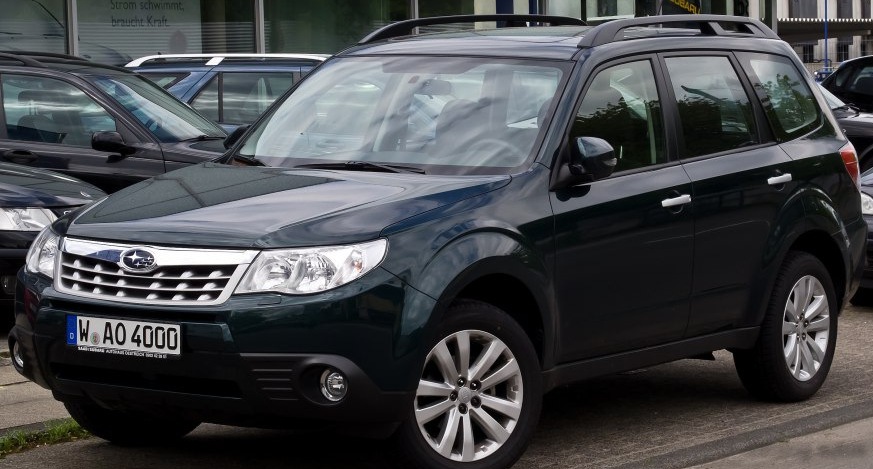
The Subaru Forester III (facelift, introduced in 2010) 2.5, producing 171 horsepower with all-wheel drive, represented a significant update to Subaru’s popular compact SUV. Produced from 2010 through 2013, this variant occupied a central position within the Forester III lineup, offering a balance between performance, fuel efficiency, and practicality. It was primarily marketed in markets where Subaru had a strong presence, including North America, Europe, and Australia, appealing to buyers seeking a versatile vehicle capable of handling diverse road conditions. This facelift brought styling revisions, interior enhancements, and refinements to the already capable Forester platform (G30/SH).
Technical Specifications
| Brand | Subaru |
| Model | Forester |
| Generation | Forester III (facelift 2010) |
| Type (Engine) | 2.5 (171 Hp) AWD |
| Start of production | 2010 |
| End of production | 2013 |
| Powertrain Architecture | Internal Combustion engine |
| Body type | SUV, Crossover |
| Seats | 5 |
| Doors | 5 |
| Fuel consumption (urban) | 12.9 l/100 km (18.2 US mpg, 21.9 UK mpg, 7.8 km/l) |
| Fuel consumption (extra urban) | 7.2 l/100 km (32.7 US mpg, 39.2 UK mpg, 13.9 km/l) |
| Fuel consumption (combined) | 9.3 l/100 km (25.3 US mpg, 30.4 UK mpg, 10.8 km/l) |
| CO2 emissions | 220 g/km |
| Fuel Type | Petrol (Gasoline) |
| Acceleration 0 – 100 km/h | 9.2 sec |
| Acceleration 0 – 62 mph | 9.2 sec |
| Acceleration 0 – 60 mph | 8.7 sec |
| Maximum speed | 198 km/h (123.03 mph) |
| Emission standard | Euro 4 |
| Weight-to-power ratio | 8.6 kg/Hp, 115.9 Hp/tonne |
| Weight-to-torque ratio | 6.3 kg/Nm, 159.3 Nm/tonne |
| Power | 171 Hp @ 5800 rpm |
| Power per litre | 68.5 Hp/l |
| Torque | 235 Nm @ 4100 rpm (173.33 lb.-ft. @ 4100 rpm) |
| Engine layout | Front, Longitudinal |
| Engine Model/Code | FB25 |
| Engine displacement | 2498 cm3 (152.44 cu. in.) |
| Number of cylinders | 4 |
| Engine configuration | Boxer |
| Cylinder Bore | 94 mm (3.7 in.) |
| Piston Stroke | 90 mm (3.54 in.) |
| Compression ratio | 10:1 |
| Number of valves per cylinder | 4 |
| Fuel injection system | Multi-port manifold injection |
| Engine aspiration | Naturally aspirated engine |
| Valvetrain | DOHC, AVCS |
| Engine oil capacity | 5.2 l (5.49 US qt | 4.58 UK qt) |
| Coolant | 7 l (7.4 US qt | 6.16 UK qt) |
| Kerb Weight | 1475-1480 kg (3251.82 – 3262.84 lbs.) |
| Trunk (boot) space – minimum | 450 l (15.89 cu. ft.) |
| Trunk (boot) space – maximum | 1660 l (58.62 cu. ft.) |
| Fuel tank capacity | 60 l (15.85 US gal | 13.2 UK gal) |
| Permitted trailer load with brakes (12%) | 1400 kg (3086.47 lbs.) |
| Permitted trailer load without brakes | 750 kg (1653.47 lbs.) |
| Length | 4560 mm (179.53 in.) |
| Width | 1795 mm (70.67 in.) |
| Height | 1700 mm (66.93 in.) |
| Wheelbase | 2615 mm (102.95 in.) |
| Front track | 1530 mm (60.24 in.) |
| Rear (Back) track | 1530 mm (60.24 in.) |
| Ride height (ground clearance) | 220 mm (8.66 in.) |
| Minimum turning circle (turning diameter) | 10.5 m (34.45 ft.) |
| Drivetrain Architecture | All wheel drive (4×4) |
| Number of gears and type of gearbox | 5 gears, manual transmission |
| Front suspension | Independent, type McPherson with coil spring and anti-roll bar |
| Rear suspension | Double wishbone, Transverse stabilizer |
| Front brakes | Ventilated discs |
| Rear brakes | Disc |
| Assisting systems | ABS (Anti-lock braking system) |
| Steering type | Steering rack and pinion |
| Power steering | Hydraulic Steering |
| Tires size | 215/65 R16 |
| Wheel rims size | 6.5J x 16 |
INTRODUCTION
The 2010-2013 Subaru Forester 2.5 AWD, equipped with the FB25 engine, was a key model in Subaru’s lineup, building upon the established reputation of the Forester for reliability, practicality, and all-weather capability. The facelift brought a more refined exterior design, improved interior materials, and enhancements to the vehicle’s safety features. This generation Forester continued to utilize Subaru’s symmetrical all-wheel drive system, making it a popular choice for drivers in regions with inclement weather. The 2.5-liter engine and five-speed manual transmission combination offered a balance of performance and fuel economy, positioning it as a versatile option for families and individuals alike.
Powertrain & Engine Architecture
The heart of this Forester variant is the FB25 2.5-liter horizontally-opposed (boxer) four-cylinder engine. This engine represented a significant departure from the previous EJ25 series, featuring a more compact design, reduced internal friction, and improved thermal efficiency. The FB25 utilizes a chain-driven dual overhead camshaft (DOHC) valvetrain with Subaru’s Active Valve Control System (AVCS) on both intake and exhaust camshafts, optimizing valve timing for improved performance and fuel economy. Fuel delivery is managed by a multi-point fuel injection system. The engine produces 171 horsepower at 5800 rpm and 235 Nm (173.33 lb-ft) of torque at 4100 rpm. The five-speed manual transmission provides a relatively direct driving experience, with gear ratios tuned for everyday usability.
Driving Characteristics
The Forester 2.5 with the five-speed manual transmission delivers adequate performance for daily driving. Acceleration from 0-60 mph takes approximately 8.7 seconds, and the vehicle has a top speed of 198 km/h (123.03 mph). While not a particularly sporty vehicle, the FB25 engine provides sufficient power for merging onto highways and overtaking other vehicles. The symmetrical all-wheel drive system provides excellent traction in various road conditions, enhancing stability and control. The manual transmission allows for greater driver engagement and control over the engine’s power delivery. Compared to higher-trim Forester models with more powerful engines, this variant offers a more economical driving experience, but at the expense of outright performance.
Equipment & Trim Levels
The 2010-2013 Subaru Forester 2.5 AWD typically came standard with features such as air conditioning, power windows and locks, a CD player with auxiliary input, and a basic instrument cluster. Higher trim levels, such as the Premium and Limited, added features like a sunroof, upgraded audio system, leather upholstery, and automatic climate control. The base model offered a functional and practical interior, while the higher trims provided a more luxurious and refined experience. Optional extras included a navigation system, rear vision camera, and various accessory packages.
Chassis & Braking
The Forester III utilizes a MacPherson strut front suspension and a double-wishbone rear suspension, providing a comfortable ride and predictable handling. Stabilizer bars are fitted to both the front and rear axles to reduce body roll during cornering. The braking system consists of ventilated discs at the front and solid discs at the rear, providing adequate stopping power. Anti-lock brakes (ABS) are standard, enhancing safety and control during emergency braking situations. The vehicle’s relatively high ground clearance (220 mm / 8.66 in) allows it to navigate rough terrain and snow-covered roads with ease.
Market Reception & Comparison
The Subaru Forester 2.5 AWD was generally well-received by automotive critics, who praised its practicality, safety, and all-weather capability. However, some reviewers noted that the engine could feel underpowered when fully loaded or driving uphill. Compared to other compact SUVs in its class, the Forester offered a unique combination of features, including standard all-wheel drive and a spacious interior. Fuel economy was considered average for its segment, with combined fuel consumption of 9.3 l/100 km (25.3 US mpg). The manual transmission version was often favored by enthusiasts who appreciated its greater driver involvement.
Legacy
The FB25 engine has proven to be a relatively reliable powertrain, with few major issues reported. The Forester III (facelift) remains a popular choice in the used car market, particularly among buyers seeking a dependable and versatile SUV. Its symmetrical all-wheel drive system and robust construction make it well-suited for a variety of driving conditions. While newer Forester models offer more advanced technology and features, the 2010-2013 2.5 AWD continues to represent a solid value proposition for budget-conscious buyers.