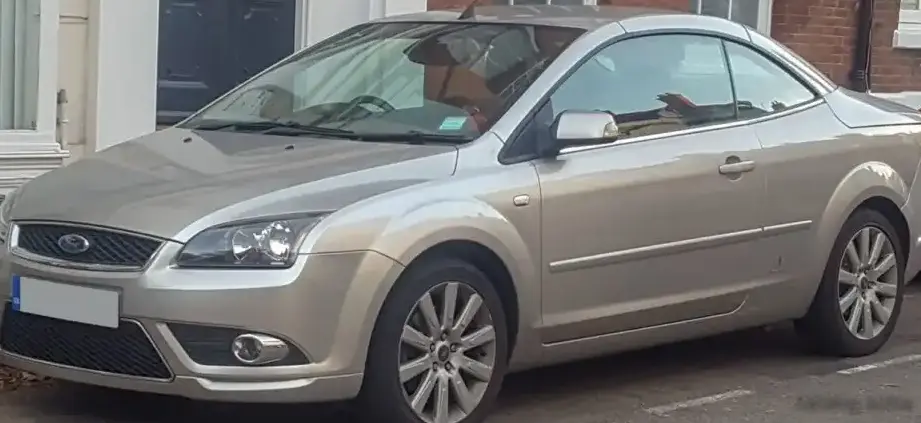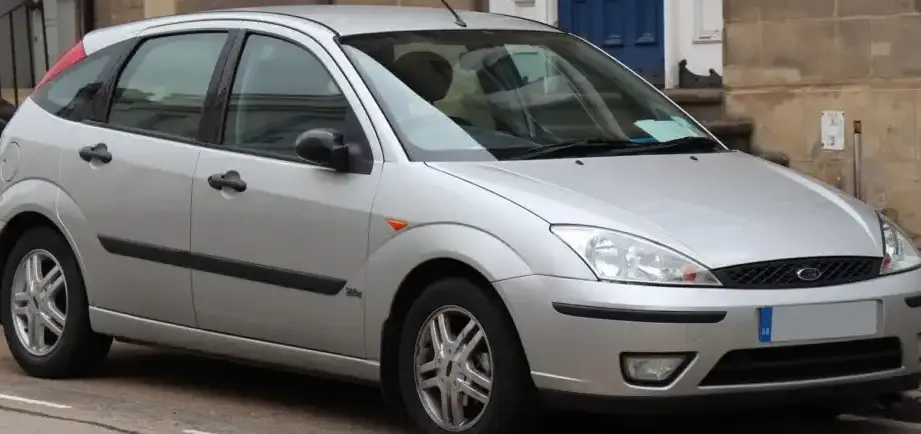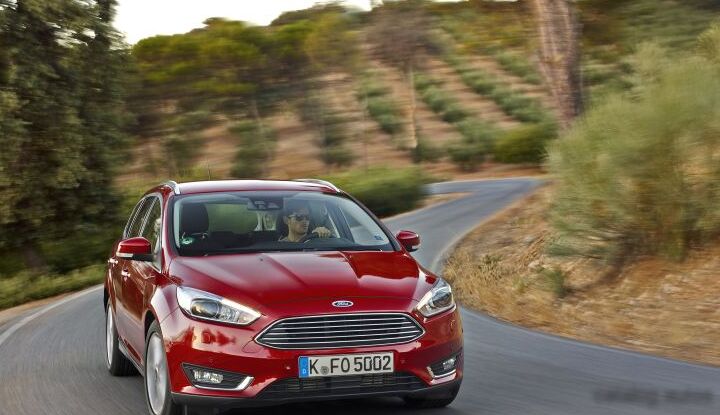
The Ford Focus III Wagon ST 2.0 EcoBoost (250 Hp) S&S, produced from 2014 to 2018, represents the performance-oriented variant of the facelifted third-generation Focus Wagon. Positioned as the flagship trim, it offered a significant upgrade in power and handling compared to the standard Focus Wagon models. This model was primarily marketed in Europe and other global markets, leveraging the popularity of the Focus platform as a versatile and sporty compact vehicle. The “S&S” designation indicates the inclusion of Ford’s Auto-Start-Stop technology, aimed at improving fuel efficiency. It built upon the foundation of the Mk3 Focus, known for its improved dynamics and refinement over its predecessors.
Technical Specifications
| Brand | Ford |
| Model | Focus |
| Generation | Focus III Wagon (facelift 2014) |
| Type (Engine) | ST 2.0 EcoBoost (250 Hp) S&S |
| Start of production | 2014 |
| End of production | 2018 |
| Powertrain Architecture | Internal Combustion engine |
| Body type | Station wagon (estate) |
| Seats | 5 |
| Doors | 5 |
| Fuel consumption (urban) | 8.8 l/100 km (26.7 US mpg, 32.1 UK mpg, 11.4 km/l) |
| Fuel consumption (extra urban) | 5.7 l/100 km (41.3 US mpg, 49.6 UK mpg, 17.5 km/l) |
| Fuel consumption (combined) | 6.8 l/100 km (34.6 US mpg, 41.5 UK mpg, 14.7 km/l) |
| CO2 emissions | 159 g/km |
| Fuel Type | Petrol (Gasoline) |
| Acceleration 0 – 100 km/h | 6.7 sec |
| Acceleration 0 – 62 mph | 6.7 sec |
| Acceleration 0 – 60 mph | 6.4 sec |
| Maximum speed | 248 km/h (154.1 mph) |
| Emission standard | Euro 6 |
| Weight-to-power ratio | 5.8 kg/Hp, 171.1 Hp/tonne |
| Weight-to-torque ratio | 4.1 kg/Nm, 246.4 Nm/tonne |
| Power | 250 Hp @ 5500 rpm |
| Power per litre | 125 Hp/l |
| Torque | 360 Nm @ 2000-4500 rpm (265.52 lb.-ft. @ 2000-4500 rpm) |
| Engine layout | Front, Transverse |
| Engine Model/Code | R9DA |
| Engine displacement | 2000 cm3 (122.05 cu. in.) |
| Number of cylinders | 4 |
| Engine configuration | Inline |
| Cylinder Bore | 87.5 mm (3.44 in.) |
| Piston Stroke | 83.1 mm (3.27 in.) |
| Compression ratio | 9.3:1 |
| Number of valves per cylinder | 4 |
| Fuel injection system | Direct injection |
| Engine aspiration | Turbocharger, Intercooler |
| Valvetrain | DOHC |
| Engine oil capacity | 5.4 l (5.71 US qt | 4.75 UK qt) |
| Coolant | 6.45 l (6.82 US qt | 5.68 UK qt) |
| Kerb Weight | 1461 kg (3220.95 lbs.) |
| Max. weight | 2025 kg (4464.36 lbs.) |
| Max load | 564 kg (1243.41 lbs.) |
| Trunk (boot) space – minimum | 476 l (16.81 cu. ft.) |
| Trunk (boot) space – maximum | 1502 l (53.04 cu. ft.) |
| Fuel tank capacity | 62 l (16.38 US gal | 13.64 UK gal) |
| Length | 4563 mm (179.65 in.) |
| Width | 1823 mm (71.77 in.) |
| Height | 1486 mm (58.5 in.) |
| Wheelbase | 2648 mm (104.25 in.) |
| Front track | 1550 mm (61.02 in.) |
| Rear (Back) track | 1534 mm (60.39 in.) |
| Minimum turning circle | 12.4 m (40.68 ft.) |
| Drivetrain Architecture | ICE, Front wheel drive |
| Number of gears | 6 gears, manual transmission |
| Front suspension | Independent type McPherson |
| Rear suspension | Double wishbone |
| Front brakes | Ventilated discs |
| Rear brakes | Disc |
| Assisting systems | ABS (Anti-lock braking system) |
| Steering type | Steering rack and pinion |
| Tires size | 235/40 R18; 235/35 R19 |
| Wheel rims size | 8.5J x 18; 8.0J x 19 |
Powertrain & Engine Architecture
The heart of the Focus ST Wagon is the 2.0-liter EcoBoost inline-four cylinder engine, designated as the R9DA. This engine is a direct-injected, turbocharged powerplant, representing a significant upgrade over the naturally aspirated engines found in lower trim levels. Direct injection allows for precise fuel delivery, enhancing both power and efficiency. The turbocharger, coupled with an intercooler, provides increased air density for improved combustion. The engine utilizes a dual overhead camshaft (DOHC) valvetrain with four valves per cylinder, optimizing airflow for high-revving performance. The 6-speed manual transmission was the only transmission option offered with this engine, providing drivers with full control over the power delivery. The engine’s Start & Stop system automatically shuts off the engine when the vehicle is stationary, reducing fuel consumption and emissions.
Driving Characteristics
The 250 hp and 360 Nm (265 lb-ft) of torque delivered by the EcoBoost engine provide the Focus ST Wagon with brisk acceleration. The 0-60 mph sprint is achieved in approximately 6.4 seconds, and it boasts a top speed of 154.1 mph. The manual transmission offers precise shifts, and the turbocharger provides a noticeable boost in power throughout the rev range. While the power delivery is strong, it’s relatively linear, making the car accessible to drivers of varying skill levels. Compared to the standard Focus Wagon engines, the ST variant offers a significantly more engaging driving experience, with improved responsiveness and handling. The gear ratios are tuned for performance, allowing for quick acceleration in each gear.
Equipment & Trim Levels
The Focus ST Wagon came generously equipped, even as standard. Key features included sport seats with enhanced bolstering, a unique ST body kit (including a rear spoiler and side skirts), and alloy wheels. Inside, the ST featured a sport steering wheel, aluminum pedals, and distinctive ST badging. Optional extras included a premium sound system, navigation system, and parking sensors. The interior upholstery typically consisted of a combination of cloth and leather, with options for full leather trim. The dashboard layout was similar to other Focus Wagon models, but with ST-specific accents and instrumentation.
Chassis & Braking
The Focus ST Wagon benefits from a sport-tuned suspension, featuring stiffer springs and dampers compared to the standard wagon. The front suspension utilizes an independent McPherson strut setup, while the rear employs a multi-link double wishbone configuration. This setup provides excellent handling and stability. The braking system consists of ventilated discs at the front and solid discs at the rear, providing ample stopping power. Anti-lock Braking System (ABS) is standard, enhancing safety and control. The ST also featured a slightly wider track than the standard Focus Wagon, further improving stability.
Market Reception & Comparison
The Ford Focus ST Wagon was generally well-received by automotive critics, praised for its performance, handling, and practicality. It was often compared favorably to other hot hatchbacks and wagons, such as the Volkswagen Golf GTI and the SEAT Leon Cupra. While the Focus ST offered comparable performance to its rivals, it was often noted for its more engaging driving experience and slightly more affordable price point. Fuel economy was respectable for a performance vehicle, averaging around 34.6 US mpg in combined driving. Reliability was generally good, although some owners reported minor issues with the turbocharger and cooling system.
Legacy
The Ford Focus III ST Wagon has become a popular choice among enthusiasts in the used car market. The 2.0 EcoBoost engine, while capable of producing impressive power, is generally considered reliable with proper maintenance. The manual transmission is also known for its durability. However, potential buyers should be aware of the possibility of turbocharger issues and ensure that the cooling system is in good condition. The Focus ST Wagon remains a practical and enjoyable performance vehicle, offering a compelling combination of space, performance, and affordability.