
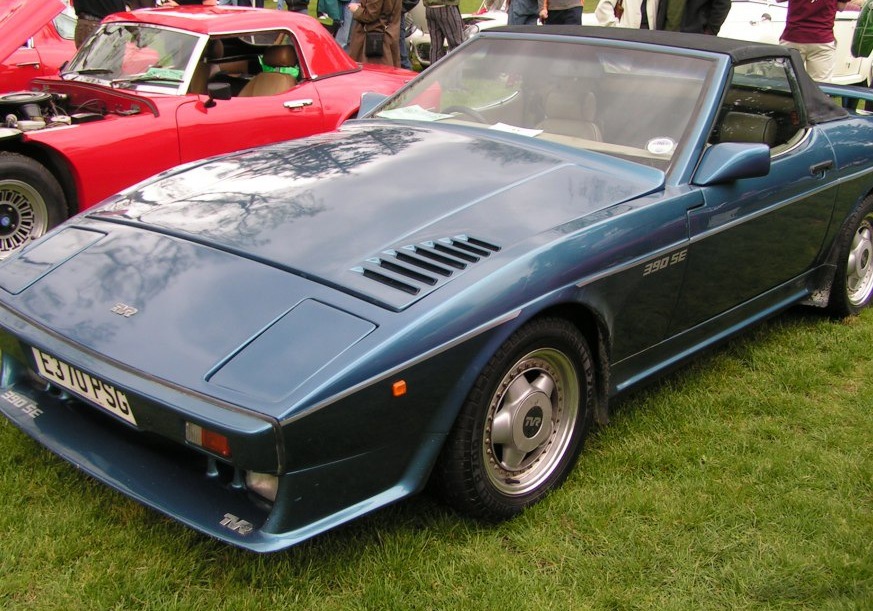
The TVR 390, produced between 1984 and 1989, represents a pivotal point in the British sports car manufacturer’s history. This model, specifically the 3.9-liter variant producing 279 horsepower, was a direct evolution of TVR’s commitment to lightweight, high-performance roadsters. It built upon the success of earlier models like the Tasmin, offering a significant power upgrade and refined styling. The 390 aimed to deliver a raw, engaging driving experience, characteristic of the TVR brand, and served as a bridge between the earlier, more rudimentary TVR designs and the more sophisticated models that would follow in the 1990s. It was exclusively offered as a two-seater cabriolet, embodying the open-top sports car ethos that TVR championed.
Technical Specifications
| Brand | TVR |
| Model | 390 |
| Generation | 390 |
| Engine Type | 3.9L Naturally Aspirated V6 |
| Start of Production | 1984 |
| End of Production | 1989 |
| Body Type | Cabriolet |
| Fuel Type | Petrol (Gasoline) |
| Power Output | 279 hp |
| Engine Aspiration | Naturally Aspirated |
Powertrain & Engine Architecture
The heart of the TVR 390 is its 3.9-liter V6 engine. This engine wasn’t an in-house TVR design; it was sourced from Coventry Climax, a British engine manufacturer with a strong racing pedigree. Specifically, it was based on the Climax 3.0-liter V6, extensively modified and enlarged by TVR. The engine features a 60-degree V6 configuration, offering a good balance between smoothness and compactness. It utilized a cast iron block and aluminum cylinder heads. Fuel delivery was managed by a Bosch K-Jetronic mechanical fuel injection system, a common setup for performance cars of the era. This system, while effective, required periodic maintenance and careful adjustment to maintain optimal performance. The engine’s valvetrain employed overhead camshafts, contributing to its relatively high power output for its displacement. The engine was mated to a five-speed manual transmission, the only transmission option available. There was no automatic transmission offered on the 390.
Driving Characteristics
The TVR 390’s driving experience is defined by its lightweight construction and potent engine. With a curb weight of around 2,400 pounds, the 390 boasts an impressive power-to-weight ratio. This translates into exhilarating acceleration – contemporary road tests reported 0-60 mph times in the low 5-second range, a remarkable figure for the mid-1980s. The five-speed gearbox provides a direct connection to the engine, allowing the driver to fully exploit the V6’s power. The steering is unassisted, providing a raw and communicative feel, though it requires considerable effort at low speeds. The suspension, consisting of independent double wishbones all around, offers a firm ride, prioritizing handling over comfort. The car’s relatively short wheelbase contributes to its nimble handling, but also means it can be prone to oversteer if pushed to its limits. Compared to earlier TVR models with smaller engines, the 390 offered a substantial performance upgrade, making it a genuinely fast sports car. However, it lacked the refinement and electronic aids found in contemporary Porsche or Ferrari models.
Equipment & Trim Levels
The TVR 390 was relatively spartan in terms of standard equipment, reflecting TVR’s focus on performance over luxury. The interior featured leather seats, a wood-rimmed steering wheel, and basic instrumentation including a speedometer, tachometer, and gauges for oil pressure, water temperature, and fuel level. Air conditioning was an optional extra, as were power windows and a more sophisticated sound system. The dashboard layout was simple and functional, prioritizing driver information. Interior trim options were limited, with a choice of leather colors and carpeting materials. The exterior was typically finished in a vibrant color, reflecting TVR’s bold styling. The car’s fiberglass body was available in a range of hues, and custom paint options were often available. The 390 didn’t offer distinct trim levels; options were largely selected à la carte.
Chassis & Braking
The TVR 390 utilizes a tubular steel space frame chassis, providing a rigid and lightweight foundation for the car. This chassis design, a hallmark of TVR engineering, contributes significantly to the car’s handling prowess. The suspension consists of independent double wishbones with coil springs and telescopic shock absorbers at all four corners. Anti-roll bars are fitted to both the front and rear axles, helping to reduce body roll during cornering. Braking is provided by disc brakes all around, though the rear discs are smaller than those at the front. The braking system is unassisted, requiring a firm pedal effort. The car’s lightweight construction helps to mitigate the lack of power assistance, but braking performance is not as strong as that of more modern sports cars. The steering is a traditional rack and pinion system, unassisted, providing direct and responsive steering feel.
Market Reception & Comparison
The TVR 390 was generally well-received by automotive critics, who praised its performance, handling, and distinctive styling. However, it was also criticized for its lack of refinement, build quality issues, and the complexity of the Bosch K-Jetronic fuel injection system. Compared to other sports cars of the era, such as the Porsche 911 and the Chevrolet Corvette, the 390 offered a more raw and visceral driving experience. It was significantly cheaper than a Porsche 911, but lacked the Porsche’s build quality and reliability. Fuel economy was relatively poor, typical for a high-performance sports car of the 1980s. Reliability was a mixed bag; the engine itself was generally robust, but the fuel injection system and electrical components could be prone to issues. The 390 appealed to drivers who prioritized performance and driving enjoyment over comfort and practicality.
Legacy
The TVR 390 holds a significant place in TVR’s history as a pivotal model that helped to establish the brand’s reputation for building exciting, high-performance sports cars. Today, the 390 is a sought-after classic car, particularly among TVR enthusiasts. The Climax V6 engine, while requiring specialized knowledge for maintenance, is generally considered to be a durable and reliable unit. However, finding parts for the K-Jetronic fuel injection system can be challenging. The fiberglass bodywork is susceptible to damage and requires careful repair. Values for well-maintained examples have been steadily increasing in recent years, reflecting the car’s rarity and desirability. The TVR 390 represents a unique and engaging driving experience that is increasingly difficult to find in modern sports cars. It remains a testament to TVR’s commitment to building cars that are driven by passion, not practicality.
