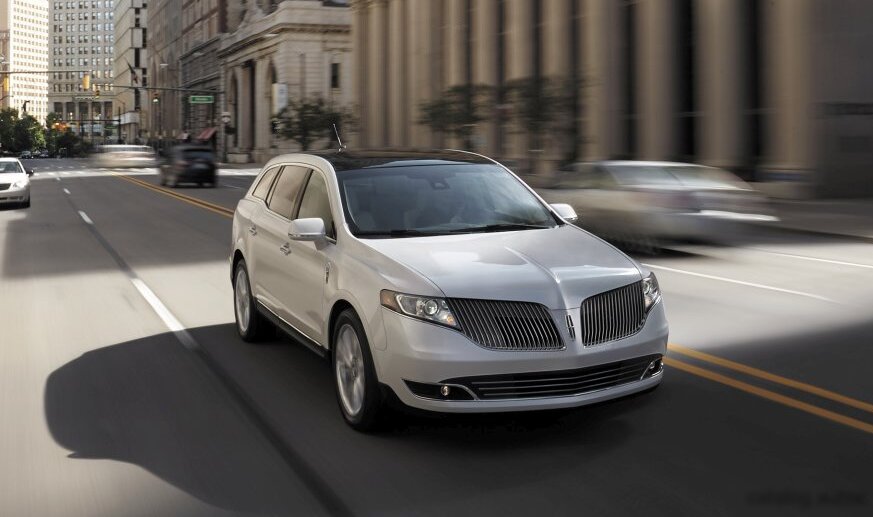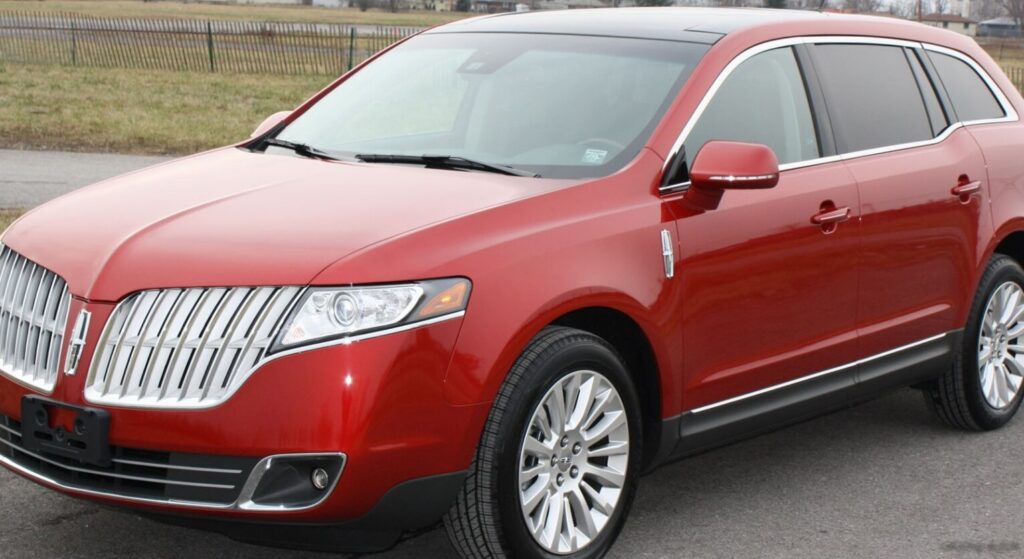
The Lincoln MKT I 3.7 V6 Automatic, produced from 2009 to 2011, represented Lincoln’s entry into the full-size luxury crossover SUV segment. Positioned as a more upscale alternative to the Ford Flex (with which it shared a platform), the MKT aimed to provide a comfortable and spacious experience for families while offering a degree of sophistication expected from the Lincoln brand. This particular variant, powered by the 3.7-liter Cyclone V6 engine paired with a six-speed automatic transmission, served as the base engine option for the MKT lineup, offering a balance between performance and fuel efficiency. It was designed to appeal to buyers prioritizing a smooth ride and ample interior space over outright sporty handling.
Technical Specifications
| Brand | Lincoln |
| Model | MKT |
| Generation | MKT I |
| Type (Engine) | 3.7 V6 (270 Hp) Automatic |
| Start of production | 2009 |
| End of production | 2011 |
| Powertrain Architecture | Internal Combustion engine |
| Body type | SUV |
| Seats | 7 |
| Doors | 5 |
| Fuel consumption (economy) – urban | 13.8 l/100 km (17 US mpg, 20.5 UK mpg, 7.2 km/l) |
| Fuel consumption (economy) – extra urban | 10.2 l/100 km (23.1 US mpg, 27.7 UK mpg, 9.8 km/l) |
| Fuel consumption (economy) – combined | 12.4 l/100 km (19 US mpg, 22.8 UK mpg, 8.1 km/l) |
| Fuel Type | Petrol (Gasoline) |
| Weight-to-power ratio | 7.9 kg/Hp, 127.2 Hp/tonne |
| Weight-to-torque ratio | 5.8 kg/Nm, 172.4 Nm/tonne |
| Power | 270 Hp @ 6250 rpm |
| Power per litre | 72.5 Hp/l |
| Torque | 366 Nm @ 4250 rpm (269.95 lb.-ft. @ 4250 rpm) |
| Maximum engine speed | 6750 rpm |
| Engine layout | Front, Transverse |
| Engine Model/Code | Cyclone |
| Engine displacement | 3726 cm3 (227.37 cu. in.) |
| Number of cylinders | 6 |
| Engine configuration | V-engine |
| Cylinder Bore | 95.5 mm (3.76 in.) |
| Piston Stroke | 86.7 mm (3.41 in.) |
| Compression ratio | 10.3:1 |
| Number of valves per cylinder | 4 |
| Fuel injection system | Multi-port manifold injection |
| Engine aspiration | Naturally aspirated engine |
| Valvetrain | DOHC, i-VCT |
| Engine oil capacity | 5.2 l (5.49 US qt | 4.58 UK qt) |
| Coolant | 12.5 l (13.21 US qt | 11 UK qt) |
| Kerb Weight | 2123 kg (4680.41 lbs.) |
| Trunk (boot) space – minimum | 507 l (17.9 cu. ft.) |
| Trunk (boot) space – maximum | 2149 l (75.89 cu. ft.) |
| Fuel tank capacity | 70 l (18.49 US gal | 15.4 UK gal) |
| Length | 5273 mm (207.6 in.) |
| Width | 1930 mm (75.98 in.) |
| Width including mirrors | 2177 mm (85.71 in.) |
| Height | 1712 mm (67.4 in.) |
| Wheelbase | 2995 mm (117.91 in.) |
| Front track | 1661 mm (65.39 in.) |
| Rear (Back) track | 1659 mm (65.31 in.) |
| Drag coefficient (Cd) | 0.35 |
| Minimum turning circle (turning diameter) | 12.4 m (40.68 ft.) |
| Drivetrain Architecture | The Internal combustion engine (ICE) drives the front wheels of the vehicle. |
| Drive wheel | Front wheel drive |
| Number of gears and type of gearbox | 6 gears, automatic transmission SelectShift |
| Front brakes | Ventilated discs |
| Rear brakes | Ventilated discs |
| Assisting systems | ABS (Anti-lock braking system) |
| Steering type | Steering rack and pinion |
| Power steering | Electric Steering |
| Tires size | 235/55 R19 |
| Wheel rims size | 19 |
INTRODUCTION
The Lincoln MKT I, launched for the 2010 model year (though technically a late 2009 release), was a significant departure for the brand, moving away from traditional body-on-frame SUVs towards a more modern, car-based crossover platform. Sharing its underpinnings with the Ford Flex, the MKT aimed to offer a more luxurious and refined experience. The 3.7-liter V6 engine, paired with the six-speed SelectShift automatic transmission, was the standard powertrain for the MKT, representing the entry point into the model range. Higher trims offered a more powerful 3.5-liter EcoBoost V6 engine. The MKT was discontinued after the 2011 model year, making these early examples increasingly collectible.
Powertrain & Engine Architecture
The heart of the MKT I 3.7 is the Ford Cyclone family 3.7-liter V6 engine. This engine, designated as the 3.7L Ti-VCT, is a naturally aspirated, 24-valve DOHC engine featuring independent variable camshaft timing (i-VCT) on both intake and exhaust camshafts. The engine utilizes multi-port fuel injection and boasts a compression ratio of 10.3:1. The engine code is generally associated with the Ford platform, and while Lincoln didn’t assign specific codes, it’s fundamentally the same engine found in various Ford vehicles of the era. The six-speed SelectShift automatic transmission, also sourced from Ford, provides smooth and responsive shifting. This transmission allows for manual gear selection via steering wheel-mounted paddle shifters, offering drivers some control over the gear selection. The transmission was designed to balance fuel efficiency with acceptable performance for a vehicle of this size.
Driving Characteristics
The 3.7-liter V6 in the MKT I delivers adequate, but not overwhelming, performance. With 270 horsepower and 273 lb-ft of torque, acceleration is sufficient for everyday driving and highway merging, but it doesn’t offer the briskness of the optional EcoBoost engine. The automatic transmission is well-tuned for comfortable cruising, with smooth gear changes. The gear ratios are optimized for fuel economy and relaxed driving, rather than aggressive acceleration. Compared to the EcoBoost variant, the 3.7L feels noticeably less powerful, especially when fully loaded with passengers and cargo. The front-wheel-drive configuration contributes to a comfortable ride, but it doesn’t provide the same level of handling precision as all-wheel-drive systems found in some competitors.
Equipment & Trim Levels
The base MKT trim came standard with a respectable array of features, including leather upholstery, tri-zone automatic climate control, a rear-view camera, and a premium audio system. Optional extras included power-adjustable pedals, heated and cooled front seats, a navigation system, and a THX II Certified sound system. The interior design was generally considered upscale for its time, with a focus on comfort and spaciousness. The second and third-row seats offered ample legroom, making the MKT a practical choice for families. Exterior features included alloy wheels, automatic headlights, and a power liftgate.
Chassis & Braking
The MKT I utilizes a fully independent suspension system, featuring MacPherson struts at the front and a multi-link setup at the rear. This suspension configuration provides a comfortable and controlled ride, absorbing bumps and imperfections in the road effectively. The base MKT came equipped with ventilated disc brakes on all four wheels, along with an anti-lock braking system (ABS). The braking performance is adequate for a vehicle of this size and weight. The steering is electrically assisted, providing a light and easy steering feel. Stabilizer bars are present at both the front and rear to reduce body roll during cornering.
Market Reception & Comparison
The Lincoln MKT I received mixed reviews from automotive critics. While praised for its spacious interior, comfortable ride, and upscale features, it was often criticized for its somewhat bland styling and lack of a distinctive Lincoln identity. The 3.7-liter V6 engine was generally considered adequate, but many reviewers felt it was underpowered for a vehicle of this size. Compared to the EcoBoost variant, the 3.7L MKT offered better fuel economy but significantly less performance. Competitors such as the Buick Enclave and Acura MDX offered a more engaging driving experience and a stronger brand image.
Legacy
The Lincoln MKT I 3.7 V6 Automatic, while not a runaway sales success, remains a relatively reliable and affordable luxury crossover in the used car market. The 3.7-liter Cyclone V6 engine is known for its durability and relatively low maintenance costs. Common issues are generally minor, such as sensor failures or oil leaks. The six-speed automatic transmission has also proven to be reliable. Today, the MKT I represents a unique and somewhat underrated chapter in Lincoln’s history, offering a spacious and comfortable alternative to more mainstream crossovers. Its relatively low price point and proven powertrain make it an attractive option for buyers seeking a large, comfortable, and reliable SUV.