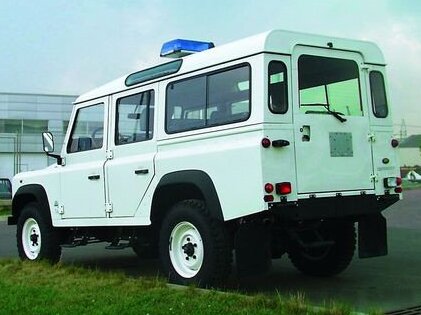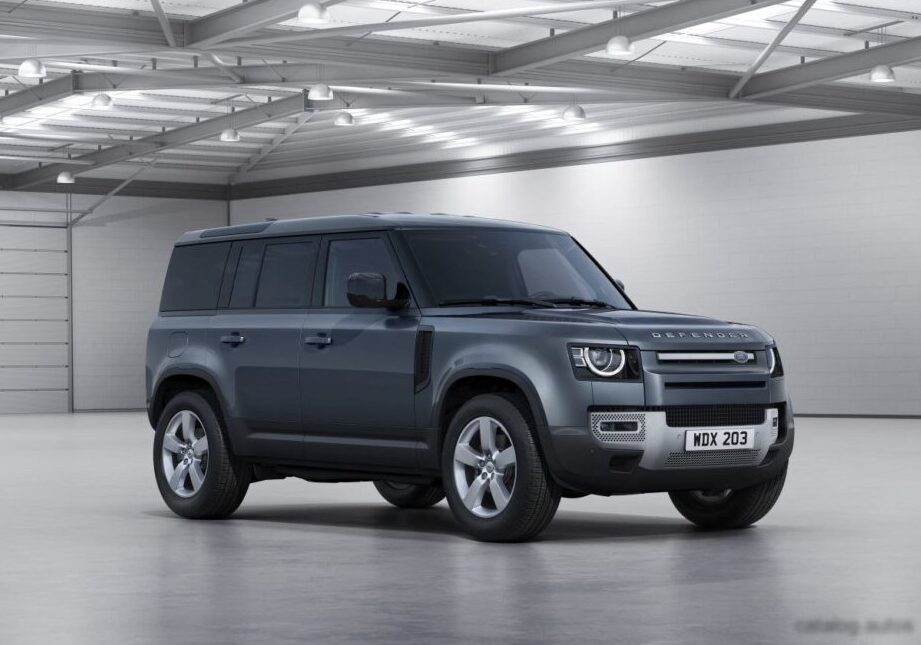
The Land Rover Defender 110 (L663) 3.0 P400, introduced in September 2019 and produced through May 2024, represents a significant departure from its utilitarian predecessor while attempting to retain the iconic Defender spirit. This variant, equipped with a 3.0-liter inline-six cylinder engine producing 400 horsepower and incorporating mild hybrid technology, occupies a mid-to-upper position within the 110 model range. It offers a blend of on-road refinement and off-road capability, appealing to buyers seeking a versatile and luxurious SUV with seven-passenger seating. The L663 generation marked the Defender’s return after a 23-year hiatus, moving production from Solihull, UK, to a more modern facility and embracing unibody construction for the first time.
Technical Specifications
| Brand | Land Rover |
| Model | Defender |
| Generation | Defender 110 (L663) |
| Type | 3.0 P400 (400 Hp) Mild Hybrid AWD Automatic 5+2 Seating |
| Start of production | September, 2019 |
| End of production | May, 2024 |
| Powertrain Architecture | MHEV (Mild Hybrid Electric Vehicle) |
| Body type | Off-road vehicle |
| Seats | 7 |
| Doors | 5 |
| Fuel consumption at Low speed (WLTP) | 15.1-15.9 l/100 km (15.6 – 14.8 US mpg) |
| Fuel consumption at Medium speed (WLTP) | 10.8-11.4 l/100 km (21.8 – 20.6 US mpg) |
| Fuel consumption at high speed (WLTP) | 9.5-10.3 l/100 km (24.8 – 22.8 US mpg) |
| Fuel consumption at very high speed (WLTP) | 11.8-12.8 l/100 km (19.9 – 18.4 US mpg) |
| Combined fuel consumption (WLTP) | 11.3-12.2 l/100 km (20.8 – 19.3 US mpg) |
| CO2 emissions (WLTP) | 257-277 g/km |
| Fuel consumption (economy) – urban (NEDC) | 12.2-12.5 l/100 km (19.3 – 18.8 US mpg) |
| Fuel consumption (economy) – extra urban (NEDC) | 8.1-8.5 l/100 km (29 – 27.7 US mpg) |
| Fuel consumption (economy) – combined (NEDC) | 9.6-9.9 l/100 km (24.5 – 23.8 US mpg) |
| CO2 emissions (NEDC) | 220-227 g/km |
| Fuel Type | Petrol (Gasoline) |
| Acceleration 0 – 100 km/h | 6.1 sec |
| Acceleration 0 – 62 mph | 6.1 sec |
| Acceleration 0 – 60 mph | 5.8 sec |
| Maximum speed | 191 km/h (118.68 mph) |
| Emission standard | Euro 6d-TEMP-EVAP-ISC |
| Weight-to-power ratio | 5.9 kg/Hp |
| Weight-to-torque ratio | 4.3 kg/Nm |
| Power | 400 Hp @ 5500 rpm |
| Torque | 550 Nm @ 2000-5000 rpm (405.66 lb.-ft. @ 2000-5000 rpm) |
| Engine layout | Front, Longitudinal |
| Engine Model/Code | Ingenium / PT306 |
| Engine displacement | 2996 cm3 (182.83 cu. in.) |
| Number of cylinders | 6 |
| Engine configuration | Inline |
| Cylinder Bore | 83 mm (3.27 in.) |
| Piston Stroke | 92.29 mm (3.63 in.) |
| Compression ratio | 10.5:1 |
| Number of valves per cylinder | 4 |
| Fuel injection system | Direct injection |
| Engine aspiration | Turbocharger, Intercooler |
| Engine oil capacity | 8.8 l (9.3 US qt | 7.74 UK qt) |
| Coolant capacity | 12.4 l (13.1 US qt | 10.91 UK qt) |
| Kerb Weight | 2343 kg (5165.43 lbs.) |
| Max. weight | 3250 kg (7165.02 lbs.) |
| Max load | 907 kg (1999.59 lbs.) |
| Trunk (boot) space – minimum | 231 l (8.16 cu. ft.) |
| Trunk (boot) space – maximum | 2233 l (78.86 cu. ft.) |
| Fuel tank capacity | 90 l (23.78 US gal | 19.8 UK gal) |
| Length | 5018 mm (197.56 in.) |
| Width | 1996 mm (78.58 in.) |
| Height | 1967 mm (77.44 in.) |
| Wheelbase | 3022 mm (118.98 in.) |
| Front track | 1704 mm (67.09 in.) |
| Rear track | 1700 mm (66.93 in.) |
| Front overhang | 845 mm (33.27 in.) |
| Rear overhang | 1151 mm (45.31 in.) |
| Ride height (ground clearance) | 218-291 mm (8.58 – 11.46 in.) |
| Drag coefficient (Cd) | 0.4 |
| Minimum turning circle | 13.12 m (43.04 ft.) |
| Approach angle | 30.1-38° |
| Departure angle | 37.7-40° |
| Ramp-over angle | 22-28° |
| Wading depth | 900 mm (35.43 in.) |
| Drivetrain Architecture | All wheel drive (4×4). MHEV. |
| Number of gears | 8 |
| Type of gearbox | automatic transmission |
Powertrain & Engine Architecture
The heart of the Defender 110 P400 is Land Rover’s Ingenium engine family, specifically the PT306 3.0-liter inline-six cylinder engine. This engine utilizes a combination of turbocharging and direct fuel injection to deliver a substantial 400 horsepower at 5500 rpm and 405.66 lb-ft of torque between 2000 and 5000 rpm. The mild hybrid system, incorporating a 48-volt electrical architecture, assists the engine during acceleration and allows for smoother start-stop operation, improving fuel efficiency. The engine features a relatively high compression ratio of 10.5:1 and employs variable valve timing on both intake and exhaust valves. The eight-speed automatic transmission, sourced from ZF, is a crucial component, providing smooth and relatively quick gear changes. It’s tuned for both on-road comfort and off-road crawling, with a low-range gear selection for challenging terrain.
Driving Characteristics
The 3.0 P400 offers a compelling driving experience. While the Defender 110 is a substantial vehicle, the engine’s ample torque provides brisk acceleration – 0-60 mph in around 5.8 seconds. The automatic transmission is well-matched to the engine, offering seamless shifts in normal driving and responsive downshifts when needed. Compared to the base four-cylinder models, the P400 feels significantly more powerful and refined. While not as overtly sporty as some competitors, the Defender 110 P400 delivers a confident and capable on-road presence. Off-road, the combination of the engine’s torque, the intelligent all-wheel-drive system, and the adjustable air suspension makes it exceptionally capable. The gear ratios are optimized for both low-speed rock crawling and high-speed cruising.
Equipment & Trim Levels
The Defender 110 P400 typically came well-equipped, even in base trim. Standard features included leather upholstery, a touchscreen infotainment system with Apple CarPlay and Android Auto integration, LED headlights, and a suite of driver-assistance technologies such as lane-keeping assist and emergency braking. Optional extras included a panoramic sunroof, premium audio systems (Meridian), heated and ventilated seats, and various off-road packages with features like electronic active differential and all-terrain tires. The 5+2 seating configuration added a third row of seats, making it suitable for larger families, although space in the third row is limited.
Chassis & Braking
The L663 Defender utilizes a monocoque construction, a significant departure from the body-on-frame design of previous generations. This contributes to improved rigidity and reduced weight. The suspension consists of double-wishbone front suspension and an independent multi-link rear suspension, often paired with adjustable air springs. This allows for variable ride height and improved off-road articulation. Braking duties are handled by disc brakes on all four wheels, with larger front discs (363mm) than rear discs (350mm). Anti-lock braking system (ABS) and electronic stability control are standard features.
Market Reception & Comparison
The Defender 110 P400 received generally positive reviews from automotive critics. It was praised for its blend of luxury, capability, and iconic design. However, some reviewers noted the relatively high price tag and the complexity of the infotainment system. Compared to other trims in the Defender 110 lineup, the P400 offered a significant performance upgrade over the base four-cylinder models, but at a higher cost. Fuel economy, while improved by the mild hybrid system, remained relatively modest for a vehicle in this class. Reliability reports have been mixed, with some owners reporting issues with the infotainment system and electrical components.
Legacy
The Land Rover Defender 110 P400 represents a pivotal moment in the Defender lineage. It successfully modernized the iconic vehicle for the 21st century while retaining a degree of its rugged character. The Ingenium engine and mild hybrid technology demonstrate Land Rover’s commitment to improving fuel efficiency and reducing emissions. On the used car market, the P400 variant holds its value well, appealing to buyers who prioritize performance and luxury. While long-term reliability remains a concern for some, the Defender 110 P400 is poised to become a sought-after vehicle among enthusiasts and collectors.