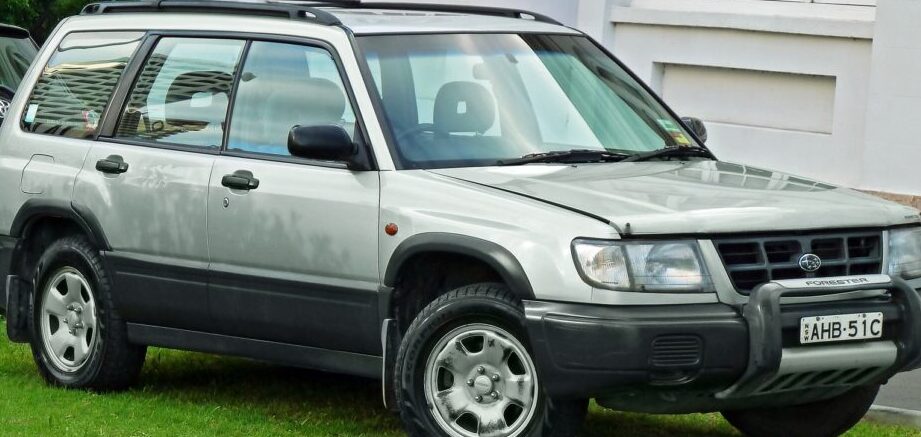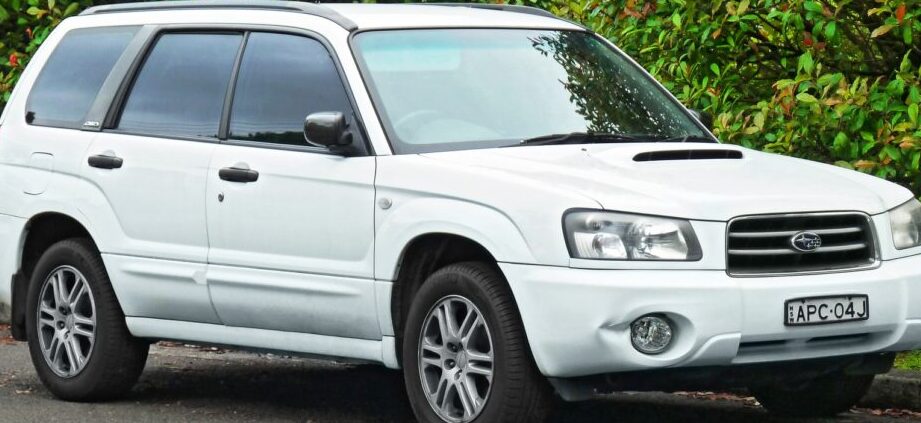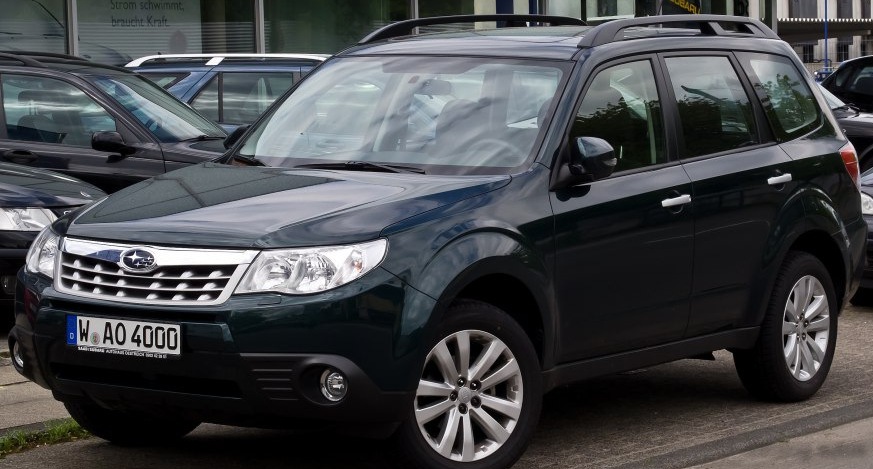
The Subaru Forester III (facelift, produced from 2010 to 2013) 2.5 Turbo, equipped with a 230 horsepower turbocharged engine and a four-speed automatic transmission (designated E-4AT), represented the performance peak of the third-generation Forester lineup. Positioned as the top-tier trim level, it catered to buyers seeking enhanced power and all-weather capability within the compact SUV segment. This variant built upon the foundation of the Forester III, which itself was based on the Subaru Impreza platform (G platform), offering a more engaging driving experience than the naturally aspirated models. The facelift brought cosmetic updates and refinements to the existing platform.
Technical Specifications
| Brand | Subaru |
| Model | Forester |
| Generation | Forester III (facelift 2010) |
| Type (Engine) | 2.5 Turbo (230 Hp) AWD E-4AT |
| Start of production | 2010 |
| End of production | 2013 |
| Powertrain Architecture | Internal Combustion engine |
| Body type | SUV, Crossover |
| Seats | 5 |
| Doors | 5 |
| Fuel consumption (urban) | 14.5 l/100 km (16.2 US mpg, 19.5 UK mpg, 6.9 km/l) |
| Fuel consumption (extra urban) | 8.2 l/100 km (28.7 US mpg, 34.4 UK mpg, 12.2 km/l) |
| Fuel consumption (combined) | 10.5 l/100 km (22.4 US mpg, 26.9 UK mpg, 9.5 km/l) |
| CO2 emissions | 248 g/km |
| Fuel Type | Petrol (Gasoline) |
| Acceleration 0 – 100 km/h | 7.9 sec |
| Acceleration 0 – 62 mph | 7.9 sec |
| Acceleration 0 – 60 mph | 7.5 sec |
| Maximum speed | 207 km/h (128.62 mph) |
| Emission standard | Euro 4 |
| Weight-to-power ratio | 6.6 kg/Hp, 150.8 Hp/tonne |
| Weight-to-torque ratio | 4.8 kg/Nm, 209.8 Nm/tonne |
| Power | 230 Hp @ 5200 rpm |
| Torque | 320 Nm @ 2800 rpm (236.02 lb.-ft. @ 2800 rpm) |
| Engine layout | Front, Longitudinal |
| Engine Model/Code | EJ255 |
| Engine displacement | 2457 cm3 (149.94 cu. in.) |
| Number of cylinders | 4 |
| Engine configuration | Boxer |
| Cylinder Bore | 99.5 mm (3.92 in.) |
| Piston Stroke | 79 mm (3.11 in.) |
| Compression ratio | 8.4:1 |
| Number of valves per cylinder | 4 |
| Fuel injection system | Multi-port manifold injection |
| Engine aspiration | Turbocharger, Intercooler |
| Valvetrain | DOHC, AVCS |
| Engine oil capacity | 4.2 l (4.44 US qt | 3.7 UK qt) |
| Coolant capacity | 8 l (8.45 US qt | 7.04 UK qt) |
| Kerb Weight | 1525-1560 kg (3362.05 – 3439.21 lbs.) |
| Trunk (boot) space – minimum | 450 l (15.89 cu. ft.) |
| Trunk (boot) space – maximum | 1660 l (58.62 cu. ft.) |
| Fuel tank capacity | 60 l (15.85 US gal | 13.2 UK gal) |
| Permitted trailer load with brakes (12%) | 1600 kg (3527.4 lbs.) |
| Permitted trailer load without brakes | 750 kg (1653.47 lbs.) |
| Length | 4560 mm (179.53 in.) |
| Width | 1795 mm (70.67 in.) |
| Height | 1700 mm (66.93 in.) |
| Wheelbase | 2615 mm (102.95 in.) |
| Front track | 1530 mm (60.24 in.) |
| Rear track | 1530 mm (60.24 in.) |
| Ride height (ground clearance) | 225 mm (8.86 in.) |
| Minimum turning circle | 10.5 m (34.45 ft.) |
| Drivetrain Architecture | All wheel drive (4×4) |
| Number of gears and type of gearbox | 4 gears, automatic transmission E-AT |
| Front suspension | Independent, type McPherson with coil spring and anti-roll bar |
| Rear suspension | Double wishbone, Transverse stabilizer |
| Front brakes | Ventilated discs |
| Rear brakes | Disc |
| Assisting systems | ABS (Anti-lock braking system) |
| Steering type | Steering rack and pinion |
| Power steering | Hydraulic Steering |
| Tires size | 225/55 R17 |
| Wheel rims size | 7J x 17 |
Powertrain & Engine Architecture
The heart of the 2.5 Turbo Forester is the EJ255 2.5-liter turbocharged boxer-four engine. This engine, a hallmark of Subaru’s engineering, features a horizontally opposed configuration, which contributes to a lower center of gravity and improved balance. The EJ255 utilizes multi-port fuel injection and an intercooled turbocharger to deliver 230 horsepower at 5200 rpm and 320 Nm (236 lb-ft) of torque at 2800 rpm. The engine’s Active Valve Control System (AVCS) on both intake and exhaust camshafts optimizes valve timing for improved performance and efficiency. Paired with this engine is a four-speed automatic transmission (E-4AT). While not as sophisticated as modern transmissions with more gears, the E-4AT was known for its durability and relatively smooth operation. It was designed to handle the increased torque output of the turbocharged engine.
Driving Characteristics
The 2.5 Turbo Forester offered a noticeable performance upgrade over the naturally aspirated models. The turbocharger provides a surge of power, making overtaking and highway merging considerably easier. The four-speed automatic transmission, while not offering the most precise control, provides adequate shifts for everyday driving. Compared to a manual transmission, the automatic sacrifices some driver engagement but offers greater convenience. The all-wheel-drive system, a Subaru staple, provides excellent traction in various weather conditions. The Forester’s relatively high ride height and soft suspension tuning prioritize comfort over sporty handling, but the vehicle remains stable and predictable.
Equipment & Trim Levels
The 2.5 Turbo Forester typically came well-equipped, reflecting its position as the range-topping trim. Standard features often included automatic climate control, power windows and locks, keyless entry, and a premium audio system. Interior upholstery was typically cloth or leather, with higher-end trims offering leather-appointed seats. Optional extras could include a sunroof, navigation system, and upgraded sound systems. The exterior often featured unique styling cues, such as alloy wheels and a rear spoiler, to differentiate it from lower trims.
Chassis & Braking
The Forester III utilized a MacPherson strut front suspension and a double-wishbone rear suspension. This setup provided a comfortable ride while maintaining reasonable handling characteristics. The 2.5 Turbo models typically featured larger brakes than the base models, with ventilated discs at the front and solid discs at the rear, providing adequate stopping power for the increased performance. Anti-lock brakes (ABS) were standard, enhancing safety and control during emergency braking situations.
Market Reception & Comparison
The 2.5 Turbo Forester was generally well-received by automotive critics, who praised its performance, all-weather capability, and spacious interior. However, some reviewers noted that the four-speed automatic transmission felt dated compared to newer transmissions with more gears. Fuel economy was also a common criticism, as the turbocharged engine consumed more fuel than the naturally aspirated options. Compared to the base 2.5L Forester, the Turbo model offered a significant performance boost but came at a higher price point and with reduced fuel efficiency. Against competitors like the Honda CR-V and Toyota RAV4, the Forester stood out with its standard all-wheel drive and unique boxer engine.
Legacy
The EJ255 engine, while generally reliable, is known to require regular maintenance, including oil changes and timing belt replacements. The four-speed automatic transmission has also proven to be durable, but like any automatic transmission, it can be susceptible to wear and tear over time. Today, the 2010-2013 Subaru Forester 2.5 Turbo remains a popular choice in the used car market, particularly for buyers seeking a capable and reliable all-weather SUV. Its combination of performance, practicality, and Subaru’s renowned all-wheel-drive system continues to appeal to a wide range of drivers. Well-maintained examples command a premium price compared to the base models.