
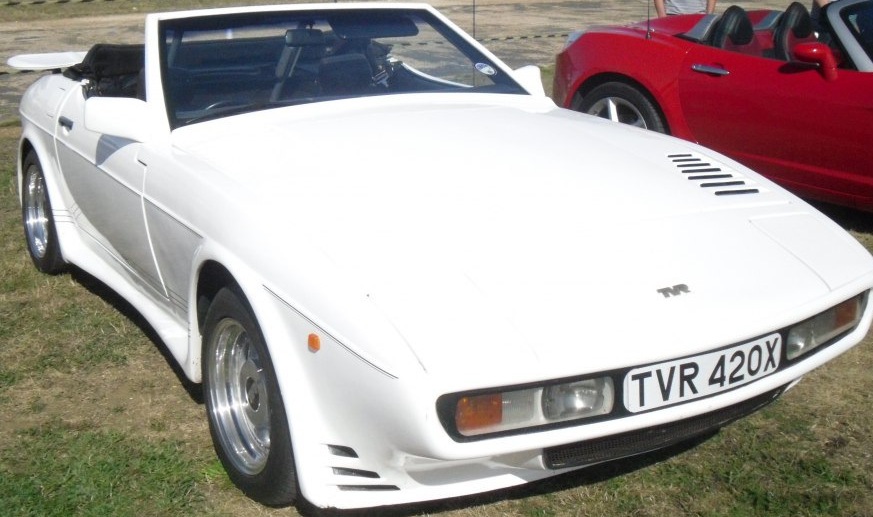
The TVR 420 Cabriolet, produced between 1986 and 1988, represents a potent and relatively short-lived iteration of the Blackpool-based manufacturer’s commitment to high-performance, lightweight sports cars. Positioned as a premium offering within the TVR range, the 420 Cabriolet capitalized on the growing demand for open-top motoring while retaining the raw driving experience that defined the brand. It was built upon the existing TVR S series chassis, offering a blend of British craftsmanship and powerful V6 engine. The “420” designation refers to the approximate horsepower figure, though actual output often exceeded this number. This model is particularly notable for being one of the last TVRs produced under the ownership of Peter Wheeler before his significant changes to the company’s design and engineering philosophy.
Technical Specifications
| Brand | TVR |
| Model | 420 |
| Generation | 420 Cabrio |
| Type (Engine) | 4.2 (304 Hp) |
| Start of Production | 1986 |
| End of Production | 1988 |
| Powertrain Architecture | Internal Combustion Engine |
| Body Type | Cabriolet |
| Fuel Type | Petrol (Gasoline) |
| Power | 304 Hp |
| Engine Aspiration | Naturally Aspirated |
Powertrain & Engine Architecture
The heart of the TVR 420 Cabriolet is its 4.2-liter V6 engine. This engine, derived from the Rover V6 unit, was extensively modified by TVR to significantly increase its power output. While based on the Buick-derived Rover design, TVR’s modifications included a redesigned cylinder head, high-lift camshafts, and a performance exhaust system. The engine featured a naturally aspirated configuration, relying on displacement and careful tuning rather than forced induction for its performance. Fuel delivery was managed by a Lucas fuel injection system, providing precise control over the air-fuel mixture. The engine’s architecture is a 60-degree V6, known for its relatively compact size and smooth operation. The 420’s engine typically produced around 304 horsepower, although dyno tests often revealed figures exceeding this claim. The engine was mated to a five-speed manual transmission, providing the driver with full control over the power delivery. An automatic transmission was available as an option, though it was less common and generally considered to detract from the car’s sporting character. The engine block itself is aluminum, contributing to the car’s overall lightweight construction.
Driving Characteristics
The TVR 420 Cabriolet delivers a visceral and engaging driving experience. Its lightweight construction – typically around 2,400 pounds – combined with the potent 304 horsepower engine results in impressive acceleration. The car is capable of reaching 60 mph in approximately 5.0 seconds, a remarkable figure for a car of its era. The five-speed manual transmission offers precise shifts, allowing the driver to exploit the engine’s powerband. The steering is direct and unassisted, providing excellent feedback and a strong connection to the road. However, the lack of power steering requires considerable effort, particularly at low speeds. The suspension, while providing a reasonably comfortable ride, is firm enough to maintain body control during spirited driving. The car’s relatively short wheelbase contributes to its nimble handling, but it can also make it feel slightly twitchy on uneven surfaces. Compared to the earlier TVR 390SE, the 420 offered a noticeable increase in power and torque, resulting in a more exhilarating driving experience. The automatic transmission version, while offering convenience, significantly dulled the car’s performance and was generally avoided by enthusiasts.
Equipment & Trim Levels
The TVR 420 Cabriolet was positioned as a premium model, and as such, it came equipped with a relatively generous level of standard features. The interior typically featured leather upholstery, although the quality and style of the leather could vary depending on customer preferences. The dashboard was relatively simple and functional, with a focus on providing essential information to the driver. A full complement of gauges, including a speedometer, tachometer, oil pressure gauge, and water temperature gauge, were standard. Optional extras included air conditioning, a stereo system, and upgraded interior trim materials. The convertible top was manually operated, and its quality was generally considered to be adequate, though not exceptional. The car’s exterior styling was characterized by its curvaceous lines and aggressive stance. A variety of paint colors were available, allowing customers to personalize their vehicles. The 420 Cabriolet did not offer a wide range of trim levels; customization was largely achieved through the selection of optional extras and bespoke interior appointments.
Chassis & Braking
The TVR 420 Cabriolet utilized a tubular steel space frame chassis, a design that prioritized lightweight and rigidity. This chassis was a hallmark of TVR engineering, providing a strong foundation for the car’s performance. The suspension consisted of independent double wishbones at the front and rear, with coil springs and adjustable dampers. The braking system featured disc brakes on all four wheels, providing ample stopping power. However, the braking system was not equipped with ABS, a common omission for sports cars of this era. The rear brakes were typically smaller than the front brakes, reflecting the car’s weight distribution. The car’s wheels were typically 15-inch alloy wheels, fitted with high-performance tires. The steering system was a direct, unassisted rack and pinion setup, providing precise control but requiring significant driver effort. Stabilizer bars were fitted to both the front and rear axles to reduce body roll during cornering.
Market Reception & Comparison
The TVR 420 Cabriolet was generally well-received by automotive critics, who praised its performance, handling, and distinctive styling. However, the car’s build quality and reliability were often criticized. TVR’s production methods were largely hand-built, which resulted in inconsistencies and potential issues. Fuel economy was also relatively poor, reflecting the car’s large engine and lack of modern fuel-saving technologies. Compared to other sports cars of the era, such as the Porsche 911 and the Chevrolet Corvette, the TVR 420 Cabriolet offered a more raw and visceral driving experience, but it lacked the refinement and reliability of its competitors. The 420 was more expensive than many of its rivals, reflecting its exclusivity and hand-built nature. The automatic transmission version was generally viewed as a compromise, sacrificing performance for convenience.
Legacy
The TVR 420 Cabriolet remains a sought-after classic car among enthusiasts. Its rarity, performance, and distinctive styling contribute to its enduring appeal. The car’s relatively simple mechanical design makes it relatively easy to maintain, although sourcing parts can sometimes be challenging. The Rover V6 engine, while prone to occasional issues, is generally considered to be reliable if properly maintained. The TVR 420 Cabriolet represents a high point in TVR’s history, embodying the company’s commitment to building exciting and unconventional sports cars. Today, well-maintained examples command significant prices in the used car market, reflecting their desirability and collectibility. The 420’s legacy is one of a bold, independent British manufacturer that dared to challenge the established order.

