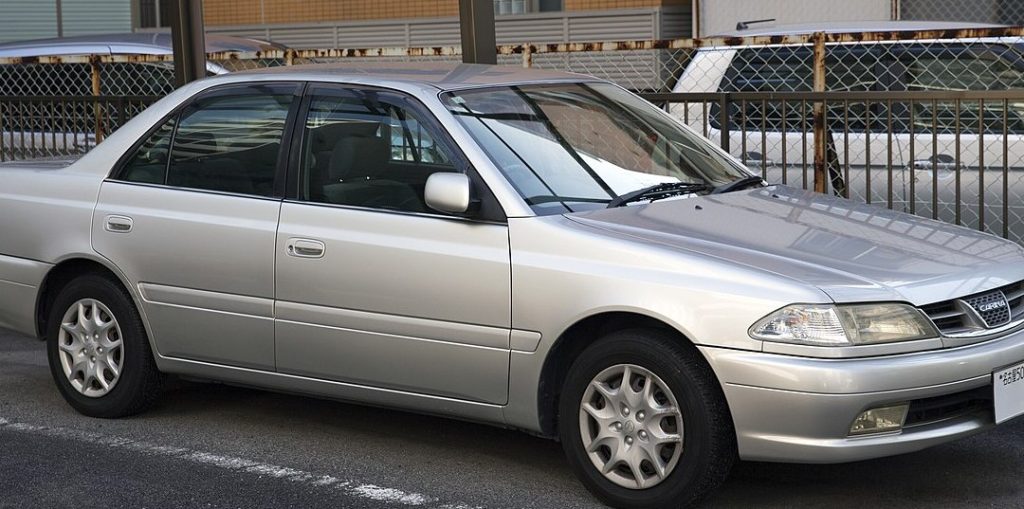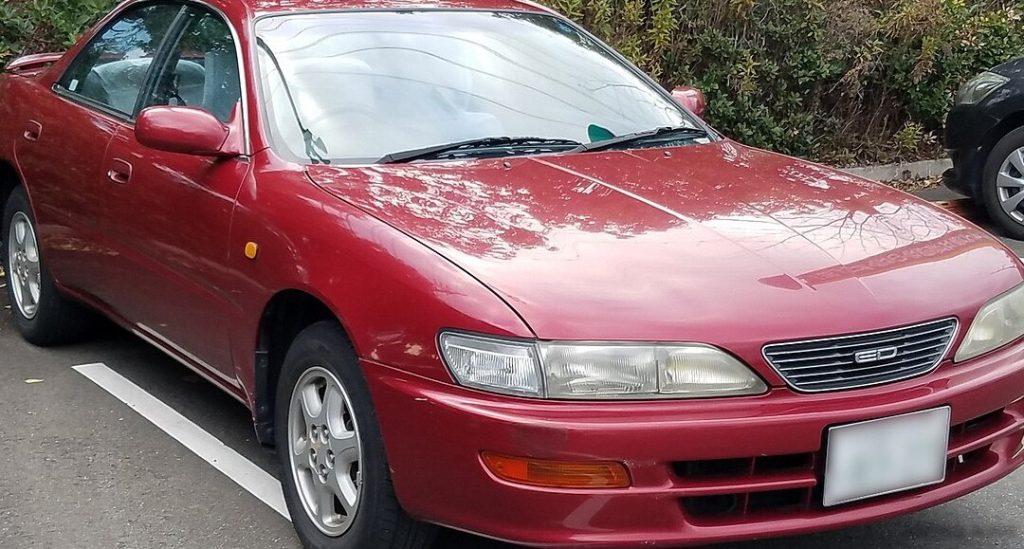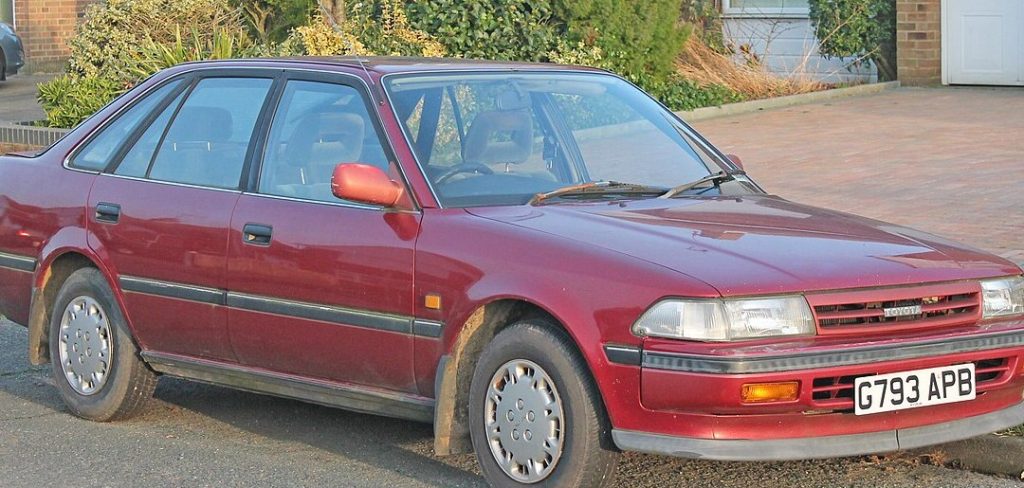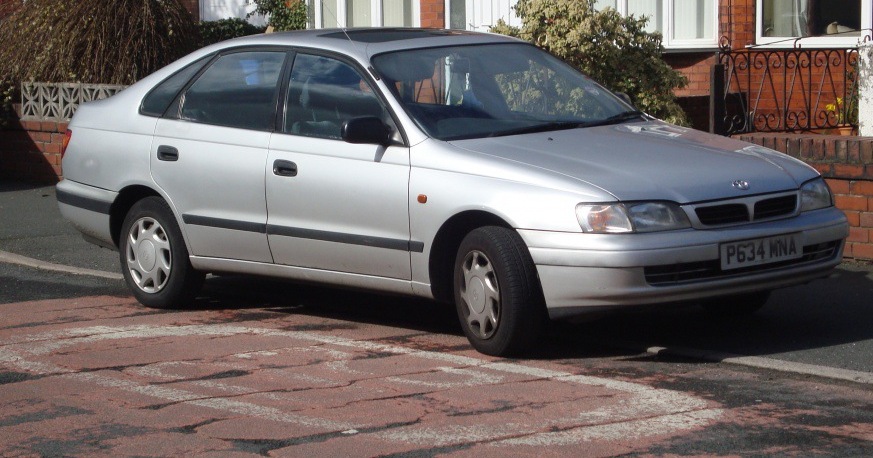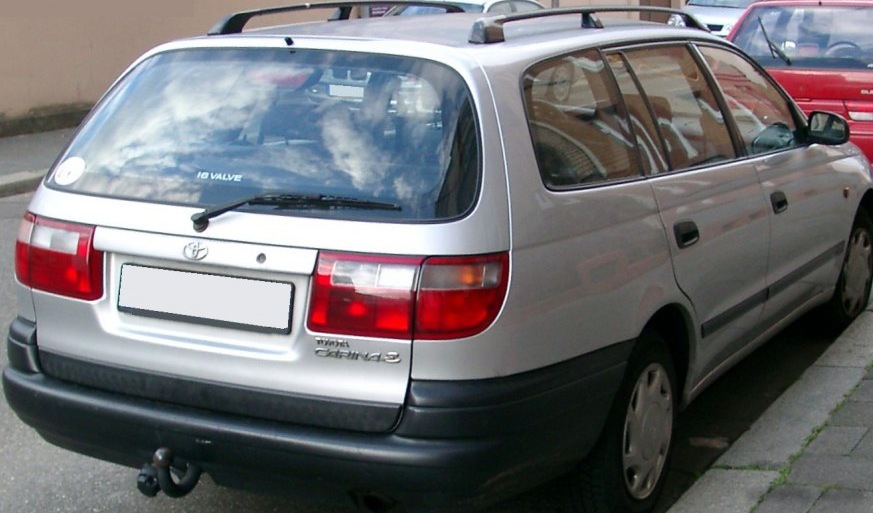
The Toyota Carina E Wagon, specifically the T19 series produced between 1995 and 1998, represented Toyota’s offering in the European mid-size station wagon segment. This variant, the 1.8i 16V with 107 horsepower coupled to a four-speed automatic transmission, was positioned as a comfortable and practical family vehicle, aiming for buyers who prioritized ease of use over outright performance. It sat within the broader Carina E range, which also included engine options like 1.6L and 2.0L variants, as well as both manual and automatic transmission choices. The Carina E Wagon was never officially sold in the North American market, but it was a popular choice in Europe and other regions where station wagons held significant market share.
Technical Specifications
| Brand | Toyota |
| Model | Carina |
| Generation | Carina E Wagon (T19) |
| Type (Engine) | 1.8i 16V (107 Hp) Automatic |
| Start of production | 1995 |
| End of production | 1998 |
| Powertrain Architecture | Internal Combustion engine |
| Body type | Station wagon (estate) |
| Seats | 5 |
| Doors | 5 |
| Fuel consumption (combined) | 7.2 l/100 km (32.7 US mpg, 39.2 UK mpg, 13.9 km/l) |
| Fuel Type | Petrol (Gasoline) |
| Acceleration 0 – 100 km/h | 12.6 sec |
| Acceleration 0 – 62 mph | 12.6 sec |
| Acceleration 0 – 60 mph | 12 sec |
| Maximum speed | 185 km/h (114.95 mph) |
| Weight-to-power ratio | 11.7 kg/Hp, 85.7 Hp/tonne |
| Weight-to-torque ratio | 8.3 kg/Nm, 120.2 Nm/tonne |
| Power | 107 Hp @ 5600 rpm |
| Power per litre | 60.7 Hp/l |
| Torque | 150 Nm @ 2600 rpm (110.63 lb.-ft. @ 2600 rpm) |
| Engine layout | Front, Transverse |
| Engine Model/Code | 7A-FE |
| Engine displacement | 1762 cm3 (107.52 cu. in.) |
| Number of cylinders | 4 |
| Engine configuration | Inline |
| Cylinder Bore | 81 mm (3.19 in.) |
| Piston Stroke | 85.5 mm (3.37 in.) |
| Compression ratio | 9.8:1 |
| Number of valves per cylinder | 4 |
| Fuel injection system | Multi-port manifold injection |
| Engine aspiration | Naturally aspirated engine |
| Valvetrain | DOHC |
| Engine oil capacity | 3.7 l (3.91 US qt | 3.26 UK qt) |
| Coolant | 5.6 l (5.92 US qt | 4.93 UK qt) |
| Kerb Weight | 1248 kg (2751.37 lbs.) |
| Max. weight | 1720 kg (3791.95 lbs.) |
| Max load | 472 kg (1040.58 lbs.) |
| Trunk (boot) space – minimum | 860 l (30.37 cu. ft.) |
| Trunk (boot) space – maximum | 1248 l (44.07 cu. ft.) |
| Fuel tank capacity | 60 l (15.85 US gal | 13.2 UK gal) |
| Length | 4545 mm (178.94 in.) |
| Width | 1695 mm (66.73 in.) |
| Height | 1470 mm (57.87 in.) |
| Wheelbase | 2580 mm (101.57 in.) |
| Front track | 1465 mm (57.68 in.) |
| Rear (Back) track | 1445 mm (56.89 in.) |
| Drivetrain Architecture | The Internal combustion engine (ICE) drives the front wheels of the vehicle. |
| Drive wheel | Front wheel drive |
| Number of gears and type of gearbox | 4 gears, automatic transmission |
| Front suspension | Spring Strut |
| Rear suspension | Coil spring |
| Front brakes | Ventilated discs |
| Rear brakes | Drum |
| Assisting systems | ABS (Anti-lock braking system) |
| Steering type | Steering rack and pinion |
| Power steering | Hydraulic Steering |
| Tires size | 185/65 R14 H |
| Wheel rims size | 14 |
Powertrain & Engine Architecture
The heart of this Carina E Wagon variant is the 7A-FE engine, a 1.8-liter (1762 cc) inline-four cylinder gasoline engine. This engine is a naturally aspirated design featuring a double overhead camshaft (DOHC) valvetrain with four valves per cylinder. It utilizes a multi-port fuel injection system, delivering fuel directly to each intake port for improved efficiency and responsiveness. The 7A-FE is known for its relative simplicity and durability, making it a reliable powerplant. The engine produces 107 horsepower at 5600 rpm and 150 Nm (110.63 lb-ft) of torque at 2600 rpm. Paired with this engine is a four-speed automatic transmission. This transmission, while providing convenient shift operation, was not known for its particularly quick or sporty shifts. It was geared towards smooth, comfortable driving rather than aggressive acceleration.
Driving Characteristics
The 1.8i 16V automatic Carina E Wagon offered a comfortable, if not particularly exciting, driving experience. Acceleration from 0-60 mph took around 12 seconds, and top speed was approximately 115 mph. The automatic transmission, while smooth, did detract from the engine’s available power, resulting in a noticeable difference in performance compared to the manual transmission versions. The gear ratios were optimized for fuel economy and relaxed cruising, rather than spirited driving. The car felt stable and predictable in corners, but the suspension was tuned for comfort, resulting in some body roll. Overall, this variant was best suited for everyday commuting and family transportation.
Equipment & Trim Levels
The 1.8i 16V automatic trim typically included features such as power steering, central locking, electric windows, and an AM/FM radio. Air conditioning was often standard, but could be an optional extra depending on the specific market. Interior upholstery was typically cloth, with a relatively simple dashboard layout. Optional extras could include alloy wheels, a sunroof, and upgraded audio systems. The Carina E Wagon aimed for a balance between practicality and affordability, so the trim levels were generally well-equipped without being overly luxurious.
Chassis & Braking
The Carina E Wagon featured a front-engine, front-wheel-drive layout. The front suspension utilized a MacPherson strut design, while the rear suspension employed a coil spring setup. Braking was handled by ventilated discs on the front wheels and drum brakes on the rear. An Anti-lock Braking System (ABS) was standard, enhancing safety by preventing wheel lockup during hard braking. The chassis was designed to provide a comfortable ride and adequate handling, prioritizing stability over sporty dynamics. The relatively modest weight of the vehicle (around 2750 lbs) helped to mitigate the effects of the lower horsepower output.
Market Reception & Comparison
The Carina E Wagon 1.8i 16V automatic received generally positive reviews for its practicality, comfort, and reliability. Critics noted that it wasn’t the most exciting car to drive, but it offered a good balance of features and affordability. Compared to other trims in the Carina E lineup, the 1.8i automatic was positioned as a mid-range option. The 1.6L versions were more affordable but offered less power, while the 2.0L versions provided more performance but came at a higher price. Fuel economy was respectable for its time, averaging around 33 mpg on the combined cycle. Reliability was a strong point, with the 7A-FE engine proving to be a durable and long-lasting unit.
Legacy
The Toyota Carina E Wagon, and particularly the 1.8i 16V automatic variant, has developed a reputation for long-term reliability. Many examples are still on the road today, testament to the quality of Toyota engineering. In the used car market, these wagons are often sought after by buyers looking for a practical, affordable, and dependable vehicle. While not a collector’s item, well-maintained examples hold their value reasonably well. The 7A-FE engine is known for its relatively simple maintenance requirements, making it an attractive option for those seeking a reliable and easy-to-maintain vehicle. The Carina E Wagon represents a solid, if unspectacular, chapter in Toyota’s history, offering a practical and dependable solution for families in Europe and beyond.