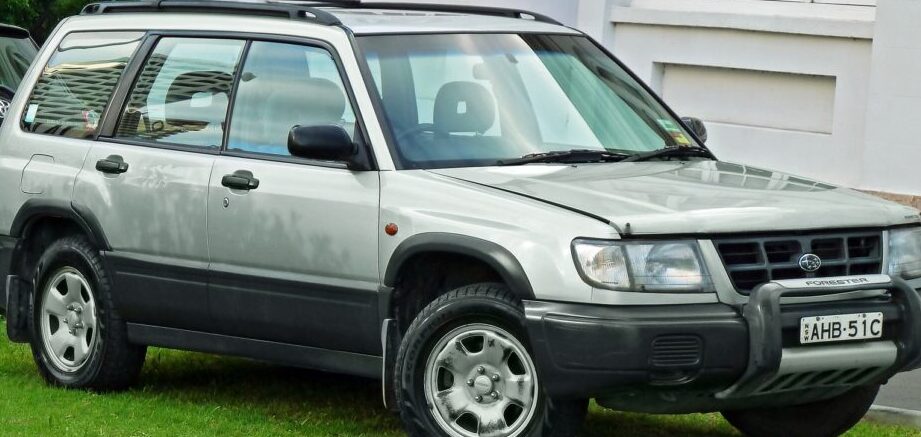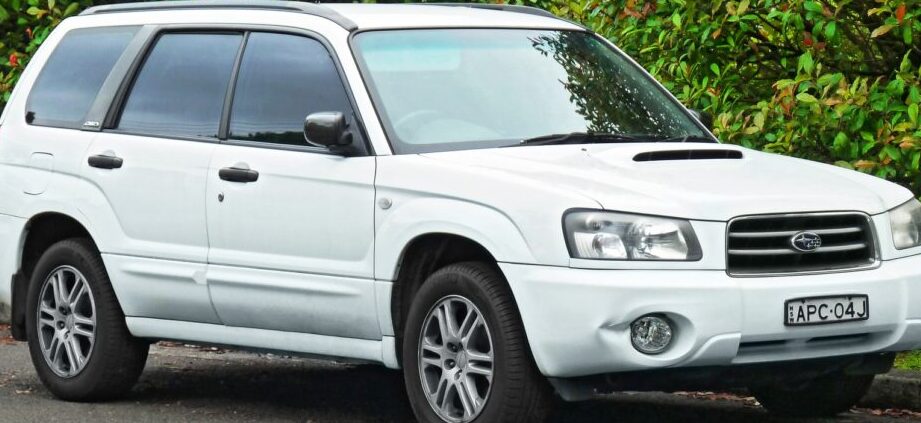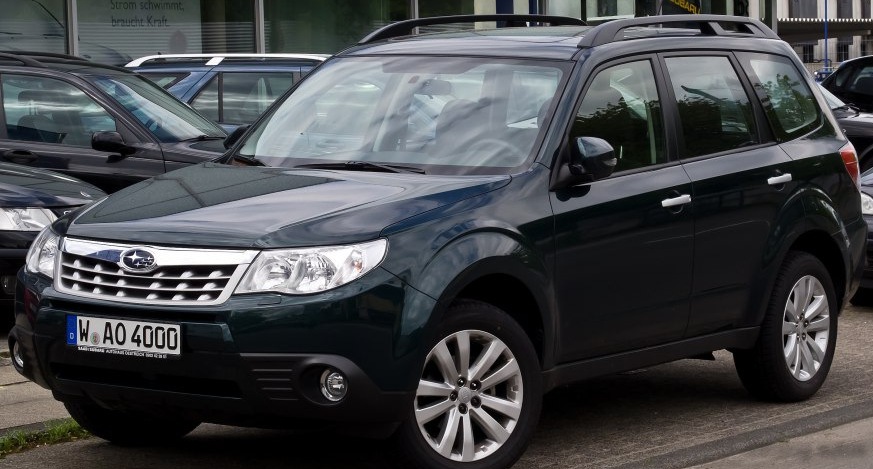
The Subaru Forester III (facelift, introduced in 2010) 2.5 Turbo, equipped with a 262 horsepower turbocharged engine and a five-speed automatic transmission (designated E-5AT), represented the performance peak of the third-generation Forester lineup. Production of this variant spanned from 2011 to 2013. Positioned as the top-tier trim level, it catered to buyers seeking a blend of practicality, all-weather capability, and spirited driving performance within the compact SUV segment. This model built upon the foundation of the Forester III, which itself was based on the Subaru Impreza platform, offering a more refined and powerful option compared to the naturally aspirated engines available in lower trims.
Technical Specifications
| Brand | Subaru |
| Model | Forester |
| Generation | Forester III (facelift 2010) |
| Type (Engine) | 2.5 Turbo (262 Hp) AWD E-5AT |
| Start of production | 2011 |
| End of production | 2013 |
| Powertrain Architecture | Internal Combustion engine |
| Body type | SUV, Crossover |
| Seats | 5 |
| Doors | 5 |
| Fuel consumption (urban) | 14.8 l/100 km (15.9 US mpg, 19.1 UK mpg, 6.8 km/l) |
| Fuel consumption (extra urban) | 7.9 l/100 km (29.8 US mpg, 35.8 UK mpg, 12.7 km/l) |
| Fuel consumption (combined) | 10.5 l/100 km (22.4 US mpg, 26.9 UK mpg, 9.5 km/l) |
| CO2 emissions | 248 g/km |
| Fuel Type | Petrol (Gasoline) |
| Acceleration 0 – 100 km/h | 6.5 sec |
| Acceleration 0 – 62 mph | 6.5 sec |
| Acceleration 0 – 60 mph | 6.2 sec |
| Maximum speed | 228 km/h (141.67 mph) |
| Emission standard | Euro 4 |
| Weight-to-power ratio | 6 kg/Hp, 165.3 Hp/tonne |
| Weight-to-torque ratio | 4.6 kg/Nm, 218.9 Nm/tonne |
| Power | 262 Hp @ 6000 rpm |
| Power per litre | 106.6 Hp/l |
| Torque | 347 Nm @ 2800-4800 rpm (255.93 lb.-ft. @ 2800-4800 rpm) |
| Engine layout | Front, Longitudinal |
| Engine Model/Code | EJ255 |
| Engine displacement | 2457 cm3 (149.94 cu. in.) |
| Number of cylinders | 4 |
| Engine configuration | Boxer |
| Cylinder Bore | 99.5 mm (3.92 in.) |
| Piston Stroke | 79 mm (3.11 in.) |
| Compression ratio | 8.4:1 |
| Number of valves per cylinder | 4 |
| Fuel injection system | Multi-port manifold injection |
| Engine aspiration | Turbocharger, Intercooler |
| Valvetrain | DOHC, AVCS |
| Engine oil capacity | 4.2 l (4.44 US qt | 3.7 UK qt) |
| Coolant | 8 l (8.45 US qt | 7.04 UK qt) |
| Kerb Weight | 1585 kg (3494.33 lbs.) |
| Trunk (boot) space – minimum | 450 l (15.89 cu. ft.) |
| Trunk (boot) space – maximum | 1610 l (56.86 cu. ft.) |
| Fuel tank capacity | 60 l (15.85 US gal | 13.2 UK gal) |
| Permitted trailer load with brakes (12%) | 1600 kg (3527.4 lbs.) |
| Permitted trailer load without brakes | 750 kg (1653.47 lbs.) |
| Length | 4560 mm (179.53 in.) |
| Width | 1795 mm (70.67 in.) |
| Height | 1700 mm (66.93 in.) |
| Wheelbase | 2615 mm (102.95 in.) |
| Front track | 1530 mm (60.24 in.) |
| Rear (Back) track | 1530 mm (60.24 in.) |
| Ride height (ground clearance) | 225 mm (8.86 in.) |
| Minimum turning circle (turning diameter) | 10.5 m (34.45 ft.) |
| Drivetrain Architecture | All wheel drive (4×4) |
| Number of gears and type of gearbox | 5 gears, automatic transmission E-AT |
| Front suspension | Independent, type McPherson with coil spring and anti-roll bar |
| Rear suspension | Double wishbone, Transverse stabilizer |
| Front brakes | Ventilated discs |
| Rear brakes | Disc |
| Assisting systems | ABS (Anti-lock braking system) |
| Steering type | Steering rack and pinion |
| Power steering | Hydraulic Steering |
| Tires size | 225/55 R17 |
| Wheel rims size | 7J x 17 |
INTRODUCTION
The 2011-2013 Subaru Forester 2.5 Turbo represented a significant step up in performance for the Forester line. Built on the robust Subaru Impreza platform (designated 1HX0/A3), the facelifted Forester III offered a more aggressive front fascia and updated interior appointments. The 2.5 Turbo variant, however, was the standout, providing a compelling alternative to other compact SUVs with its standard all-wheel drive and potent turbocharged engine. It aimed to attract buyers who desired a practical vehicle with a sporty edge, capable of handling diverse road conditions and offering a more engaging driving experience.
Powertrain & Engine Architecture
At the heart of the Forester 2.5 Turbo lies the EJ255 2.5-liter horizontally-opposed (Boxer) four-cylinder engine. This engine benefits from a single turbocharger with an intercooler, boosting output to 262 horsepower and 347 Nm (255.93 lb.-ft.) of torque. The engine utilizes multi-port fuel injection and a dual overhead camshaft (DOHC) valvetrain with Active Valve Control System (AVCS) on both intake and exhaust camshafts, optimizing performance and efficiency. The E-5AT five-speed automatic transmission was specifically tuned to handle the increased power and torque. This transmission featured adaptive learning, adjusting shift points based on driving style. While not the most modern automatic by today’s standards, it provided smooth and reliable operation. The engine’s longitudinal mounting and symmetrical all-wheel drive system contribute to balanced handling and stability.
Driving Characteristics
The 2.5 Turbo Forester delivered noticeably quicker acceleration than its naturally aspirated counterparts. The 0-60 mph sprint took approximately 6.2 seconds, making it one of the fastest vehicles in its class. The automatic transmission, while smooth, wasn’t particularly quick to downshift, but the readily available torque from the turbocharged engine compensated for this. Compared to the six-speed manual transmission available on some models, the automatic prioritized comfort and ease of use over outright performance. The all-wheel drive system provided excellent traction in all weather conditions, making it a confident handler on both dry and slippery surfaces. The Boxer engine’s low center of gravity also contributed to reduced body roll during cornering.
Equipment & Trim Levels
The 2.5 Turbo Forester typically came well-equipped, often including standard features such as automatic climate control, a premium audio system, power-adjustable driver’s seat, and alloy wheels. Leather upholstery and a sunroof were common optional extras. Interior trim generally featured dark gray or black color schemes with metallic accents. The facelifted model also benefited from improved interior materials and a more modern dashboard layout compared to earlier Forester III models. Safety features included anti-lock brakes (ABS), electronic brakeforce distribution (EBD), and multiple airbags.
Chassis & Braking
The Forester 2.5 Turbo utilized an independent McPherson strut front suspension and a double-wishbone rear suspension, providing a comfortable ride and responsive handling. Stabilizer bars were fitted to both axles to minimize body roll. Braking duties were handled by ventilated discs at the front and solid discs at the rear. The ABS system helped maintain steering control during hard braking. The suspension was tuned to balance comfort and handling, offering a compliant ride without sacrificing stability.
Market Reception & Comparison
The Forester 2.5 Turbo received generally positive reviews from automotive critics. It was praised for its strong performance, all-weather capability, and spacious interior. However, some reviewers noted that the fuel economy was relatively poor compared to other compact SUVs, and the automatic transmission wasn’t as engaging as the manual option. Compared to the base 2.5i models, the 2.5 Turbo offered a significant performance upgrade, but at a higher price point. Against competitors like the Honda CR-V and Toyota RAV4, the Forester 2.5 Turbo stood out with its standard all-wheel drive and turbocharged engine, appealing to buyers who prioritized performance and capability.
Legacy
The EJ255 engine, while generally reliable, is known to require regular maintenance, particularly regarding oil changes. The turbocharger can be a potential point of failure if not properly maintained. The E-5AT automatic transmission is generally durable, but some units may experience issues with solenoid valves or torque converter wear over time. Today, the 2011-2013 Forester 2.5 Turbo holds a respectable position in the used car market, appealing to buyers seeking a capable and relatively affordable all-wheel drive SUV with a sporty character. Its combination of performance, practicality, and Subaru’s reputation for reliability continues to make it a desirable option for those looking for a versatile and engaging vehicle.