Technical Specifications
| Brand | Opel |
| Model | Insignia |
| Generation | Insignia Sedan (A) |
| Type (Engine) | OPC 2.8 V6 Turbo (325 Hp) 4×4 |
| Start of production | July, 2009 |
| End of production | June, 2013 |
| Powertrain Architecture | Internal Combustion engine |
| Body type | Sedan |
| Seats | 5 |
| Doors | 4 |
| Fuel consumption (urban) | 16.6 l/100 km (14.2 US mpg, 17 UK mpg, 6 km/l) |
| Fuel consumption (extra urban) | 8.4 l/100 km (28 US mpg, 33.6 UK mpg, 11.9 km/l) |
| Fuel consumption (combined) | 11.4 l/100 km (20.6 US mpg, 24.8 UK mpg, 8.8 km/l) |
| CO2 emissions | 249 g/km |
| Fuel Type | Petrol (Gasoline) |
| Acceleration 0 – 100 km/h | 6 sec |
| Acceleration 0 – 62 mph | 6 sec |
| Acceleration 0 – 60 mph | 5.7 sec |
| Maximum speed | 250 km/h (155.34 mph) |
| Emission standard | Euro 5 |
| Weight-to-power ratio | 5.6 kg/Hp, 179.6 Hp/tonne |
| Weight-to-torque ratio | 4.2 kg/Nm, 240.3 Nm/tonne |
| Power | 325 Hp @ 5250 rpm |
| Power per litre | 116.4 Hp/l |
| Torque | 435 Nm @ 5250 rpm (320.84 lb.-ft. @ 5250 rpm) |
| Engine layout | Front, Transverse |
| Engine Model/Code | A28NER |
| Engine displacement | 2792 cm3 (170.38 cu. in.) |
| Number of cylinders | 6 |
| Engine configuration | V-engine |
| Cylinder Bore | 89 mm (3.5 in.) |
| Piston Stroke | 74.8 mm (2.94 in.) |
| Compression ratio | 9.5:1 |
| Number of valves per cylinder | 4 |
| Fuel injection system | Multi-port manifold injection |
| Engine aspiration | Turbocharger, Intercooler |
| Engine oil capacity | 6.3 l (6.66 US qt | 5.54 UK qt) |
| Coolant | 6.7 l (7.08 US qt | 5.9 UK qt) |
| Kerb Weight | 1810 kg (3990.37 lbs.) |
| Max. weight | 2315 kg (5103.7 lbs.) |
| Max load | 505 kg (1113.33 lbs.) |
| Trunk (boot) space – minimum | 500 l (17.66 cu. ft.) |
| Trunk (boot) space – maximum | 1010 l (35.67 cu. ft.) |
| Fuel tank capacity | 70 l (18.49 US gal | 15.4 UK gal) |
| Length | 4830 mm (190.16 in.) |
| Width | 1858 mm (73.15 in.) |
| Height | 1498 mm (58.98 in.) |
| Wheelbase | 2737 mm (107.76 in.) |
| Front track | 1585 mm (62.4 in.) |
| Rear (Back) track | 1587 mm (62.48 in.) |
| Drag coefficient (Cd) | 0.27 |
| Minimum turning circle | 10.8 m (35.43 ft.) |
| Drive wheel | All wheel drive (4×4) |
| Number of gears | 6 |
| Gearbox type | Manual transmission |
| Front brakes | Ventilated discs |
| Rear brakes | Ventilated discs |
| Assisting systems | ABS (Anti-lock braking system) |
| Tires size | 245/40 R19 |
| Wheel rims size | 8.5 x 19 |
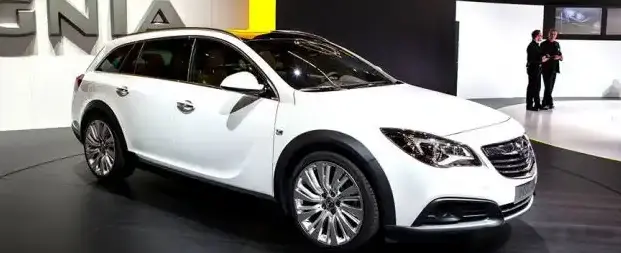
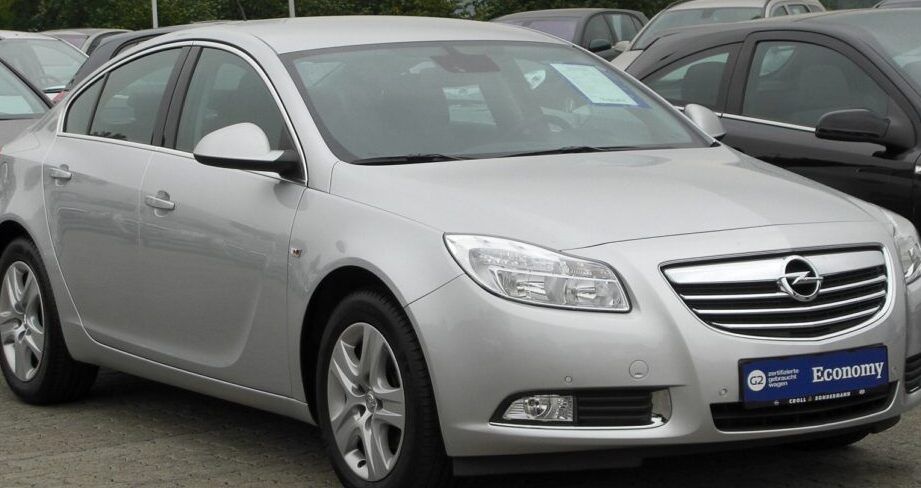
The Opel Insignia OPC, launched in July 2009 and produced through June 2013, was the high-performance variant of the first-generation (A) Insignia. The “OPC” badge, signifying Opel Performance Center, denoted a substantial upgrade in performance and handling compared to the standard Insignia models. Positioned as Opel’s flagship performance sedan, it was primarily aimed at the European market, offering a sporty alternative to established competitors. It was never officially sold in the United States.
Powertrain & Engine Architecture
The Insignia OPC’s powertrain revolved around the A28NER engine, a 2.8-liter, 60-degree V6. This engine employed a single twin-scroll turbocharger with an intercooler to boost output to 325 horsepower at 5250 rpm and 320.84 lb-ft of torque at the same engine speed. The engine utilized multi-port fuel injection and featured a compression ratio of 9.5:1. The engine was mounted transversely within the engine bay. The A28NER was a member of the GM High Feature V6 engine family, known for its inherent strength and potential for tuning. Power was delivered to all four wheels through a six-speed manual transmission and Opel’s sophisticated 4×4 system. This system employed a multi-plate clutch to dynamically distribute torque between the front and rear axles, maximizing traction and stability in various driving conditions.
Driving Characteristics
The Insignia OPC 2.8 V6 Turbo 4×4 delivered a significantly more engaging driving experience than its standard counterparts. The turbocharged V6 provided robust acceleration, achieving a 0-60 mph time of approximately 5.7 seconds. The all-wheel-drive system ensured excellent grip, particularly beneficial in inclement weather. The six-speed manual transmission offered precise control, although the gear ratios were tuned more for acceleration than maximizing fuel efficiency. Compared to lower-powered Insignia models, the OPC felt considerably more responsive and capable. While perhaps lacking the ultimate refinement of some premium rivals, the OPC offered a raw and visceral driving experience that appealed to driving enthusiasts. The steering was direct, and the chassis felt well-balanced, inspiring confidence during spirited driving.
Equipment & Trim Levels
The Insignia OPC came well-equipped as standard. Interior features included sport seats upholstered in Morrocana (a high-quality leatherette), a leather-wrapped steering wheel, and aluminum sport pedals. Unique OPC badging and trim details distinguished the interior. Externally, the OPC featured a distinctive body kit, including a front spoiler, side skirts, and a rear diffuser. Optional extras included a panoramic sunroof, a navigation system, and an upgraded audio system. The OPC represented the highest trim level available for the Insignia sedan, offering a comprehensive package of performance and luxury features.
Chassis & Braking
The Insignia OPC benefited from a sport-tuned suspension, featuring stiffer springs and dampers compared to the standard Insignia. The front suspension utilized MacPherson struts, while the rear employed a multi-link setup. Ventilated disc brakes were standard on all four wheels, providing ample stopping power. The OPC also featured an upgraded braking system with larger calipers and rotors for improved performance. Anti-lock braking system (ABS) was standard equipment. The chassis itself was reinforced to handle the increased power and torque output of the V6 engine, enhancing rigidity and handling precision.
Market Reception & Comparison
The Insignia OPC generally received positive reviews from automotive critics. It was lauded for its strong performance, engaging handling, and spacious interior. However, some reviewers noted that the ride quality was firm, and the interior materials weren’t quite as luxurious as those found in some of its competitors. Compared to the standard Insignia models, the OPC offered a substantial performance upgrade, but at a higher price point and with increased running costs. When compared to rivals like the Ford Mondeo ST, the Insignia OPC offered a more powerful engine and a more sophisticated all-wheel-drive system. However, the Mondeo ST was often praised for its more balanced handling characteristics. Fuel economy was a notable drawback, with a combined fuel consumption of 20.6 US mpg.
Legacy
The Opel Insignia OPC 2.8 V6 Turbo 4×4 continues to be a desirable vehicle among automotive enthusiasts. The A28NER engine is generally considered reliable, provided regular maintenance is performed. The all-wheel-drive system is typically robust, although repairs can be costly if issues arise. On the used car market, OPC models consistently command a premium over standard Insignia variants. The Insignia OPC represents a bold effort by Opel to create a genuinely sporty and capable vehicle, and it remains a distinctive and memorable model in the company’s history. Its blend of power, all-wheel drive, and practicality continues to appeal to drivers seeking a performance sedan with a unique character.