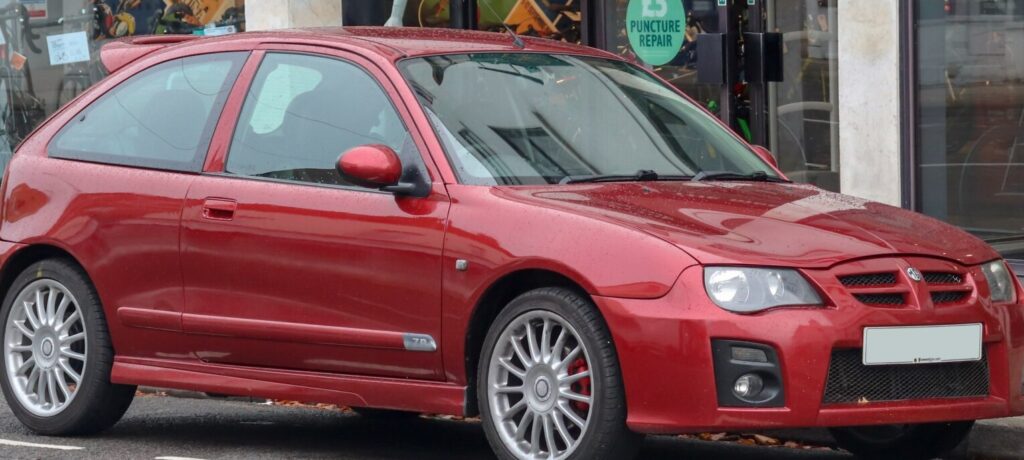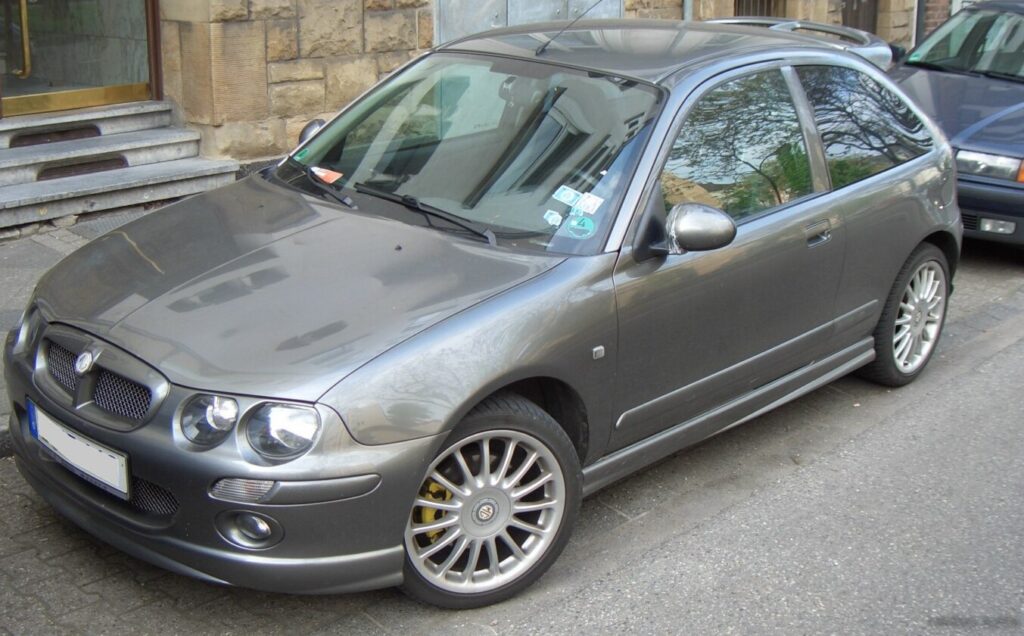
The MG ZR 1.8 i 16V, produced between 2001 and 2003, was a key variant within the ZR range, representing a mid-tier offering in MG’s attempt to revitalize the British sports hatchback market. Based on the Rover 200 platform (internally designated as the R3 platform), the ZR aimed to provide a more dynamic and youthful alternative to its predecessor. The 1.8L engine and five-speed manual transmission combination was positioned as a balance between performance and affordability, appealing to drivers seeking a sporty experience without the higher price tag of the more powerful V6 models. It was a crucial model for MG, hoping to establish a brand identity separate from its Rover roots following BMW’s divestment of the brand.
Technical Specifications
| Brand | MG |
| Model | ZR |
| Generation | ZR |
| Type (Engine) | 1.8 i 16V (117 Hp) |
| Start of production | 2001 |
| End of production | 2003 |
| Powertrain Architecture | Internal Combustion engine |
| Body type | Hatchback |
| Seats | 5 |
| Doors | 3/5 |
| Fuel consumption (urban) | 9.9 l/100 km (23.8 US mpg) |
| Fuel consumption (extra urban) | 5.7 l/100 km (41.3 US mpg) |
| Fuel consumption (combined) | 7.3 l/100 km (32.2 US mpg) |
| Fuel Type | Petrol (Gasoline) |
| Acceleration 0 – 100 km/h | 9.1 sec |
| Acceleration 0 – 62 mph | 9.1 sec |
| Acceleration 0 – 60 mph | 8.6 sec |
| Maximum speed | 192 km/h (119.3 mph) |
| Weight-to-power ratio | 9.1 kg/Hp |
| Weight-to-torque ratio | 6.7 kg/Nm |
| Power | 117 Hp @ 5500 rpm |
| Torque | 160 Nm @ 2750 rpm (118.01 lb.-ft. @ 2750 rpm) |
| Engine layout | Front, Transverse |
| Engine Model/Code | 18K4F |
| Engine displacement | 1795 cm3 (109.54 cu. in.) |
| Number of cylinders | 4 |
| Engine configuration | Inline |
| Cylinder Bore | 80 mm (3.15 in.) |
| Piston Stroke | 89.3 mm (3.52 in.) |
| Compression ratio | 10.5:1 |
| Number of valves per cylinder | 4 |
| Fuel injection system | Multi-port manifold injection |
| Engine aspiration | Naturally aspirated engine |
| Valvetrain | DOHC |
| Engine oil capacity | 4.5 l (4.76 US qt | 3.96 UK qt) |
| Coolant capacity | 4.8 l (5.07 US qt | 4.22 UK qt) |
| Kerb Weight | 1070 kg (2358.95 lbs.) |
| Max. weight | 1530 kg (3373.07 lbs.) |
| Max load | 460 kg (1014.13 lbs.) |
| Trunk (boot) space – minimum | 304 l (10.74 cu. ft.) |
| Trunk (boot) space – maximum | 1090 l (38.49 cu. ft.) |
| Fuel tank capacity | 50 l (13.21 US gal | 11 UK gal) |
| Length | 4011 mm (157.91 in.) |
| Width | 1690 mm (66.54 in.) |
| Height | 1400 mm (55.12 in.) |
| Wheelbase | 2502 mm (98.5 in.) |
| Front track | 1472 mm (57.95 in.) |
| Rear track | 1457 mm (57.36 in.) |
| Drivetrain Architecture | Front wheel drive |
| Number of gears | 5 |
| Gearbox type | Manual transmission |
| Front suspension | Spring Strut |
| Rear suspension | Coil spring |
| Front brakes | Ventilated discs |
| Rear brakes | Drum |
| Steering type | Steering rack and pinion |
| Power steering | Hydraulic Steering |
| Tires size | 205/50 R16 |
Powertrain & Engine Architecture
The MG ZR 1.8 i 16V utilized the 18K4F engine, a 1.8-liter inline-four cylinder powerplant. This engine was a derivative of the Rover K-Series, known for its compact dimensions and relatively lightweight construction. The 18K4F featured a multi-port fuel injection system and a double overhead camshaft (DOHC) valvetrain, contributing to its respectable power output for its displacement. The engine produced 117 horsepower at 5500 rpm and 160 Nm (118 lb-ft) of torque at 2750 rpm. The five-speed manual transmission was a standard feature, providing drivers with direct control over the engine’s power. The transmission’s gear ratios were tuned for a balance of acceleration and fuel efficiency, though it wasn’t particularly sporty compared to some contemporary rivals.
Driving Characteristics
The 1.8L engine, paired with the five-speed manual, offered a reasonably engaging driving experience. While not a performance powerhouse, the ZR 1.8 i 16V provided adequate acceleration for everyday driving, with a 0-60 mph time of around 8.6 seconds. The engine felt responsive in the mid-range, making it suitable for overtaking maneuvers. Compared to the higher-output V6 models, the 1.8L felt less urgent, but it also offered better fuel economy and a lighter front end, which some drivers preferred for its more balanced handling. The gear ratios were well-spaced, allowing the driver to keep the engine in its optimal power band. The steering was direct, providing good feedback, and the suspension offered a firm but comfortable ride.
Equipment & Trim Levels
The MG ZR 1.8 i 16V typically came equipped with a reasonable level of standard features. These included central locking, power steering, electric front windows, and an RDS stereo. Interior upholstery was typically cloth, with a sporty design. Optional extras included alloy wheels, air conditioning, and a sunroof. The ZR range offered various trim levels, with the 1.8L model often serving as a mid-range option, bridging the gap between the entry-level 1.4L and the more expensive V6 variants. The dashboard layout was functional and driver-focused, with clear instrumentation.
Chassis & Braking
The MG ZR featured a MacPherson strut front suspension and a coil spring rear suspension. The front suspension incorporated an anti-roll bar to reduce body roll during cornering. Braking duties were handled by ventilated discs at the front and drum brakes at the rear. While adequate for most driving situations, the rear drum brakes were a point of criticism, as they lacked the stopping power and fade resistance of disc brakes. The chassis was relatively lightweight, contributing to the ZR’s nimble handling characteristics.
Market Reception & Comparison
The MG ZR 1.8 i 16V received mixed reviews from automotive critics. It was generally praised for its handling and steering feel, but some criticized the interior quality and the lack of refinement compared to rivals like the Volkswagen Golf or Ford Focus. Fuel economy was considered average for its class. Compared to the 1.4L ZR, the 1.8L offered a noticeable performance improvement, while the V6 models provided significantly more power but at a higher cost and with increased fuel consumption. The 1.8L model represented a good compromise for drivers seeking a sporty and affordable hatchback.
Legacy
The MG ZR, including the 1.8 i 16V variant, enjoyed a modest following among enthusiasts. The K-Series engine, while generally reliable, could be prone to head gasket failures if not properly maintained, particularly on earlier models. Today, the MG ZR is considered a relatively affordable classic car, appealing to those seeking a retro-styled hatchback with a sporty pedigree. Parts availability can be a challenge, but a dedicated community of MG enthusiasts continues to support the model. The ZR represents a final attempt by MG to create a distinctive and engaging British sports hatchback before the brand’s eventual decline.