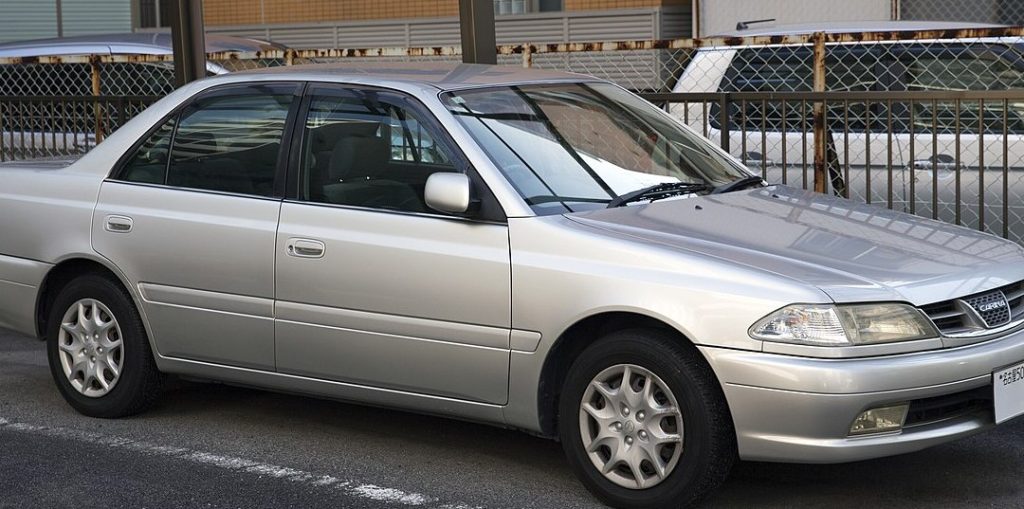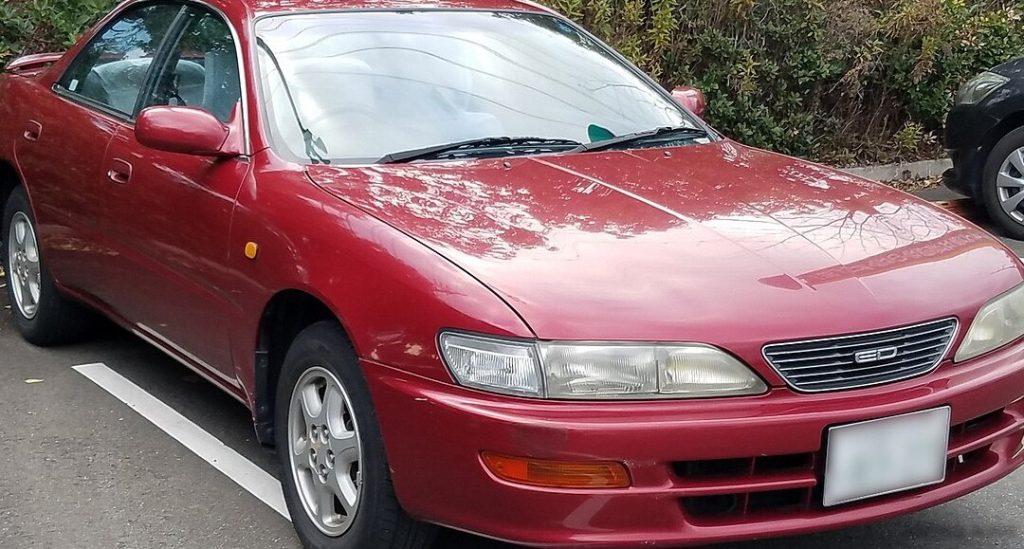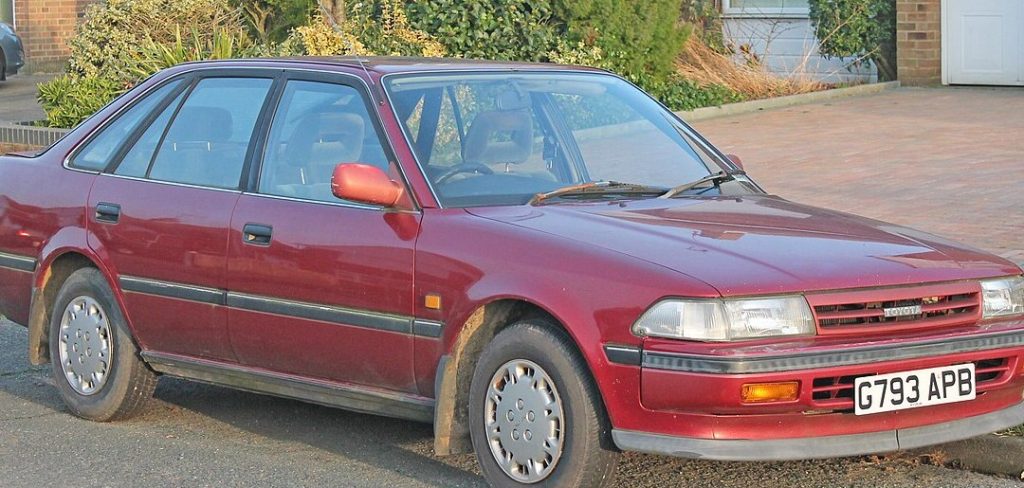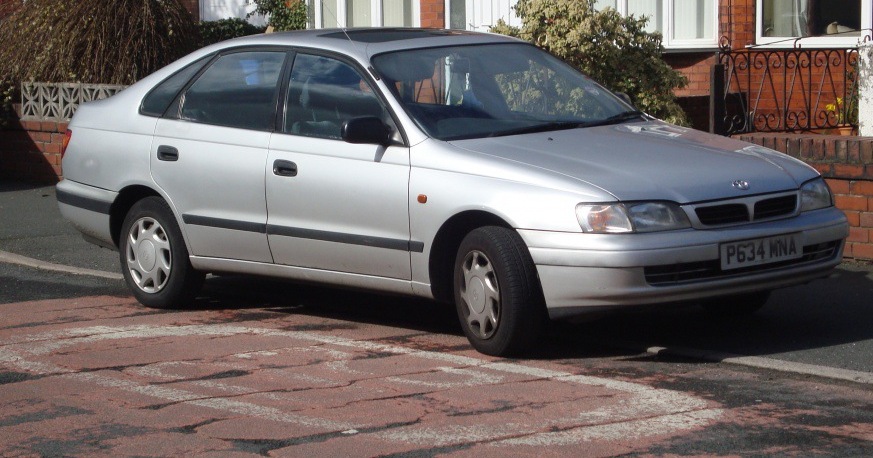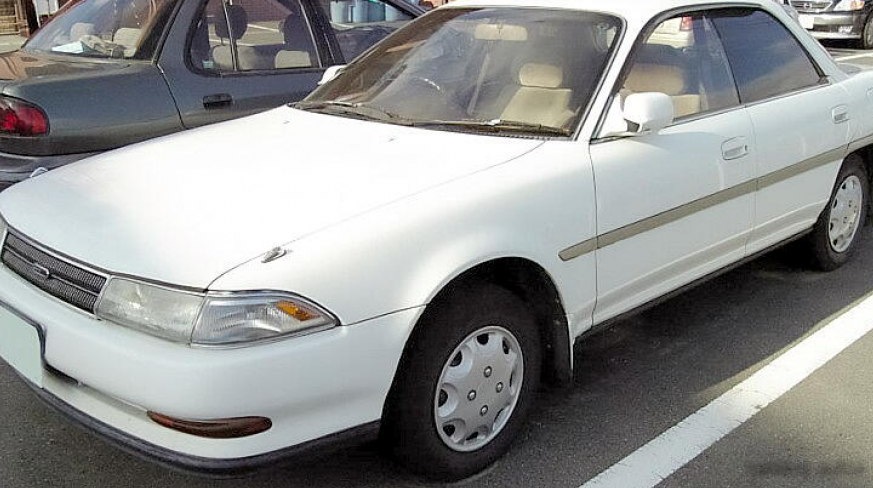
The Toyota Carina ED 1.8 i, produced between 1988 and 1992, represented a significant step forward for Toyota’s mid-size offerings. Part of the broader Carina line, the “ED” designation – standing for “Elegant Dynamic” – signified a more modern and stylish approach compared to its predecessors. This variant, powered by the 4S-FE 1.8-liter engine producing 115 horsepower, occupied a middle ground in the Carina ED lineup, offering a balance between performance, fuel economy, and affordability. It was primarily marketed in Japan and Europe, where front-wheel-drive sedans were gaining popularity. The Carina ED, built on the T180 platform, aimed to compete with rivals like the Honda Accord and Nissan Bluebird.
Technical Specifications
| Brand | Toyota |
| Model | Carina |
| Generation | Carina ED |
| Type (Engine) | 1.8 i (115 Hp) |
| Start of production | 1988 |
| End of production | 1992 |
| Powertrain Architecture | Internal Combustion engine |
| Body type | Sedan |
| Seats | 5 |
| Doors | 4 |
| Fuel Type | Petrol (Gasoline) |
| Power | 115 Hp @ 5400 rpm |
| Power per litre | 65.3 Hp/l |
| Torque | 155 Nm @ 2800 rpm / 114.32 lb.-ft. @ 2800 rpm |
| Engine layout | Front, Transverse |
| Engine Model/Code | 4S-FE |
| Engine displacement | 1762 cm3 / 107.52 cu. in. |
| Number of cylinders | 4 |
| Engine configuration | Inline |
| Cylinder Bore | 81 mm / 3.19 in. |
| Piston Stroke | 85.5 mm / 3.37 in. |
| Compression ratio | 9.5:1 |
| Number of valves per cylinder | 4 |
| Fuel injection system | Multi-port manifold injection |
| Engine aspiration | Naturally aspirated engine |
| Valvetrain | DOHC |
| Engine oil capacity | 3.9 l / 4.12 US qt | 3.43 UK qt |
| Coolant | 6.9 l / 7.29 US qt | 6.07 UK qt |
| Fuel tank capacity | 60 l / 15.85 US gal | 13.2 UK gal |
| Length | 4485 mm / 176.57 in. |
| Width | 1690 mm / 66.54 in. |
| Height | 1315 mm / 51.77 in. |
| Wheelbase | 2525 mm / 99.41 in. |
| Drivetrain Architecture | The Internal combustion engine (ICE) drives the front wheels of the vehicle. |
| Drive wheel | Front wheel drive |
Powertrain & Engine Architecture
The heart of the Carina ED 1.8 i was the 4S-FE engine, a member of Toyota’s highly regarded S-series family. This 1.8-liter, inline-four cylinder engine featured a double overhead camshaft (DOHC) valvetrain and multi-port fuel injection. The 4S-FE was known for its relatively smooth operation and decent power output for its displacement. The engine’s 9.5:1 compression ratio contributed to its efficiency and responsiveness. The engine was transversely mounted, driving the front wheels. The transmission offered with the 1.8 i was typically a four-speed automatic, although a five-speed manual was also available in some markets. The automatic transmission was designed for smooth shifts and comfortable cruising, prioritizing ease of use over outright performance.
Driving Characteristics
The Carina ED 1.8 i with the automatic transmission offered a comfortable and predictable driving experience. While not particularly sporty, the 115 horsepower engine provided adequate power for everyday driving situations. Acceleration was reasonable, but not brisk, with 0-60 mph times estimated around 11-12 seconds. The automatic transmission’s gear ratios were tuned for fuel efficiency and smooth transitions, rather than aggressive downshifts. Compared to the manual transmission version, the automatic offered less driver engagement but greater convenience. Higher-spec Carina ED models equipped with the 2.0-liter 3S-FE engine (and often a manual transmission) provided significantly more performance, but at a higher price point. The suspension was tuned for comfort, absorbing bumps and providing a stable ride, though it wasn’t particularly engaging for enthusiastic drivers.
Equipment & Trim Levels
The 1.8 i trim level generally represented a mid-range offering within the Carina ED lineup. Standard equipment typically included power steering, central locking, electric windows, and a basic audio system. Interior upholstery was usually cloth, with a relatively simple dashboard layout. Optional extras could include air conditioning, upgraded audio systems, alloy wheels, and a sunroof. The interior design prioritized functionality and durability over luxury, reflecting the car’s target market. Higher trim levels offered more luxurious appointments, such as leather upholstery and woodgrain trim.
Chassis & Braking
The Carina ED utilized a front-wheel-drive chassis with independent MacPherson strut suspension at the front and a torsion beam rear suspension. This setup provided a good balance between ride comfort and handling. Braking was typically accomplished with disc brakes at the front and drum brakes at the rear, although some later models featured rear disc brakes. The braking system was adequate for the car’s weight and performance, but lacked the stopping power of more modern systems. Stabilizer bars were fitted to both the front and rear axles to reduce body roll during cornering.
Market Reception & Comparison
The Toyota Carina ED 1.8 i was generally well-received by critics as a practical and reliable family sedan. It was praised for its comfortable ride, fuel efficiency, and build quality. However, it was sometimes criticized for its somewhat bland styling and lack of sporting character. Compared to other trims in the Carina ED lineup, the 1.8 i offered a more affordable entry point, appealing to buyers who prioritized value and practicality over performance. Fuel economy was a strong point, with combined cycle figures typically around 30-35 mpg. Reliability was also a key strength, with the 4S-FE engine proving to be a durable and long-lasting unit.
Legacy
The Toyota Carina ED, and specifically the 1.8 i variant, has maintained a reputation for reliability and durability. In the used car market, these models are often sought after for their affordability and low running costs. The 4S-FE engine is known for its longevity, and parts availability remains relatively good. While not a particularly collectible car, the Carina ED represents a significant chapter in Toyota’s history, showcasing the company’s commitment to building practical, reliable, and fuel-efficient vehicles. The Carina ED was eventually replaced by the Toyota Caldina and Allion, continuing Toyota’s presence in the mid-size sedan segment.