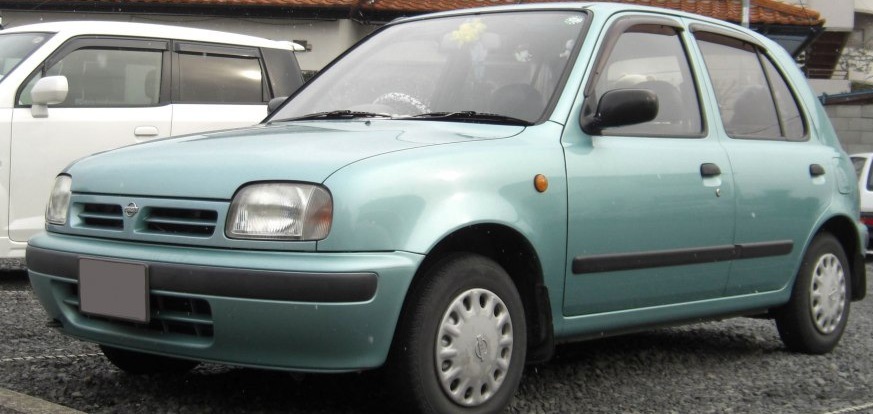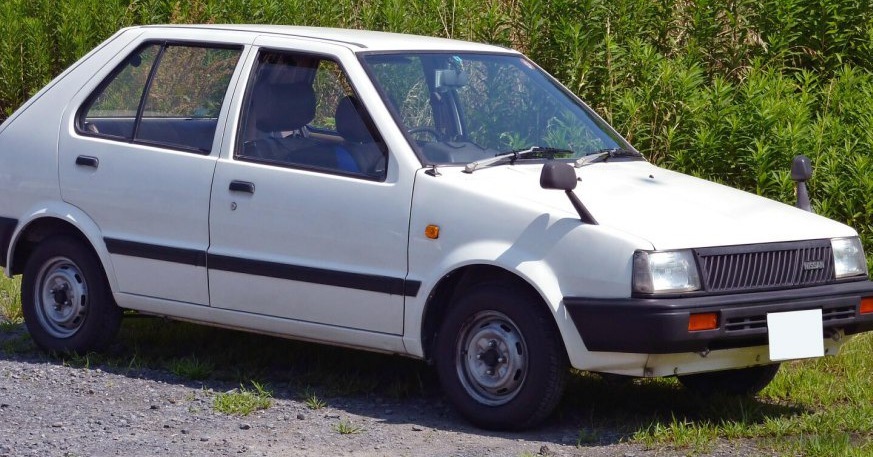
The Nissan March, known as the Micra in many international markets, K10 generation represented a significant step forward for Nissan’s supermini offerings. Produced from 1982 to 1992, the K10 was a front-wheel-drive hatchback designed to compete with established European and Japanese rivals like the Fiat Uno, Renault 5, and Suzuki Swift. The 1.2-liter (54 horsepower) variant, introduced later in the production run, aimed to provide a balance of affordability and usability for a broader customer base. This particular engine and trim level occupied the entry-level position within the K10 March lineup, focusing on economy and practicality rather than outright performance.
Technical Specifications
| Brand | Nissan |
| Model | March |
| Generation | March (K10) |
| Type (Engine) | 1.2 (54 Hp) |
| Start of Production | 1986 |
| End of Production | 1992 |
| Powertrain Architecture | Internal Combustion Engine |
| Body Type | Hatchback |
| Fuel Type | Petrol (Gasoline) |
| Power | 54 Hp |
| Engine Aspiration | Naturally Aspirated |
| Engine Displacement | 1.2 Liters |
| Transmission | Typically 4-speed Automatic or 5-speed Manual (this article focuses on the automatic) |
| Weight (approx.) | 780 – 850 kg (1720 – 1874 lbs) depending on trim |
Introduction
The K10 Nissan March was a pivotal model for Nissan, marking their serious entry into the burgeoning European supermini market. Launched in 1982, it underwent several revisions throughout its ten-year production run. The 1.2-liter engine, introduced in 1986, was a key part of these updates, offering a slightly larger displacement and improved refinement compared to the earlier 1.0-liter options. The K10 March was built on Nissan’s ‘B’ platform, and was designed with a focus on maximizing interior space within a compact footprint. The 1.2L variant, particularly when paired with the four-speed automatic transmission, was targeted at buyers prioritizing ease of driving and fuel efficiency over sporty handling.
Powertrain & Engine Architecture
The 1.2-liter engine, designated as the E12 series, was a naturally aspirated inline-four cylinder gasoline engine. It featured a single overhead camshaft (SOHC) valvetrain operating two valves per cylinder. Fuel delivery was managed by a carburetor in earlier iterations of the 1.2L, but later models, particularly those sold in markets with stricter emissions regulations, transitioned to electronic fuel injection (EFI). This EFI system, while relatively simple by modern standards, improved fuel economy and reduced emissions. The engine’s block was cast iron, providing durability, while the cylinder head was aluminum, contributing to weight reduction. The four-speed automatic transmission was a conventional hydraulic unit, offering smooth but not particularly quick shifts. It was chosen for its simplicity and reliability, rather than performance. The transmission’s gear ratios were optimized for fuel efficiency and comfortable cruising, prioritizing low engine speeds at highway velocities.
Driving Characteristics
The 1.2-liter March automatic was not a performance car. With only 54 horsepower on tap, acceleration was leisurely, and overtaking required careful planning. Zero to sixty mph times were typically in the 14-16 second range. However, the car’s light weight helped to mitigate the lack of power. The automatic transmission, while providing convenience, did sap some of the engine’s already limited power. The gear ratios were spaced to maximize fuel economy, meaning the engine often felt strained when accelerating hard. Compared to the five-speed manual version of the 1.2L, the automatic offered a more relaxed driving experience, particularly in urban environments, but at the cost of responsiveness. The steering was light and accurate, making it easy to maneuver in tight spaces, and the suspension provided a reasonably comfortable ride, although it could become unsettled on rough roads.
Equipment & Trim Levels
The 1.2-liter March automatic typically came with a fairly basic level of equipment. Standard features generally included cloth upholstery, a simple dashboard with analog gauges, and manual windows and door locks. Power steering was often an optional extra, as was air conditioning. Higher trim levels, available with the 1.2L engine, might have included features like a more sophisticated stereo system, upgraded interior trim, and alloy wheels. The focus of this variant was affordability, so Nissan kept the standard equipment list relatively sparse. The interior design was functional and practical, with a focus on maximizing space. The rear seats could be folded down to increase cargo capacity, making the March a versatile vehicle for everyday use.
Chassis & Braking
The K10 March utilized a front-wheel-drive layout with a MacPherson strut suspension at the front and a torsion beam suspension at the rear. This setup provided a good balance of ride comfort and handling. The steering was rack and pinion, offering precise control. Braking was typically accomplished with disc brakes at the front and drum brakes at the rear. The brakes were adequate for the car’s weight and performance, but lacked the stopping power of more modern systems. Stabilizer bars were often omitted on the base models to further reduce cost, which could result in noticeable body roll during cornering. The chassis was relatively lightweight, contributing to the car’s fuel efficiency and maneuverability.
Market Reception & Comparison
The 1.2-liter March automatic was generally well-received as an affordable and practical city car. Critics praised its fuel economy and ease of driving, but noted its lack of performance. Compared to the 1.0-liter versions, the 1.2L offered a noticeable improvement in power and refinement, making it a more pleasant vehicle for longer journeys. However, it was less sporty than the manual transmission models. Against competitors like the Fiat Uno and Renault 5, the March offered a competitive package in terms of price, fuel economy, and reliability. The automatic transmission, while convenient, did impact fuel economy compared to the manual, but the difference was not substantial. Reliability was generally good, although the carburetor-equipped models could require occasional maintenance.
Legacy
The K10 Nissan March, particularly the 1.2-liter automatic variant, has developed a loyal following among enthusiasts and collectors. Its simplicity, reliability, and affordability make it an attractive option for those seeking a classic city car. The E12 engine, while not particularly powerful, is known for its durability and ease of maintenance. Today, well-maintained examples of the K10 March are becoming increasingly rare, and prices for good condition cars are steadily rising. The 1.2L automatic is often seen as a desirable option for those who prioritize comfort and convenience over performance, and it remains a testament to Nissan’s ability to produce practical and reliable vehicles.