
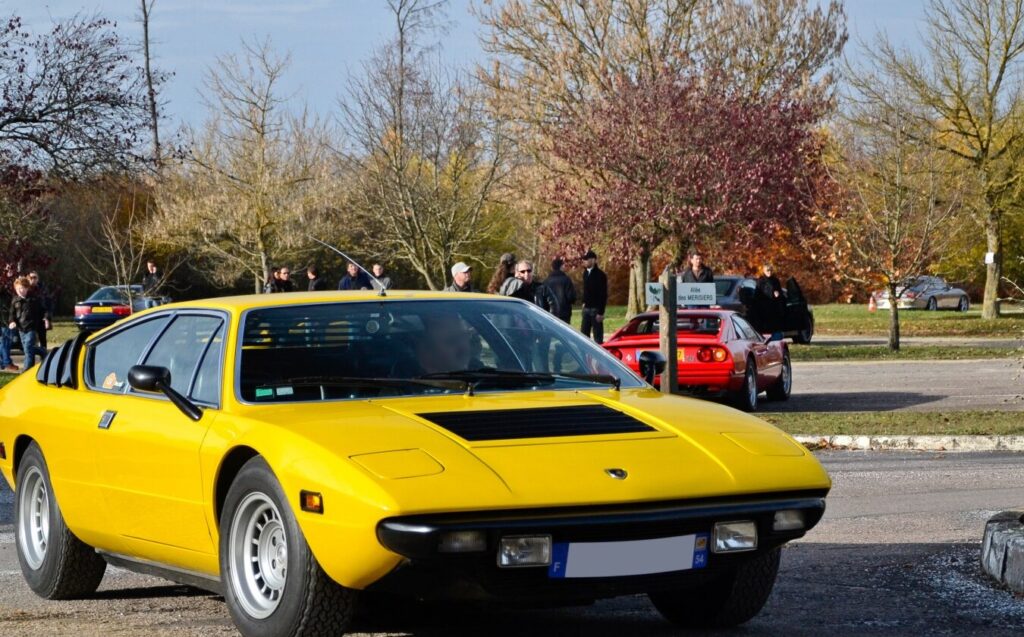
The Lamborghini Urraco P200, produced between 1975 and 1981, represented a significant departure for the Italian automaker. Positioned as a more accessible entry into the world of Lamborghini ownership, the Urraco aimed to combine the exotic appeal of the brand with a more compact and manageable package. It was the first Lamborghini to utilize a mid-engine layout with a transversely mounted engine, a design choice that would influence future models. The P200 designation refers to the engine’s approximate horsepower output, and it served as the initial offering in the Urraco lineup, later joined by the P250 and P300 variants. The Urraco was built on a steel unibody chassis, a departure from the traditional space frame construction used in earlier Lamborghinis, and was intended to appeal to a broader customer base seeking a sporting grand tourer.
Technical Specifications
| Brand | Lamborghini |
| Model | Urraco |
| Generation | Urraco |
| Type (Engine) | P200 (182 Hp) |
| Start of production | 1975 |
| End of production | 1981 |
| Powertrain Architecture | Internal Combustion engine |
| Body type | Coupe |
| Seats | 4 |
| Doors | 2 |
| Fuel Type | Petrol (Gasoline) |
| Maximum speed | 260 km/h (161.56 mph) |
| Weight-to-power ratio | 6.9 kg/Hp, 145.6 Hp/tonne |
| Weight-to-torque ratio | 7.1 kg/Nm, 140.8 Nm/tonne |
| Power | 182 Hp @ 7500 rpm |
| Power per litre | 91.3 Hp/l |
| Torque | 176 Nm @ 3800 rpm (129.81 lb.-ft. @ 3800 rpm) |
| Engine layout | Middle, Transverse |
| Engine Model/Code | L200 |
| Engine displacement | 1994 cm3 (121.68 cu. in.) |
| Number of cylinders | 8 |
| Engine configuration | V-engine |
| Compression ratio | 8.6:1 |
| Number of valves per cylinder | 2 |
| Fuel injection system | Carburettor |
| Engine aspiration | Naturally aspirated engine |
| Kerb Weight | 1250 kg (2755.78 lbs) |
| Fuel tank capacity | 80 l (21.13 US gal | 17.6 UK gal) |
| Length | 4250 mm (167.32 in) |
| Width | 1760 mm (69.29 in) |
| Height | 1160 mm (45.67 in) |
| Wheelbase | 2450 mm (96.46 in) |
| Front track | 1450 mm (57.09 in) |
| Rear track | 1470 mm (57.87 in) |
| Drivetrain Architecture | The Internal combustion engine (ICE) drives the rear wheels of the vehicle. |
| Drive wheel | Rear wheel drive |
| Number of gears and type of gearbox | 5 gears, manual transmission |
| Front brakes | Ventilated discs |
| Rear brakes | Ventilated discs |
| Front tires | 195/70 VR14 |
| Rear tires | 205/70 VR14 |
| Front wheel rims | R14 |
| Rear wheel rims | R14 |
Powertrain & Engine Architecture
The heart of the Urraco P200 is the Lamborghini L200 engine, a 2.0-liter (1994 cc) V8. This engine is notable for its 90-degree V-angle and its transversely mounted configuration, a first for Lamborghini. The engine utilized a relatively simple carbureted fuel system, relying on four Weber 34 DCOF carburetors. The valvetrain employed two valves per cylinder, operated by a single overhead camshaft per bank. The engine produced 182 horsepower at 7500 rpm and 176 Nm (129.81 lb-ft) of torque at 3800 rpm. The engine’s compact size and transverse layout were crucial to achieving the Urraco’s relatively short wheelbase and balanced handling. The engine was paired with a five-speed manual transmission, delivering power to the rear wheels. The transmission was chosen for its sporty feel and responsiveness, complementing the Urraco’s overall driving experience.
Driving Characteristics
The Urraco P200 offered a distinctly different driving experience compared to its larger Lamborghini siblings. While lacking the raw power of the Countach or Jarama, the P200 was praised for its nimble handling and responsive steering. The transversely mounted engine contributed to a lower center of gravity, enhancing stability in corners. The five-speed manual transmission provided precise gear changes, allowing drivers to fully exploit the engine’s powerband. Acceleration was respectable for the era, but the P200’s focus was more on balanced performance than outright speed. Compared to the later P250 and P300 models, the P200 felt less urgent in its acceleration, but its lighter weight and more manageable power delivery made it a more approachable and enjoyable car for everyday driving. The gear ratios were tuned for a balance between acceleration and fuel economy, reflecting the Urraco’s intended role as a grand tourer.
Equipment & Trim Levels
The Urraco P200 was relatively sparsely equipped compared to modern luxury cars, but it offered a comfortable and stylish interior. Standard features included leather upholstery, power windows, and a wood-rimmed steering wheel. The dashboard layout was clean and functional, with a focus on providing essential information to the driver. Optional extras included air conditioning, a radio, and upgraded sound systems. Interior color options were limited but allowed for some personalization. The Urraco P200 was positioned as the entry-level model in the Urraco range, and its trim level reflected this. It lacked some of the more luxurious features found in the P250 and P300, but it still offered a premium driving experience.
Chassis & Braking
The Urraco P200 utilized a steel unibody chassis, a departure from Lamborghini’s traditional space frame construction. This design choice helped to reduce weight and manufacturing costs. The suspension consisted of independent double wishbones all around, with coil springs and anti-roll bars. The braking system featured ventilated disc brakes on all four wheels, providing adequate stopping power for the car’s weight and performance. The steering was unassisted, providing a direct and engaging feel. The Urraco’s chassis and suspension were tuned to prioritize handling and stability, making it a rewarding car to drive on winding roads. The rear suspension geometry was carefully engineered to minimize oversteer, contributing to the car’s balanced handling characteristics.
Market Reception & Comparison
The Urraco P200 received mixed reviews from automotive critics. While praised for its handling and styling, some critics found the engine’s performance to be underwhelming. The carbureted engine was also criticized for its complexity and potential maintenance issues. Compared to the Porsche 911, the Urraco offered a more exotic and visually striking design, but the Porsche was generally considered to be more reliable and practical. The Urraco P200’s fuel economy was relatively poor, typical for a V8-powered sports car of the era. However, its lower price point compared to other Lamborghini models made it an attractive option for buyers seeking a taste of Italian exoticar ownership.
Legacy
The Lamborghini Urraco P200, while not as iconic as some of its more famous siblings, played an important role in the evolution of the Lamborghini brand. It was the first Lamborghini to utilize a mid-engine, transverse engine layout, a design that would be carried forward in future models. The Urraco also demonstrated Lamborghini’s willingness to experiment with new materials and construction techniques. Today, the Urraco P200 is a sought-after classic car, appreciated by collectors for its unique design and driving experience. The L200 engine, while requiring careful maintenance, is known for its durability and distinctive sound. The Urraco P200 remains a testament to Lamborghini’s commitment to innovation and performance.
