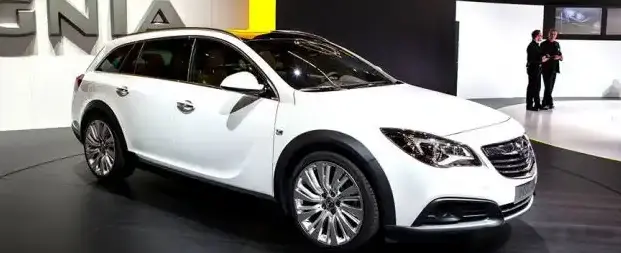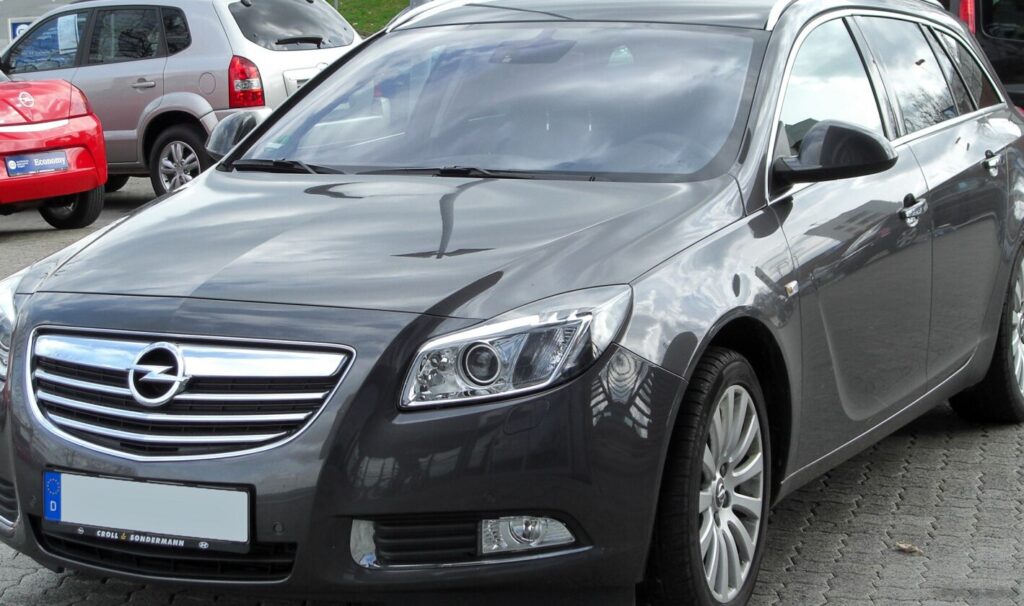
The Opel Insignia Sports Tourer (A) 1.4 Turbo LPG ecoFLEX, produced from July 2012 to June 2013, represented a unique offering within the broader Insignia range. Positioned as an economy-focused variant, it combined a turbocharged gasoline engine with the flexibility of Liquefied Petroleum Gas (LPG) capability. This model aimed to appeal to buyers seeking lower running costs and reduced emissions without sacrificing the practicality of a spacious station wagon. It was part of the A generation of the Insignia, built on the GM Delta II platform, also known as the 1HX0/A3 platform, and sold primarily in European markets.
Technical Specifications
| Brand | Opel |
| Model | Insignia |
| Generation | Insignia Sports Tourer (A) |
| Type (Engine) | 1.4 Turbo LPG ecoFLEX (140 Hp) |
| Start of production | July, 2012 |
| End of production | June, 2013 |
| Powertrain Architecture | Internal Combustion engine |
| Body type | Station wagon (estate) |
| Seats | 5 |
| Doors | 5 |
| Fuel consumption (economy) – combined | 5.7 l/100 km (41.3 US mpg, 49.6 UK mpg, 17.5 km/l) |
| Fuel consumption (economy) – combined (LPG) | 7.6 l/100 km |
| CO2 emissions | 124 g/km |
| Fuel Type | Petrol / LPG |
| Acceleration 0 – 100 km/h | 13.4 sec |
| Acceleration 0 – 62 mph | 13.4 sec |
| Acceleration 0 – 60 mph | 12.7 sec |
| Maximum speed | 190 km/h (118.06 mph) |
| Emission standard | Euro 5 |
| Weight-to-power ratio | 11.1 kg/Hp, 89.7 Hp/tonne |
| Weight-to-torque ratio | 7.8 kg/Nm, 128.2 Nm/tonne |
| Power | 140 Hp @ 4900-6000 rpm |
| Power per litre | 102.6 Hp/l |
| Torque | 200 Nm @ 1850-4900 rpm (147.51 lb.-ft. @ 1850-4900 rpm) |
| Engine layout | Front, Transverse |
| Engine Model/Code | A14NET |
| Engine displacement | 1364 cm3 (83.24 cu. in.) |
| Number of cylinders | 4 |
| Engine configuration | Inline |
| Cylinder Bore | 72.5 mm (2.85 in.) |
| Piston Stroke | 82.6 mm (3.25 in.) |
| Compression ratio | 9.5:1 |
| Number of valves per cylinder | 4 |
| Fuel injection system | Multi-port manifold injection |
| Engine aspiration | Turbocharger |
| Valvetrain | DOHC |
| Engine oil capacity | 4 l (4.23 US qt | 3.52 UK qt) |
| Coolant | 9 l (9.51 US qt | 7.92 UK qt) |
| Kerb Weight | 1560 kg (3439.21 lbs.) |
| Max. weight | 2215 kg (4883.24 lbs.) |
| Max load | 655 kg (1444.03 lbs.) |
| Trunk (boot) space – minimum | 540 l (19.07 cu. ft.) |
| Trunk (boot) space – maximum | 1530 l (54.03 cu. ft.) |
| Fuel tank capacity | 70 l (18.49 US gal | 15.4 UK gal) |
| Length | 4908 mm (193.23 in.) |
| Width | 1858 mm (73.15 in.) |
| Height | 1520 mm (59.84 in.) |
| Wheelbase | 2737 mm (107.76 in.) |
| Front track | 1585 mm (62.4 in.) |
| Rear (Back) track | 1587 mm (62.48 in.) |
| Ride height (ground clearance) | 160 mm (6.3 in.) |
| Drag coefficient (Cd) | 0.27 |
| Minimum turning circle (turning diameter) | 10.8 m (35.43 ft.) |
| Drivetrain Architecture | The Internal combustion engine (ICE) drives the front wheels of the vehicle. |
| Drive wheel | Front wheel drive |
| Number of gears and type of gearbox | 6 gears, manual transmission |
| Front brakes | Ventilated discs |
| Rear brakes | Disc |
| Assisting systems | ABS (Anti-lock braking system) |
| Tires size | 245/45 R18 |
| Wheel rims size | 18 |
Powertrain & Engine Architecture
At the heart of the Insignia Sports Tourer 1.4 Turbo LPG ecoFLEX lies the A14NET engine, a 1.4-liter inline-four cylinder gasoline engine. This engine utilizes a single-scroll turbocharger and multi-point fuel injection to deliver 140 horsepower and 200 Nm (147.51 lb-ft) of torque. The engine’s design incorporates features aimed at improving efficiency, such as low-friction components and optimized combustion chamber geometry. Crucially, this engine was designed to run on both gasoline and LPG, with a dedicated LPG fuel system integrated into the engine management. The LPG system allows the vehicle to switch seamlessly between fuels, offering drivers the flexibility to choose the most cost-effective option. The engine is paired with a six-speed manual transmission, which was the only transmission option available for this specific variant.
Driving Characteristics
The 1.4 Turbo LPG ecoFLEX offered a comfortable, if not particularly sporty, driving experience. With 140 hp, acceleration from 0-60 mph took around 12.7 seconds, making it one of the slower Insignia variants. The focus was clearly on fuel economy and lower emissions rather than outright performance. The manual transmission provided a reasonable level of control, but the engine’s relatively low torque output meant that frequent gear changes were necessary, especially when overtaking or climbing hills. When running on LPG, a slight reduction in power was noticeable, but the lower fuel costs often outweighed this drawback. The suspension was tuned for comfort, providing a smooth ride on most road surfaces.
Equipment & Trim Levels
The 1.4 Turbo LPG ecoFLEX trim typically included standard features such as air conditioning, a CD/radio system with auxiliary input, electric front windows, and central locking. Safety features included ABS, electronic stability control, and multiple airbags. Higher trim levels, available as options, could add features like alloy wheels, a touchscreen infotainment system, parking sensors, and heated seats. Interior upholstery was typically cloth, with a functional and durable design. The dashboard layout was consistent with other Insignia models, offering a clean and user-friendly interface.
Chassis & Braking
The Insignia Sports Tourer featured a MacPherson strut front suspension and a multi-link rear suspension, providing a good balance of ride comfort and handling. The front brakes were ventilated discs, while the rear brakes were solid discs. ABS (Anti-lock Braking System) was standard, enhancing braking performance and stability. The car’s weight of approximately 1560 kg (3439.21 lbs) contributed to its relatively modest handling characteristics. The standard tire size was 245/45 R18, providing adequate grip for most driving conditions.
Market Reception & Comparison
The Insignia 1.4 Turbo LPG ecoFLEX was generally well-received by critics as a practical and economical option. Its ability to run on both gasoline and LPG was a significant selling point, particularly in countries where LPG was readily available and competitively priced. Compared to the higher-powered Insignia variants, such as the 2.0 Turbo, it offered significantly lower running costs but at the expense of performance. Against diesel-powered Insignias, like the 2.0 CDTI, it offered a different fuel economy profile, with LPG potentially being cheaper than diesel depending on local fuel prices. However, the LPG system did add some complexity and potential maintenance requirements.
Legacy
The Opel Insignia Sports Tourer 1.4 Turbo LPG ecoFLEX represents an interesting chapter in the development of alternative fuel vehicles. While LPG has not become as widespread as other alternative fuels like gasoline or diesel, this variant demonstrated the potential for reducing emissions and running costs through the use of LPG technology. Today, these vehicles can be found on the used car market, often appealing to buyers seeking an economical and practical station wagon. The A14NET engine, while generally reliable, may require periodic maintenance of the LPG system to ensure optimal performance and longevity. Its status as a niche model within the Insignia range has given it a degree of collectibility among enthusiasts interested in alternative fuel vehicles.