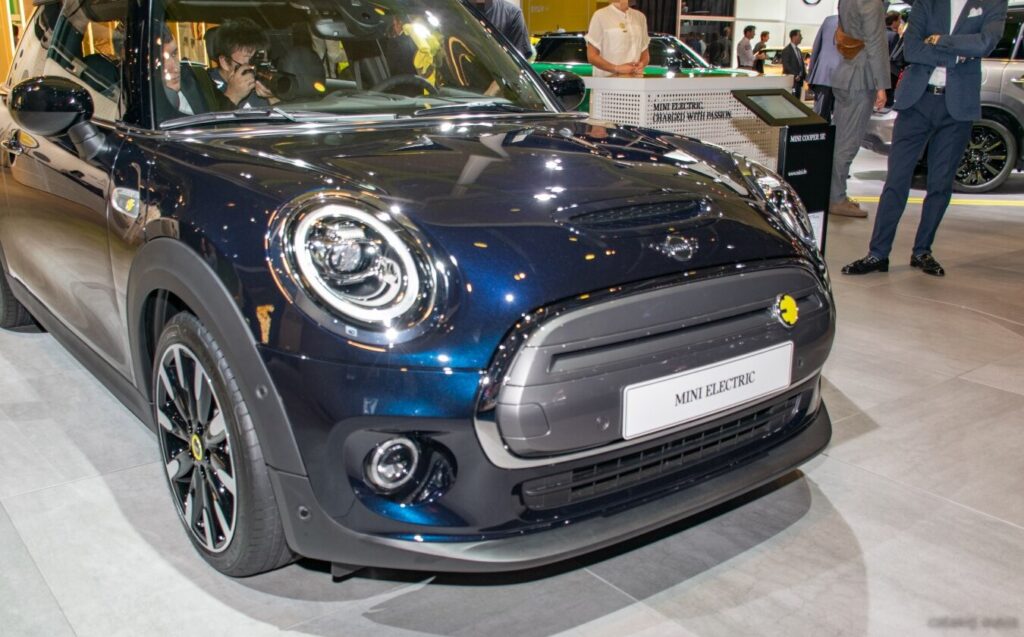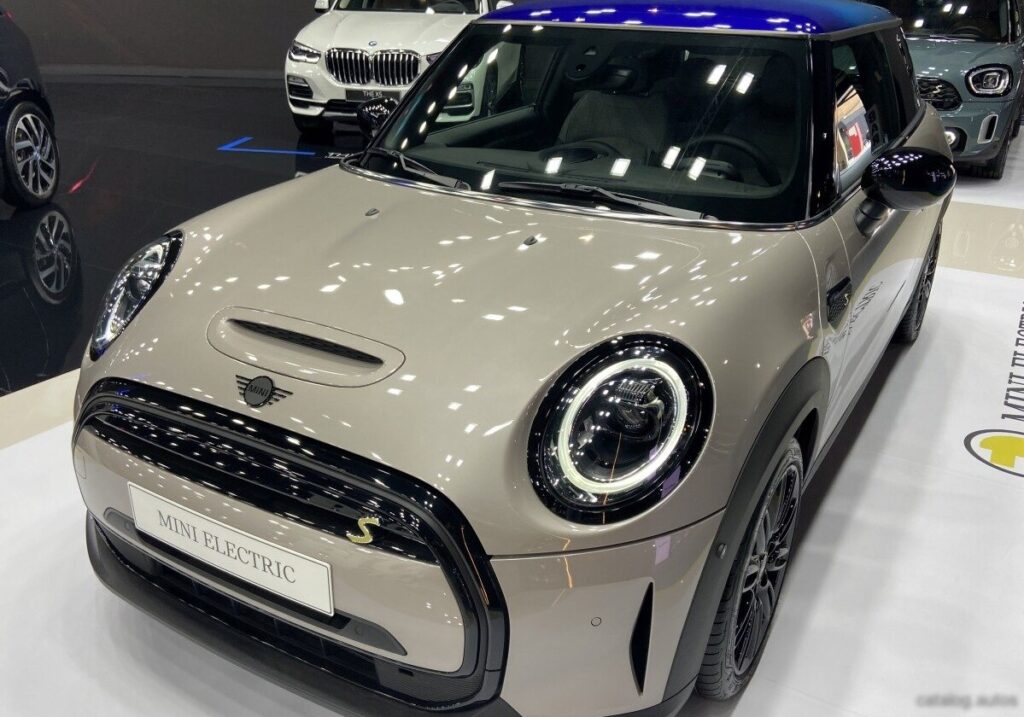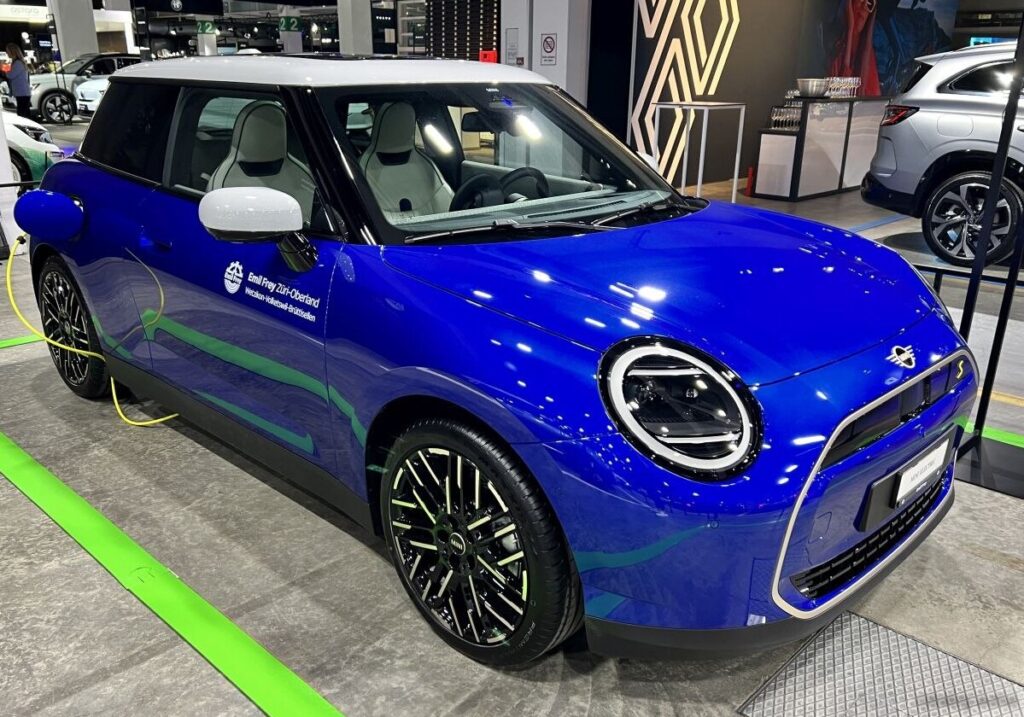
The Mini Electric (J01) Cooper SE 54.2 kWh, producing 218 horsepower, represents Mini’s entry into the all-electric vehicle market. Introduced in February 2024, this model builds upon the foundation of the J01 platform, designed specifically for electric Mini vehicles. It’s positioned as a premium, urban-focused EV, retaining the iconic Mini design while embracing a zero-emission powertrain. This variant is a key component of Mini’s strategy to transition to a fully electric lineup in the coming years, offering a blend of performance, style, and sustainability.
Technical Specifications
| Brand | Mini |
| Model | Electric |
| Generation | Electric (J01) |
| Type (Engine) | Cooper SE 54.2 kWh (218 Hp) |
| Start of production | February, 2024 |
| Powertrain Architecture | BEV (Electric Vehicle) |
| Body type | Hatchback |
| Seats | 4 |
| Doors | 3 |
| Fuel Type | Electricity |
| Acceleration 0 – 100 km/h | 6.7 sec |
| Acceleration 0 – 62 mph | 6.7 sec |
| Acceleration 0 – 60 mph | 6.4 sec |
| Maximum speed | 170 km/h (105.63 mph) |
| Weight-to-power ratio | 7.7 kg/Hp, 129.8 Hp/tonne |
| Weight-to-torque ratio | 5.1 kg/Nm, 196.4 Nm/tonne |
| Gross battery capacity | 54.2 kWh |
| Net (usable) battery capacity | 49.2 kWh |
| Battery technology | Lithium-ion (Li-Ion) |
| Battery location | Below the floor |
| All-electric range (WLTP) | 387-402 km (240.47 – 249.79 mi) |
| Average Energy consumption (WLTP) | 14.1-14.7 kWh/100 km (22.69 – 23.66 kWh/100 mi) |
| MPGe | 149 – 142 |
| km/kWh | 7.1 – 6.8 |
| mi/kWh | 4.4 – 4.2 |
| Electric motor power | 218 Hp |
| Electric motor Torque | 330 Nm (243.4 lb.-ft.) |
| Electric motor model/code | HC0001N0 |
| Electric motor location | Front axle, Transverse |
| Electric motor type | Synchronous |
| System power | 218 Hp |
| System torque | 330 Nm (243.4 lb.-ft.) |
| Kerb Weight | 1680 kg (3703.77 lbs.) |
| Trunk (boot) space – minimum | 210 l (7.42 cu. ft.) |
| Trunk (boot) space – maximum | 800 l (28.25 cu. ft.) |
| Length | 3858 mm (151.89 in.) |
| Width | 1756 mm (69.13 in.) |
| Height | 1460 mm (57.48 in.) |
| Wheelbase | 2526 mm (99.45 in.) |
| Drivetrain Architecture | One electric motor drives the front wheels. |
| Drive wheel | Front wheel drive |
| Number of gears and type of gearbox | 1 gears, automatic transmission |
| Front brakes | Ventilated discs |
| Rear brakes | Disc |
| Assisting systems | ABS (Anti-lock braking system) |
| Steering type | Steering rack and pinion |
| Power steering | Electric Steering |
| Wheel rims size | 16; 17 |
Powertrain & Engine Architecture
The Cooper SE 54.2 kWh utilizes a single, synchronous electric motor positioned transversely on the front axle. This motor, designated HC0001N0, delivers a peak output of 218 horsepower and 330 Nm (243.4 lb.-ft.) of torque. The powertrain is built around a 54.2 kWh gross (49.2 kWh net/usable) lithium-ion battery pack located under the vehicle floor, contributing to a low center of gravity and improved handling. The battery pack employs advanced thermal management to maintain optimal operating temperatures. The single-speed automatic transmission is a direct-drive system, typical of electric vehicles, providing seamless acceleration. The car doesn’t have traditional gears, relying on the motor’s torque curve and the inverter to manage power delivery.
Driving Characteristics
The 218 hp electric motor provides brisk acceleration, achieving 0-60 mph in approximately 6.4 seconds. While not as overtly sporty as some gasoline-powered Minis, the instant torque delivery of the electric motor offers a responsive and engaging driving experience, particularly in urban environments. The single-speed transmission simplifies operation, and the lack of gear changes contributes to a smooth and quiet ride. Compared to earlier Mini Electric models with lower power outputs, the 54.2 kWh variant offers a noticeable improvement in acceleration and overall performance. The weight distribution, influenced by the battery pack’s location, enhances stability and cornering ability.
Equipment & Trim Levels
The Cooper SE 54.2 kWh typically comes standard with features such as a digital instrument cluster, an infotainment system with touchscreen display, automatic climate control, and a suite of advanced driver-assistance systems (ADAS) including lane departure warning and automatic emergency braking. Interior upholstery options include cloth and leatherette combinations. Optional extras often include a panoramic sunroof, premium sound system, and parking assist features. Trim levels may vary depending on the market, but generally offer increasing levels of luxury and technology.
Chassis & Braking
The Mini Electric utilizes a MacPherson strut front suspension and a multi-link rear suspension, tuned to provide a balance between comfort and agility. Ventilated disc brakes are fitted to the front wheels, while solid discs are used at the rear. The electric powertrain incorporates regenerative braking, which helps to recapture energy during deceleration and extend the vehicle’s range. Electric power steering provides precise and responsive steering feel. The vehicle’s relatively low weight, despite the battery pack, contributes to its nimble handling characteristics.
Market Reception & Comparison
The Mini Electric Cooper SE 54.2 kWh has been generally well-received by automotive critics, praised for its fun-to-drive character, stylish design, and zero-emission powertrain. Compared to other EVs in its class, such as the Fiat 500e and Honda e, the Mini Electric offers a more premium feel and a more engaging driving experience. Its range, while competitive, is not class-leading, but is sufficient for many urban commuters. Fuel economy, expressed as MPGe, ranges from 149-142, and energy consumption is between 14.1-14.7 kWh/100km. Reliability reports are still emerging, but early indications suggest that the electric powertrain is proving to be robust.
Legacy
The Mini Electric Cooper SE 54.2 kWh represents a significant step in Mini’s transition to an all-electric future. Its success will be crucial in establishing the brand as a leader in the EV market. The powertrain’s long-term reliability remains to be fully assessed, but the use of proven lithium-ion battery technology and a robust electric motor suggests a reasonable expectation of durability. On the used car market, the Cooper SE is expected to hold its value well, particularly as demand for EVs continues to grow. The vehicle’s combination of iconic design, engaging driving dynamics, and zero-emission credentials positions it as a desirable and sustainable transportation option.