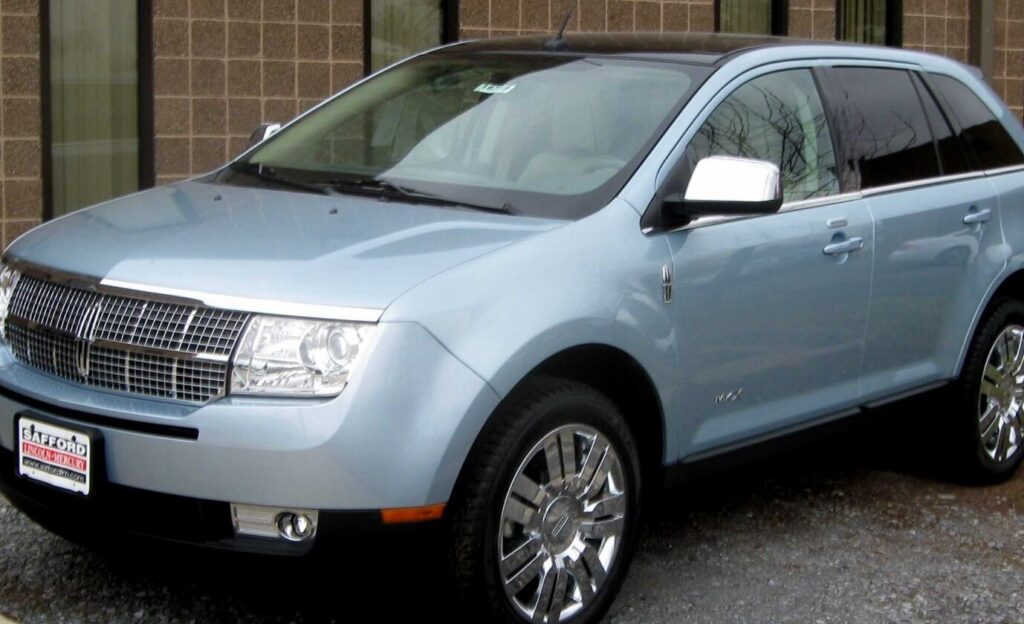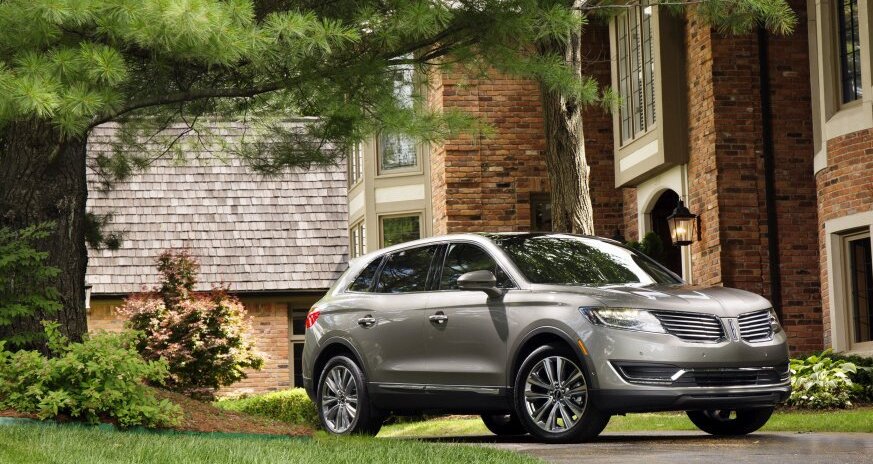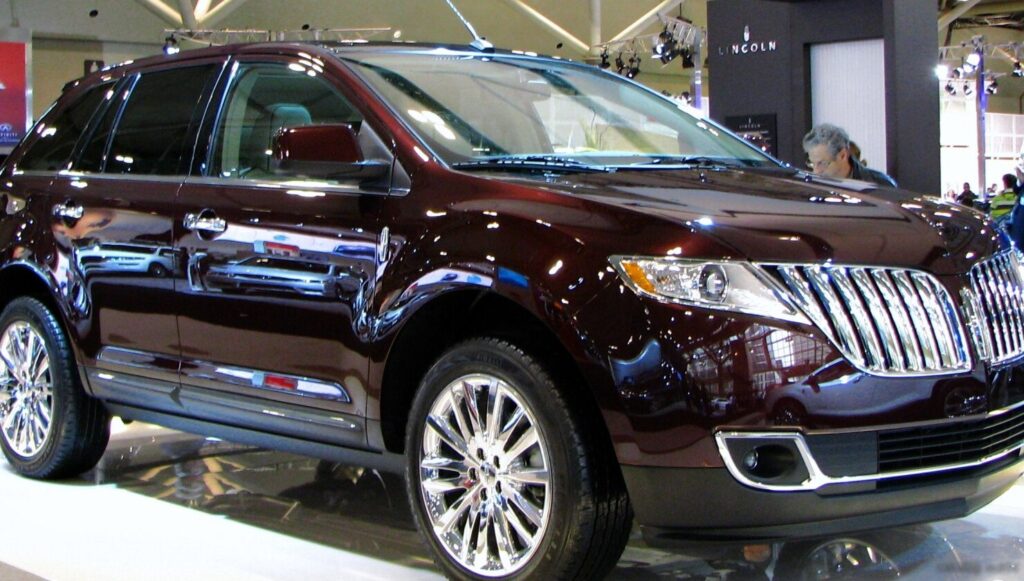
The Lincoln MKX, specifically the facelifted first generation produced from 2011 to 2015, represented Lincoln’s entry into the mid-size luxury crossover segment. This iteration, characterized by a revised exterior and interior, aimed to compete with established rivals like the Acura RDX, Cadillac SRX, and Buick Enclave. The 3.7L V6 24V (305 hp) AWD Automatic variant occupied the mid-to-upper range of the MKX lineup, offering a balance of performance, luxury, and all-weather capability. It served as a step up from the base front-wheel drive model, appealing to buyers seeking enhanced driving dynamics and a more premium experience.
Technical Specifications
| Brand | Lincoln |
| Model | MKX |
| Generation | MKX I (facelift 2011) |
| Type (Engine) | 3.7 V6 24V (305 Hp) AWD Automatic |
| Start of production | 2011 |
| End of production | 2015 |
| Powertrain Architecture | Internal Combustion engine |
| Body type | Crossover |
| Seats | 5 |
| Doors | 5 |
| Fuel consumption (urban) | 13.8 l/100 km (17 US mpg, 20.5 UK mpg, 7.2 km/l) |
| Fuel consumption (extra urban) | 10.2 l/100 km (23.1 US mpg, 27.7 UK mpg, 9.8 km/l) |
| Fuel consumption (combined) | 12.4 l/100 km (19 US mpg, 22.8 UK mpg, 8.1 km/l) |
| Fuel Type | Petrol (Gasoline) |
| Weight-to-power ratio | 6.6 kg/Hp, 152.2 Hp/tonne |
| Weight-to-torque ratio | 5.3 kg/Nm, 189.6 Nm/tonne |
| Power | 305 Hp @ 6500 rpm |
| Power per litre | 81.9 Hp/l |
| Torque | 380 Nm @ 4000 rpm (280.27 lb.-ft. @ 4000 rpm) |
| Maximum engine speed | 7000 rpm |
| Engine layout | Front, Transverse |
| Engine Model/Code | Cyclone |
| Engine displacement | 3726 cm3 (227.37 cu. in.) |
| Number of cylinders | 6 |
| Engine configuration | V-engine |
| Cylinder Bore | 95.5 mm (3.76 in.) |
| Piston Stroke | 86.7 mm (3.41 in.) |
| Compression ratio | 10.5:1 |
| Number of valves per cylinder | 4 |
| Fuel injection system | Multi-port manifold injection |
| Engine aspiration | Naturally aspirated engine |
| Valvetrain | DOHC, Ti-VCT |
| Engine oil capacity | 5.7 l (6.02 US qt | 5.02 UK qt) |
| Coolant capacity | 11.1 l (11.73 US qt | 9.77 UK qt) |
| Kerb Weight | 2004 kg (4418.06 lbs.) |
| Max. weight | 2421 kg (5337.39 lbs.) |
| Max load | 417 kg (919.33 lbs.) |
| Trunk (boot) space – minimum | 915 l (32.31 cu. ft.) |
| Trunk (boot) space – maximum | 1943 l (68.62 cu. ft.) |
| Fuel tank capacity | 76 l (20.08 US gal | 16.72 UK gal) |
| Permitted trailer load with brakes (12%) | 1588 kg (3500.94 lbs.) |
| Length | 4742 mm (186.69 in.) |
| Width | 1930 mm (75.98 in.) |
| Width including mirrors | 2222 mm (87.48 in.) |
| Height | 1709 mm (67.28 in.) |
| Wheelbase | 2824 mm (111.18 in.) |
| Front track | 1661 mm (65.39 in.) |
| Rear (Back) track | 1631 mm (64.21 in.) |
| Ride height (ground clearance) | 201 mm (7.91 in.) |
| Drag coefficient (Cd) | 0.36 |
| Minimum turning circle (turning diameter) | 11.98 m (39.3 ft.) |
| Approach angle | 13.5° |
| Departure angle | 27.7° |
| Ramp-over (brakeover) angle | 17.1° |
| Drive wheel | All wheel drive (4×4) |
| Number of gears and type of gearbox | 6 gears, automatic transmission |
| Front suspension | Independent, type McPherson with coil spring and anti-roll bar |
| Rear suspension | Independent multi-link suspension |
| Front brakes | Ventilated discs |
| Rear brakes | Disc |
| Assisting systems | ABS (Anti-lock braking system) |
| Tires size | 245/60 R18 |
| Wheel rims size | 18 |
Powertrain & Engine Architecture
The heart of this MKX variant is the 3.7-liter “Cyclone” V6 engine. This naturally aspirated engine, part of Ford’s Cyclone family, utilizes a 60-degree V-angle configuration. It features a dual overhead camshaft (DOHC) valvetrain with variable valve timing (Ti-VCT) on both intake and exhaust valves, optimizing performance and efficiency across the rev range. The engine employs multi-port fuel injection, delivering fuel directly into the intake ports. The 3.7L engine produces 305 horsepower at 6500 rpm and 280 lb-ft of torque at 4000 rpm. This power is channeled through a six-speed automatic transmission, specifically the 6F55, known for its smooth shifts and responsiveness. The all-wheel-drive system is primarily front-wheel drive, engaging the rear wheels as needed for enhanced traction.
Driving Characteristics
The 3.7L V6 and six-speed automatic combination in the MKX provided a comfortable and capable driving experience. While not overtly sporty, the powertrain delivered adequate acceleration for everyday driving and highway merging. The automatic transmission was well-tuned, offering smooth gear changes and a generally unobtrusive experience. Compared to the base 3.5L V6, the 3.7L offered a noticeable increase in power and responsiveness. However, it didn’t match the quicker acceleration of the optional EcoBoost turbocharged engines. The all-wheel-drive system provided confident handling in various weather conditions, enhancing stability and control. The gear ratios were optimized for a balance of fuel economy and performance, with a focus on providing sufficient torque for everyday driving situations.
Equipment & Trim Levels
The 3.7L AWD MKX typically came standard with features such as leather upholstery, heated front seats, a power-adjustable driver’s seat, dual-zone automatic climate control, and a premium audio system. Optional extras included a navigation system, a rear-view camera, parking sensors, and a panoramic sunroof. Trim levels varied, but the 3.7L engine was generally available on the Elite and Ultimate trims, which added more luxurious appointments and advanced technology features. Interior materials were generally of good quality, with a focus on providing a comfortable and refined cabin environment.
Chassis & Braking
The MKX utilized an independent front suspension with McPherson struts and a multi-link independent rear suspension. This setup provided a comfortable ride quality while maintaining reasonable handling characteristics. The front suspension incorporated a coil spring and anti-roll bar to reduce body roll during cornering. Braking duties were handled by ventilated discs at the front and solid discs at the rear, equipped with an anti-lock braking system (ABS) as standard. The braking system provided adequate stopping power for the vehicle’s weight and performance capabilities.
Market Reception & Comparison
Critics generally praised the MKX for its comfortable ride, spacious interior, and user-friendly technology. The 3.7L V6 engine was considered a good compromise between performance and fuel economy. However, some reviewers noted that the MKX didn’t offer the same level of driving engagement as some of its European competitors. Fuel economy was rated at around 19 mpg combined, which was typical for a mid-size crossover with a V6 engine at the time. Compared to the EcoBoost models, the 3.7L offered a more traditional driving experience and potentially lower long-term maintenance costs, as it lacked the complexity of a turbocharged engine.
Legacy
The 3.7L Cyclone V6 engine, when paired with the 6F55 automatic transmission, proved to be a relatively reliable powertrain. While not without its potential issues (such as timing chain wear in some cases), it generally offered good longevity with proper maintenance. Today, used MKX models with this powertrain represent a relatively affordable entry point into the luxury crossover segment. The engine’s simplicity and readily available parts contribute to its continued appeal among budget-conscious buyers. The MKX, in general, helped establish Lincoln as a viable competitor in the increasingly popular crossover market, paving the way for future models like the Nautilus.